

TL;DR: Summary
A leaking skylight in Seattle is rarely just a "glass" problem; it’s usually a system failure. Most leaks occur at the higher end (indicating faulty flashing or uphill roof issues) or the lower end (signaling a failed factory seal). At RoofSmart, we focus on technical accuracy: if the skylight is deck-mounted, it’s physically bound into your roof and requires surgical precision to replace. Ignoring these drips leads to delaminated plywood and structural rot. Identifying whether you have a simple flashing gap or a total seal failure is the first step to saving your roof deck.
Have you noticed a water stain or drip marks around your skylight and are concerned about it causing damage to your roof? Do you know how to tell if your skylight is leaking, or if the problem lies elsewhere?
The last thing you want to see on your ceiling is evidence of water damage. What makes it worse is that you might not always see the signs even when the roof has started leaking. And when you do, it can be difficult to tell what’s actually causing the leak.
At RoofSmart, we pride ourselves on our thorough inspection process that looks not just at the roof itself, but also all around it, in the attic, in the gutters, on the ceilings, and even on your home’s siding. This allows us to find issues in the roof, such as leaks, that might not be found by just looking at the roof.
In this article, you’ll learn how to identify the cause of your skylight leak and what steps you can take to fix it. By the end, you’ll be able to make an informed decision about the best way to handle your leaking skylight and when to call in a professional.
What are the impacts of a leaking skylight?
Just like with any other type of leak, a leak in your roof around a skylight can lead to water damage, rot, and mold. In other words, your home will begin to deteriorate. The longer you wait to fix it, the worse it will get.
How can I identify leaks in or around my skylight?
Oftentimes, leaks do not show very easily. So, if you notice dripping water coming from your skylight then that indicates there is a big leak. It takes time for the water to pool up enough to actually leak through the roof. If water is coming through, this typically means that there is also a problem with the roof itself.
Pooling water is likely inside the roof, but you can also check to see if it is visible on or around the skylight. Look for drip marks, staining, or bulging in the paint. These are all signs
Here is an example of a leaking skylight with drip marks, staining, and damage to the paint:
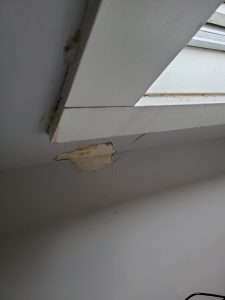
If you have a leak inside the skylight well that means that the skyline has failed in some way. Either it wasn’t sealed properly or something else has gone wrong. You will likely notice staining or drip marks on the drywall up by the glass if this is the case.
If you’re not sure what the cause of the leak is and you want to know how extensive the damage is so far, we’d recommend calling in a professional roofing contractor to take a look at it.
What should I do when I notice my skylight is leaking?
When you notice a leak around your skylight, do your best to point a fan or a space heater at it to help dry it out. If you can reach the ceiling, you can soak up excess water with a rag.
Make sure that you monitor the leak closely to if you can identify any patterns related to when it leaks. Is it only leaking during certain types of rain (i.e. heavy rain vs. light rain)? Does it leak when the wind is blowing in a certain direction? Did it only leak once, or is this a consistent issue?
Answering all of these questions can be helpful in identifying the problem. The more information that you can gather between the time somebody comes out to repair it and when you first notice it, the better.
How can I attempt to fix the skylight leak myself?
If the skylight is causing the leak then it will need to be replaced. If you feel comfortable going up on the roof to put in a new skylight, then that would be your next step. If you have a curb-mounted skylight the old skylight should be pretty easy to access and switch out, as long as you order the right size.
Sizing for skylights can be incredibly complicated. A big issue is that deck-mounted skylights and curb-mounted skylights have completely different sizing. So, even though they look similar online, ordering the wrong type of skylight can cause a lot of problems.
A deck-mounted skylight is much trickier to replace because it requires pulling up the roof around it. They require skill and precision to install, otherwise they’ll leak.
How will a professional roofer help me fix a leak in my skylight?
If you have a deck-mounted skylight that is leaking, it is best to call a roofer because they have the experience needed to replace it. Not only is it difficult to properly install flashing on a deck-mounted skylight to seal it in, but after it’s installed the roof must be repaired as well.
Deck-mounted skylights are prone to leaking if not installed properly. Having a professional do this will ensure that your money is well spent on a quality repair job that will last and won’t leak.
The other thing to consider is that the leak might not be caused by your skylight, even if the leak appears next to it. Fixing this type of leak might require pulling the skylight out of the way for the repair and putting it back after the roof gets redone.
How long does a skylight last?
The lifespan of a skylight can vary based on many factors, but usually they last about 10 years on average. Sometimes they can last up to 20 years, but that is more common for higher-quality, more expensive skylights. Warranties for skylights are often for a 10-year period.
If you’re having regular maintenance done on your roof, it’s a good idea to have them check your skylights as well to make sure they’re still in good condition. If that’s not the case, then you approach the 10-year mark, you might consider having a professional take a look at them.
Fogging between the window panes and leaks at or around the skylight are both signs that your skylight is failing and needs to be replaced.
Fogging is a sign that the seal around your skylight is not working properly, which means that it’s not far off from leaking.
Take Action Before Your Skylight Leak Causes More Damage
A leaking skylight might seem like a minor inconvenience at first, but the longer you wait, the more serious the damage can become, leading to expensive repairs, mold, or even structural issues. Whether you decide to try fixing the skylight yourself or call in a professional, it’s crucial to address the problem quickly.
Monitor the leak, note the conditions when it occurs, and gather as much information as possible. This will help the roofer or technician make a quicker diagnosis and repair. If you’re unsure or uncomfortable handling the situation, hiring a professional can give you peace of mind, especially if you have a deck-mounted skylight that requires precision and skill to replace.
Your next step is to assess the severity of the leak and decide whether it’s time for professional help.
For guidance on figuring out how to find a qualified roofer to help you with roof repairs, check out our article “How Do I Know If A Roofing Contractor is Qualified?” which explains how to effectively assess and research roofing contractors. This will help ensure your roof ends up in good hands.
Now that you’ve identified an issue with your skylight, you know you’ll need a replacement. To learn more about the different options you have as you choose a new skylight, check out our article “Choosing the Right Skylight: Types, Features, and Benefits Explained“.
Frequently Asked Questions
What is the most common reason a skylight starts leaking?
The primary culprit is usually improper installation or aging flashing. Over time, the metal seals surrounding the unit can pull away or corrode. However, in modern units, thermal expansion, where the unit grows and shrinks with Seattle's temperature swings, can also stress the factory seals until they snap.
How can I tell if the leak is the skylight or the roof itself?
Gravity is your best diagnostic tool. If water enters at the top of the skylight frame, the issue is likely the flashing or a leak originating higher up the roof (like a chimney). If it pools at the bottom of the frame, the seal between the glass and the frame has likely failed.
Why are deck-mounted skylights harder to repair?
Deck-mounted units are nailed directly into the roof deck and integrated with the shingles. To fix a leak, a roofer often has to tear up the surrounding shingles, replace the flashing kit, and sometimes the entire unit, making it a much more technical job than a "curb-mounted" unit that sits on a raised box.
Does condensation mean my skylight is broken?
Not necessarily. Fogging between the panes of glass means the hermetic seal has failed, and a leak is likely coming soon. However, moisture on the inside surface of the glass might just be high interior humidity, though this is often a sign of poor attic airflow.
Can I fix a skylight leak with silicone caulk?
Caulking is a temporary "band-aid" that usually fails within one season. Because roofs and skylights expand and contract at different rates, rigid caulk will eventually crack. A permanent fix requires replacing the mechanical flashing or the unit itself.
How long should a high-quality skylight last in Seattle?
Most skylights have a lifespan of 10 to 20 years. If your roof is approaching the 15-year mark, it’s often more cost-effective to replace the skylight during a roof overhaul rather than waiting for it to fail and cause interior ceiling damage.
How do I know if a roofer is actually qualified to handle skylights?
Skylights require specific flashing techniques that many general laborers skip. To ensure you aren't hiring someone who will just "slap some goop on it," read our guide on red flags to look for when comparing roof proposals.
Could my skylight leak be caused by a ventilation issue?
Yes. If your home isn't breathing correctly, moisture can trap around the skylight well, leading to rot that looks like a roof leak. Check out our expertise on whether a Seattle attic can be over-ventilated to see if airflow is your real problem.
What should I do if my skylight leak has caused mold in the ceiling?
Mold is a sign of long-term moisture. Before you pay for expensive remediation, you need to know the extent of the damage. See our post on how to tell if your attic mold is actually a problem.
Are there specific codes for skylight installation in Washington?
Yes, particularly regarding energy efficiency and moisture barriers. For more on the technical side of local compliance, visit our page on Seattle's Attic Ventilation and Roofing Code Requirements.
Topics:
