

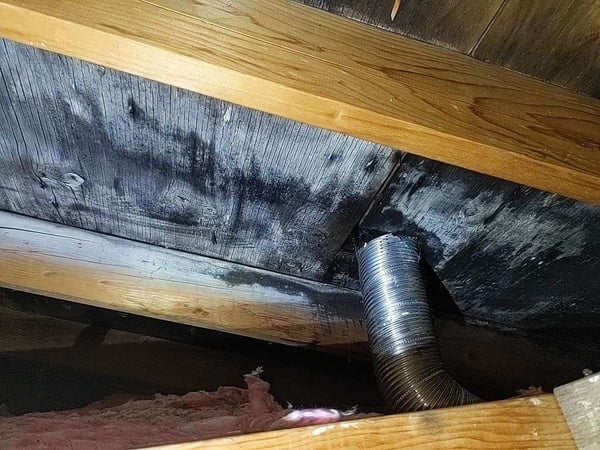
Know what's in your attic, and what it needs.
- ★ 4.9 on Google, 400+ reviews across platforms
- A+ BBB Accredited
- Since 2011 WA license ROOFS**797BK
 Owens Corning Platinum Preferred Contractor
 GAF Certified Plus
 CertainTeed ShingleMaster PREMIER
Short answer: Attic mold removal starts with finding out why the attic got wet, not with scrubbing the wood or replacing the roof. In Greater Seattle homes, condensation is often the cause: warm, moist house air leaks up through gaps in the ceiling, reaches a cold roof deck, and turns to water. Then the growth gets treated and the moisture source gets fixed, starting with air sealing. Skip the second step and the mold tends to return.
Maybe a home inspector flagged it. Maybe you went up for the holiday boxes and saw dark spotting on the plywood. Either way, you are probably asking two questions: how bad is this, and who do I call?
This guide covers what to do first, how to read what you are seeing, what causes attic mold, how removal and remediation work, and how to keep it from coming back. A roofing company wrote it, so we'll be clear about where the roof fits in and where it doesn't.
What to do first when you find mold in your attic
- Don't panic, and don't sign anything that day. Attic mold rarely appears overnight. It usually builds over a season or more, so you have time to understand the cause before you pay for a fix.
- Take photos from the hatch. Note where the growth is: across one whole slope, around a bath fan, near the eaves, or in one spot under a chimney, vent, or valley. The pattern is a clue.
- Check the obvious moisture sources. Do bath or kitchen fans end in the attic instead of outdoors? Is insulation stuffed into the soffits? Do you see frost on nail tips in cold weather, or a stain that lines up with something on the roof?
- Hold off on cleaning until the cause is known. Cleaning a wet attic buys time. It isn't a fix.
- Get one inspection that looks at the roof and the attic together. Whoever treats the growth and whoever fixes the cause need to agree on what went wrong.
Signs of mold in the attic
- Dark or white spotting on the underside of the roof sheathing or on the rafters, often heaviest on the north-facing slope or near the eaves
- A musty smell when you open the attic hatch
- Frost on nail tips or sheathing in cold weather, or water dripping from nails when it warms up
- Damp, matted, or stained insulation
- Rusty nail tips, or staining around bath fan ducts
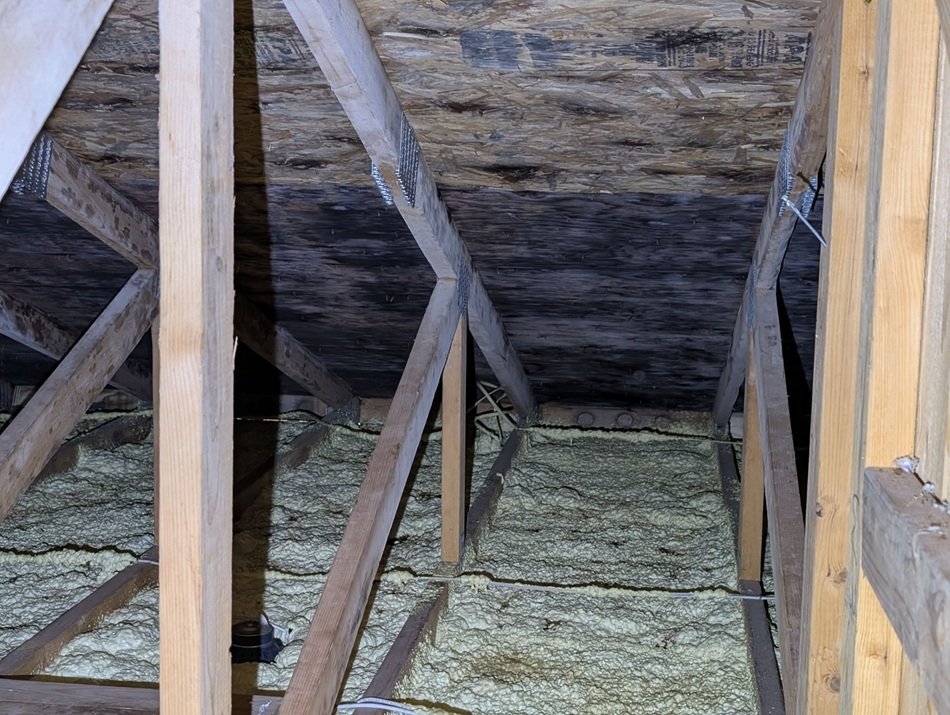
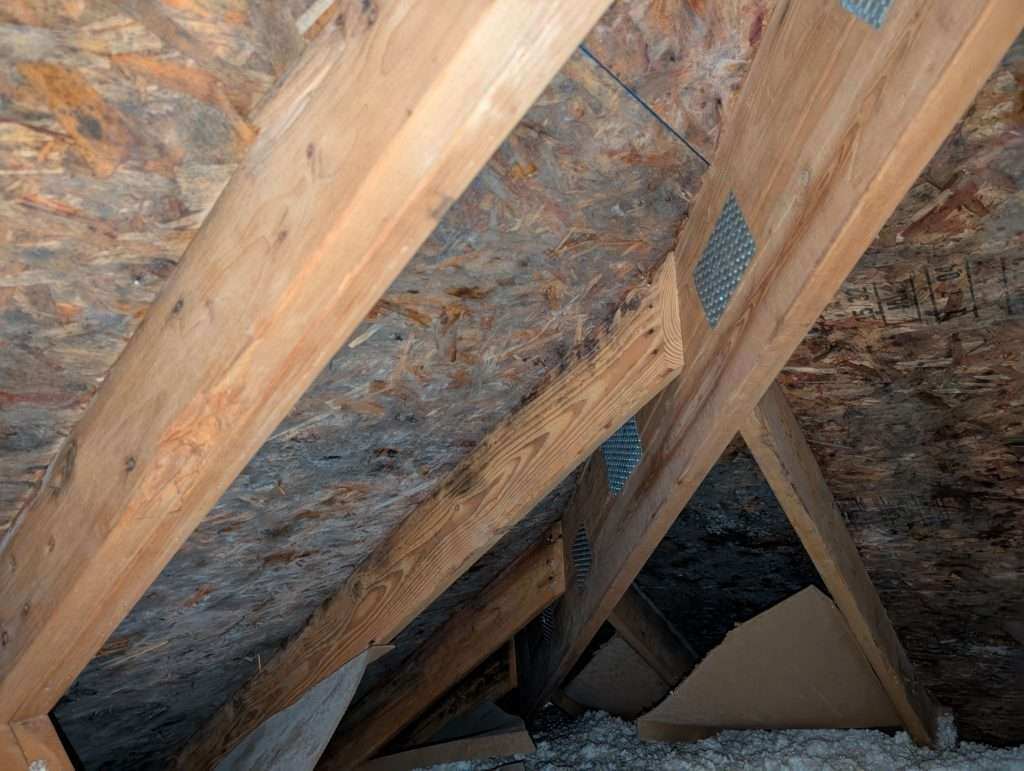
When a home inspection report says "microbial growth" or "suspected mold" in the attic, it usually means one or more of these. For a longer list, see signs you need a mold inspection in your Seattle roof.
What about ghosting on the ceiling?
Ghosting is dust and soot settling on colder strips of ceiling, usually along the framing. It isn't mold. It's still worth noting, because it shows where heat is escaping and air is moving, and that same air movement can carry moisture into the attic.
What causes mold in the attic?
Mold needs moisture, something to grow on, and time. The wood in an attic is plenty to grow on, so the real question is where the moisture comes from.
Air leaking up from the house: condensation, often the cause in Greater Seattle
The biggest moisture source in most attics is the house below it. Warm, moist air from the house leaks into the attic through gaps around light fixtures, the attic hatch, plumbing and wiring holes, and bath fans. When that air meets roof sheathing colder than its dew point, the moisture turns to water on the wood. Our long, wet, mild winters give it plenty of chances. Read more on why Seattle attics condense.
Roof leaks
A leak usually leaves one wet trail that lines up with a flashing, a vent, a valley, or a chimney, and it shows up after rain. Here's how to tell a roof leak from condensation.
Blocked or unbalanced ventilation
Intake vents at the soffits let outside air in. Exhaust vents at or near the ridge let attic air out. If insulation buries the soffits, or intake and exhaust don't balance, air stops moving along the underside of the roof deck and moisture lingers. The fix is balanced, correct ventilation, not simply extra openings: ventilating harder without air sealing first can pull more damp house air into the attic.
See what proper ventilation does and doesn't fix for attic mold, and compare attic intake vent types and attic exhaust vent types.
Exhaust fans venting into the attic
Bath, kitchen, and dryer vents that end in the attic, or ducts that have come loose, blow moist air straight onto the wood.
Insulation changes
Adding insulation on the attic floor without opening the soffit intake can make the roof deck colder, which can mean more condensation. Insulation, air sealing, and ventilation have to be planned together.
How attic mold removal and remediation work
You'll hear "removal," "remediation," and "treatment" used for the same job. The methods differ, but every sound plan has two halves: deal with the growth, and fix the moisture source. Skip the second half and the first half doesn't last.
Dealing with the growth
- Physical cleaning: HEPA vacuuming and scrubbing the affected surfaces. It's thorough and labor-heavy.
- Applied treatment: a treatment sprayed or fogged across the affected surfaces. It reaches tight spots between rafters and around nails that are hard to scrub.
- Encapsulating coating: a coating applied over treated wood to seal the surface. A white coat also makes any regrowth easy to spot later.
- Replacing damaged materials: sheathing that is soft or delaminated gets replaced, not treated. Insulation usually doesn't need replacing, because mold grows on the wood and the dust on its surface, not inside the insulation. It gets replaced when it's wet, damaged, or contaminated by pests.
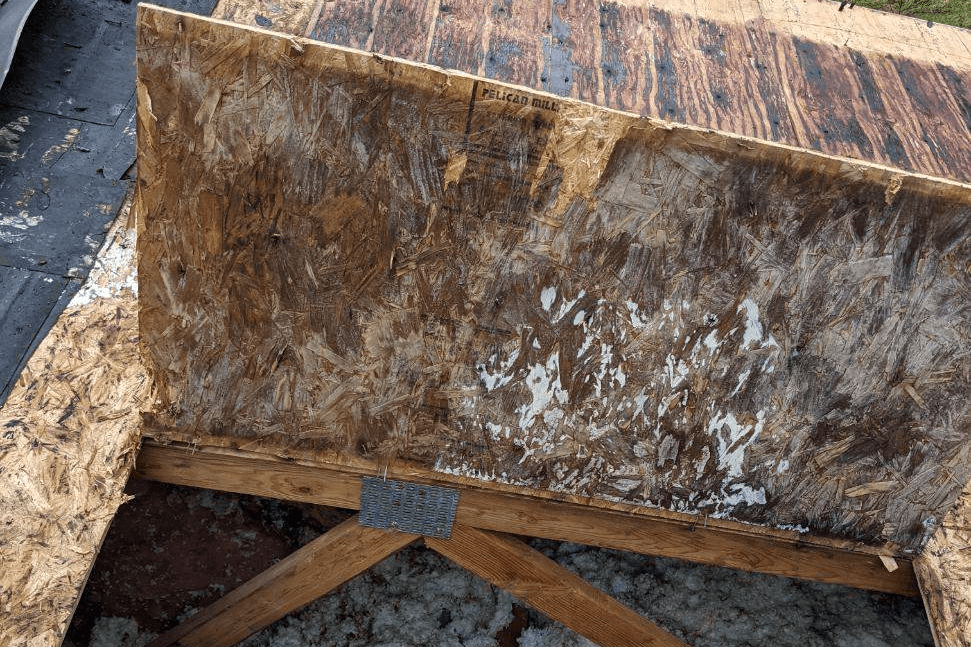
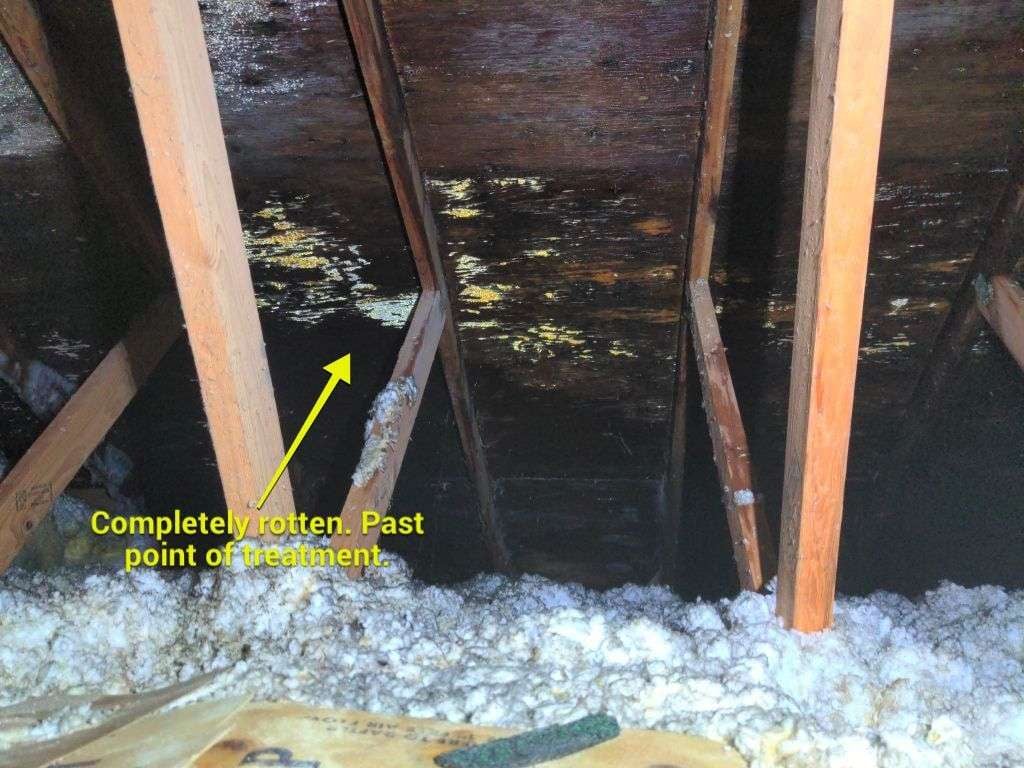
Which method fits depends on how much growth there is, the condition of the wood, and how easy the attic is to get around in. We don't name products or chemicals here. A good contractor will explain the method and what it does and doesn't cover.
Fixing the moisture source
- Air seal gaps in the ceiling below the attic. It's usually the strongest single step, because it stops the moist house air at the source. More on air sealing a Seattle attic
- Reroute bath, kitchen, and dryer exhaust to the outdoors
- Open the soffit intake (baffles keep insulation out of the way) and balance it with exhaust
- Fix leaks at flashings, vents, valleys, and chimneys
- Replace the roof only if the roof itself is done
RoofSmart treats attic mold at three levels: spot treatment with a 90-day warranty, two-stage fogging with a 3-year warranty, and full treatment plus a thick encapsulant with a lifetime warranty that lasts the life of the home and transfers to the next owner. Which level fits depends on what the inspection finds, and warranty conditions apply to every level. You get the price for your attic after the inspection. See how our attic mold treatment works, level by level.
Can I remove attic mold myself?
Some homeowners do clean small spots. Before you try, weigh three things:
- Access: attics are tight, with roofing nails coming through the deck and ceiling drywall between the joists that won't hold your weight.
- Scope: what you can see from the hatch is often not all of it.
- Cause: cleaning without fixing the moisture source is temporary.
Size matters too. The U.S. Environmental Protection Agency's A Brief Guide to Mold, Moisture and Your Home says: "If the moldy area is less than about 10 square feet (less than roughly a 3 ft. by 3 ft. patch), in most cases, you can handle the job yourself, follow the guidelines." For larger areas or a lot of water damage, EPA points to its more detailed cleanup guidance.
For a side-by-side, read DIY vs. professional attic mold removal.
We don't publish do-it-yourself chemical mixes. For health questions about mold, talk to your doctor or read the Washington State Department of Health's mold guidance.
Who should I call for mold in the attic?
Usually you need two kinds of help: someone to treat the growth and someone to fix what caused it.
- A mold-only company treats the growth, but typically doesn't address ventilation, exhaust ducts, leaks, or the roof.
- An insulation company can air seal and insulate, but may add insulation without opening the intake.
- A roofer can fix leaks and ventilation, but many roofers don't handle the growth.
If you hire more than one company, make sure they agree on the cause before anyone starts. At RoofSmart, we remove or treat the growth and fix the moisture path (air sealing, exhaust vented outdoors, balanced ventilation, and leak repair) and the roof behind it as one job. You make one call. See how our attic mold treatment works.

Do I need a mold test?
A lab test can tell you what is growing. It can't tell you why the wood got wet. For attic mold, the more useful first step is an inspection that checks ventilation, exhaust ducts, insulation, and the roof.
Will a new roof get rid of attic mold?
Not on its own. New shingles stop future rain, but they don't treat growth already on the sheathing and rafters. If the cause was condensation, a new roof over the same blocked soffits and a bath fan that still vents into the attic leaves the moisture source in place.
The roof matters when the old roof is leaking, when sheathing is soft and has to be replaced anyway, or when the roof is near the end of its life. In that case, plan treatment, ventilation, and the new roof together. If someone is pushing a full tear-out for a few spots of mildew, read how to tell if attic mold is serious or an upsell.
How do I keep mold from coming back?
- Air seal the gaps in the ceiling below the attic first. It's the strongest prevention step
- Vent bath, kitchen, and dryer fans to the outdoors, and check that the ducts are still attached
- Consider a bath fan that runs continuously at low speed and boosts when someone showers. It helps keep indoor humidity down
- Keep soffit intake clear and balanced with exhaust
- Fix leaks promptly
- Look in the attic once a year, ideally during a cold, wet stretch
During a SmartMatch™ inspection we check intake, exhaust, ducts, and moisture readings together. Our target for attic air is under 40% relative humidity. That's an attic-air number, separate from the humidity in your living space.
No treatment makes an attic immune to mold. Keeping the attic dry is what makes the result last.
Related reading
- Roof leak vs. condensation: how to tell the difference
- Are Seattle roofs more likely to have condensation and mold issues?
- How to fix attic ventilation in an older house without causing mold
- Will my roof mold warranty protect my Seattle roof?
- Who is the authority on attic ventilation codes?
- What attic mold says about your roof
Frequently Asked Questions
What should I do first if I find mold in my attic?
Take photos from the hatch, note where the growth is, and hold off on cleaning or signing a contract until you know why the attic got wet. Then get one inspection that looks at the roof and the attic together, because the growth and the moisture source need to be handled as one plan.
How common is mold in an attic in the Seattle area?
Common enough that it shouldn't shock you. Our wet, mild winters keep roof sheathing cool and damp for months, and many older homes have blocked soffit vents or bath fans that vent into the attic. That combination gives mold the moisture it needs.
What causes mold in the attic?
Moisture that stays on the wood long enough. In Greater Seattle attics, condensation is often the cause: warm, moist house air leaks up through gaps in the ceiling, reaches a cold roof deck, and turns to water. Roof leaks, blocked or unbalanced ventilation, and bath or kitchen fans venting into the attic are the other common sources.
What's the difference between attic mold removal and remediation?
In practice, people use removal, remediation, and treatment for the same job. Every sound plan has two halves: deal with the growth on the wood, and fix the moisture source that let it grow. Skip the second half and the first half doesn't last.
How do I get rid of mold on attic rafters and plywood?
Find the moisture source first, then deal with the growth. Depending on how much there is, that means physical cleaning such as HEPA vacuuming and scrubbing, an applied treatment sprayed or fogged across the wood, or an encapsulating coat over treated wood. Sheathing that is soft or delaminated gets replaced, not treated.
Does attic insulation have to be replaced when there's mold?
Usually not. Mold grows on the wood and the dust on its surface, not inside the insulation. Insulation gets replaced when it's wet, damaged, or contaminated by pests.
My home inspection report says "microbial growth" in the attic. What now?
It usually means dark or white spotting on the roof sheathing or rafters, a musty smell, frost on nail tips, or damp insulation. Don't sign anything that day. Take photos from the hatch, check whether bath or kitchen fans end in the attic, and get one inspection that looks at the roof and the attic together so the cause gets found.
Is ghosting on my ceiling a sign of attic mold?
No. Ghosting is dust and soot settling on colder strips of ceiling, usually along the framing. It isn't mold, but it shows where heat is escaping and air is moving, which is worth checking from the attic side.
Can I remove attic mold myself?
Some homeowners clean small spots, but cleaning without fixing the moisture source is temporary, and what you can see from the hatch is often not all of it. Attics are also tight, awkward spaces to work in. We don't publish do-it-yourself chemical mixes. If you're unsure, start with an inspection that finds the cause.
Who should I call for mold in the attic?
You usually need two kinds of help: someone to treat the growth and someone to fix what caused it, such as ventilation, exhaust ducts, or a leak. If those are two companies, make sure they agree on the cause. RoofSmart does both as one job: we remove or treat the growth and fix the moisture path behind it (air sealing, exhaust vented outdoors, balanced ventilation, and leak repair).
Will replacing my roof get rid of attic mold?
Not on its own. A new roof stops future rain, but it doesn't treat growth already on the sheathing and rafters. If the mold came from condensation, a new roof over the same blocked soffits or a bath fan venting into the attic leaves the moisture source in place.
How do I keep mold from coming back in my attic?
Keep the attic dry. Start by air sealing the gaps in the ceiling below the attic, because warm, moist house air leaking up is often the main source of attic moisture. Then vent bath, kitchen, and dryer fans outdoors, keep the ventilation balanced, and fix leaks promptly. No treatment makes an attic immune to mold if the moisture comes back.
Want one inspection that looks at the attic and the roof together? Fill out the short form to pick your inspection time, or call us during normal business hours.
Topics:
