With so many roofing contractor options out there, it can be difficult to know who is actually qualified and who isn't.
In fact, in the state of Washington, you do not need to take a test to get the general contractor’s license. In other words, having a contractor’s license does not demonstrate any sort of roofing knowledge or expertise.
This means that pretty much anyone can become licensed to work on your Seattle area roof, even if they have absolutely no roofing experience. Simply having a general contractor’s license is not proof that your roofer will actually do a good job on your roof.
This sets you up to get an improperly installed roof that will develop issues early on (usually in about 7 to 12 years).
What Are the Best Questions to Ask Before Choosing My Seattle Roofer?
What Licensing Do Seattle Roofers Need?
How Do I Make Sure My Roofer Has Plenty of Roofing Experience?
Does It Matter How Long My Roofer Has Been in Business?
Does A Good Roofer Do Everything You Ask, Or Should They Tell You No Sometimes?
Often, Seattle homeowners feel tempted to ask the same generic questions because they assume that their roofer knows what they're doing.
We'd encourage you to be a bit more skeptical and ask questions that dig a little deeper to prove that your roofer is competent and invested in the quality of your roof.
Questions like "How long have you been in business?" and "How many crews do you have?" are decent starting places.
But, to determine if your roofer is putting thought into your roof and has the experience to back up their decisions, ask these questions:
Where should I be investing more money into my project?
What’s special about my project?
What's special about your company?
What’s your story?
Based on how your roofer answers each of these questions, you'll be able to tell if they're putting thought into your roof and creating a proposal based on your roof's unique needs. You don't want a generic, one-size-fits-all proposal. This also gives your roofer the opportunity to get creative and show their expertise by giving you unique suggestions.
Here is a video with more information:
All roofing companies in the Seattle area must have:
See the WA State Department of Labor and Industries website for registration requirements.
In addition, roofers will need to be bonded and have general liability insurance to operate legally.
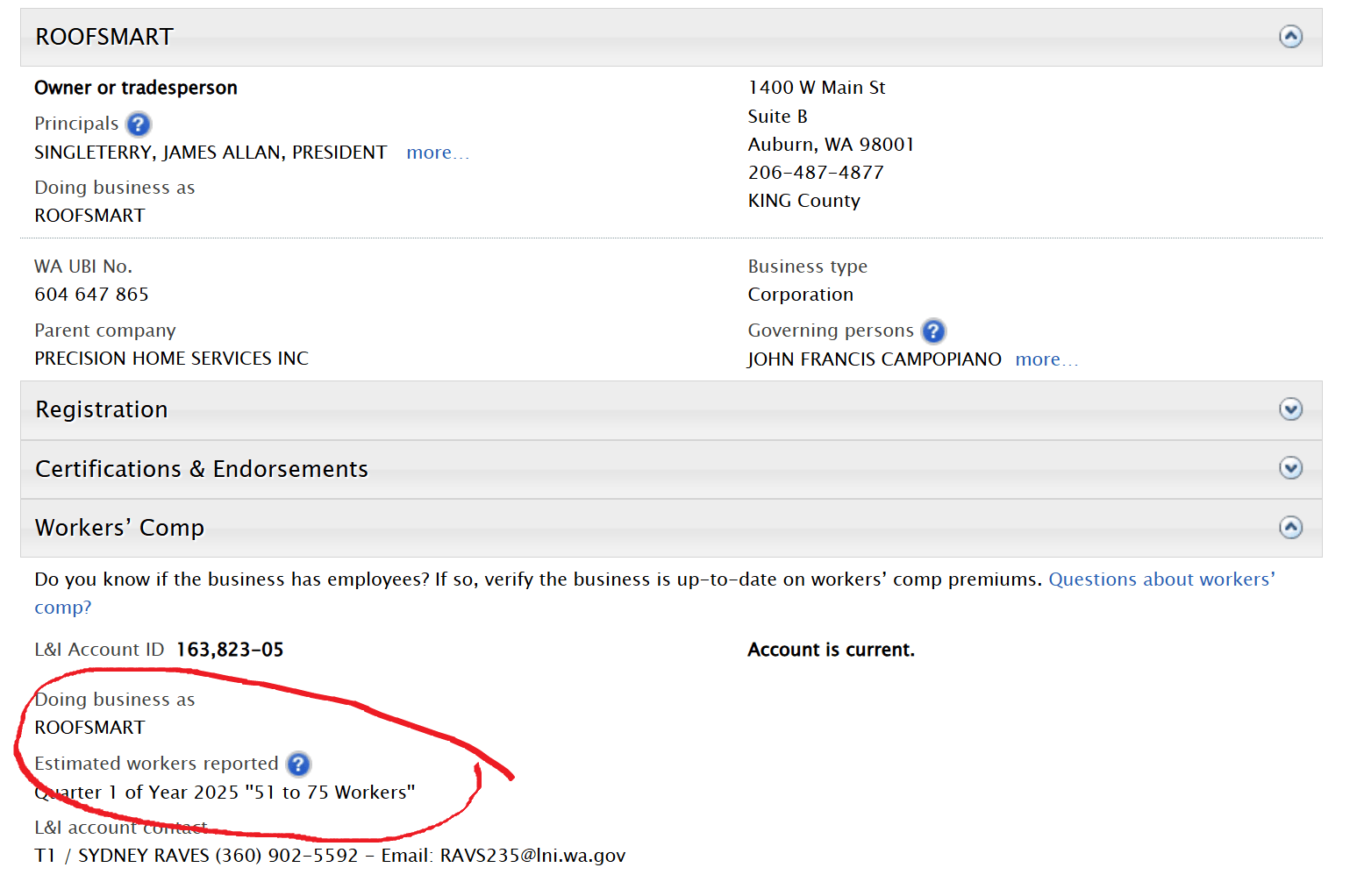
Here's an example of what it looks like with RoofSmart. You can see our business license, bond, and insurance:

And that's it! There is no test required, so you don't need to know anything about roofing to legally start a roofing business.
So, if your roofer doesn't have to prove their qualifications to become a roofer, how do you know that they actually have experience and know what they're doing?
You'll need to do research on any company that you're considering to see how much roofing experience they have. Here's what to look for:
Background check on their business practices: Before you let anyone near your roof in Seattle, look up their profile on the State of Washington Department of Labor and Industries’ Verify tool and look up the roofing company by its name or license number.
This will show you:
Most roofers only make it a few years before going out of business. So, if your roofer has been around for 10 years or more, it shows that they know what they're doing.
When you're looking for a roofer, it's up to you to decide what you want. Some people are willing to take a chance on someone new, and sometimes it goes well.
Choosing a roofer who has been around for 10+ years has many benefits, including:
You certainly want a roofer who listens to your wishes for your roof and makes them happen. However, it's also important that your roofer is honest with you and makes sure that your roof will function properly.
If your roofer seems too eager to agree with everything you say or quickly brushes over the details of the project, that’s a sign that they might not be invested in your roof’s quality.
Roofers who are vague about the roofing process or say yes to your every request without consideration are more likely to be on the job for the money, no matter how your roof turns out. A roofer like that is usually the cheapest option.
Based on the number of issues and damage we've seen when repairing or replacing roofs, choosing the cheapest roofer saves money up front and then costs more later on when damage from your roofer's mistakes starts to appear and become a real problem.
We recommend finding a roofer who will dig deeper and put thought into the project to make sure that ALL of their roofing problems are fixed. They'll cost more up front, but ultimately save you money in the long run.
Schedule a free inspection to learn what’s wrong with your roof and how we can help you fix it.