

TL;DR: Summary
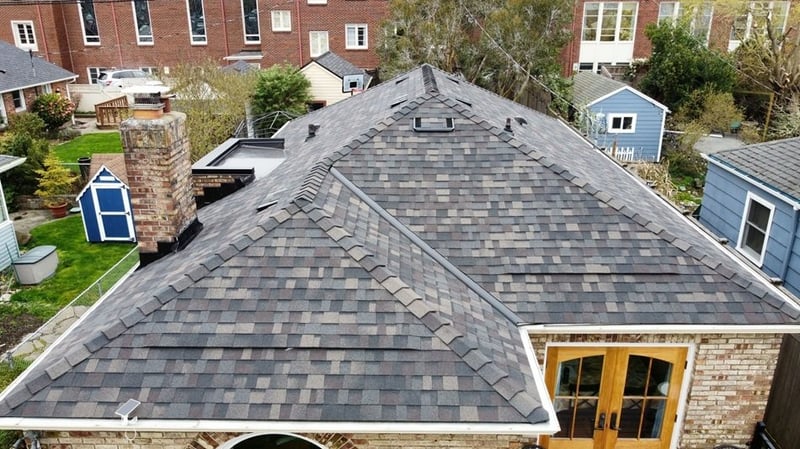
An asphalt shingle roof includes much more than just shingles. Key components like decking, ventilation, underlayment, flashing, and gutters all play a critical role in protecting your home.
While each item may seem minor, these components can collectively add around 10% (or thousands of dollars) to your total roof cost, depending on your home’s needs and material choices.
Not all roofing estimates include the same components because some contractors may exclude or downgrade items like ventilation, ice and water shield, or flashing to offer a lower price.
The key takeaway: always review your proposal carefully and ask detailed questions to ensure your roof system is complete, code-compliant, and built to last, so you avoid hidden costs and premature failures.
Did you get a quote for a new asphalt shingle roof, but you’re not sure what’s actually included beyond the shingles themselves? Are you worried that important components like flashing, ventilation, or underlayment might be missing from your proposal, only to become surprise add-ons later?
Some roofing components are factored into the total cost, but it looks different for every roof. Each one might be around $100 a piece, and collectively they can easily contribute to about 10% of the job cost.
This includes:
- Roof decking
- Attic ventilation
- Underlayment type
- Different types of flashing
- Second-story gutters and downspouts
In this article, we’ll break down the key components that go into a properly installed asphalt shingle roof, explain which ones are typically included in the base cost, and show you what to look for in your contract so you’re not caught off guard by hidden costs or shortcuts.
Asphalt Shingle Roof Components (What's Included vs What's Often Missing)
| Component | What It Does | Usually Included? | When It Becomes an Extra Cost | Why It Matters |
|---|---|---|---|---|
| Roof Decking (Plywood/OSB) | Structural base for shingles | ⚠️ Sometimes | If replacement or upgrades are needed | Weak decking can cause nail failure and leaks |
| Attic Ventilation | Regulates airflow and moisture | ❌ Often Missing | When system needs redesign or upgrades | Prevents mold, heat buildup, and early roof failure |
| Synthetic Underlayment | Secondary moisture barrier | ✅ Usually | Upgrade from felt or premium options | Protects roof if shingles fail |
| Ice & Water Shield | Waterproof membrane at vulnerable areas | ⚠️ Sometimes | Required in certain areas or as upgrade | Critical for leak-prone sections |
| Perimeter Flashing (Drip Edge) | Prevents water from wicking under roof | ✅ Usually | Rarely extra unless missing | Required by code |
| Wall & Chimney Flashing | Seals roof transitions and penetrations | ⚠️ Sometimes | If replacing old or reused flashing | Common source of leaks if skipped |
| Pipe & Vent Flashing | Seals around roof penetrations | ✅ Usually | Upgraded materials cost more | Prevents leaks at openings |
| Gutters & Downspouts (Upper Levels) | Manages roof drainage | ❌ Often Missing | Added if needed for design | Prevents water buildup and overflow |
| Upgraded Materials | Higher-quality components | ❌ Optional | Customer-selected upgrades | Impacts durability and lifespan |
What are the additional components that you need to install aside from the shingles?
When you’re getting a new asphalt shingle roof, there are a lot of parts that need to be installed on your roof in addition to the shingles. Without all of these components, your roof would not function properly.
This is not an exhaustive list, of course, but it's enough to give you an idea of what to expect from your roofing contractor. All of these items should be listed in the proposal and contract.
Here is a list of the components included in an asphalt shingle roof installation:
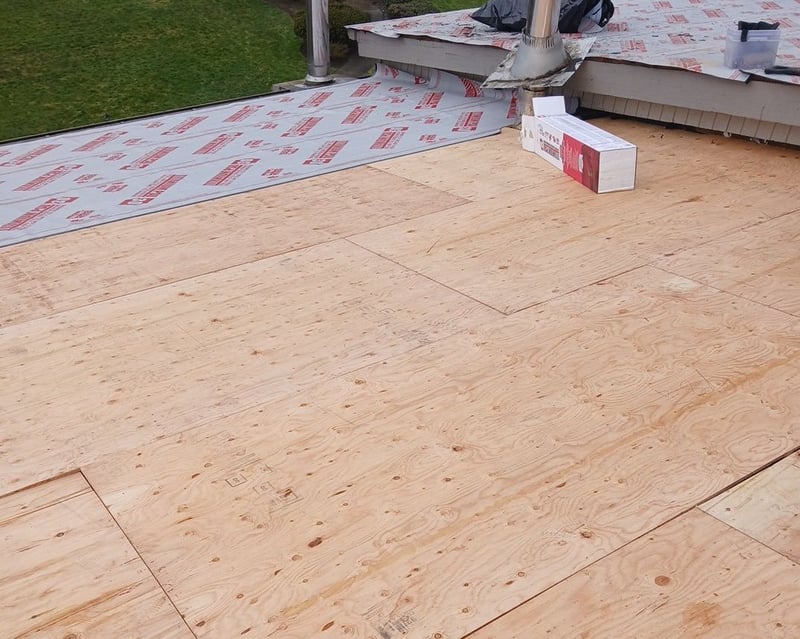
- Roof decking: The roof decking needs to be compliant with the current building code. So, for example, it's not supposed to be shiplap or planks or anything with gaps or voids in the wood. Most roofers use plywood or OSB, which meet code.
- Plywood roof decking compliance: It's supposed to be APA rated for the span, meaning it's supposed to be thick enough for how far apart the supports are. Otherwise, it's springy. Why does that matter? Well, if you put a nail into a piece of plywood that's not strong enough, then if anybody ever walks on it, the plywood deflects down, and the shingle stays put. And so what's joining those two together is the nail. And every time you walk on it, you're actually prying the nail out.
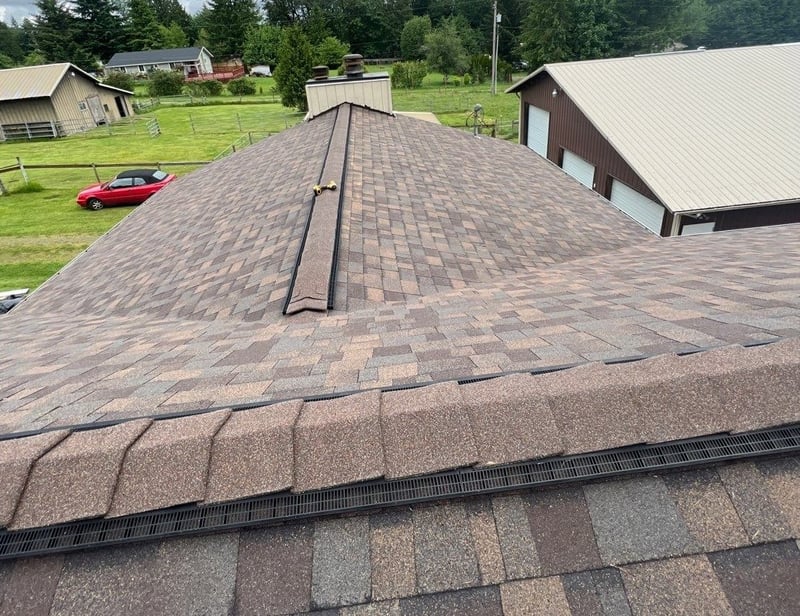
- Attic ventilation: Your attic is supposed to have intake and exhaust ventilation to help it breathe properly. This helps prevent condensation, mold, and overheating in the attic, all of which can ruin your roof. The Seattle area follows the IRC’s requirements for ventilation to calculate how much ventilation your attic needs. Most roofers don’t concern themselves with attic ventilation beyond maybe installing ridge vent or some other kind of vent on your roof. Without proper attic ventilation, your roof will stop working long before it's supposed to.
- Underlayment:
- Felt- So, you have felt, which is just tar paper. It still works, but it's rarely used anymore because it can't get wet. If it gets wet, it absorbs water, and it'll wrinkle. And if you leave it in place, those wrinkles will telegraph through the shingle after a few months. So you end up with a lumpy-looking roof. Usually, people aren't using roofing felt anymore because that's an issue, and the price of the newer synthetic underlayment has come down to be very cost-competitive. So the main reason to use tar paper is that it's still a little bit cheaper.
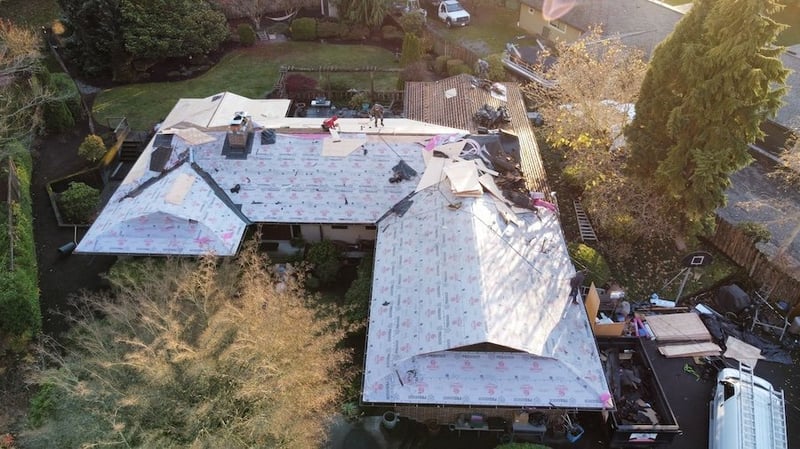
- Synthetic- This is the most commonly used type of underlayment. Modern underlayment is typically a synthetic made of woven or spun polypropylene, and it doesn't absorb water.
-
- Ice and water shield- The last option is ice and water shield. It's only required in certain situations. It adds extra insurance because it's a waterproof membrane that is made with some rubber in it, and it seals around the nail so it forms a nice gasket. There are different grades of it: asphalt and rubber. The rubber base one seals way better, but it costs two to three times more, so most people use the asphalt-based one. A higher-quality ice and water shield can make all the difference on a low-slope roof with lots of trees shedding debris.
- Flashing:
- Perimeter flashings: You've got your starter metal, and you've got your drip edge at the gables. Both of those keep water from wicking around to the sheathing. If you spill water on a coffee table, it curls around underneath and drips from the bottom. That's the capillary action of water. And so those perimeter flashings are made to counteract that capillary action of water. It's been code since 2012 to use those.
-
- Sidewall flashings: These are installed around a second story where the roof meets the wall. A lot of times, people will reuse that because it's a way to save a couple of bucks. This is not a good idea because flashing doesn’t work as well after it has already been used. There are some rare exceptions where it’s okay.
-
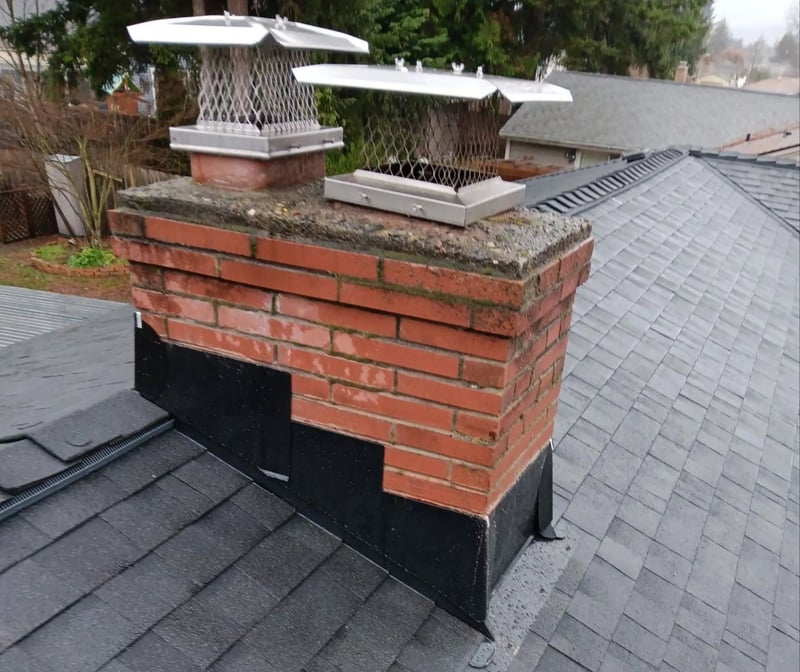
- Chimney flashing- If you're thinking of a chimney, there's the uphill part and the downhill part. Each one has different flashing: pan flashing and apron flashing (they kind of look the same). So, the apron flashing goes at the bottom (downhill side), and the pan flashing goes at the top (uphill side). They're both an L flashing. But pan flashing goes up 13 inches, and apron flashing goes up like 5 inches. You don't want to use apron flashing all the way around because if you get an ice dam or debris dam on the top side of that chimney and water builds up, it can make it past that and create a leak (even though it all looks fine).
-
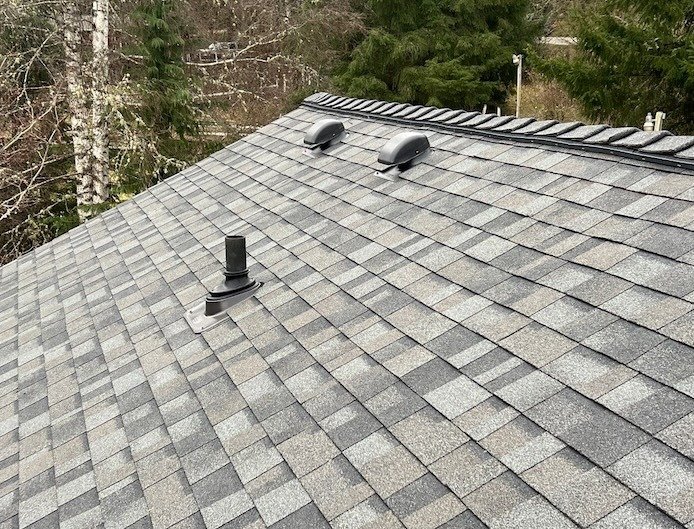
- Pipe flashing and bath vent flashing: There are also different vents and pipes that stick out of your roof for plumbing and other venting purposes. These need their own types of flashing as well to prevent water from getting in the hole where they come through the roof.
- Second story downspout or gutter: If you have multiple levels on your roof, you might need to add or replace a gutter or downspout on the upper level(s). This doesn’t apply to every roof, but it is an additional service that your roofer can help with. On this roof, we lined the second story with gutters and included special downspouts that go all the way down to the gutter on the first level:
.jpg?width=800&height=782&name=black%20sable%20asphalt%20shingle%20roof%20(1).jpg)
Which ones are included in the cost, and which ones cost extra?
The cost of these items really depends on your individual roof’s needs. Every job cost looks a little different because not everyone needs the same amount of these materials. Also, some might choose a higher or lower-grade item.
But, for example, these components individually may be around $100 a piece, but collectively they can add up. And it's not unusual for it to account for a 10% difference in the cost of the job.
If the roof is $35,000, it wouldn't be unusual for this to be three to $4,000 worth of the budget.
Not all roofers include all of these items either because they aren’t always needed or due to negligence. Some might choose the cheapest option to help lower their prices. Components that aren’t always included are:
- Ventilation
- Ice and water shield
- Second-story downspout or gutter
How do I know if my roofer will install every component?
Never assume that your roofing contractor will just do what they need to do. Make sure that you’re asking them about what your roof needs and paying attention to what they said they will do on your roof in the contract.
You really can't rely on your roofer's reputation alone because most customers have no idea how well a roof was designed or built. All they know is how the experience went.
So, how do you know? Ask them some test questions. Here are some examples:
- Can you explain the difference between the different underlayments?
- Can you explain the functional difference between the different types of ice and water shield?
- What should be improved about my current ventilation, and why?
What is the total cost of a new asphalt shingle roof in Seattle?
By now, you can see that an asphalt shingle roof is much more than just shingles. Decking, ventilation, flashing, underlayment, ice and water shield, and other critical components all work together to protect your home. And while each item may seem small on its own, collectively they can add thousands of dollars to the total project cost.
That’s why two roofing estimates that look similar at first glance can vary by 10% or more. One contractor may include upgraded underlayment, proper ventilation corrections, and new flashing, while another may cut corners to lower the price.
If you’re budgeting for a roof replacement, the next step is understanding what a realistic total investment looks like in today’s Seattle market.
Read our article “How Much Does a Roof Cost in 2026? Prices for Seattle Homeowners” to see a breakdown of current pricing ranges, material options, and the factors that most impact your final cost so you can compare estimates with confidence and know exactly what you’re paying for.
Frequently Asked Questions About Asphalt Shingle Roofs
1. What is included in the cost of a new asphalt shingle roof?
A typical roof replacement includes:
- Shingles
- Underlayment
- Basic flashing
- Labor
However, important components like ventilation upgrades, ice and water shield, or new gutters may not always be included and should be confirmed in your proposal.
2. Why do roofing quotes vary so much in price?
Roofing quotes can vary by 10% or more because:
- Some contractors include more components
- Others use lower-quality materials
- Certain upgrades may be excluded or added later
Always compare what’s included, not just the total price.
3. What are the most commonly missing items in a roofing proposal?
Commonly excluded items include:
- Attic ventilation improvements
- Ice and water shield
- Replacement flashing
- Upper-level gutters or drainage
These can become surprise costs if not discussed upfront.
4. How much do extra roof components add to the total cost?
Individually, many components may cost around $100 each, but together they can account for:
- Around 10% of the total roof cost
- Several thousand dollars on a full project
These small items add up quickly.
5. How can I make sure my roofer includes everything I need?
You should:
- Ask for a detailed, itemized proposal
- Question anything that isn’t clearly explained
- Ask about ventilation, flashing, and underlayment specifically
Never assume everything is included. Always verify it in writing.
Topics:
