

TL;DR: Summary
Cedar shake roofs vary significantly in quality, lifespan, and cost depending on the grade you choose.
Premium shakes (100% edge grain) offer the best durability and can last around 50 years in Seattle, while lower grades with more flat grain are cheaper but more prone to curling, splitting, and rot.
Prices drop 20–30% between each grade, but the savings come with a shorter lifespan and higher long-term risk, especially in Seattle’s wet climate.
The key takeaway: paying more upfront for higher-grade cedar shake can lead to better performance and longer lifespan, while lower grades may cost less initially but fail sooner and require earlier replacement.
Are you worried about spending top dollar on a cedar shake roof only to find out later you didn’t actually get premium quality? Have you seen different grades like “Premium,” “#1,” or “#2” and felt unsure which one will actually hold up in Seattle’s wet climate (vs. which ones might fail early)?
Cedar shake roofing can last a long time, but only if you choose the right grade. The problem is, the differences in quality, lifespan, and cost between these grades are significant, and many Seattle homeowners don’t realize what they’re actually paying for until it’s too late. Choosing the wrong grade could mean dealing with curling, splitting, or even rot years sooner than expected.
At RoofSmart, we install and repair hundreds of roofs every year. Not only do we install standard roof materials like asphalt shingles or metal, but we also install specialized products like tile or cedar shake.
In this article, we’ll break down the different grades of cedar shake, how they perform in Seattle weather, and what the real cost differences mean so you can confidently choose the right option for your home and avoid costly surprises down the road.
What are the different grades of cedar shake?
There are 4 types of cedar shakes that you can buy for your Seattle home:
- Premium
- Number 1
- Number 2
- Number 3
Premium cedar shake is the top-tier option, followed by Number 1 cedar shake. This is important to remember, otherwise it will get really confusing when you’re trying to pick the right shake grade for your home.
Note: There is also a big difference between wood shakes and wood shingles. Wood shingles are thinner, and they’re installed differently from wood shakes. They’re typically used as siding, but they can be used on the roof as well.
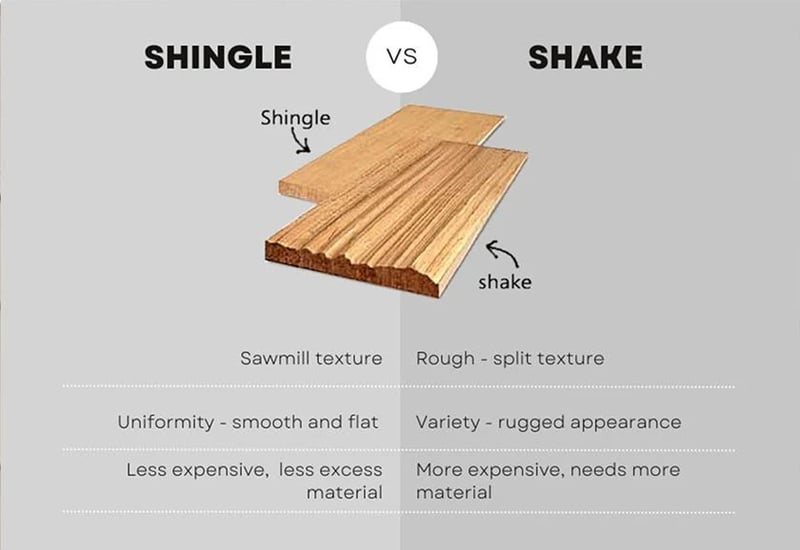
Image from Pally Roofing
Within those grades, you can also order different sizes. There are three basic options: heavies, medium, and tapered. We at RoofSmart typically install the heavies, which are 24 in. long and ¾ in. at the bottom. Mediums are ½ in. at the bottom.
How much does quality vary between the different grades of cedar shake?
There is quite a wide variation in quality between the grades. Premium cedar shake is the best of the best and will last for a long time, but Number 3 cedar shake is a fairly mediocre product. The difference comes down to the grain and quality of the wood.
Check out this table for an overview of the differences:
|
Grade |
Grain Requirement |
Wood Quality |
Typical Use |
|
Premium |
100% Edge Grain |
100% Heartwood, 100% Clear |
High-end residential roofing; longest lifespan. |
|
Number 1 |
Up to 20% Flat Grain |
100% Clear |
Standard roofing; very common but slightly less stable. |
|
Number 2 |
Unlimited Flat Grain |
Permitted knots/defects above the exposure line |
Economy roofing or secondary buildings (sheds, barns). |
|
Number 3 |
Unlimited Flat Grain |
More defects permitted |
Utility use or under-coursing. |
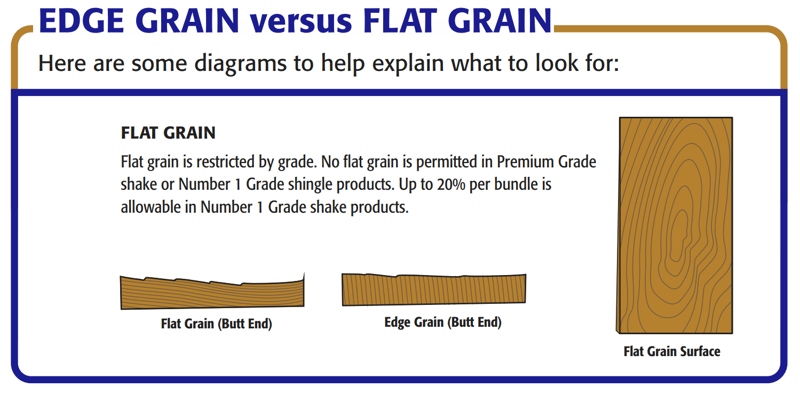
One big distinction between premium cedar shake and the rest of the grades is the grain of shake used. There are two options:
- Edge grain: Edge grain comes from the heart of the tree and is only found in old-growth trees. The shakes are cut perpendicular to the grain of the wood to make them stronger. This is the grain used in premium and number 1 cedar shake. Premium can only be made of edge grain.
- Flat grain: Flat grain is more common. These types of shakes are cut perpendicular to the wood grain, making them less sturdy and leading to curling or twisting in the shake over time. Number 1 cedar shake only allows up to 20% of flat grain, whereas Number 2 and Number 3 shakes are fully made of flat grain wood.
How does each grade of premium shake hold up on the roof in Seattle weather?
When chemically treated and regularly maintained, premium cedar shake can last around 50 years in Seattle’s rainy climate. However, anything with flat grain will curl, cup, split, or crack much earlier than that. Constantly getting wet and drying out causes these issues.
Number 1 cedar shake only has a lifespan of 25 to 30 years in Seattle’s climate. That’s a pretty significant difference, which shows you how much better quality pure edge grain is. Even incorporating ⅕ or less of flat grain decreases the quality and lifespan of the shake.
How much do the different grades of cedar shake cost?
Premium cedar shake is the most expensive at $900 to $1,200 per square (100 square feet). This is the price for material only. There is a 20% to 30% drop in price going from Premium to Number 1. And if you go from Number 1 to Number 2, it's another 20% to 30% drop in price.
Here’s a price breakdown per square (material only) based on grade and size:
|
Grade |
Medium (1/2" Butt) |
Heavy (3/4" Butt) |
Key Characteristics |
|
Premium |
$750 – $950 per square (100 sq. ft.) |
$900 – $1,200 per square (100 sq. ft.) |
100% Edge Grain. No flat grain allowed. |
|
Number 1 |
$550 – $700 per square (100 sq. ft.) |
$700 – $900 per square (100 sq. ft.) |
Up to 20% Flat Grain allowed. |
|
Number 2 |
$350 – $450 per square (100 sq. ft.) |
$450 – $550 per square (100 sq. ft.) |
Unlimited Flat Grain; knots/sapwood allowed. |
Keep in mind that these prices are just for the shake itself. You’ll want to factor in another $500 to $800 per square (100 sq. ft.) for labor and additional materials (like flashing and underlayment).
The drop in price between grades is significant because of how the wood is harvested. While Premium requires old-growth, straight-grained logs, Number 2s can be cut from lower-quality sections of the tree, including the outer sapwood and knotty areas.
On a typical roofing project, you can expect the material cost to drop by 20% to 30% at each step down the grading scale.
Estimated Material Price Drop (Per Square)
Based on 2026 PNW market averages for 24" Hand-Split Shakes.
|
Grade |
Medium (1/2" Butt) |
Heavy (3/4" Butt) |
Key Characteristics |
|
Premium |
$750 – $950 |
$900 – $1,200 |
100% Edge Grain. No flat grain allowed. |
|
Number 1 |
$550 – $700 |
$700 – $900 |
Up to 20% Flat Grain allowed. |
|
Number 2 |
$350 – $450 |
$450 – $550 |
Unlimited Flat Grain; knots/sapwood allowed. |
Why do the prices drop so sharply between grades?
There's a big difference in the quality of the material when you move to a different grade of cedar shake. The lower the grade, the lower the quality and cost.
From Premium to Number 1 (25% Drop)
The price drops here because the mill doesn't have to be as picky.
- Including flat grain: Number 1 bundles are allowed to include up to 20% flat grain. Flat grain is much easier (and cheaper) to produce than 100% edge grain because the mill can use more of the log.
- Reduced labor and waste: Sorting for 100% edge grain when making premium shake results in much higher waste at the mill, which factors into the price of premium cedar shake.
From Number 1 to Number 2 (20% to 40% Drop)
There is room for a huge price drop here because Number 2 shakes aren’t using any of the premium heartwood edge grain.
- More defects allowed: Number 2 shakes allow for knots and sapwood as long as they are above the "exposure line" (the part covered by the shake above it).
- Less durability and moisture resistance: In a wet climate like Seattle, Number 2 shakes are a risky choice on your roof. The sapwood in Number 2 shakes has almost zero rot resistance compared to the heartwood used in higher grades. So, not only is it at risk of curling and splitting, but it’s also more likely to rot.
How much should you expect to pay for a new cedar shake roof in Seattle?
As you’ve seen, the grade of cedar shake you choose has a massive impact on both performance and price. From premium, edge-grain shakes that can last decades longer, to lower-grade options that may save money upfront but fail much sooner, the difference isn’t just cosmetic, it’s structural and financial.
And while material costs vary significantly between grades, they’re only one part of the total investment. Labor, roof complexity, ventilation upgrades, and additional components all play a major role in what you’ll actually pay for a full roof replacement.
So before you make a final decision, it’s important to understand the full picture (not just the cost of the shakes themselves).
Read our article “How Much Does a New Roof Cost in Seattle in 2026? Updated Prices & Breakdown”. This guide breaks down real pricing ranges, what drives costs up or down, and how to budget for your new roof so you can make a confident, informed decision.
Frequently Asked Questions About Different Cedar Shake Grades
1. What is the best grade of cedar shake for roofing?
Premium cedar shake is the highest-quality option.
It is made from 100% edge grain and heartwood, which makes it more durable, stable, and resistant to moisture. This results in the longest lifespan, especially in wet climates like Seattle.
2. How much longer does premium cedar shake last compared to lower grades?
Premium cedar shake can last around 50 years with proper maintenance, while:
- Number 1 typically lasts 25–30 years
- Numbers 2 and 3 have significantly shorter lifespans
The difference comes down to wood quality and grain structure, with flat grain materials deteriorating faster.
3. Why is there such a big price difference between cedar shake grades?
The price difference is mainly due to wood quality and manufacturing requirements.
Premium shakes require:
- Old-growth logs
- 100% edge grain
- More labor and material waste during production
Lower grades use more of the tree, including sapwood and knotty sections, which reduces cost but also durability.
4. Is Number 1 cedar shake good enough for a roof?
Number 1 cedar shake is a common roofing material. However, it includes up to 20% flat grain, which makes it slightly less stable and durable than premium. It’s a decent mid-range option, but it won’t last longer than standard asphalt shingles even though it costs way more.
5. Can I use Number 2 or Number 3 cedar shake on my roof?
You can, but it’s generally not recommended for residential roofing.
These lower grades:
- Contain more defects and flat grain
- Are more prone to cracking, curling, and rot
- Are better suited for sheds or secondary structures
Using them on a home may lead to higher long-term maintenance and replacement costs.
Topics:
