

TL;DR: Summary
TPO (thermoplastic polyolefin) is a white, rubber-based membrane that serves as a budget-friendly alternative to PVC for flat roofs. While it is highly reflective and compatible with asphalt products, it has a history of formula failures and poor resistance to reflected UV rays from windows.
At RoofSmart, we typically recommend PVC for long-term certainty, but TPO remains a viable option for homeowners prioritizing upfront savings or looking for a material that integrates easily with asphalt shingles.
Are you considering TPO for your flat roof but concerned that it’s not durable enough for Seattle’s wet climate? Worried that there are too many unknown long-term risks of installing TPO on my home or commercial building?
It’s frustrating trying to make the “right” decision when your roof is one of the most expensive things you'll invest in. And when a material like TPO has had multiple failed versions before getting to its current form, it’s fair to ask questions.
At RoofSmart, we’ve installed hundreds of flat roofs all over the Seattle area. Before each installation, we talk to our customers about which roofing material is right for them. We help you choose the best roof option by considering your budget, your aesthetic preferences, and your roof’s needs.
In this article, we’ll walk you through what TPO is made of, how it performs in Seattle, and when it actually makes sense to use it (and when it doesn’t).

What is TPO made of?
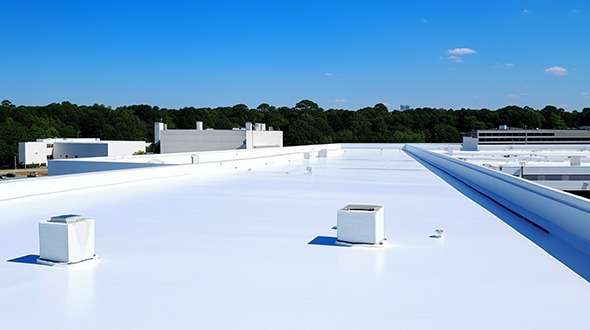
Image from Atlanta Commercial Roofing
TPO (thermoplastic polyolefin) is a membrane made mainly of ethylene-propylene rubber and polypropylene. It also has carbon fiber added to it to make it stronger, but it is a rubber-based product.
TPO has a lot of different additives and has evolved many times since it was first used in the U.S. in the mid-90s. In total, there have been six versions made. The first five failed, so they kept working on it.
Early versions of TPO used a lot of EPDM, but they didn’t really work out. So they added more EPDM content for better flexibility at low temperatures. They also added a bunch of other stuff to make it so that you didn't need as narrow a temperature range to weld it effectively. And those failed, too.
So, around 2010, they added ketone ethylene ester instead of pure EPDM. That made it more hardy. As a result, the TPO had more impact resistance, less scuffing from walking on it. It was the best version so far.
That version is the modern standard that is used today, but new versions are also being worked on. The next version will be made out of recycled materials.
How is TPO roofing installed?
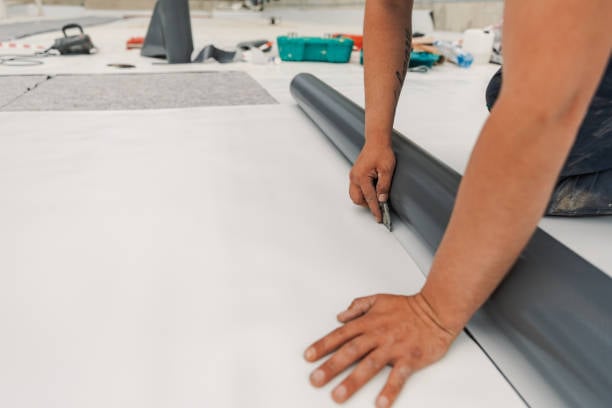
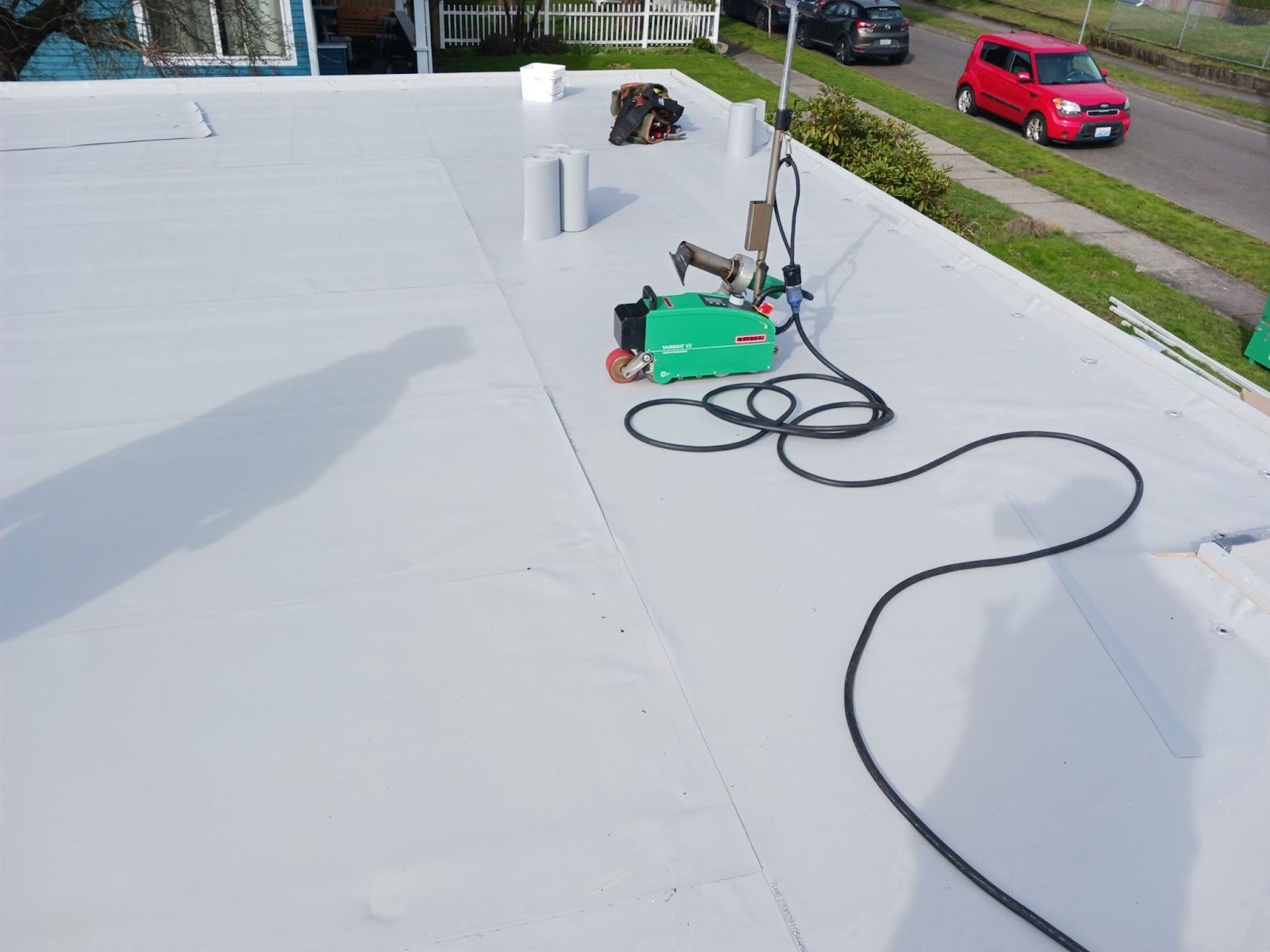
TPO is installed using a heat gun, similar to how a PVC roof is installed. Your roofer (or a robot, if you have one) will go up and down the roof at each seam to weld it down using a heat gun. Special care must be taken around chimneys, scuppers, and other spots on the roof that are trickier.
What are the pros and cons of using TPO in Seattle?
TPO is one of a handful of flat roofing options that you can choose in the Seattle area. Each one has its own pros, cons, and unique features.
Here are the pros and cons of installing TPO on a Seattle roof:
Pros:
- Cheaper: TPO exists as a cheaper alternative to PVC. That's what it's for. So PVC is what we recommend unless your value system prioritizes. money over certainty.
- Compatible with bituminous asphalt (no slip sheet needed): You can use it if you're trying to integrate it with ice and water shield or various caulkings that are an asphalt polymer, or you're trying to blend it with, you know, an asphalt roof. TPO has rubber in it, which is why this works. If you try to do it with PVC, the rubber compound in the asphalt is that it will leach the plasticizers out of PVC and cause it to get brittle. So you can be sloppy with TPO around asphalt, and you're probably fine.
Cons:
- Not very flexible: It's less flexible, so it's difficult to work around detail spots like skylight curbs or parapet walls.
- Warranty: They keep changing the formula because they're trying to figure it out. So it doesn't give a high degree of confidence that this version works well. There are lots of exclusions in the warranty language because of this, and it’s hard to get the manufacturer to honor a claim. TPO marketing talks about how it's been around for 40-plus years. And that's true, but not in the same formula (they keep changing it because it keeps failing, which doesn’t inspire a lot of confidence).
- UV degradation: TPO has poor resistance to UV reflection. I've seen issues with excessive UV degradation when there are second-story windows that reflect onto the membrane. It's like getting double UV, and it just doesn't last. This causes it to crack.
- Installation: TPO is very sensitive to the cold. It cannot be installed in cold weather or in the rain. So if you live in the Seattle area, you can mostly only install it during the summer.
- Not compatible with pressure-treated lumber: TPO is not compatible with pressure-treated lumber. When you put these two materials in contact, it will cause the TPO to degrade. Make sure you don’t use this type of lumber with TPO.
When is TPO the right fit for my Seattle roof?
The reason that we tend to steer away from TPO is because of everything with it is still fairly experimental. The most modern version has only been around for about 10 years, which is not a super long time to work out every kink.
It has a great warranty, but there are all kinds of exclusions because even the manufacturers don’t know exactly what to expect from the product, especially long term.
However, if you’re looking for a cheaper alternative to PVC, then it might be a good fit for you. It is also a good fit if you need a flat roof material that works with shingles.
What will a flat roof actually cost me in Seattle?
Now that you understand the pros and cons of TPO roofing (and how it compares to other flat roofing options), it’s time to talk about the next big question on your mind: how much is this going to cost?
Flat roof pricing in Seattle depends on several factors: the type of material you choose (like TPO vs. PVC), the complexity of your roof, how well it needs to be insulated or ventilated, and even the time of year you install it.
To help you make a fully informed decision, read our article “How Much Does It Cost to Install a Flat Roof in Seattle?” for an easy guide that breaks down the real costs of flat roof installation in Seattle.
Frequently Asked Questions
1. What is TPO roofing actually made of?
TPO is a blend of ethylene-propylene rubber and polypropylene. Modern versions also include ketone ethylene ester to improve impact resistance and reduce scuffing compared to earlier, failed iterations of the product.
2. Why has the TPO formula changed so many times?
Since the 1990s, manufacturers have struggled to find a blend that balances flexibility with durability. There have been six different versions of TPO; the current formula, established around 2010, is the most stable to date, though it is still considered somewhat experimental compared to PVC.
3. Is TPO really cheaper than PVC?
Yes. TPO exists primarily as a lower-cost alternative to PVC. If your primary goal is to minimize your initial investment on a flat roof, TPO is often the most attractive price point.
4. How does TPO handle "Double UV" from second-story windows?
Poorly. TPO is susceptible to accelerated UV degradation if it sits below highly reflective windows. This "double UV" exposure can cause the membrane to crack and fail much faster than expected.
5. Can TPO be installed in the typical Seattle winter?
No. TPO is very sensitive to cold and moisture. It generally cannot be installed in the rain or cold, meaning most Seattle installations must be scheduled during the dry summer months.
6. Is TPO compatible with pressure-treated lumber?
No. This is a common installation mistake. When TPO comes into contact with pressure-treated wood, the chemicals in the lumber cause the membrane to degrade.
7. Why is TPO a good choice for roofs that transition to shingles?
TPO is compatible with bituminous asphalt, meaning it won't become brittle if it touches asphalt-based sealants or shingle underlayments. Unlike PVC, it doesn't require a "slip sheet" to separate it from asphalt products.
8. How are the seams of a TPO roof joined?
TPO seams are heat-welded using a hot-air gun. This creates a single, continuous waterproof sheet. However, because TPO is less flexible than PVC, it is much harder for installers to work around complex details like skylights or parapet walls.
9. Are TPO warranties reliable?
While TPO comes with long warranties, they often contain many exclusions because the long-term performance of the current formula is still being documented. It can be more difficult to get a manufacturer to honor a TPO claim than a PVC claim.
10. How much does TPO cost compared to other flat roofs in Seattle?
While the material is cheaper, total costs depend on roof complexity and insulation needs. You can view a full breakdown of flat roof installation costs in Seattle to see how TPO stacks up against PVC and Torchdown.
Topics:
