

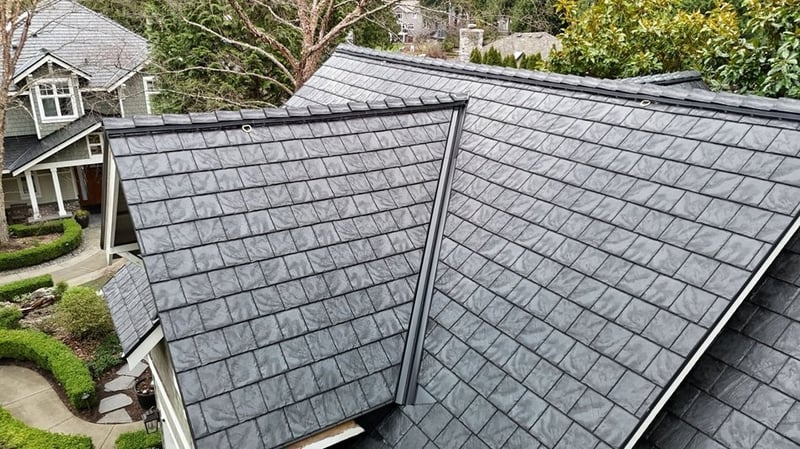
TL;DR: Summary
If you’re worried about tree damage during Seattle windstorms, roofing material choice matters a lot.
In this case study, a Euroshield (rubber) roof showed exceptional impact resistance by withstanding a full tree strike with only minor surface damage. It also prevented catastrophic structural failure that could have occurred with other materials.
Compared to other options, asphalt shingles are the most vulnerable to impact, while metal offers moderate protection but can dent. Euroshield stands out as the most durable option due to its flexibility and ability to absorb impact.
The key takeaway: if you have trees near your home and want maximum protection, investing in a high-impact-resistant material like Euroshield can significantly reduce damage risk and improve safety during severe storms.
As all Seattle residents know, windstorms are fairly common here during fall and winter. If you are a homeowner and you have trees on your property, then when the storms roll in, you’re concerned about branches flying into your home, or even worse, the entire tree falling over and smashing your house.
When that happens, you’re left to figure out how to deal with the damage, file insurance claims, and wonder if there’s a better roofing material that can prevent this headache from happening again.
RoofSmart is based in Kent and has been serving the Greater Seattle area for 15 years. This means that we’re no strangers to roof damage caused by branches and trees during windstorms. We have helped hundreds of homeowners repair and replace their damaged roofs. We’ve seen firsthand which materials are best and worst at protecting your roof from impact damage.
Keep reading to see how a Seattle-area homeowner just like you chose a Euroshield roof and ended up protecting their home and family from devastating damage.
How did a Euroshield roof protect a Seattle area family and their roof during a windstorm?
In the spring of 2024, we replaced a metal tile roof with Euroshield. This customer called us up after a tree branch hit their roof and caused some damage.
The metal tiles did a decent job of protecting the roof, but there was a puncture where the branch hit the roof, and some of the tiles in that area were dented. The puncture went through to the attic. In addition to the puncture damage, the roof was leaking all over.
The customer wanted an upgrade with better leak resistance and something that would still protect the roof from branches that might fall in the future, which are two major concerns that a lot of Seattle area homeowners have. We recommended Euroshield, and the customer agreed.
Last November, they called us up and said that their roof had been damaged in a recent windstorm. When we went out to inspect the roof, what we found was incredible: their Euroshield roof was hit by a tree, but sustained minimal damage.
An entire tree blew over in the wind and fell on the house. The only evidence of damage on the Euroshield was a small puncture and a few small spots that got slightly banged up:


Euroshield is a rubber product made of recycled tires, giving it incredible impact resistance and durability. It is one of the bounciest roofing materials available. As you can see, this Euroshield roof barely felt the effects of having a tree fall on it.
For context, on an asphalt roof, this tree would’ve crashed entirely through the roof (we’ve seen it happen, but more on that later). Thankfully, these homeowners chose Euroshield for their roof because this tree hit the roof right above their bedroom, while they were in there sleeping
We talked to the homeowners about the risks of having trees on their property and which roofing materials handle it best.
As a result, they chose Euroshield, giving their home an elevated look with great protection. This choice ended up saving their life. I know it sounds dramatic, but that tree seriously might’ve gone through the roof had it had a different material.
The roof itself was fairly unscathed, but there was some other damage to the roof in these areas:
- Bent gutter: The edge of the gutter where it was hit by the tree is dented.
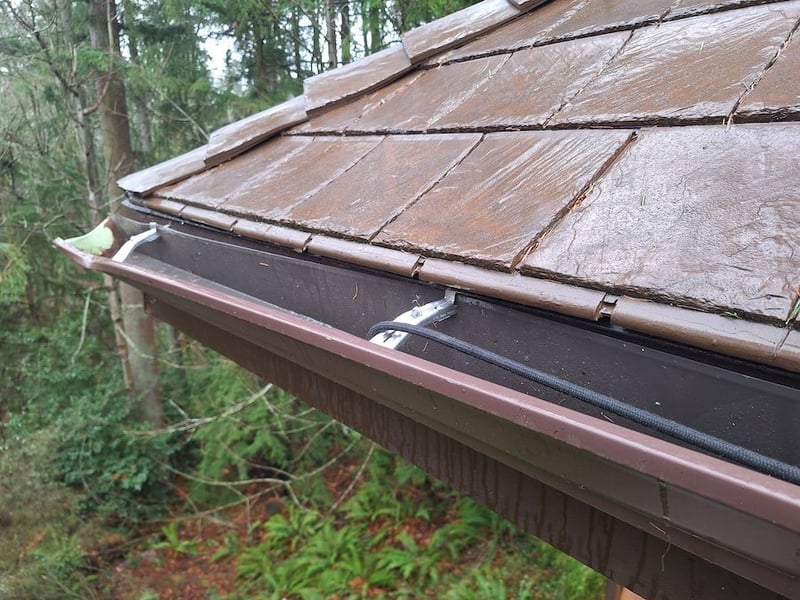
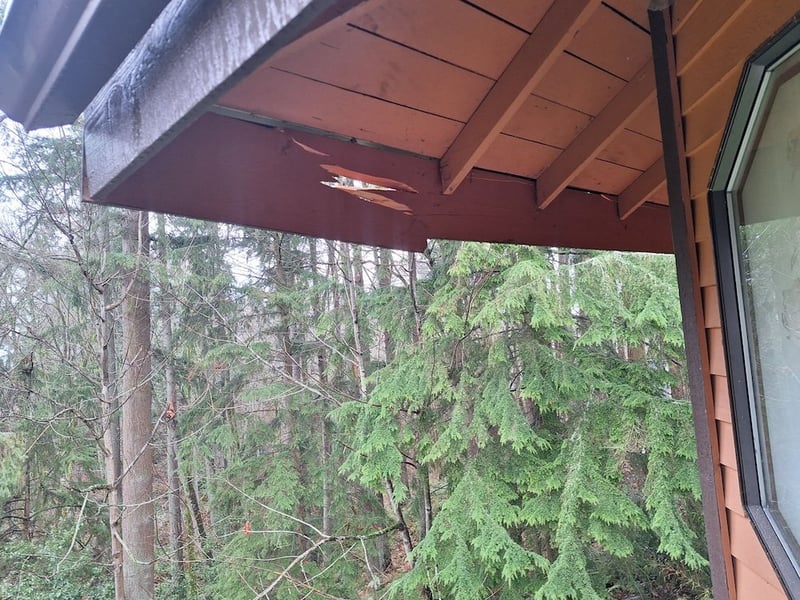
- Smashed facia: One section of the facia was struck and cracked
- Smashed framing: The major damage to the roof actually happened in the attic to the roof framing. A couple of trusses were smashed due to the impact of the tree hitting the roof.


The Euroshield roof turned out to be stronger than the framing, which prevented a ceiling collapse and potential injury.
Even though the Euroshield roof held up well, we’ll have to remove it to be able to repair the roof framing. We’ll also replace the damaged Euroshield pieces and other parts of the roof that took some hits.
If they had stuck with the metal tile roof, there would likely have been more damage to the roof. The tree might not have smashed through the roof, but it would’ve damaged a lot of the tiles.
Can any other roof materials protect a roof as well as Euroshield?
Now that you’ve heard about this customer’s experience with Euroshield, the question is whether any other roofs can provide the same level of protection. In my opinion, Euroshield is the best material to protect your roof from impact damage.
Euroshield is bouncy, making it better equipped to prevent damage. Metal roofs are good at protecting your roof from impact damage, but they might dent or scuff in the process. When the tree fell on the Euroshield roof, there was less damage to the roofing material than when a branch fell on that same roof with metal tile on it.
So, if you’re also a Seattle area homeowner with trees near your property, it’s important to consider what kind of roof you have. An asphalt roof doesn’t have the same level of impact resistance as a metal or Euroshield roof, so a falling tree can easily cave right through it.
If you can afford the additional cost of Euroshield or metal, the extra protection for your roof and your family is a great bonus.
Is Euroshield the right roofing material for your home?
As you saw in this real-life example, not all roofing materials perform the same when disaster strikes. A tree falling on your home is every Seattle homeowner’s worst-case scenario, and in this case, Euroshield may have saved lives.
The roof held strong where others would have crumbled, thanks to the unique impact resistance of recycled rubber. That kind of performance doesn’t just protect your house, it protects the people inside it. Still, every roof choice comes with tradeoffs, and Euroshield might not be the right fit for every home or budget.
So how do you know if Euroshield is the right investment for your home?
Read our article “Pros and Cons of Euroshield: Is It Right For My Seattle Roof?” to get an honest breakdown of what it does well, where it might fall short, and how to decide whether it’s the best roofing material for your situation.
Frequently Asked Questions About EurShield Roofing
1. What is the best roofing material to protect against falling trees?
Euroshield (rubber roofing) is one of the best options.
It is made from recycled rubber, which allows it to absorb impact instead of cracking or puncturing, making it highly effective against falling branches and trees.
2. Can a metal roof withstand a tree falling on it?
Metal roofs perform well against impact, but they are not perfect.
They can:
- Resist full penetration in many cases
- Dent or deform under heavy impact
They offer strong protection, but not the same flexibility as rubber roofing.
3. Why do asphalt shingles perform poorly against tree damage?
Asphalt shingles are relatively thin and brittle compared to other materials.
When hit by a falling branch or tree, they can:
- Crack or tear
- Allow objects to penetrate into the attic
This makes them one of the least protective options for impact resistance.
4. Does impact-resistant roofing prevent all damage from falling trees?
No roofing material can prevent all damage.
Even with high-performance materials like Euroshield:
- Structural components (like framing) can still be damaged
- Gutters, fascia, and other areas may still be affected
However, impact-resistant roofing can significantly reduce the severity of damage.
5. Is upgrading to an impact-resistant roof worth the cost in Seattle?
If you have trees near your home, it often is.
Seattle’s windstorms increase the risk of falling branches and trees, so investing in a more durable roofing material can:
- Protect your home and family
- Reduce repair costs after storms
- Provide peace of mind
Topics:
