

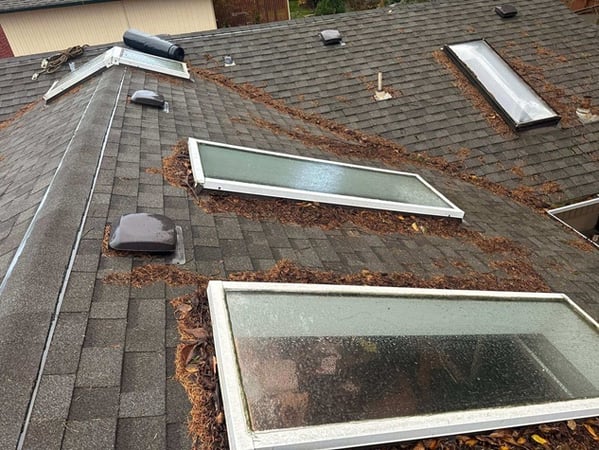
TL;DR: Summary
In the Pacific Northwest, the choice of skylight mounting can be the difference between a bright home and a recurring leak. Deck-mounted skylights are installed flush with the roof for a sleek, energy-efficient look, but they rely heavily on a rubber gasket that can be overwhelmed by heavy rainfall.
Curb-mounted skylights sit on a raised frame (curb), using gravity and metal flashing to direct water away from the opening. While deck-mounted units are easier for DIYers to install, curb-mounted units are the industry standard for leak prevention and are better suited for flat or low-slope roofs.
Are you struggling to figure out why your deck-mounted skylight is leaking so much compared to other types of skylights? Do you wonder what makes a deck-mounted skylight worth getting considering that it’s prone to leaking?
Skylights can be an expensive addition to your home. If you’re going to pay several thousand dollars for one, then you certainly don’t want it to be leaking and causing damage to your roof.
At RoofSmart, we install and replace around 1,000 skylights every year. We have done everything from installing a new skylight in a home that didn’t already have one to replacing a deck-mounted skylight with a curb-mounted one.
This means that we are familiar with how each type of skylight is installed and functions and have seen all the different ways a deck-mounted skylight can leak.
In this article, you’ll learn why deck-mounted decks are more likely to leak, what benefits they have, and how they compare to curb-mounted skylights. By the end, you’ll be able to decide if a deck-mounted skylight is right for you.
What is the difference between deck-mounted and curb-mounted skylights?
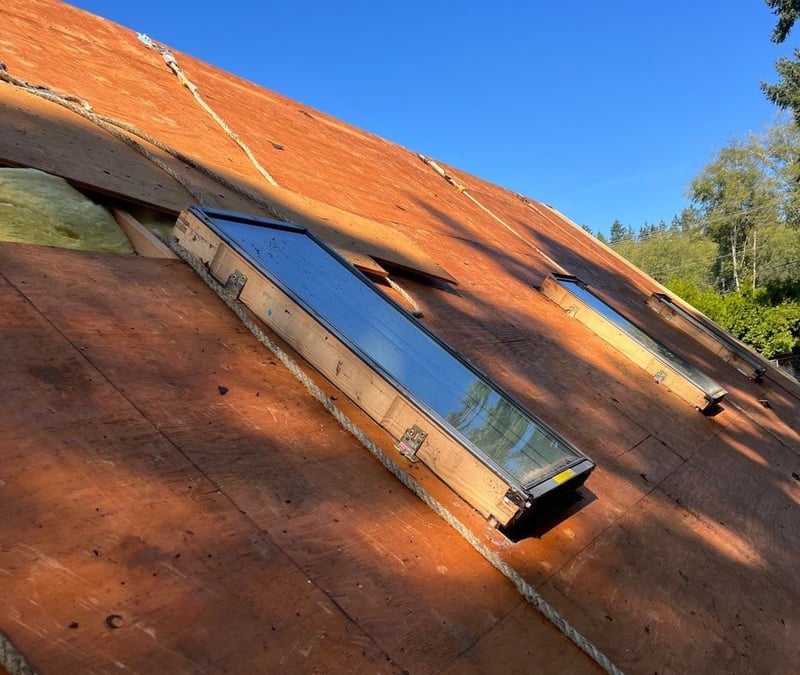
A deck-mounted skylight is installed directly into the roof. The installer cuts out a hole, puts the skylight in, and then seals the area around it. The skylight sits just on top of the roof.
A curb-mounted skylight is installed on a frame that sits on top of the roof. The height will vary depending on building codes, what your roofer recommends, and any special circumstances your roof might require.
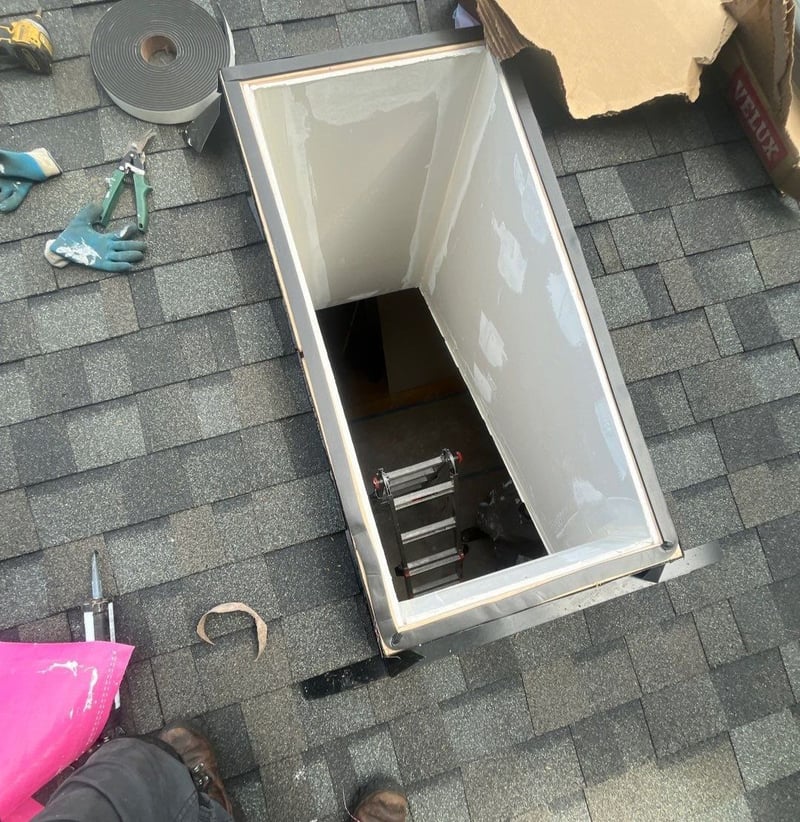
The curb-mounted skylight gets flashing installed around the base where it meets the roof, just like a roofer would do on a chimney or anything else that sticks out of the roof.
What causes the deck-mounted skylight to leak more than the curb-mounted skylight?
When installed properly, a deck-mounted skylight can hold up without leaks for a long portion of its life. But, because of the way that it sits in the roof, a deck-mounted skylight is more likely to leak than a curb-mounted skylight.
Deck-mounted skylights are installed right inside the roof, so they have more opportunities to leak. This is because it can be difficult to ensure that everything gets sealed properly on something that sits inside the roof.
With a curb-mounted skylight, you have gravity on your side pulling water down the roof and away from the skylight. And, at the same time, you have multiple overlapping layers of metal flashing wrapped around the base, which is very effective in keeping out water when installed properly.
However, with a deck-mounted skylight, you are relying on the rubber gasket that lines the skylight to keep the water out. This will work for a while, but with gravity naturally pulling water down and over the skylights, the water is bound to get through eventually.
Leaking is an especially big concern in deck-mounted skylights that are installed further down on the roof closer to the gutters.
This is because water from rainfall has more time to increase in speed and volume as it comes down the roof and eventually reaches the skylight. This can overwhelm the gasket and cause leaking.
Are there specific roof slopes or materials that help prevent leaks in deck-mounted skylights?
The short answer here is no. There is not a roof slope or material that will prevent the skylight from leaking. There are some things to consider that might help a little bit, but overall it’s most important to find an installer who knows what they’re doing to prevent leaks.
A deck-mounted skylight cannot be installed on a flat roof. There needs to be at least a little bit of a slope on the roof. A curb-mounted skylight is better suited for a flat roof. It does help somewhat to prevent leaking if the roof is steeper because the water will run right down and into the gutter, rather than lingering around the skylight.
But this is true for all kinds of roof issues related to leaking. So, if you have a steep roof then that might help prevent leaks, but overall it doesn’t make a drastic difference. Unfortunately, there is not a particular style of roof that prevents leaking in deck-mounted skylights.
Another thing to consider is the material your roof is made of. Unfortunately, there is no material that can prevent leaks in your skylight. But it is important to consider how it might impact accessibility to the deck-mounted skylight if you need to repair a leak around it or replace the skylight.
With a deck-mounted skylight, you’ll have to tear up the roof around it to get access. So, for example, this can be an incredibly difficult process with a metal roof. It can also get tedious and expensive if you have a shake or tile roof. If you have a deck-mounted skylight, it is ideal to have asphalt shingles because they are the cheapest and easiest material to work with.
What are the benefits of a deck-mounted skylight?
For homeowners who want to install a skylight themselves but have little to no roofing experience, a deck-mounted skylight can be an appealing option. This is because it does not require any extra building on top of the roof like you would need to do for a curb-mounted skylight.
Deck-mounted skylights are better for energy efficiency because they are right up against the insulation in the attic ceiling. So, when sealed properly they can help to maintain the temperature of your home.
Additionally, skylight manufacturers will sell you the flashing and all the other items you need to install a deck-mounted skylight as an entire package. Getting everything at once is much more efficient and easy than figuring out everything you need and buying it individually.
When is a deck-mounted skylight the right fit?
If you want to install the skylight yourself and your roof is not flat then a deck-mounted skylight is a good option for you. It is easier to install than a curb-mounted skylight and can be ordered in a package that has everything you need.
In terms of aesthetics, these two options are very different. Deck-mounted skylights are installed in the roof, giving a smoother and sleeker look. Curb-mounted skylights do stick out of the roof, which is not a look that everyone likes.
Deck-Mounted Skylights: Making Your Final Decision
Now that you know the differences between deck-mounted and curb-mounted skylights, and the specific factors that make deck-mounted skylights more prone to leaks, you’re well-equipped to decide which type fits your needs best. Remember, a deck-mounted skylight can be a great DIY option for some, but this leaves you at a higher risk for leaks.
If you’re still struggling to make a decision between deck-mounted and curb-mounted skylights, check out our article “How Much Does It Cost to Install Gutter Guards in the Greater Seattle Area?” to learn more about the cost of each type of skylight.
Frequently Asked Questions
1. Why do deck-mounted skylights leak more than curb-mounted ones?
Deck-mounted skylights sit inside the roofline, making it harder to achieve a perfect seal. They rely on a rubber gasket that eventually degrades. In contrast, curb-mounted skylights use gravity and multiple layers of metal flashing to shed water effectively, making them much more reliable in rainy climates.
2. Is there a roof material that prevents skylight leaks?
No. While shingles are easier to work with, no material can stop a leak if the installation is poor. However, deck-mounted skylights are difficult to repair on metal roofs because you have to tear up a large section of the metal panels to access the seals.
3. Which skylight is better for energy efficiency?
Deck-mounted skylights generally offer better energy efficiency. Because they sit flush against the roof deck and closer to the attic insulation, they create a tighter thermal seal that helps maintain your home's temperature more effectively than the elevated curb-mounted style.
4. Can I install a deck-mounted skylight on a flat roof?
No. Deck-mounted units require a minimum slope to shed water. For flat or very low-sloped roofs, a curb-mounted skylight is required to elevate the glass and prevent water from pooling around the frame.
5. Why are curb-mounted skylights preferred for replacements?
When an old skylight fails, replacing it with a curb-mounted unit is often easier. You can replace the skylight itself without necessarily disturbing the surrounding roofing materials, whereas a deck-mounted replacement often requires "re-roofing" the immediate area.
6. Do deck-mounted skylights look better?
Many homeowners prefer the sleek, low-profile appearance of deck-mounted skylights because they don't protrude from the roofline. Curb-mounted units sit higher up, which some find less aesthetically pleasing on modern homes.
7. How do I know if my skylight leak is actually a roof deck problem?
Soft spots around a skylight often indicate that the wood is rotting. You should check for common problems with OSB roof decking to ensure the structure around your skylight hasn't been compromised by long-term moisture.
8. Is my skylight leaking because of my gutters?
It’s possible. If gutters are clogged, water can back up under the eaves and travel up the roof deck toward a skylight. You should determine if your roof leak is caused by the roof or gutter guards before replacing a skylight.
9. Will a manufacturer's warranty cover a leaking skylight?
Usually, manufacturer warranties only cover the glass seal (fogging) or material defects. Most leaks are caused by installation errors, which is why it's critical to understand if a manufacturer’s warranty actually protects your roof from water intrusion.
Topics:
