

TL;DR: Summary
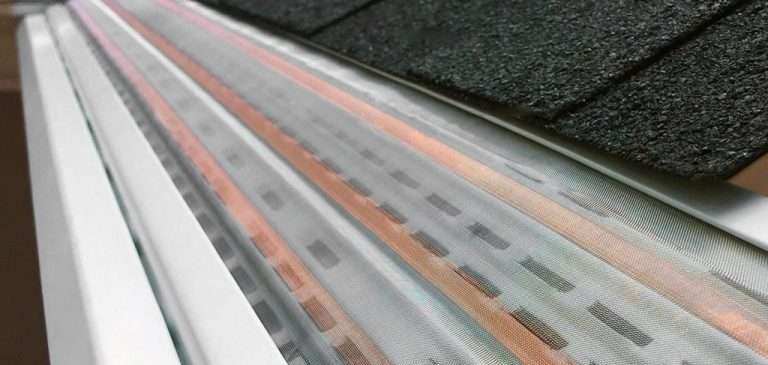
Quick Review: MasterShield is a copper interlaced surgical-grade stainless steel micro-mesh gutter guard designed for Seattle’s heavy rain and fir needles. It features CopperCare™ technology to kill moss and a pitched installation that sheds debris naturally. While it costs more than DIY covers, it is the only system that handles both organic growth and fine pine needles effectively in the PNW.
- HydroVortex™ Technology: Siphons water via patented design
- CopperCare™: Inhibits moss/algae growth
- Pitch-Matching: It is installed at the same angle as the roof (between 22.5 and 75 degrees), which distinguishes it from "flat-profile" competitors (majority of the competition).
- Highly Porous, Tight Filtration: 50 micron microfilter will allow very little debris that could ever clog a gutter. It's smaller than human hair.
The Roofing Nerd’s Verdict: MasterShield Review
Overall Rating: ⭐⭐⭐⭐⭐ (4.8/5)
“The only system we’ve found that actually survives the 'Fir Needle Test' in the Pacific Northwest.”
| Feature | Score | Why It Matters for Seattle |
| Debris Shedding | 5/5 | Angled install means debris slides off; doesn't sit "flat" like LeafFilter. |
| Algae Resistance | 5/5 | Woven copper fibers kill moss/algae spores common in King County. Super problematic for other products that plug themselves. |
| Heavy Rain Intake | 4.5/5 | Surgical-grade mesh handles PNW downpours without "overshooting." Needs special valley controllers for large areas. |
| Value for Money | 4/5 | Higher upfront cost, but prevents $1,000s in wood rot/foundation damage. |
The Bottom Line: If you have fir trees or moss issues, MasterShield is the clear winner. If you have no needles or seed pods and just want a "set it and forget it" gutter guard, LeafFilter is a decent budget alternative.
Are you tired of cleaning out clogged gutters multiple times a year, only to deal with roof leaks or water damage anyway? Have gutter guards you've installed in the past failed to keep out pine needles, moss, or debris from Seattle’s tree-heavy neighborhoods? You’re not alone, and you’re right to wonder whether a premium leaf guard solution like MasterShield is truly worth the investment.
At RoofSmart, we install and replace hundreds of gutters and gutter guards every year. We have seen firsthand on hundreds of different roofs which gutter guards do or do not hold up well in different scenarios. We at RoofSmart are excited to sell MasterShield gutter guards to customers but we understand that it is not always the right fit for everyone.
This article is not designed to say that you have to buy MasterShield. It is meant to be an educational guide that explains how MasterShield works so that you can decide for yourself if it’s right for you.
In this article, you’ll get an honest, straightforward review of MasterShield gutter guards, including how they perform in Seattle’s climate, what problems they actually solve, and where they might fall short.
We’ll walk you through the pros, cons, and maintenance considerations so you can confidently decide if MasterShield is the right fit for your home.
What Problems Do Gutter Guards Cause for Seattle Homeowners?
If you have gutters and trees at your Seattle home, you know that keeping your gutters clear and clog-free is a constant battle. Gutter guards can reduce the amount of cleaning your gutter needs, but almost all still require some maintenance to work properly.
If you neglect your gutter guards for too long, you might experience these issues.
- Clogging: In addition to regular debris, your gutter guards can actually clog up due to algae or moss growth. This will plug your gutters and cause water to spill over instead of going into the gutter. You’re expected to maintain the gutter guards and clean them as needed, so there is no warranty coverage for damage caused by clogged gutter guards. This is especially a problem for mesh or micro-mesh style gutter guards like Leaf Filter because the holes are so small that algae can easily clog them and block entire sections of it.
- Why do gutter guards get clogged with algae and moss in Seattle?: It’s easy for little bits of muck to fall into your mesh, filter, or screen gutter guard and stay there without clogging it. With easy access to air, water, and shade, moss (and algae) can grow within a matter of days and will build up enough to plug your gutter guard. Algae and moss mainly grow in areas that have lots of shade. So, if you need gutter guards to keep out leaves and pine needles, that means you probably have a fair amount of shade on your property from trees.
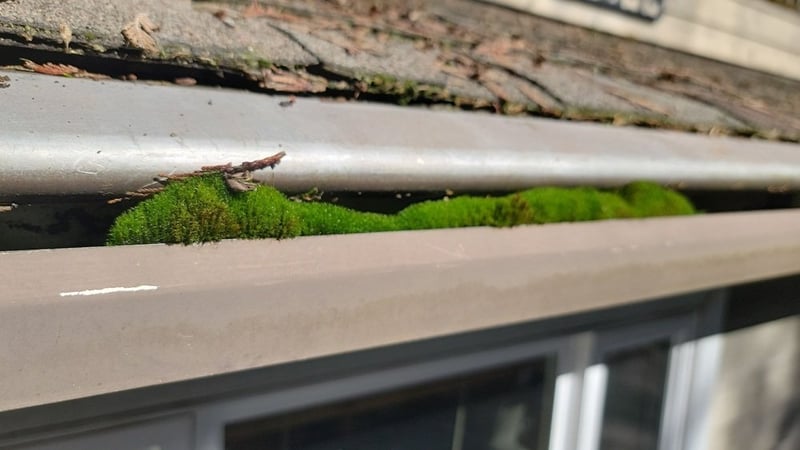
- Debris piling up on top of the gutter guard: Most gutter guards sit on top of your gutter. When they’re lying flat like that, they’re definitely going to collect debris. Some of it might fall off, but it will be up to you to go out there every once in a while to clean it off. If not, eventually it will pile up enough that the water will overflow and spill over rather than flow into the gutter.
- Pine needles in the gutter: If you live in the Seattle area, you already know that pine needles are everywhere, especially in your gutters. Hood and screen gutter guards aren’t always a reliable way to keep pine needles from clogging your gutters because their design leaves room for them to get in. Micro-mesh and filter guards keep pine needles out, but if they’re lying flat on top of the gutter guard, then the pine needles will just collect on top of it.
Gutter guards that don’t work properly are a pain because they need regular maintenance to prevent overflowing or clogging. Overflowing water in your gutters can damage your roof or your home’s foundation, which could mean you’ll need to pay for costly repairs.
Is MasterShield Right for My Seattle Home? Pros and Cons You Should Know
To help you decide if MasterShield is the right gutter guard for your home, consider the pros and cons. It’s important to understand the full picture before you make your final decision.
.jpg?width=800&height=735&name=MasterShield%20Shots%20(3).jpg)
Pros:
- It naturally prevents algae growth: MasterShield has stainless steel mesh with copper strands woven through it. Copper naturally prevents algae from growing, so it doesn’t even get the chance to plug the gutter guard. Other top mesh and filter gutter guards haven’t taken this step. They will still grow algae and need to be cleaned.
- Keeps out pine needles and other debris from trees: The micro-mesh screen and filter are too small to let pine or fir needles into the gutter. There are no gaps or holes where it can enter, unlike on a hood or screen gutter guard.
- Slanted so that debris slides right off: Master Shield is installed to match the slope of your roof so that leaves, pine needles, and other debris slide right off. This will further reduce the amount of maintenance your gutters need. Most other gutter guards are installed right on top of the gutter so that they lay flat and cover the top. This allows debris to build up on top of the gutter guards and cause issues like overflowing water that can damage the roof or other parts of your home.
- Self-cleaning to prevent clogs: Aside from algae, other substances like tree sap or oil runoff from asphalt shingles can also clog your filter gutter guards and cause water damage. However, MasterShield is typically able to self-clean and clear out these harmful substances. The inventor of MasterShield did a demonstration of how well MasterShield can clean itself. He used honey, syrup, and vegetable oil to simulate tree sap and oil runoff. Check out the video to see MasterShield clean these products off:
Cons:
- They’re expensive: MasterShield is a premium product with a lot of beneficial features, which means it’s going to cost more than other products without specialized features. It’s not the most expensive product out there, but it is on the higher end at $35 to $50 per linear foot to install (this includes materials AND labor). Sometimes it's viable to rework the existing gutter system, sometimes not.
- Not compatible with a flat roof: One of the biggest advantages of MasterShield is that it is slanted so it can easily shed debris. This doesn’t work as well with a flat roof. Typically, flat roofs collect puddles of water that grow algae or other substances. Eventually, it will rain enough that the entire puddle will overflow into the gutter. Getting hit with so much algae water at once can overwhelm MasterShield gutter guards. It cannot get rid of algae immediately, so this can cause flooding problems.
- Must be wet to filter water properly: For best performance, MasterShield gutter guards need to be saturated with water to get the engineered siphoning action to trigger. That means it needs direct rain drops, so if it’s hidden under an awning, it’s not the best fit. If it’s dry, then it cannot filter out substances like sap or oil. That’s why in the video you see some water spilling over. It had to get wet to kick in the self-cleaning technology.
How Do I Know If MasterShield Gutter Guards Are Worth It for My Seattle Home?
Just because we at RoofSmart believe that MasterShield is a great solution for gutter guard issues Seattle homeowners face, doesn’t mean that it’s the right product for everyone’s needs and budget.
If you have trees hanging over your roof and you’re worried about sap clogging your gutter guard, then MasterShield is a good option for you. It’s also a good option for you if you don’t want to worry about algae growth or clearing debris off the gutter guard.
After nearly 20 years in the gutter guard business, I can attest that it is the best gutter guard in most situations, if your budget allows for it.
Is MasterShield Worth It for Your Seattle Home? Here’s What to Consider Next
If you’ve been frustrated by clogged gutters, roof leaks, or constant clean-up, even with gutter guards in place, you now understand how MasterShield stands apart from other options on the market. With its self-cleaning design, copper mesh to block algae growth, and a roof-slope installation that sheds debris, MasterShield addresses many of the issues Seattle homeowners face year-round.
But like any premium solution, it’s important to balance performance with cost. So before you make a final decision, your next step should be to understand exactly what you’ll pay to install gutter guards like MasterShield on your home.
Read our article “How Much Do Gutter Guard Installations Cost in Seattle? A Pricing Guide for Homeowners” to learn about real pricing ranges, cost factors to consider, and how much you can expect to invest in protecting your home long-term.
Frequently Asked Questions About Master Shield Gutter Guards
1. Does MasterShield actually work with Seattle’s pine and fir needles?
Absolutely. While most "hood" or screen guards have gaps that needles can dive into, MasterShield uses a 50-micron micro-mesh, smaller than a human hair. Because we install it at a pitch-matched angle (the same slope as your roof), needles don't just sit there; they slide right off. It is the only system we've seen pass the "PNW Fir Needle Test."
2. Seattle is the moss capital of the world. Won't the mesh just get covered in green gunk?
That’s where CopperCare™ technology comes in. We’ve woven copper strands directly into the stainless steel mesh. Since copper is naturally antimicrobial, it kills moss and algae spores on contact, preventing the "bio-muck" that usually plugs up cheaper filter systems in the King County area.
3. What is the average cost for a MasterShield installation in the PNW?
MasterShield is a premium, permanent solution. In the Seattle market, professional installation (including labor and materials) typically ranges from $35 to $50 per linear foot. While the upfront cost is higher than DIY screens, it's designed to prevent thousands of dollars in foundation damage and wood rot over the life of your home.
4. Can I use MasterShield if I have a flat roof?
Generally, no. MasterShield relies on a roof pitch between 22.5 and 75 degrees to shed debris effectively. On a flat roof, water and debris pool together, which can overwhelm the siphoning action and cause overflow. We recommend other drainage solutions for flat or very low-slope roofs.
5. Is it truly "maintenance-free"?
"Maintenance-free" is a myth in the roofing world, but MasterShield is as close as it gets. It is self-cleaning, using rainwater to wash away tree sap and shingle oils. However, if you have a section of gutter tucked under a deep awning where rain never hits the mesh, you might need to give it a quick spray with a garden hose once a year to keep the siphoning technology primed.
6. Is MasterShield worth the investment compared to budget guards like LeafFilter?
If you have few trees, a budget guard may be fine. But if you have fir trees or shade-heavy areas, MasterShield's ability to shed needles and kill moss makes it the "set it and forget it" choice for the Northwest.
