

TL;DR: Summary
Why it matters: Proper attic ventilation isn't just a "code thing"—it's a "save your house" thing. Without it, you face mold, high energy bills, and a voided roof warranty. Per the International Residential Code (IRC), most Seattle homes require a 1/300 ratio (1 sq. ft. of vent for every 300 sq. ft. of attic), perfectly balanced between intake and exhaust. If your roofer isn't doing this math, they aren't just cutting corners; they’re cutting your roof's lifespan in half.
Roof Ventilation Building Codes Explained For The
Greater Seattle Area Homeowner
Getting a roof replacement on your Greater Seattle Area home is a pretty big deal. A few costly mistakes can lead to big problems in short order, and that’s why there are building codes to ensure roofing contractors install new roofs with some bare necessities.
What’s at Stake: Why You Should Read This
Here’s what often happens if attic ventilation isn’t right:
- Voided roof warranty
- Health problems
- Drastically shorter roof life
- Superheated attic that radiates heat back down on you
- Mold
- Condensation
- Failing insulation
- Grumpy homeowners
Ventilation is a critical component of a sound roofing system. It’s so important that there’s a subsection in Chapter 8 of the International Residential Code (IRC) that’s dedicated to the governing rules of how a roofing company must ensure proper ventilation is installed with every roof. Here’s what you need to know as a homeowner. This will get a little dense, but stick with me. It’s worth it to understand this.
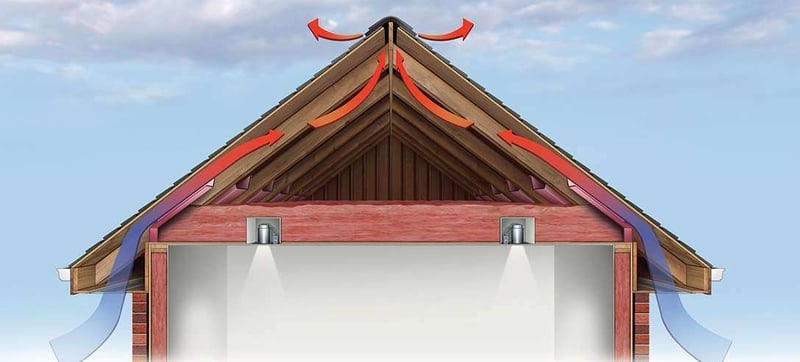
Why You Need Attic Ventilation
The $15,000 Mistake: Why Most Roofers Ignore the Code
Here’s the "dirty secret" of the roofing industry: Calculating Net Free Area (NFA) takes time, and installing extra intake vents (like bird blocks or soffit vents) is hard work. Many contractors will tell you, "Your roof has been fine for 20 years, we’ll just swap the shingles."
Don't fall for it. If they don’t update your ventilation to current IRC standards, they are essentially handing you a high-performance sports car with a clogged exhaust pipe. It might look great in the driveway, but it's going to overheat and die way before its time. At RoofSmart, we’re "Meticulous Roofing Nerds" because we’d rather do the math now than see you deal with a moldy attic in five years.
Updating an 80s-era intake system typically adds $800–$1,500, but prevents a $15,000 mold remediation later.
Proper ventilation in your attic will help to regulate the overall temperature of the space and reduce the moisture buildup that can occur.
Uniform and regular air exchange helps the attic stay within 15 degrees of the outside temperature. It will also cool off faster, because the hot air doesn’t stick around. Especially important on a hot summer day!
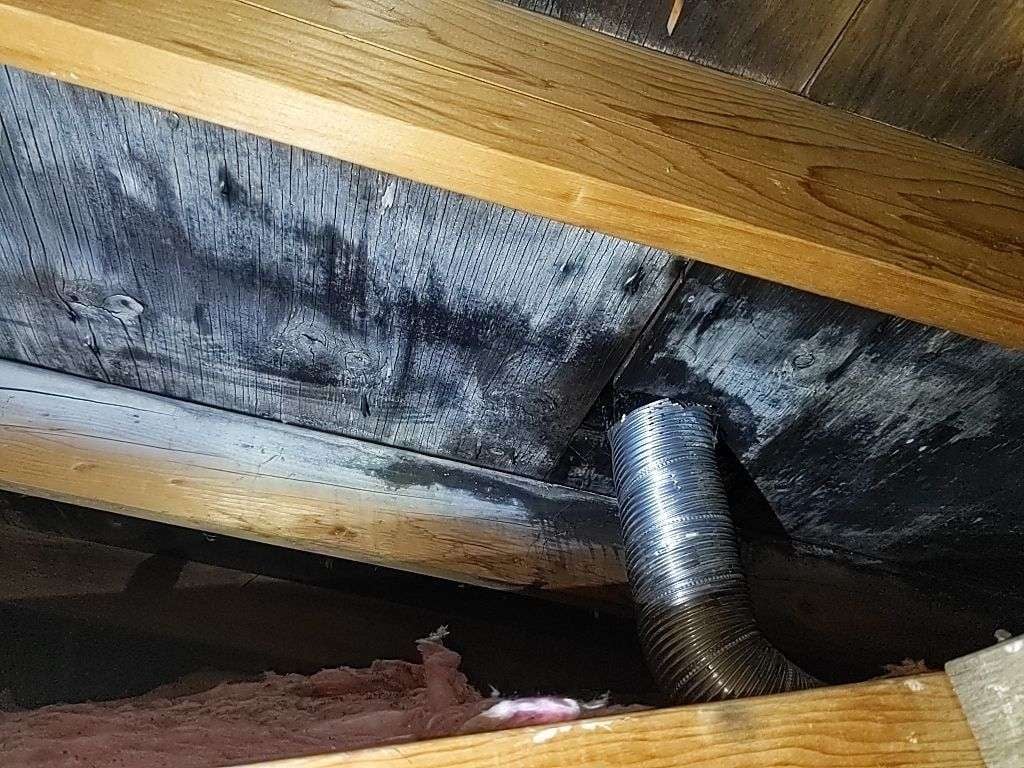
Another major concern in the moist Seattle weather is excess moisture, which leads to mold. In addition to the “yuck” factor from mold spores spewing forth from your attic, it can be very bad for your health.
Quick Facts About Mold in the Attic
Some of the more common health impacts of mold in your attic:
- Respiratory illness and/or infection
- Itchy, watery eyes
- Weakened immune system
- Allergic reactions
- And more…
Do you ever have a relative that complains about health effects when they come to visit? Check the attic!
What Are The Code Requirements For Ventilation?
The IRC governs the minimum standards for construction of single family homes.
When it comes to ventilation systems, the IRC is very specific. It addresses enclosed attics, which are insulated on the attic floor, and enclosed rafter spaces, which are where ceilings meet the roof rafters with insulation placed between the rafters (This is called the attic, for normal people). The breakdown of the code requirements for ventilation is as follows:
- Vents will be screened so that they do not allow bugs, rain or snow to enter the space
- Corrosion-free materials must be used, ¼” or smaller openings
- 1/150 is the minimum net free vent area of the vented space
- This can be reduced to 1/300 when the following conditions are both met:
- A Class I or II vapor retarder has to be used on the facing of the ceiling that will stay warm in the colder months in Climate Zones 6, 7, and 8
- A balanced ventilation method has to be used (equal intake to exhaust)
Some explainers:
A vapor retarder is used to stop the migration of moisture from the warmth of your ceiling to cooler areas of your home, like the attic. It will also reduce the amount of water available for condensation. Closed-cell foam insulation is a good example of this.
Balanced ventilation means that around half of the needed ventilation will be located in the higher portions of your attic. The remaining intake will be within the lower ⅓ of the attic space. Exhaust vents are typically located no more than 3 feet from the ridge and are commonly continuous ridge vents or evenly spaced static vents.
It’s common practice to incorporate balanced ventilation into a new roofing system, so it’s typical to see the 1/300 ratio being used. What this means is that for every 300 square feet of attic space that you have, your roofing contractor will have to dedicate 1 square foot of attic ventilation. Additionally, it will need to be evenly divided between intake and exhaust.
Example:
2000 sqft attic (converting to square inches gives you 288,000 square in)
For 1/300 ratio, you simply divide it out: 960 square inches
To balance it, you need to have half as intake and half as exhaust: 480 each
Intake: You need 54 bird blocks, each allowing 9 square inches = 486 square in
Exhaust: you need 54 linear feet of ridge vent, or approx 13 static roof vents.
On a NEW home, the architect does the math. The thing is, building codes have most likely been updated since your home was built. Especially if you’re in the market for a new roof! Rules have tightened a lot. There used to be no mention at all of ventilation calculations. Then it was 1/600 ratio. Then 1/300. Now it’s 1/300 only if balanced, and 1/150 is recommended.
The Nerd's Guide to "Net Free Area"
You’ll hear us talk about Net Free Area (NFA). Think of this as the "breathing room" of a vent. A vent might be 12 inches wide, but because of screens and louvers (to keep the Seattle rain and squirrels out), only a portion of that space actually moves air.
When we calculate your 1/300 ratio, we aren't just looking at the size of the hole in your roof; we’re looking at the NFA rating of the specific product. If your roofer isn't checking the manufacturer's NFA stamps, they aren't actually "calculating"—they're guessing. And guessing is a great way to void a TripleGuard Warranty.
What if your roofer doesn’t “do the math” when replacing your roof?
Your warranty may be void.
All the shingle manufacturers require the roof to have current ventilation minimums, or they will not honor the warranty. But many of the other roofers in town either don’t know, or don’t care. Most put it right back the way they found it. Or worse, they actually reduce ventilation by installing bargain bin parts that choke off air flow. Ouch.
The Difference When Your Attic Is Occupied
It’s now more common to have usable, conditioned space in your attic. In this situation, the ceiling and the rafters are attached. This most commonly creates a cathedral type of ceiling as well as an enclosed rafter space.
This type of attic space has another set of ventilation requirements. Roofing contractors must install a minimum of 1 inch of vent space in every rafter space directly below the roof deck but immediately above the insulation. This setup is more difficult to create and maintain airflow.
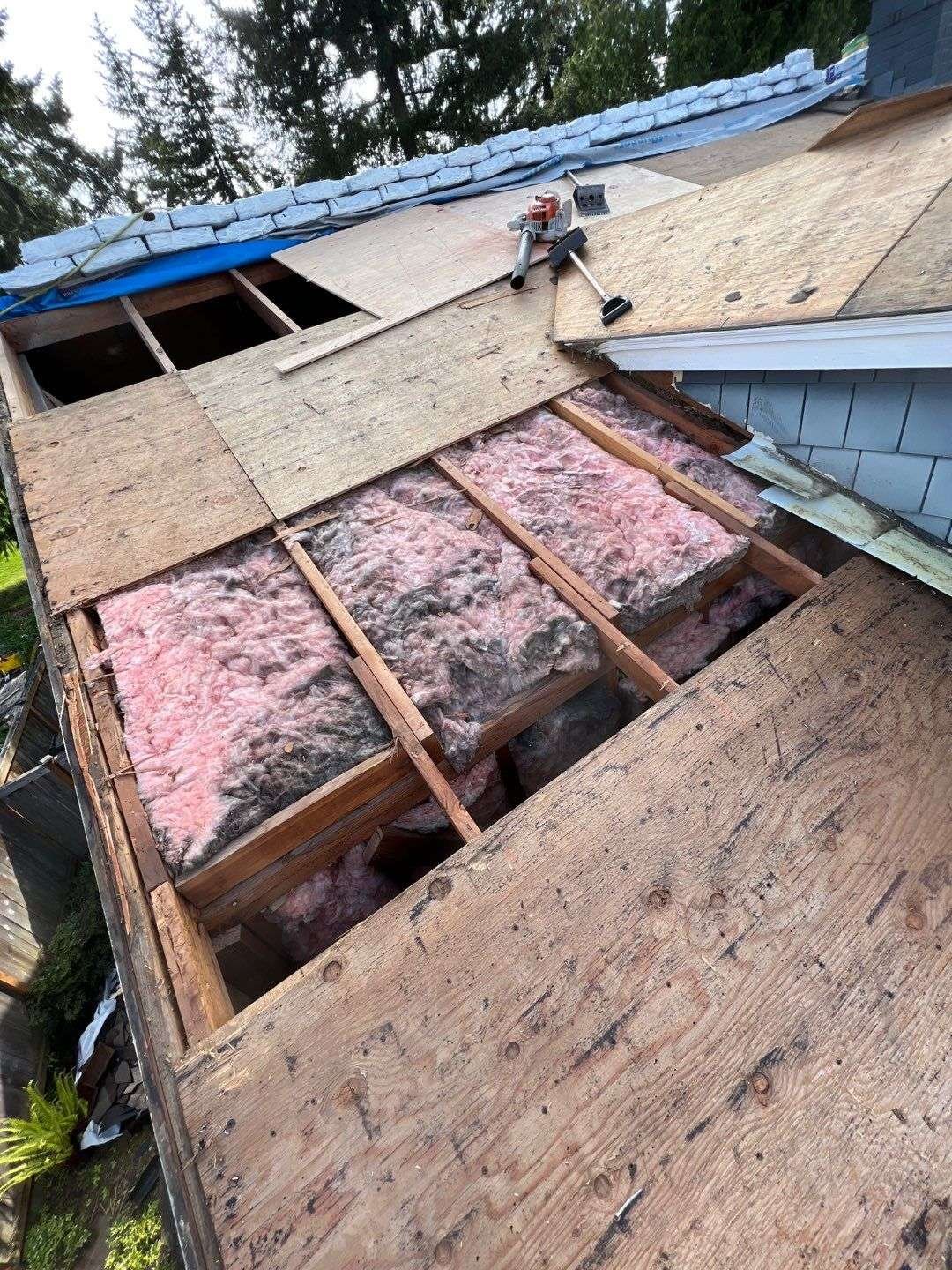
To inspect or repair this type of attic ventilation, fixing it with the roof off is the best time. Otherwise you have to get at it by taking out your interior drywall. Huge mess!
What About A Flat Or Low-Sloped Roof?
Roofs without an attic, don’t have ventilation. This leads to some confusion around these specialty roof types.
Flat and low-sloped roofs are horizontal constructs, and natural convection does not truly occur in this type of space. This means that warm, moist air would never rise naturally to an exhaust vent. Additionally, there is no real way to install a vent on these types of roofs due to their construction and have it naturally draft from a dedicated intake to an exhaust. Often these are installed with “above the deck” closed-cell foam insulation, to a minimum of R38. This does 2 things for you: keeps your heat in, and keeps the dew point for any condensation far away from where the cold air is.
When Ventilation is a Bad Idea
We’re the "Meticulous Roofing Nerds," so we have to tell you the truth: Not every attic should be ventilated. If you have a "conditioned" attic (where spray foam is applied directly to the underside of the roof deck), adding vents will actually destroy your home's energy efficiency and lead to massive condensation.
If a roofer walks onto a spray-foamed roof and starts talking about ridge vents, run. They don't understand the science of your home's envelope.
Are You Ready To Have Your Roof Replaced?
Call The Roofing Experts Today!
We pride ourselves on expertise. We’re Meticulous Roofing Nerds, after all! You’d call RoofSmart if you’re looking for smart people that are passionate about roofing!
With our Egghead Installation, every part of your roof will be installed with absolute perfection. Our obsession with detail will guarantee you more than just pretty shingles.
Call us at (206) 487-4877 for your free estimate!
Frequently Asked Questions
Does every roof replacement require a ventilation upgrade?
Not necessarily, but most do. If your home was built under older codes, your current ventilation likely doesn't meet the modern Seattle attic ventilation code requirements
What happens if my roofer ignores the 1/300 rule?
Your manufacturer warranty is likely void the moment the last nail is driven. Most shingle brands require proof of proper ventilation for claims.
Can I have too much ventilation?
It’s rare, but "unbalanced" ventilation is common. If you have too much exhaust and not enough intake, you can actually pull conditioned air out of your living space.
Do flat roofs need to follow the same IRC code?
Yes and No. Flat roofs are a different animal. They typically use above-the-deck insulation
rather than airflow to manage moisture.
Why is mold so common in Seattle attics?
Our high humidity meets warm attic air, creating condensation. Without a "balanced" system to flush it out, mold takes over.
What is "balanced" ventilation?
It’s a 50/50 split. Half of your vents should be "intake" (low on the roof) and half should be "exhaust" (high on the ridge).
Will new ventilation stop my bath vent from leaking?
Attic ventilation helps, but a leaking bath vent is usually a flashing issue. Check out how we use the Ultimate Bath Vent to solve that specifically.
What is a "Vapor Retarder"?
It’s a material (like certain types of insulation) that stops moisture from traveling from your warm house into the cold attic.
How do I know if my current roof is failing because of ventilation?
Look for "alligatoring" (cracked shingles), extreme heat in the summer, or frost on the underside of your roof deck in winter.
Does a metal roof need different ventilation than shingles?
The math (1/300) remains the same, though the vent styles might change. You can read more in our guide to metal roofing
Topics:
