

TL;DR: Summary
Deciding whether to repair or replace a concrete tile roof in Seattle comes down to cost, condition, and how much life the roof has left.
Concrete tile roofs often need frequent maintenance due to moisture, moss, debris buildup, and clogged valleys that can lead to widespread leaks, even if the roof isn’t very old.
If damage is isolated and the roof still has years of life remaining, repairs can be a cost-effective way to extend its lifespan. But if the roof is older, leaking in multiple areas, or failing systemically, replacement is usually the better long-term investment.
In this case study, a homeowner chose to spend about $20,000 on repairs instead of $100,000 on a full replacement, buying roughly another decade of use.
The key takeaway: repairs can save money short-term, but you need to weigh total costs and long-term plans before deciding.
Have you been told your concrete tile roof needs expensive repairs and wondered if it would be smarter to just replace the whole thing? Are you worried that pouring thousands of dollars into repairs might only buy you a few more years before you’re forced to replace the roof anyway?
Concrete tile roofs in Seattle often require significant maintenance because of constant rain, moss growth, and debris from trees. But even when problems show up, replacing the entire roof isn’t always the best financial decision if a quick repair can fix things.
At RoofSmart, we understand that it can be difficult to decide when it’s better to repair or replace your roof, especially if you have a material like concrete tile that is expensive for both repair and replacement.
In this case study, we’ll walk through what happened when a Seattle-area homeowner faced exactly this dilemma. You’ll see the problems we discovered on his concrete tile roof, the repair work required to keep it functioning, and how he ultimately decided whether spending $20,000 on repairs was worth it compared to a $100,000 roof replacement.
Repair vs Replace a Concrete Tile Roof
| Factor | Repairing Your Roof | Replacing Your Roof | Why It Matters |
|---|---|---|---|
| Upfront Cost | Lower ($10K–$30K typical range) | High ($80K–$120K+) | Budget is often the biggest deciding factor |
| Roof Age | Best under ~30–40 years | Best over ~40–50 years | Older roofs are closer to full failure |
| Damage Location | Isolated areas | Widespread issues | Systemic problems favor replacement |
| Lifespan After Work | 5–15 more years | 30–50+ years | Replacement resets the lifespan |
| Frequency of Repairs | Occasional fixes | Eliminates recurring repairs | Repeated repairs add up quickly |
| Condition of Underlayment | Still functional | Failing or worn out | Underlayment failure often requires replacement |
| Return on Investment | Short-term savings | Long-term value | Depends on how long you’ll stay in the home |
| Risk Level | Higher (issues may continue) | Lower (new system) | Repairs don’t fix underlying system problems |
Why do concrete tile roofs need so much maintenance in Seattle?
Seattle’s damp, rainy environment is hard on a lot of different roofing materials. Excess moisture and debris from trees (like leaves and pine needles) can cause issues that require frequent repairs or maintenance calls.
For example, concrete tile doesn’t mesh well with constant moisture. It can absorb water, and if there is excess moisture, it can cause the concrete tile to crumble. Or, if the tile freezes while wet, it can cause damage.
Concrete tile is also susceptible to algae and moss growth. Algae is an unsightly nuisance, but moss can grow between the tiles, absorbing moisture and keeping the tiles wet.
Another concern that many homeowners don’t know about is that the valleys of their tile roofs need to be cleaned out because the debris collects there and can’t get out on its own.
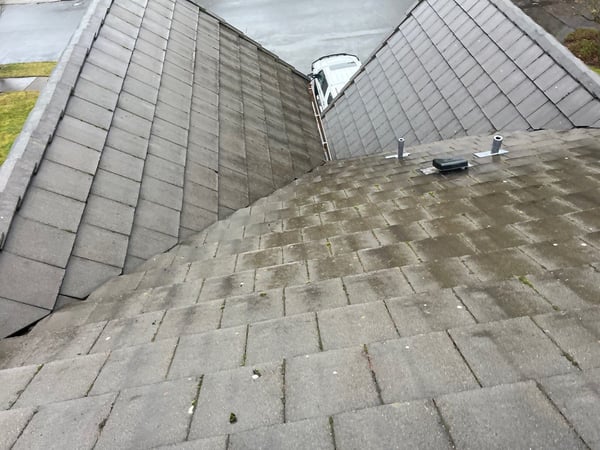
One of our customers who hired us for repairs on his tile roof had all of these issues. His valleys were full of debris, there were leaks all over, tiles were broken, moss was growing all over, and a downspout was draining onto one section and causing excessive moisture buildup.


How do you decide between repairing and replacing your concrete tile roof in Seattle?
There are factors you can consider when it comes to deciding between repairing and replacing your concrete tile roof, but a lot of the time, it comes down to how much you’re willing to spend.
You should replace your concrete roof if:
- It is over 50 years old and worn out
- It has leaks or damage all over
You should repair your concrete roof if:
- Only one small, isolated section has an issue
- You can’t afford a full replacement, but doing some repairs will help
- Your roof still has 1 or more decades left before it fully wears out
The factors you should consider are:
- Can you afford a full replacement if needed?
- How old is the roof?
- Is the roof still mostly in good condition?
- How much longer do you want to live in your house?
For our customer with the concrete tile roof, it was a tough call. His roof was about 20 years old, so it still potentially has around 10 years left to go.
Even though some repairs and maintenance were needed, the roof was still in ok condition. Our customer decided to do a bunch of repairs instead of a full replacement to save money. But we told the customer that it's going to be an expensive repair job because the issues are not just in one spot. It's a systemic problem.
He opted for a repair because replacing the concrete tile roof would cost around $100,000, whereas he ended up spending around $20,000 for us to repair and perform maintenance in several spots. Every day that we worked on the roof, we uncovered more issues, which brought the cost up.
There were several spots on his roof that were leaking. Normally, this means that you should replace the roof, but this customer was able to get away with repairing the leaks. It was mostly due to the valley being clogged and shooting water in the wrong direction.
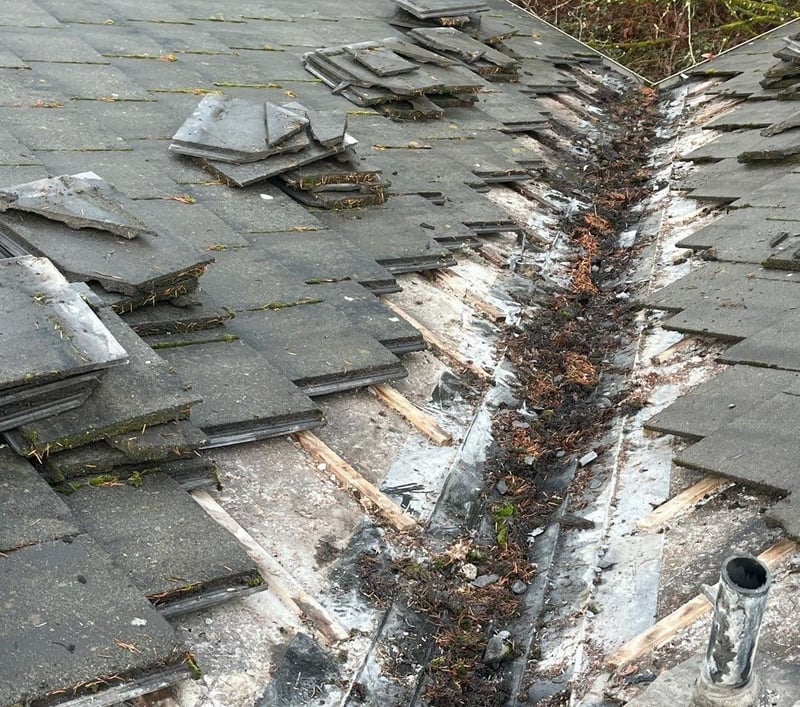
He had 168 feet in total of valleys on his roof, which makes for a big maintenance job. We had to pull off the tile surrounding the valley, pull off the wooden battens holding up the tiles, clean out the debris from the valley, and then put everything back.
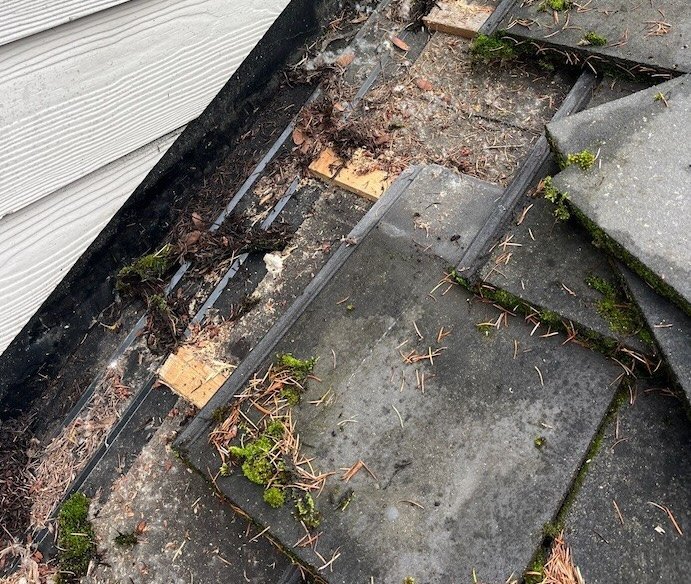
This also includes cleaning the debris that builds up where the edge of the roof meets a wall. There were several of these spots on this customer’s roof:
It was hard for this homeowner to justify throwing it all away and spending so much more money because somebody did a mediocre job installing the concrete tiles. By mediocre, I mean that they didn't optimize it to prevent leaks when debris inevitably builds up in the valley. It was built to minimal acceptable standards. So it's not wrong, it’s just not good.
This customer spent $20,000 to avoid having to pay $100,000. But, in about 10 more years, he’ll likely have to replace his roof. For him, the cost of repairing was worth it, but that might not be the case for everyone.
The bottom line is that tile roofs are expensive, so you have to decide how much you’re willing to spend on repairs before it gets to a point where a full replacement makes more sense financially.
When does it make more sense to repair a roof instead of replacing it?
As this Seattle homeowner discovered, deciding whether to repair or replace a concrete tile roof isn’t always a straightforward decision. Even though his roof had multiple issues (clogged valleys, broken tiles, leaks, and moss buildup), it still had enough life left that spending about $20,000 on repairs made more financial sense than immediately investing $100,000 in a full replacement.
But that decision won’t be the right choice for every homeowner. In some situations, repairs can buy you valuable time and extend the life of your roof for another decade. In others, continuing to repair a failing roof can quickly become more expensive than replacing it altogether.
The key is understanding how to evaluate your roof’s condition, age, and repair costs so you can make the smartest long-term investment for your home.
Read our article “Roof Repair vs Replacement: How Do I Decide What’s Best for My Seattle Home?” to learn how to weigh the pros and cons of each approach.

Frequently Asked Questions About Repairing vs. Replacing Tile Roofs
1. Is it cheaper to repair or replace a concrete tile roof?
Repairing is cheaper upfront, but not always long-term.
- Repairs may cost $10,000–$30,000+
- Full replacement can cost $80,000–$100,000+
However, repeated repairs can eventually exceed the cost of replacement.
2. How do I know if my tile roof is worth repairing?
Your roof is a good candidate for repair if:
- Problems are limited to small areas
- The roof is still relatively young (under ~30 years)
- The structure and underlayment are mostly intact
If issues are widespread, replacement is usually the better option.
3. How long will a repaired concrete tile roof last?
A repaired tile roof can last 5 to 15 more years, depending on:
- The condition of the underlying system
- How extensive the repairs are
- Ongoing maintenance
Repairs extend life, but don’t reset it.
4. When should I replace my concrete tile roof instead of repairing it?
Replacement makes more sense when:
- The roof has leaks in multiple areas
- The roof is approaching 50 years old
- The underlayment is failing
- Repair costs are adding up quickly
At that point, continuing repairs may not be cost-effective.
5. Why are concrete tile roofs expensive to repair in Seattle?
Repairs are costly because:
- Tiles must be carefully removed and reinstalled
- Debris and moisture issues require extensive cleanup
- Seattle’s climate accelerates wear and moss growth
Even “small” repairs can involve significant labor.
Topics:
