

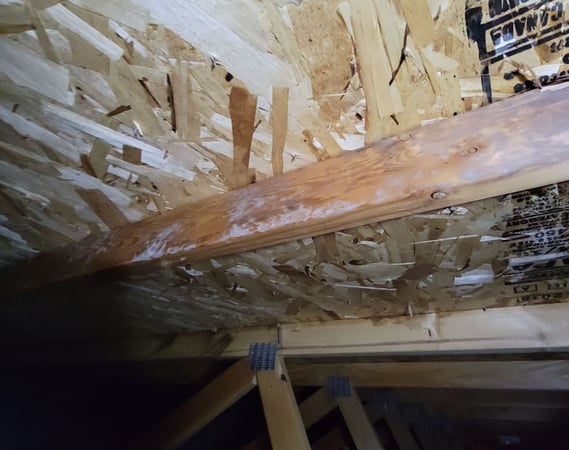
TL;DR: Summary
In a damp climate like Seattle, small amounts of mildew can be fairly common, and not every situation requires a full tear-out and costly remediation. The challenge is knowing the difference between a legitimate problem and an exaggerated one.
Attics with a lot of mold need treatment, and usually air sealing, ventilation or leak work too, so the moisture that fed it is gone.
However, sometimes your mold problem isn't that bad, but a company might exaggerate the problem to make more money.
Did a contractor just tell you there’s mold in your attic, and now you’re wondering if it’s a serious problem or just a scare tactic to sell you an expensive fix? Are you worried about making the wrong call while trying to decide between spending thousands you don’t need to, or ignoring something that could quietly damage your home?
This is a tough spot to be in. Mold has a way of triggering immediate concern (for good reason), and when someone shows up at your door pointing it out, it’s hard not to feel pressured to act fast. But not all attic mold is the same.
We inspect roofs and attics all over the Seattle area, and we've seen everything from a few spots of mildew to actual mushrooms growing in a customer's attic. We remove or treat the growth and fix the moisture path and the roof behind it as one RoofSmart job. Our job is to tell you which of those you actually need.
In this case study, we’ll walk you through a real example of a Seattle homeowner who was told she needed a full attic overhaul and what we actually found when we took a closer look. You’ll see how to evaluate these situations and how to avoid paying for work you may not need.
How to Tell If Attic Mold Is a Real Problem or an Upsell
|
Indicator |
Minor / Common Mildew |
Serious Mold Problem |
What It Means |
|
Location |
Edges of roof or soffits |
Spread across rafters, insulation, decking |
Widespread growth indicates bigger issue |
|
Appearance |
Light spotting or discoloration |
Thick, dark, or fuzzy growth |
Heavier growth = long-term moisture problem |
|
Insulation Condition |
Clean and white |
Stained, damp, or deteriorating |
Moist insulation signals ongoing moisture |
|
Structural Impact |
No visible damage |
Rotting wood or weakening structure |
Structural damage = urgent repair needed |
|
Moisture Source |
Small airflow or humidity issue |
Active leaks or major ventilation failure |
Root cause determines severity |
|
Cost to Fix |
Low (targeted repairs) |
High (full remediation or tear-out) |
Severity directly impacts cost |
|
Contractor Behavior |
Explains and shows evidence |
Uses pressure or vague claims |
Transparency is key indicator of trust |
How do I know if I can trust an attic company that goes door to door?
In the Seattle area, there are contractors (in a variety of trades) who go door to door to advertise their services. Some homeowners respond well to this; others don’t. No matter how you feel about them, it can still be difficult to know whether they’re trustworthy or just trying to make money.
So, how can you tell if the attic company is trustworthy?
- If they claim your attic is moldy, then they can immediately show you proof
- They don’t pressure you to sign on immediately
- They are transparent about cost
- They are happy to answer all of your questions
What are some red flags of a door-to-door salesperson?
- They make big claims with no proof
- They pressure you using scare tactics or limited-time discounts
- They want to operate on a verbal agreement
- They dodge your questions or only give vague answers
Trust your gut when talking to any type of contractor. Make sure that you take the time to thoroughly research them before signing a contract.
One of our customers had this experience with an attic company. Her neighbor had called the attic company out to work on their home, and while they were door-knocking in the neighborhood.
Our customer agreed to let them inside, and after their inspection, they claimed she had extensive mold requiring a full tear-out and re-insulation. This would cost $8,000.
She felt nervous and unsure what to do. That’s a solid chunk of money, and she wasn’t sure how to feel about what they had said. So, she called us up at RoofSmart for a second opinion.
Does every attic in Seattle have mold?
When I went out to inspect this customer’s home, I found that her attic did have mold, but not nearly as much as the attic company claimed she did. It’s not uncommon in the Seattle area for some attics to have a little bit of mold due to the constant humidity and moisture.
Here’s a shot of what her attic looks like:
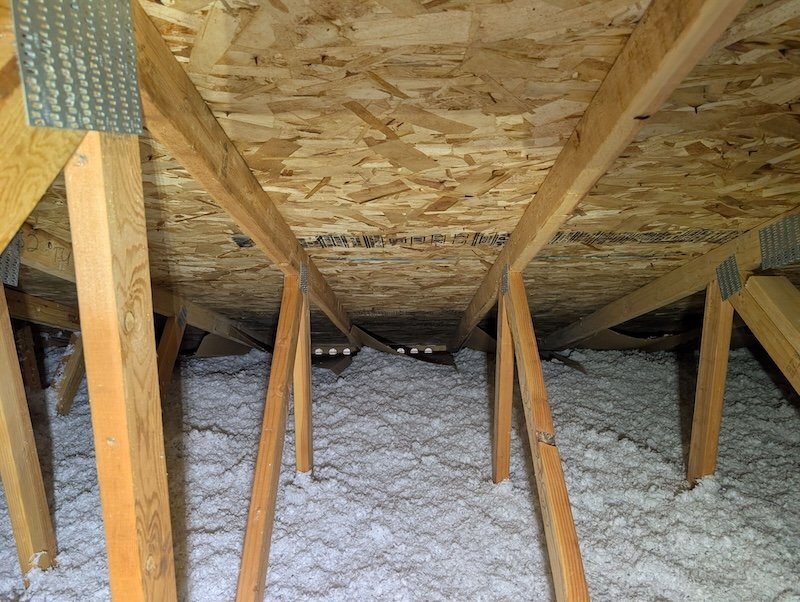
If you zoom in closer to the edges, you can see that there is some mold:
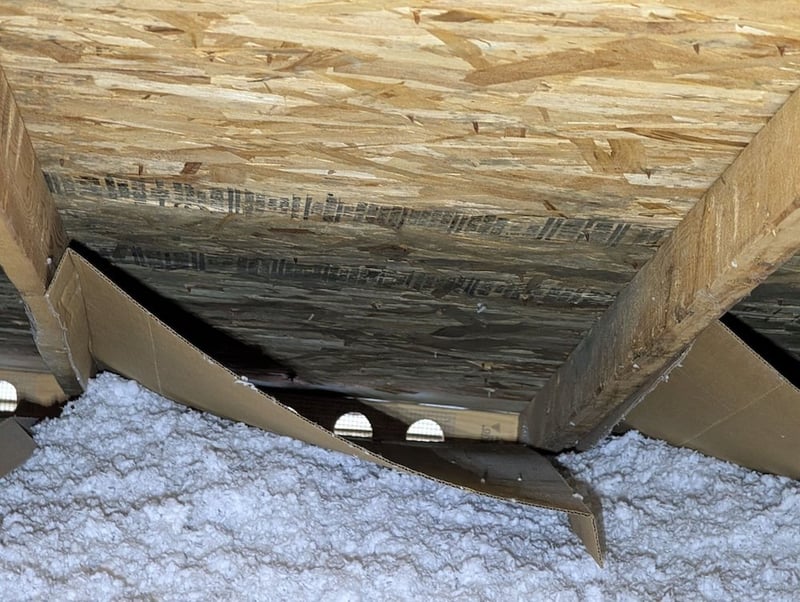
I told her yes, you have mold, but if you look at the insulation, it's still white. It doesn't have that mildew layer that we often see in attics with a lot of condensation.
You don't see anything on the rafters, the framing, or trusses. There’s only a little bit of mildew at the edge of the roof.
Okay. So yes, they didn't lie to her. But they might’ve overemphasized how bad the issue is because the mold and mildew are actually minor and localized, not widespread.
What caused the mold and mildew in this attic?
To find the cause of the mildew, I decided to look outside. I found that the paint on the soffit was not doing its job. Ambient humidity was soaking through the painted soffit vents, saturating the board and then soaking back up the part of the board that is in the attic.
This is what allowed mildew to grow right at the edge of the attic.
Remember what the mildew looked like on the board in the attic? This is the same board, just on the outside:
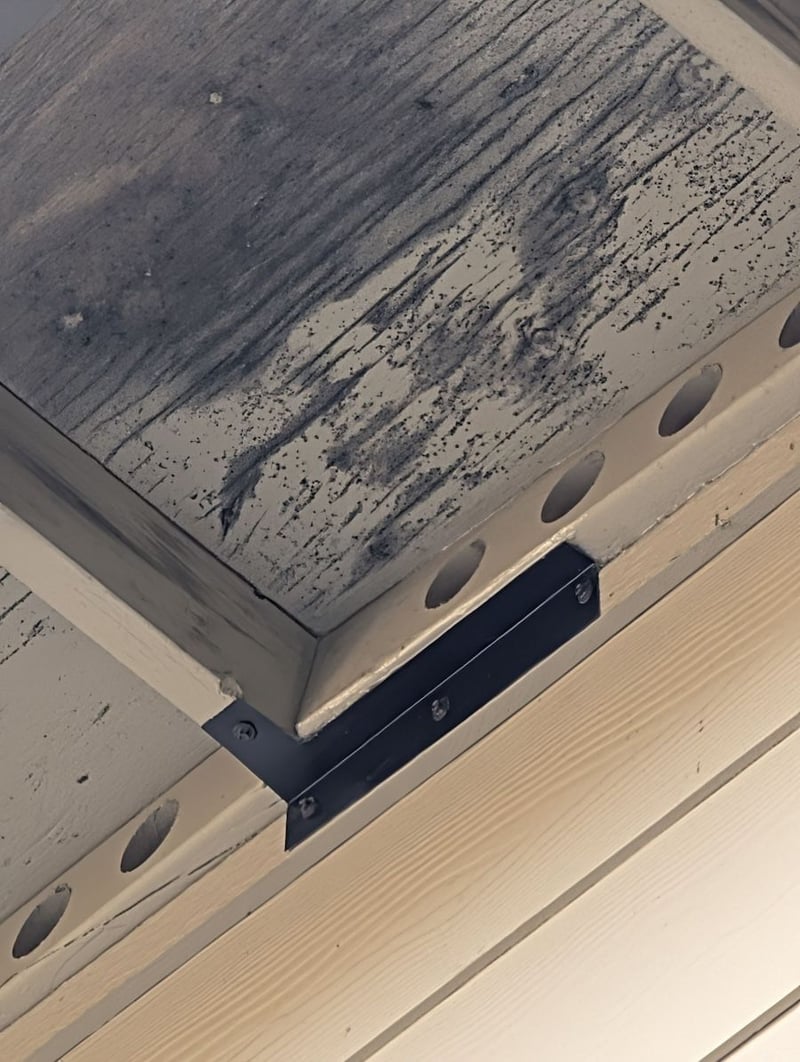
You can tell where there’s enough airflow in the attic to keep the board dry because that’s where the mildew cuts off. But on the outside, the board is completely saturated because the paint doesn’t protect it from Seattle’s constant humidity and moisture.
How do I get rid of mold in my attic?
Fixing the root cause of mold and mildew in the roof is essential. Otherwise, the problem will recur and likely void any new remediation warranty.
So, if you have a little bit of mildew on your sheathing, the right thing to do is to make sure the airflow is correct and fix the leaks. That's what we did for this customer, so the sheathing can stay dry and the mildew has nothing to feed on. If you've been quoted a big remediation job, get a second opinion on attic mold before you sign.
Here’s what we fixed on the roof to prevent current and future leaks:
- Leaky super anchors: They're cut right through the sheathing and they don't, they always seem to leak. From the attic, you can see that they leak.
- Leaking pipe jacks: Pipe jacks made of neoprene don’t usually last very long. They weren’t leaking yet, but the customer wanted to be proactive.
- Celerestory flashing: This was originally nailed in the wrong place along the edges of the roof. There wasn’t evidence of a leak yet, but the customer wanted to prevent that possibility.
- Cracked shingles that were leaking: Some shingles were torn and cracked. They even had moss growing in the cracks.
With all of those repairs included, we fixed the root cause of the mildew and the other minor roof issues for around $1,500. In the end, this customer was able to avoid the unnecessary $8,000 remediation proposed by the other company.
What should you actually do if you find mold in your attic?
As this case study shows, finding mold in your attic doesn’t automatically mean you’re facing a massive, expensive problem. In this homeowner’s situation, the issue was real, but minor and localized, not the widespread damage that the company initially claimed. By focusing on the root causes, like small roof leaks, moisture intrusion, and airflow, the problem was solved for a fraction of the cost.
The key takeaway is this: the severity of attic mold matters. Jumping straight to full remediation without understanding the cause can lead to unnecessary expenses, while ignoring real issues can allow damage to spread.
So before you commit to any major work, it’s important to understand what level of action your specific situation actually requires and what steps will fix the problem for good.
Read our article “What Should I Do If I Have Mold In My Attic?” to learn how to assess the severity, address the root cause, and choose the right solution so you can protect your home without overpaying.

Frequently Asked Questions About Attic Mold in Seattle Homes
Not all attic mold situations require expensive remediation. These common questions will help you understand what’s normal, what’s serious, and what to do next.
1. Is all mold in an attic dangerous?
No, not all attic mold is dangerous.
In climates like Seattle, small amounts of mildew are fairly common and may not pose a serious risk. The key is determining whether the mold is minor and localized or widespread and caused by ongoing moisture issues.
2. How do I know if an attic mold problem is serious?
A mold problem is more serious if you see:
- Growth across large areas of the attic
- Mold on rafters, insulation, or framing
- Signs of rot or structural damage
- Persistent moisture or leaks
Small, isolated spots are usually less concerning and often easier to fix.
3. Why would a contractor exaggerate attic mold issues?
Some contractors may exaggerate problems to sell expensive services like:
- Full attic tear-outs
- Insulation replacement
- Large-scale remediation
This is why it’s important to ask for clear proof or even get a second opinion before agreeing to major work.
4. What actually causes mold in an attic?
Common causes include:
- Poor ventilation
- Small roof leaks
- Moisture entering through soffits or vents
- High humidity levels
Fixing the root cause is the most important step to prevent mold from returning.
5. What should I do if I find mold in my attic?
Start by:
- Identifying how severe the mold is
- Finding the source of moisture
- Getting a second opinion if the solution seems expensive
In many cases, fixing ventilation or small leaks is enough to resolve the issue without full remediation.
Topics:
