

TL;DR: Summary
Even a brand-new roof can develop mold if the ventilation isn't engineered correctly. A homeowner in Seattle faced recurring mold issues despite multiple attempts by a major roofing company to fix it with power vents and extra insulation.
The root cause was condensation caused by poor airflow design. RoofSmart solved this by creating a "vented deck", using polyiso foam insulation and furring strips to allow air to flow between the roof layers, and properly separating exhaust fans to ensure consistent, balanced airflow.
If you’re like most Seattle homeowners, then you’ve probably looked into your attic at one point and noticed signs of mold growth. Yikes! It’s the last thing that you want to see, especially if your roof just got redone and you assumed that everything would be fine.
Now you have to worry about getting rid of the mold, making sure it doesn’t come back, and figuring out what caused it in the first place.
What most Seattle area homeowners don’t realize is that their attic ventilation is not working, which leads to mold, rotting wood, and potentially even early roof failure. Even worse is that a lot of roofers completely ignore attic ventilation, so you can’t guarantee that a new roof means improved ventilation.
At RoofSmart, we prioritize thoroughly inspecting your roof and the surrounding areas when we come out to do an estimate. That way, we know what problems we’re working with and how to fix them. We do hundreds of inspections every year, so we have diagnosed attic ventilation issues a ton in the last 15 years.
Keep reading to see how a Seattle-area homeowner just like you educated himself on attic ventilation issues and kept trying until he found a permanent and effective solution to his mold problem.
When did the mold problem start in this homeowner’s attic?
In 2019, a homeowner in the Seattle area hired a roofing company (a major roofing company that works in the Seattle area) to replace his old, worn-out roof. The roofing company replaced the shingles on his roof and added some insulation.
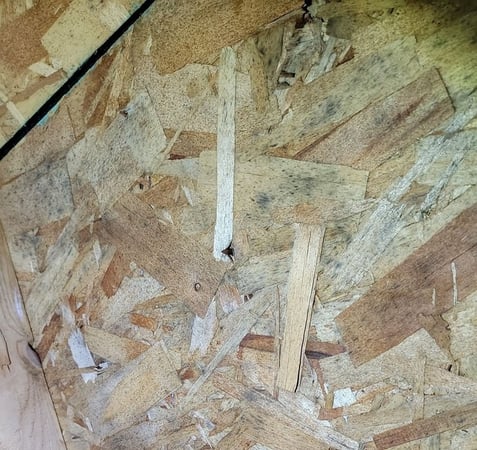
Everything seemed okay for a while, but two years later, the customer noticed that his attic was covered in mold and still had ongoing humidity issues

He was confused about how this happened because he did not expect a new roof to have any problems.
The homeowner had the roofing company return again to try to get rid of the mold problem. They weren’t totally sure how to fix it, so they ended up having to come out 3 or 4 times to try a bunch of things. Here’s everything that they tried:
- Added two power vents
- Blocked intake vents with plywood and spray-foamed the porch roof
- Curtained off the porch area, which worsened the mold
None of these attempts to change up the attic ventilation worked, so the roofer decided to reach out to the manufacturer. The manufacturer suggested adding a dehumidifier, but at this point, the homeowner said that he was done trying things.
He appreciated that the roofing company put in the effort to find a solution, but was frustrated that nothing was working.
How did this frustrated Seattle homeowner finally get rid of the mold in his attic?
The homeowner decided that it was time to look for a new roofing company with more experience in attic ventilation because he was certain that there were other options to try.
He contacted us at RoofSmart after reading some of our articles about attic ventilation. This helped him better understand the importance of proper attic ventilation and showed him that RoofSmart is a reliable resource for his attic ventilation needs.
After inspecting his attic and hearing his story, I determined that the main issue in his attic was condensation. Also, the ventilation was wonky due to all the recent updates.
We decided to focus on the back half of the roof because the front half had solar panels, so it would be much more expensive to deal with those. Luckily, the front half of the attic wasn’t having any issues.
Here are the steps we took to fix this customer's condensation and ventilation problem:
1. Add a layer of insulation to prevent condensation: We removed the shingles and the plywood so that we could create a vented deck. First, we put down a layer of polyiso foam that is 2 inches thick to prevent condensation. Then we placed furring strips on top of the foam with a layer of plywood on top of that. The furring strips elevate the plywood so that air can still flow above the new insulation. Basically, we added a new attic on top of the old one.

2. Reinstalled the power vents: We still needed the attic underneath the new layers to be able to breathe, so we cut out holes and reinstalled the power vents.
3. Added a curtain down the middle to separate the power vents: The roof was long enough to require 2 power vents. However, if you have multiple vents, you need to be able to separate them, or they won’t work, and your attic ventilation will be totally messed up. So, our solution was to install a plastic sheet down the middle of the attic. That way, both sides get proper airflow without being disturbed by a second power vent.
Final results: To recap, the power vents are venting the original attic, and the vented deck (with the foam) is venting that back slope.
While we were tearing everything off, we also made sure to clear off the intake vents so that they were no longer blocked. It’s important that your attic has both intake and exhaust ventilation so air can flow throughout the entire attic. Without both types of venting, air won’t be able to move around.
As a result, the condensation issues have been addressed, and the attic now has proper airflow. It’s been a year since we did this, and our customer is happy to report that it has been working great.
He was so excited to finally have a solution to his condensation problem that he also signed up for regular roof maintenance and asked us to install new MasterShield gutter guards. I am thrilled to know that we helped someone solve a tough problem and give him the peace of mind that he had been wanting for years.
What steps should you take if you find mold in your attic?
As you saw in this homeowner’s story, attic mold rarely fixes itself, and simply adding fans, blocking vents, or trying random solutions can make the problem worse. In this case, the real issue wasn’t just “mold.” It was condensation caused by improper ventilation and poor airflow design.
Once the root cause was identified and addressed properly, the mold stopped coming back. No more guessing. No more temporary fixes. Just a ventilation system that actually worked.
If you’ve looked into your attic and seen dark staining, fuzzy growth, or signs of moisture buildup, the most important thing you can do is avoid jumping straight to surface-level fixes.
Read our article “What Should I Do If I Have Mold In My Attic?” to learn what steps you should take to get rid of mold and make sure it never comes back.

Want to see every roofing topic explained simply? Visit our Roofing Resource Learning Center.
Worried that algae is overtaking your roof and that your warranty might not cover the damage? Learn the facts here: https://getroofsmart.com/blog/does-algae-warranty-for-asphalt-shingles-actually-protect-roof
Want to make sure the roofing company inspecting your attic actually knows what they’re doing? Here’s how to tell if a roofer is truly qualified: https://getroofsmart.com/blog/roofing-contractor-qualified
Frequently Asked Questions
Does a new roof automatically prevent attic mold?
No. Many roofers focus only on the exterior shingles and ignore the attic ventilation system. If the ventilation is blocked or unbalanced, moisture will trap inside, leading to mold regardless of how new the shingles are.
Why did adding power vents fail in the case study?
Adding multiple power vents without proper separation can cause them to "fight" each other, disrupting the natural flow of air. In this case, RoofSmart had to install a plastic "curtain" to separate the vents so they could each pull air from their designated zones effectively.
What is a "vented deck" (roof sandwich)?
It’s a specialized installation where a layer of polyiso foam is placed over the roof deck, followed by furring strips and a second layer of plywood. This creates a physical gap that allows air to flow directly under the roof surface, preventing the temperature differences that cause condensation.
What are the signs that my attic has a ventilation problem?
- Visible Mold: Dark staining or fuzzy growth on plywood.
- Ongoing Humidity: A "stuffy" or damp feeling in the attic.
- Early Roof Failure: Shingles that curl or degrade faster than they should.
- Blocked Intakes: Plywood or insulation covering the soffit vents.
What should I do if I find mold in my attic?
Don't jump to surface-level fixes like just cleaning the mold or adding a single fan. You need to identify the root cause, usually moisture or condensation, and consult an expert who understands airflow dynamics to ensure the mold doesn't return.
What are the first signs that my attic has a mold problem?
Look for dark staining on plywood, fuzzy white or black growth on rafters, or a musty odor. Often, these issues stem from condensation rather than a roof leak. If you aren't sure if your situation is urgent, check out Is My Attic Company Trying to Upsell Me or Is My Attic Mold Bad?
Can I just install a power vent to fix the moisture?
Not necessarily. Adding a fan without proper intake or separation can actually "short-circuit" your ventilation, pulling air from the wrong places and making mold worse. Learn the correct steps to take in What Should I Do If I Have Mold In My Attic?
How do I know if my roofing contractor is actually fixing the ventilation?
Many roofers ignore attic health and focus only on shingles. A qualified contractor will inspect your intake vents and calculate proper airflow. To ensure you're hiring the right expert, read How to Tell if a Roofing Contractor is Truly Qualified.
Does my roof warranty cover damage caused by mold or algae?
Most standard warranties have specific limitations regarding organic growth and ventilation-related failures. You can find the details on coverage in Does Algae Warranty for Asphalt Shingles Actually Protect Your Roof?
Topics:
