

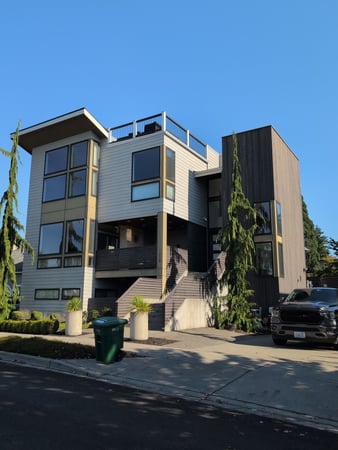
TL;DR: Summary
For Seattle homeowners, what looks like a failing roof is often moisture intrusion caused by improperly installed siding or faulty wall flashing.
You can distinguish the two by checking for water stains: ceiling stains typically indicate a roof leak, while drips around windows or doors point to siding issues. Because flat roofs and decks often lack attics for easy inspection, professional "tarp tests" are frequently used to confirm the source before expensive structural rot sets in.
Are you worried that what looks like a simple roof leak might actually be something more complicated (and expensive) hiding behind your siding? Wondering if your siding might be letting water in even if your roof looks fine?
The truth is, leaks in homes with rooftop decks or flat roofs can be incredibly misleading. What seems like a roofing issue is often coming from somewhere else entirely, like improperly installed siding or flashing. You can tell if there are water stains by the window or door or rotting wood in the siding.
At RoofSmart, we thoroughly inspect on and around your roof so that we make sure we find all the problems that impact your roof. We’ve installed and replaced over 100 rooftop decks, and even replaced entire walls when the leak was in the siding instead of the roof.
In this article, we’ll walk you through how to tell the difference between a roof leak and a siding leak, what signs to look for, and how one Seattle homeowner uncovered the real source of their leak before it caused even more damage.
How to Identify Where Your Leak Is Coming From
|
Sign or Symptom |
Likely Roof Leak |
Likely Siding Leak |
Why It Matters |
|
Water stains on ceiling |
✅ Yes |
❌ Rare |
Indicates water entering from above (roof system) |
|
Damp or rotting attic wood |
✅ Yes |
❌ No |
Shows moisture intrusion through roof decking |
|
Water around windows/doors |
❌ No |
✅ Yes |
Points to siding or window flashing failure |
|
Drip marks on interior walls |
❌ Rare |
✅ Yes |
Water traveling through wall system |
|
Leak in homes with no attic (flat roof/deck) |
⚠️ Possible |
⚠️ Possible |
Requires further testing to confirm |
|
Visible siding damage or cracks |
❌ No |
✅ Yes |
Allows water intrusion behind siding |
|
Flashing issues on walls |
❌ No |
✅ Yes |
Poor flashing redirects water into structure |
|
Leak stops when wall is covered (tarp test) |
❌ No |
✅ Yes |
Confirms siding or wall-related leak source |
How do I identify if my leak is coming from the roof or the siding?
Sometimes it can be tricky to tell where a leak in your home has originated, especially if you have a flat roof or a rooftop deck.
Signs of a Roof-Related Leak
- Ceiling Stains: Water marks appearing directly on the ceiling.
- Attic Evidence: Damp or rotting wood in the attic (if applicable).
- Standing Water: Issues typically arise after rain pools on a flat roof surface.
Signs of a Siding-Related Leak
- Window/Door Drips: Water coming in or stains appearing specifically around door frames or window headers.
- Visible Siding Damage: Cracks or gaps in your exterior siding.
- The "Shower Wall" Test: Soft or crumbling interior walls (drywall) often indicate water traveling behind the siding through the wall system.
We at RoofSmart have gotten tons of calls from customers asking us to come inspect their roof and identify the cause of their leak. We mostly see this with flat roofs and rooftop decks because there is no attic to inspect, making it difficult to narrow down where the leak came from.
Sometimes it’s immediately obvious what the issue is. For example, we recently had a customer call us because he suspected that his rooftop deck was leaking, but he wasn’t sure. He noticed the leak when he bumped into his shower wall, and it crumbled away, revealing rotting wood:
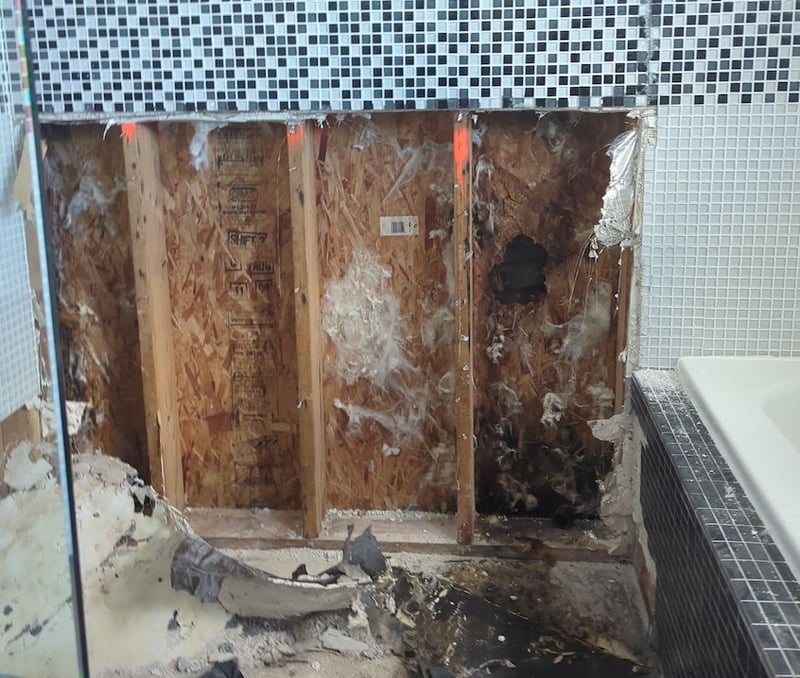
In this picture, you can clearly see rotting wood on the right, which means it was leaking there. I thought it might be a localized leak, but when I looked over to the left, I found more rot. Normally, we aren’t able to see inside the wall, but damp, rotting wood is a great indicator that you have a leak.
When I was looking at his siding, it was clear to me right away that the installer did not use the right flashing, causing the water to go sideways instead of falling down the roof. In addition, there were some cracks on the corners that were most likely letting water in. Here’s what it looked like:
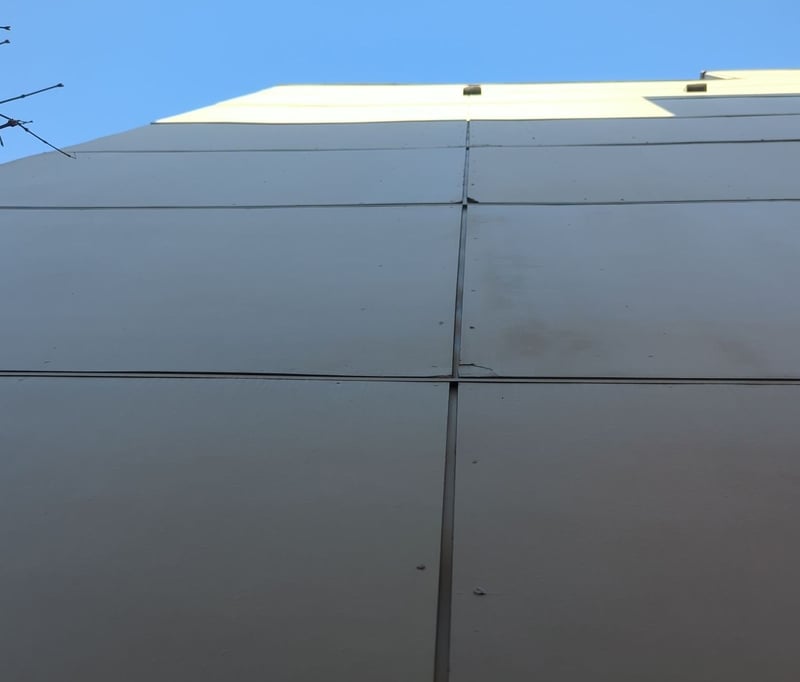
The siding all over this roof had incorrect flashing and was even bowing out in some places. The rooftop deck was in decent shape and didn’t appear to be leaking. So, that led me to believe that the siding was the true problem here.
To confirm, we put a tarp over the top of the wall. This was a test to see if the leaking would stop. If it did, that meant that the leak was caused by the siding:
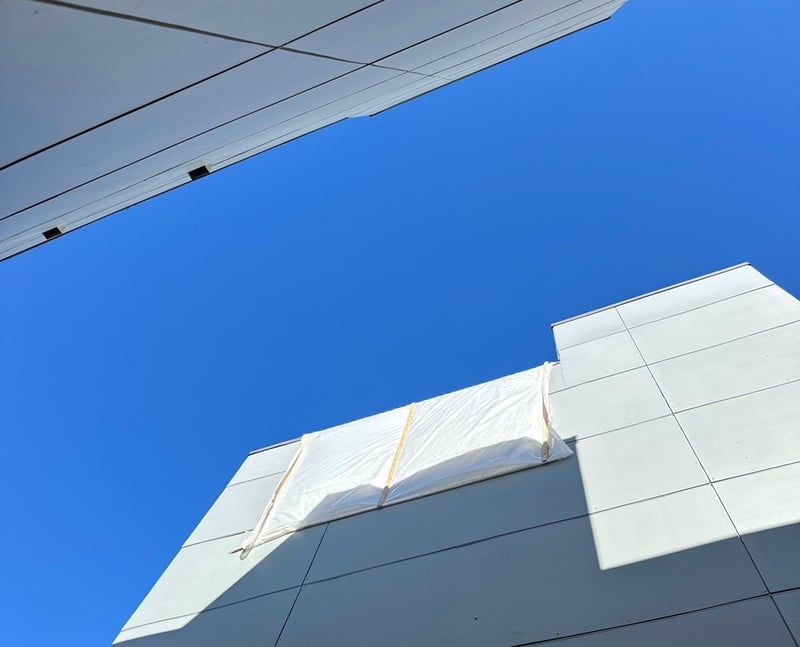
Sure enough, the leak stopped with the tarp, which confirmed that it was a siding leak.
How do you fix a siding leak on a 3-story building in Seattle?
The next step was to fix all of the siding. This meant that we had to remove all of the siding on this wall, replace the rotten wood, and then install new siding with proper flashing this time.
Here’s what the wall looked like after we ripped off all of the siding. The leaking was very extensive, so a lot of the wood was rotting:
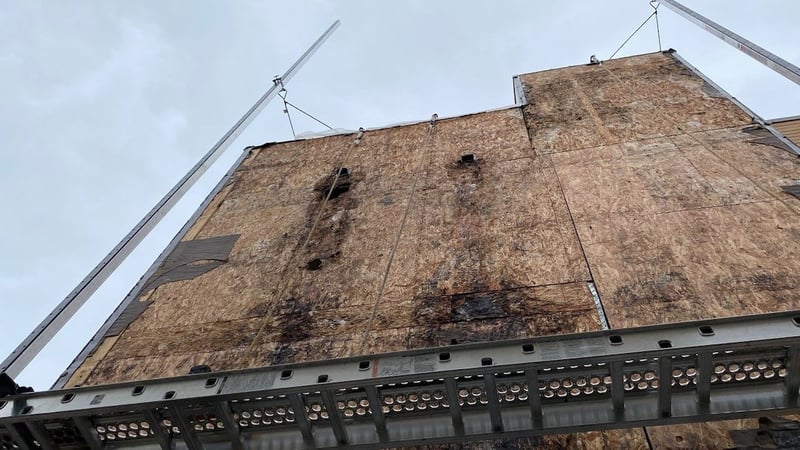
You can also see the scaffolding that we used in this picture. Because this wall was several stories high, we had to use scaffolding to reach the wall. This added some extra time and cost to the project.
The leaking had been going on for a while, so the wall was in pretty bad shape. In a lot of spots, the wood was so rotten that it would crumble when we tried to take it off. Here’s a closer shot of some of the rot:
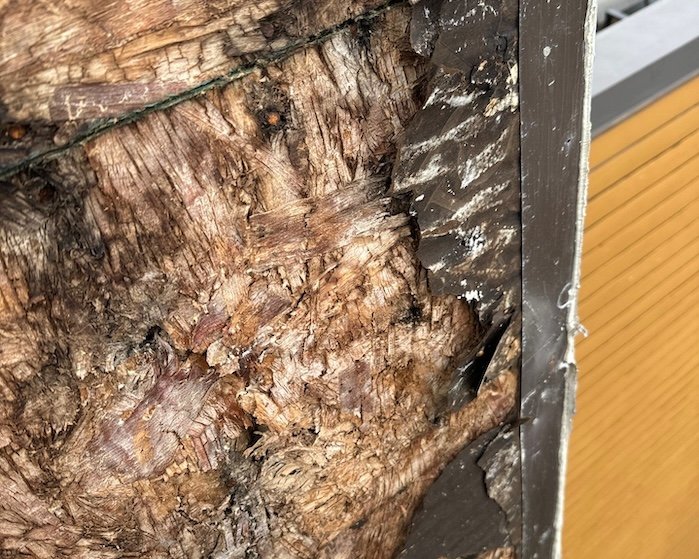
My crews have seen a lot of rotting wood on a lot of homes, but the extent of damage on this roof was a continuous shock. So much of the wall was in poor shape that we were surprised it was still standing.
Most of the work that we did on this wall was replacing rotting wood and fixing issues related to rot.
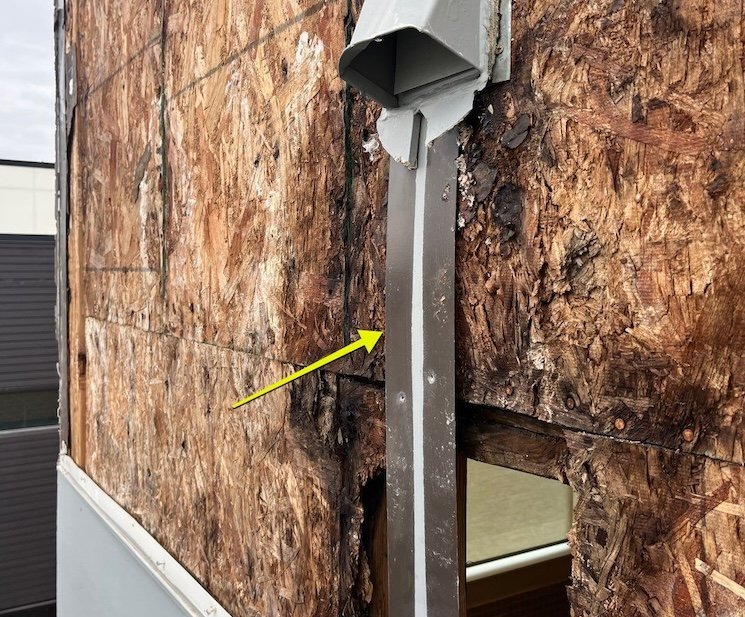
There were also a few spots where framing or other details needed to be upgraded. For example, the flashing underneath this vent was incorrect. On top of that, there are nail holes right where the water was supposed to trickle down. This likely resulted in a leak.
Another extra issue that we found was a spot in the wall that was not reinforced properly, so we added more support:
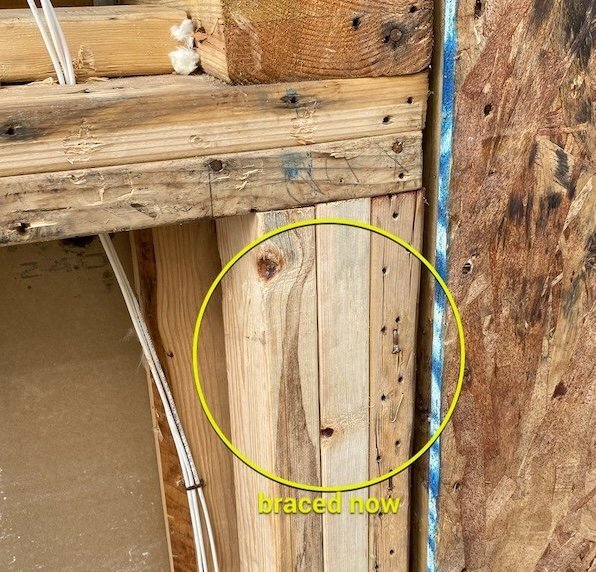
If you look in the spot that’s circled, you can see that the left and middle boards are much newer. Those are the boards we added to strengthen the framing. Before, the board on the right was the only one there.
After replacing the rotting wood and fixing other issues, we installed new siding with the proper flashing.
Now this wall has flashing that wraps around the edges of the siding to protect it from water. The flashing directs water down and out so that it doesn’t absorb into the siding or the wall behind it.
We also layered the flashing with ice and water shield over top of it so that the nail is covered by a protective barrier:
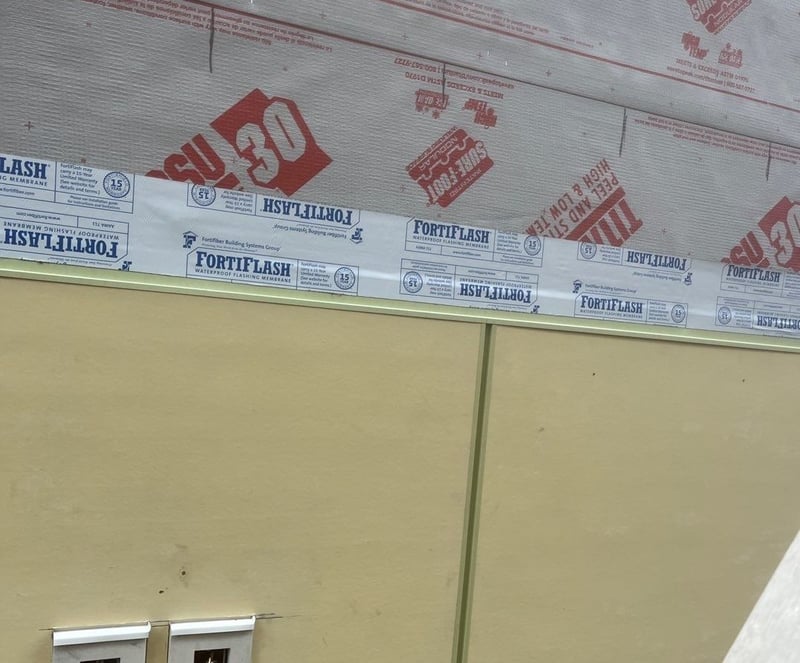
This ensures that the wall is extra protected from any chance of a leak, even if a bit of water somehow gets behind the flashing.
How much does it cost to repair a rooftop deck leak in Seattle?
This case study is a perfect example of how quickly a hidden leak can turn into a much bigger and more expensive problem. What started as what seemed like a simple leak ended up requiring extensive repairs, including replacing rotting wood, rebuilding sections of the wall, and reinstalling siding with proper flashing.
And that’s the reality with rooftop deck leaks (whether it’s the roof or the siding) in the Seattle area: by the time you notice the damage, it’s often already spread much farther than you think.
The longer it goes undetected, the more structural repairs are needed and the higher the cost climbs. Rooftop deck leaks are particularly well hidden, no matter whether it’s in the roof or down in the siding.
The exact price to fix a rooftop deck leak can vary widely depending on factors like:
- How long the leak has been happening
- How much rot or structural damage is present
- Accessibility (like needing scaffolding on multi-story homes)
- Whether the issue is isolated or widespread
If you're trying to understand what your situation might cost and what factors will impact your repair bill, the next step is to break down the numbers.
Read next: How Much Does It Cost to Repair a Rooftop Deck in Seattle?
https://getroofsmart.com/blog/cost-to-repair-rooftop-deck-seattle
This guide will walk you through real pricing ranges, what drives costs up, and how to budget for repairs so you’re not caught off guard during your siding or rooftop deck leak repair.

Frequently Asked Questions About Roof vs. Siding Leaks
1. Can a rooftop deck leak actually be caused by siding?
Yes, a rooftop deck leak can sometimes be caused by siding.
If water is entering through improperly installed siding or faulty wall flashing, it can travel behind the structure and appear as though the roof or deck is leaking. This is especially common in homes without attics.
2. How do I know if my leak is coming from the roof or the siding?
You can identify the source by looking at where the symptoms appear:
- Roof leaks typically cause ceiling stains and attic moisture
- Siding leaks often show up around windows, doors, or inside walls
In some cases, a controlled test (like covering a wall section) may be needed to confirm the source.
3. Why are leaks harder to diagnose on flat roofs or rooftop decks?
Flat roofs and rooftop decks don’t have attics, which removes a key inspection point.
Without attic access, it’s harder to trace water entry points, and leaks from siding or walls can mimic roof leaks, making professional diagnosis more important.
4. What causes siding leaks on multi-story homes?
Common causes include:
- Improper or missing flashing
- Cracked or damaged siding
- Poor installation techniques
- Water being redirected sideways instead of downward
5. How do professionals confirm the source of a leak?
Contractors often use controlled tests, such as:
- Covering sections with a tarp
- Inspecting flashing and siding details
- Checking for rot behind walls
If the leak stops after covering a specific area, it helps pinpoint the exact source of the problem.
6. How much does it cost to fix a siding leak versus a roof leak?
While you link to a cost guide, a brief summary here manages expectations. Costs vary based on the extent of wood rot and whether scaffolding is required for multi-story repairs.
7. Can I ignore a small siding leak if it only happens during heavy rain?
No. In the Seattle climate, even small leaks can lead to extensive structural rot that remains hidden behind the siding until the wall is "crumbling away".
8. Does homeowners' insurance cover siding or rooftop deck leaks?
Coverage often depends on whether the leak was caused by a sudden "peril" (like a storm) or gradual wear and tear/poor installation. It is best to have a professional inspection first to document the cause.
9. How long does a siding repair take on a multi-story home?
Repairs on taller buildings often take longer because they require scaffolding for access and potentially more extensive wood replacement if the rot is deepTopics:
