

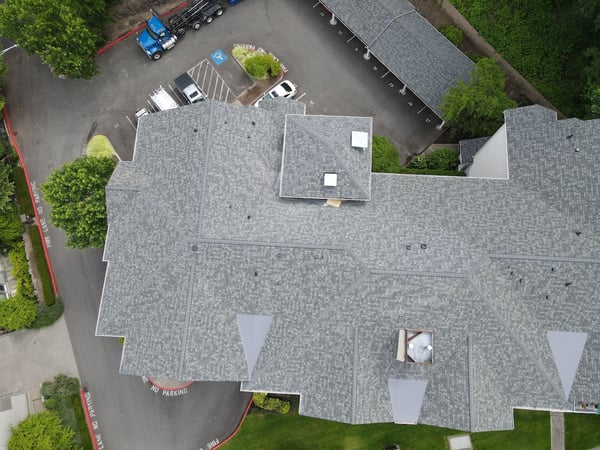
TL;DR: Summary
Roofing a multi-story building requires extra safety measures, planning, and logistics compared to a standard residential project.
Contractors must use equipment like cranes for material transport, set up protected work zones, and ensure safe roof access (such as installing roof hatches) to protect both workers and people below.
While the roofing process itself is similar, multi-story projects often uncover additional issues like rot or low-slope areas that require specialized materials and repairs.
The key takeaway: multi-story roofing is more complex and time-intensive, so choosing an experienced contractor who prioritizes safety and coordination is critical for a successful project.
Are you concerned about how a roofing project on a multi-story building could impact the safety of your tenants or customers below? Are you unsure what extra precautions a roofer should take to safely handle a multi-story roofing project?
Roofing a multi-story building is far more complex than a standard residential project. Between coordinating with tenants, safely moving materials several stories up, and protecting everyone below from falling debris, there’s a lot more that can go wrong if the job isn’t handled properly.
At RoofSmart, we repair and replace hundreds of roofs every year. We have lots of experience coordinating safety logistics on tall buildings and minimizing delays from extra safety precautions as much as possible.
In this case study, we’ll walk you through exactly how our team approaches multi-story roofing projects on an actual building in the Seattle area, so you can understand what should happen on your property and feel confident your building is in good hands.
Multi-Story Roofing vs Standard Residential Roofing
|
Category |
Multi-Story Roofing |
Standard Residential Roofing |
Why It Matters |
|
Material Transport |
Crane required to lift materials |
Materials carried by hand or conveyor |
Safer and more efficient on tall buildings |
|
Debris Removal |
Crane buckets or controlled drop zones |
Dump trailers or ground-level disposal |
Reduces risk to people below |
|
Roof Access |
Roof hatch or built access system |
Ladders or simple access points |
Improves long-term maintenance safety |
|
Safety Measures |
Caution zones, restricted access areas |
Basic jobsite awareness |
Protects residents and pedestrians |
|
Fall Protection |
Strict harnessing and edge safety |
Strict harnessing and edge safety |
Fall protection is crucial no matter the building height |
|
Project Complexity |
Coordination with tenants and logistics |
Minimal coordination needed |
Multi-family buildings require planning |
What steps does RoofSmart take to stay safe when roofing on tall buildings?
When our crews are roofing on multi-story buildings, they take extra steps to prioritize safety, such as:
1. Using a crane to lift supplies: When you’re working on a tall building, it’s not really a great idea (for many reasons) to carry the roofing supplies up to the roof by hand. So, instead, the safest and most efficient option is to use a crane to lift everything you need up onto the roof. For example, on a 5-story apartment complex that we recently worked on, we hired a crane. With a building this high, a crane is really the only safe option. We also attached a bucket to the crane for easy access to a dumpster while roofing. This helps reduce potential danger to others so that the crew doesn’t have to throw stuff all the way down to the ground.


2. Setting up caution tape: To help protect people from potential injury, we set up caution tape on the ground to keep people out of active work zones. When working on an apartment complex, it’s important to keep not only our crews safe, but also everyone living in the building. Caution tape is a simple but effective way to let people know that they should avoid certain areas. We also used this on the 5-story building to keep people away from potential danger.
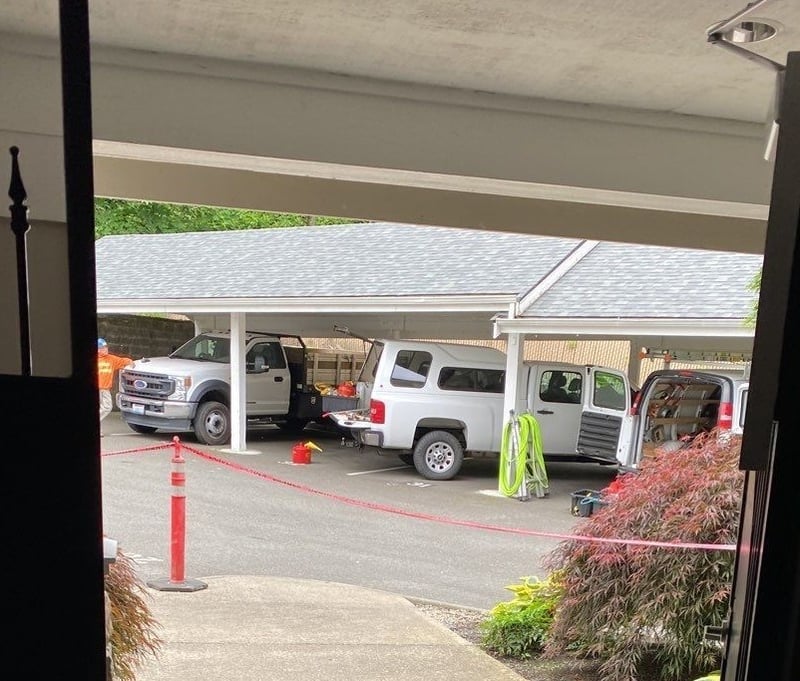
3. Using a roof access hatch: On a multi-story roof, ladders aren’t a safe or realistic option for accessing the roof. Instead, your building will need a roof hatch. On the 5-story roof we worked on recently, they did not have a roof hatch, so our first step was to install one. We cut a hole through the attic space up to the roof, built the hatch space, installed a hatch on top, and added some ladders. Now they have an easy way to access the roof. When we first got there, they talked about how hard it was to access the roof for maintenance, so this hatch will come in handy for a long time. We made sure to put it in a spot on the roof away from the edge to make it easy and safe to use the hatch.


And, of course, the roofing crews are always following standard safety protocols that we follow on a one-story building or a standard residential roof (like wearing harnesses to protect them from potential injury). But on a tall building, it’s important to take extra precautions to ensure that the roofers and others in the surrounding area stay safe.
What does a roof replacement look like on a multi-story building?
A roof replacement on a tall building looks basically the same as a standard roof replacement (it just happens much higher up). As we were tearing off the old shingles, we discovered some places on the roof that were rotting:
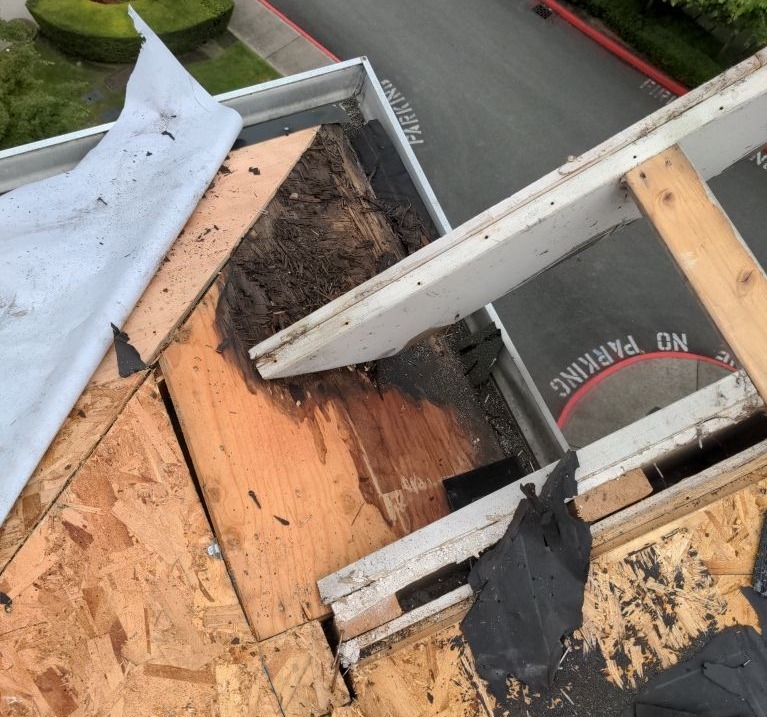
There were a few of these rotting spots, and they were mostly on the edge of the roof by the gutter. After fixing this, we were able to put down the underlayment, shingles, and other materials like normal.
The unit that we did was just one large building, so we didn’t really have to worry about readjusting the crane to get new roof materials onto a bunch of different roofs (aside from the one carport that we reroofed, which didn’t require a crane.
In addition, a lot of the siding on this building was rotting, so we replaced that as well. There were a few small patches on the roof that were too shallow for shingles, so we installed PVC instead:
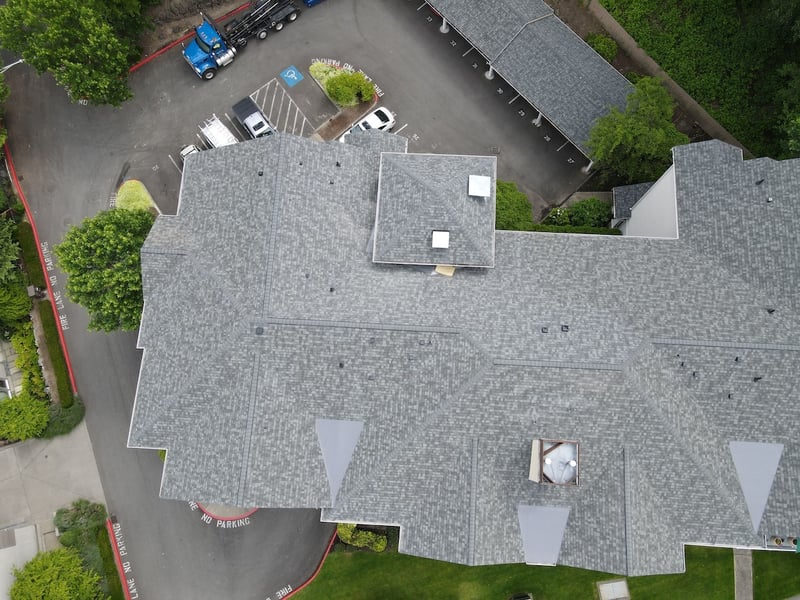
This will help provide additional protection for these spots. If they had asphalt shingles on them, they’d be vulnerable to leaks and water damage (even with ice and water shield). This is important for anyone living in the Seattle area because of the humidity and constant rainfall.
Asphalt shingles cannot drain properly on too low a slope, so it’s better for your roof (and your wallet) to choose a flat roof material like PVC instead.
We also built a chimney chase around the chimney to protect it from condensation and moisture damage. We placed a layer of underlayment around the chimney and then installed siding over the top of that.
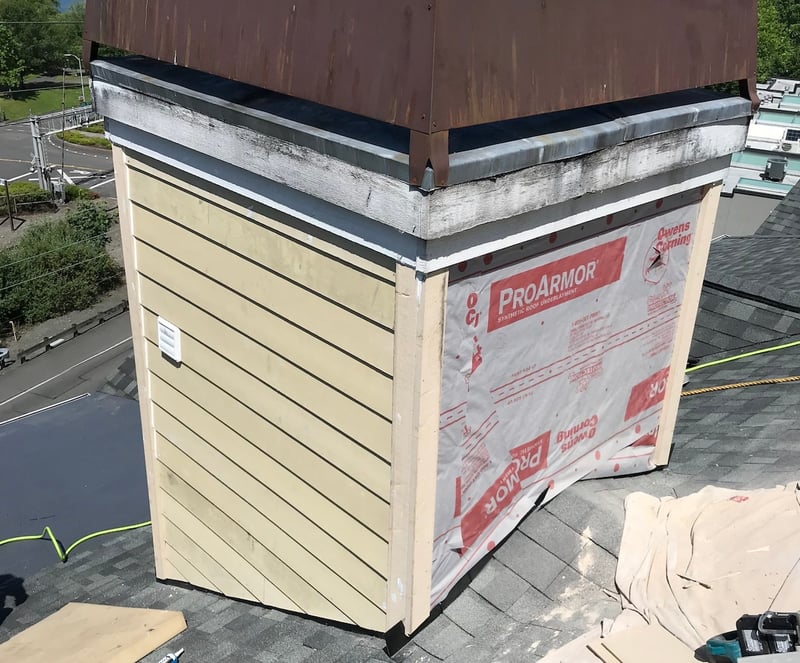
The owners were very pleased with the new roof and all of the other updates we made, especially the new roof hatch. They chose an Owens Corning shingle in Estate Gray, which is a fitting choice for an apartment complex and complements the color of their building well.
Why do multi-story and commercial roofing projects take longer than you might expect?
By now, you’ve seen that roofing a multi-story building isn’t just about installing materials: it’s about managing safety risks, coordinating logistics, and protecting everyone in and around the property. Every added layer of complexity, from staging materials to controlling jobsite hazards, requires careful planning and execution.
All of these extra steps don’t just make the project safer; they also make it take longer.
If you’re planning a roofing project on a commercial or multi-story building, it’s important to understand that longer timelines aren’t a sign of inefficiency. They’re often the result of doing the job correctly and responsibly.
Read our article “Why Do Commercial Roofs Take Longer to Install Than Residential Roofs?” to get a breakdown of exactly what impacts installation timelines so you know what to expect and how to plan your project with confidence.
Frequently Asked Questions About Multi-Story Roofing Safety and Processes
1. How is roofing a multi-story building different from a house?
The main difference is safety and logistics.
Multi-story roofing requires:
- Cranes to transport materials
- Controlled work zones for safety
- Specialized roof access (like hatches)
These added steps help protect both workers and people on the ground.
2. Do roofers always use a crane on tall buildings?
In most cases, yes.
For multi-story buildings, cranes are the safest and most efficient way to:
- Lift heavy materials
- Remove debris
- Reduce physical strain and risk
Carrying materials manually is typically not practical or safe.
3. How do roofers keep people safe during a multi-story roofing project?
Roofers use several safety measures, including:
- Caution tape and restricted zones
- Controlled debris removal
- Proper fall protection equipment
These steps are especially important in occupied buildings like apartments.
4. What type of roofing materials are used on multi-story buildings?
It depends on the roof design.
- Asphalt shingles are most common due to their low price
- PVC or flat roofing materials are used on low-slope roofs
Using the correct material for each section helps prevent leaks and drainage issues. You can install almost any kind of roofing on a multi-story building.
5. Why is a roof hatch important on a multi-story building?
A roof hatch provides safe and reliable access to the roof.
Without one:
- Maintenance becomes difficult
- Access may be unsafe or impractical
Installing a hatch improves both safety and long-term usability of the building.
Topics:
