

Are you in need of a tarp but worried that doing it wrong might ruin your roof? Do you feel stuck waiting for a roofer while your home is exposed to even more water damage?
Many homeowners assume any tarp will do the trick, but if it’s not installed correctly, water can still get in, causing further damage and frustration.
At RoofSmart, we know how problematic a leak can be after repairing and replacing thousands of roofs and offering emergency tarp installation. We know how easily roofs can be ruined by water damage over the years in such a rainy, damp climate.
In this article, we’ll walk you through the proper way to install a tarp over a leaking roof and help you decide whether it’s something you should tackle yourself or leave to a professional.
What is the proper way to install a tarp over a roof leak in Seattle?
If your roof was damaged during a storm and starts leaking, then you’ll likely need to have an emergency tarp installed over the leak to prevent it from getting worse. Professional roofers offer this service.
To properly install a tarp for a roof leak, you need to do the following:
1. Fully cover the leak: Make sure that your tarp is big enough to cover the roof leak and the roof around it. Don’t use a tarp that’s worn out and has holes in it.
2. Cover the highest point of the roof: Typically, what you want to do is make sure you get it up and over the highest point. That means wrapping the tarp over the ridge or the hip where you have your leak. Because of this, the tarp tends to take up a lot more space than you think it will.
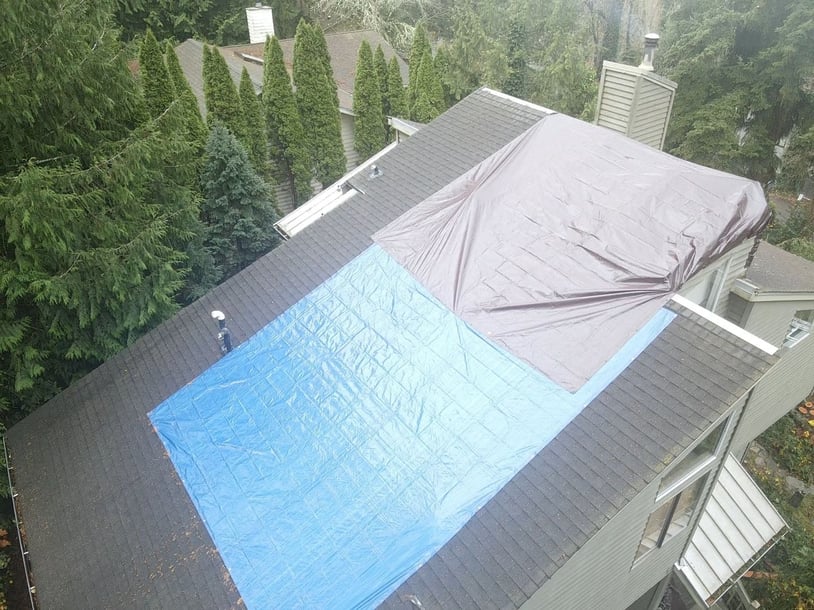
In this example, the tarp goes all the way to the top of the roof and rolls over. Ideally, you’d only need one tarp. This prevents water from traveling down, getting under the tarp, and making the leak even worse.
3. Wrap the edges and secure them with nails or screws: the way that your roofer should do this is by taking a piece of wood and curling the edge under it. And then nail through that piece of wood. And then you secure it with screws or nails. It goes all the way over the affected area so that when water goes down, it can’t get in.
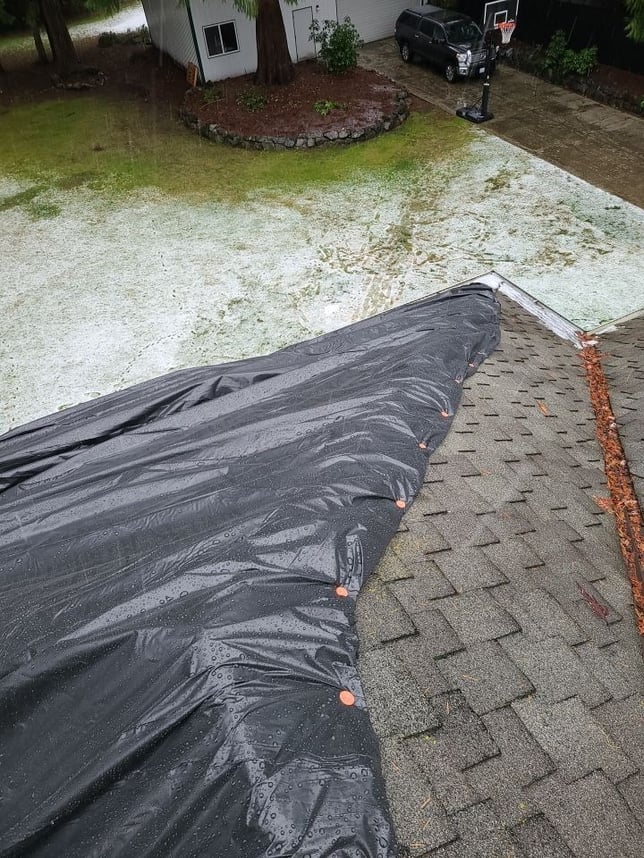
This can hold up for maybe six months, until it degrades in the sun. So if you do it in the winter, you can get quite a lot of life out of it. All of the edges should be wrapped like this.
Keep in mind that when you take the tarp off, you have to replace the whole area that the tarp was covering, even if not all of it was damaged before. To properly secure the tarp, you have to nail into the roof, which means those shingles will need to be replaced.
So if you have a leak that’s really far away from the highest point on your roof, then you’re going to have a big section of the roof that needs to be replaced. You're going to need a big tarp, and it’s going to increase the cost of the replacement.
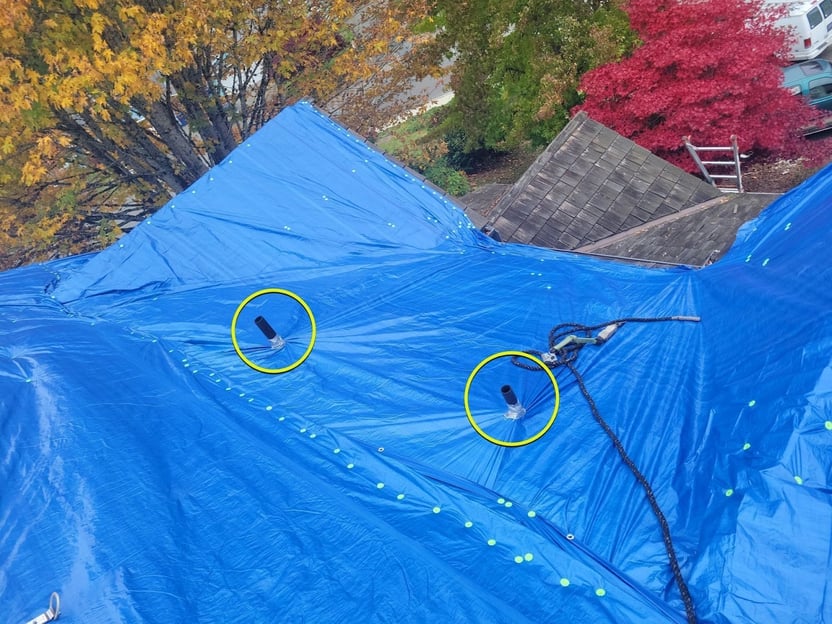
4. Tape around anything sticking out of the roof: If you’re installing the tarp over an area with pipes, vents, or anything else that sticks out of the roof and the tarp, then you need to tape around it. Cutting a hole in your tarp makes it vulnerable, so you need to seal around it with tape.
Here’s an example:
What does a bad tarping job over a roof leak look like?
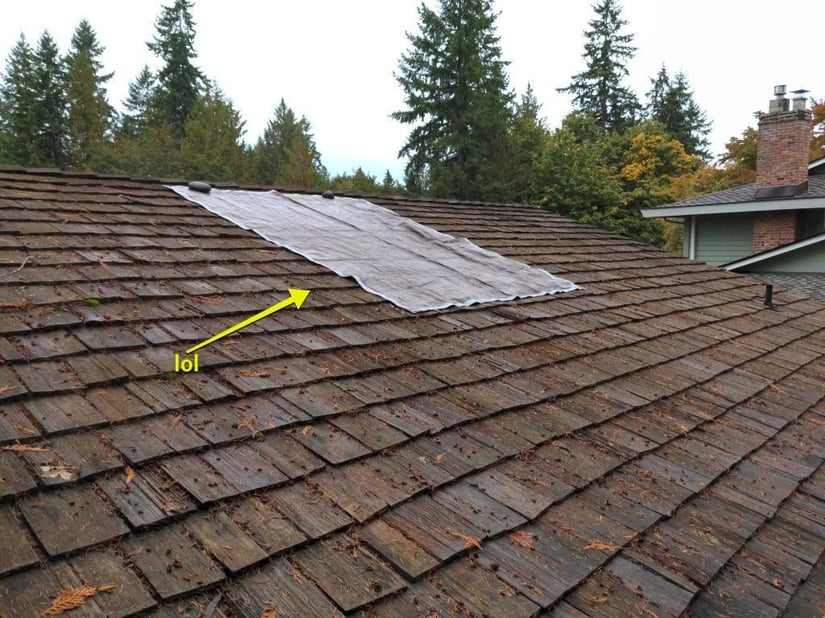
This is a bad tarping job. It might cover the roof leak, but it’s still pretty ineffective.
Here’s what went wrong with this tarp job:
- It doesn't go over the ridge. Rain that lands here just goes underneath it. The edge of the tarp is right at the ridgeline, which gives water less momentum, but there’s also a big gap at the top where water has direct access to get underneath the tarp.
- It doesn't have any protection against the wind: You've got loose edges all around the tarp, so if there is any more wind, it's just going to rip off. Those two rocks might keep the tarp from blowing off the roof, but they don’t secure the other 3 sides of the tarp. This could leave the leak completely exposed to the elements.
- No folded edges: Water can get underneath the tarp from any side. No leak-proofing was done.
Should I install the tarp over the roof leak myself or hire a professional?
If your tarp is not installed properly, then water will still get underneath it, and it will continue to leak.
Professional roofers have the tools and the experience to safely and effectively install the tarp on your roof. If you go up on the roof to do it yourself, you risk these possibilities:
- You do it wrong, and the leak continues
- You fall off the roof and get hurt
How do I decide between getting a tarp or an immediate repair for my roof leak?
If you've got a roof leak, then sometimes you can just do a repair because maybe that's going to be less invasive. Other times, you might get a tarp first. But how do you know which one is the right move for your home?
If it's an insurance claim, you’ll for sure get it tarped because it's going to take them a while to get you your coverage. But getting a tarp installed professionally by your roofer should be covered by insurance.
If you're paying out of pocket and you want to keep it absolutely as cheap as possible, then you might just want to call a repair crew directly and have them come out and patch it. And if they can't patch it, then they’ll tarp it.
Your roofer can help you decide which move is best for you.
Can you use a tarp for temporary leak protection on a flat roof?
So, if you need to install your tarp over the highest point on your roof, how does that work on a flat roof that has no peak?
Putting a tarp over a flat roof can be done, but it’s a lot more complicated. On a regular slope, you put the tarp down directly onto the roof and secure it in place.
However, on a flat roof, you can’t put a tarp directly on the roof because that won’t be effective.
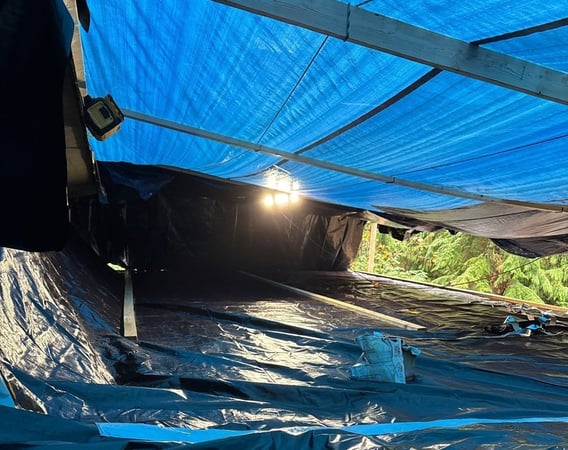
Instead, you basically have to build a tent of tarps over the entire roof to keep water out.
Here’s an example of what that looks like:
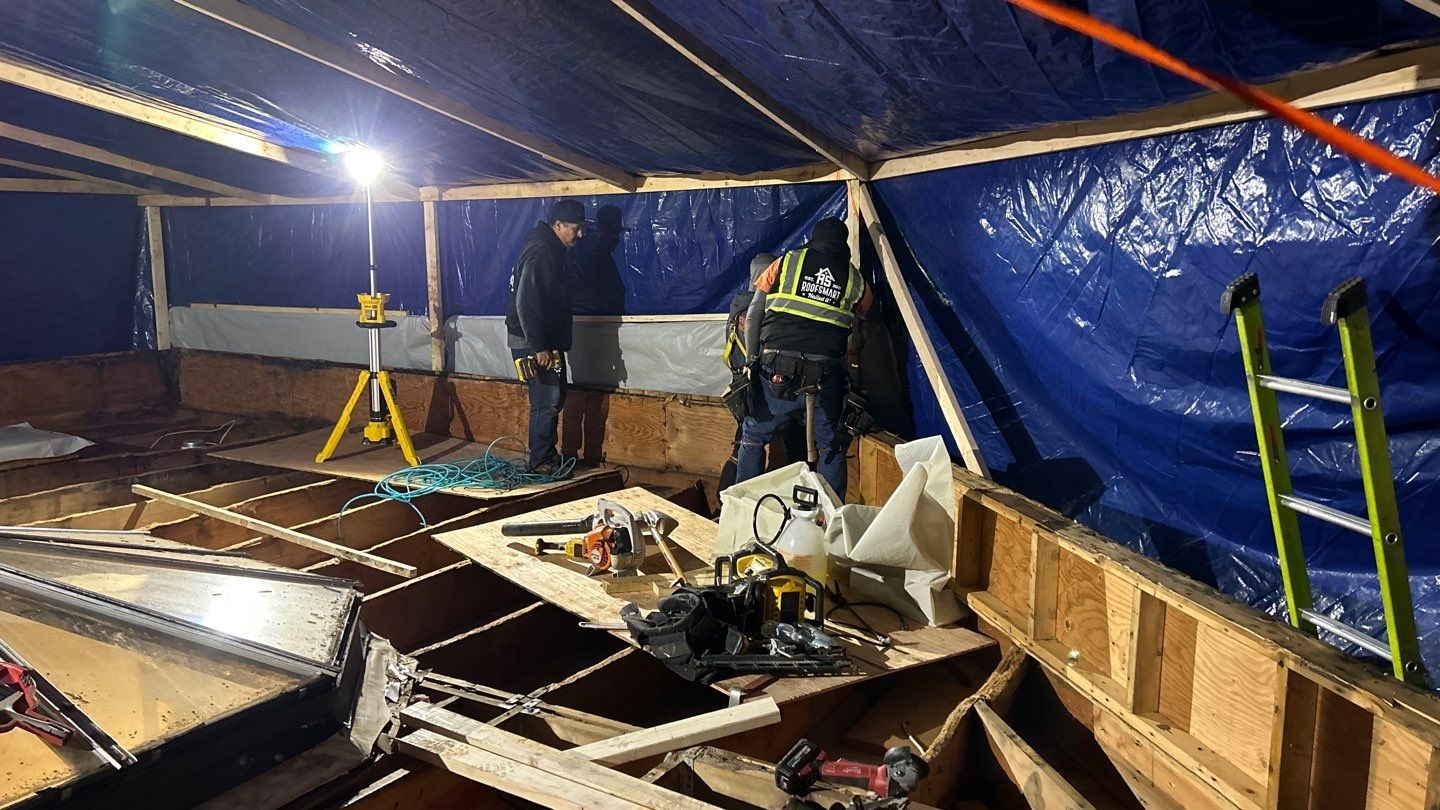
This can become pretty time-consuming and increase the total cost of the roofing project. But, this is the proper way to set up the tarp so that it protects the roof and gives the roofer space to work.
Flat roofs are extremely vulnerable to the rain. This may seem like an excessive measure, but it’s really the only way to protect your roof until your roof is fully replaced.
What should I do after tarping my roof to prevent more damage?
If you've had a tarp installed on your roof after a storm, you're probably feeling a little better knowing the leak is under control ( at least for now). But a tarp is just a temporary fix.
And if you’re in the Seattle area, where it rains often and heavily, waiting too long to take the next step could mean the difference between a simple repair and tens of thousands of dollars in damage.
So what should you do next? Whether you're dealing with missing shingles, visible water stains, or just an uneasy feeling that something's wrong, it’s critical to act quickly.
Read our article “6 Steps to Take After a Wind Storm Damages Your Roof” to learn exactly how to protect your home, document your damage for insurance, and decide whether a repair or full replacement is the right move.

Topics:
