

TL;DR: Summary
The average cost of a roof replacement in the Seattle area ranges from $20,000 to $45,000+ for a typical home, with asphalt shingles being the most common and affordable option ($20,000–$35,000 for ~2,500 sq ft). Prices vary widely based on material, roof size/complexity, labor, and hidden issues like mold or rotten decking (common in the rainy PNW).
2026 Cost Ranges by Material (approximate for 2,500 sq ft roof):
- Asphalt shingles: $20,000 – $35,000
- Metal roofing: $40,000 – $70,000
- Cedar shake: $50,000 – $80,000+
- Tile (concrete/clay): $45,000 – $100,000+
- Flat/low-slope (PVC/TPO/etc.): $25,000 – $50,000+
Key takeaway: Budget for surprises — mold, decking replacement, or ventilation upgrades can add $4,000–$15,000+. Get multiple in-person inspections and use our free Instant Estimator for a personalized ballpark.
| Roof Material | Cost per Sq Ft (2026 est.) | Typical Total for 2,500 sq ft Roof | Lifespan (Years) | Best For in Seattle |
|---|---|---|---|---|
| Asphalt Shingles | $8 – $14 | $20,000 – $35,000 | 20–30 | Most homeowners (affordable) |
| Metal Roofing | $15 – $25+ | $40,000 – $70,000+ | 40–70 | Long-term durability, modern look |
| Cedar Shake | $18 – $30+ | $50,000 – $80,000+ | 30–50 | Traditional aesthetic |
| Concrete/Clay Tile | $15 – $40+ | $45,000 – $100,000+ | 50+ | Premium, fire-resistant |
| Flat/Low-Slope (PVC etc.) | $12 – $22 | $25,000 – $50,000+ | 20–40 | Flat roofs, commercial-style homes |
Feeling lost about how much a new roof will cost in Seattle? You’re not alone. With so little clear pricing information, it’s frustrating trying to budget for a new roof. And when roofing companies only say “It depends,” it makes things even more confusing.
At RoofSmart, we’ve helped thousands of Seattle homeowners navigate roof replacements over the last 14 years. We’ve seen how unpredictable pricing can be, and we know the key factors that determine your actual cost.
The average Seattle homeowner buys asphalt shingles, making the average cost of a new roof $20,000 to $30,000. There are many factors that can drive up this cost, including choosing a more expensive roofing material.
In this article, we’ll break down real Seattle-area roof replacement costs, what impacts pricing, and how you can get an accurate estimate for your home.
After reading this article, you will understand how much it costs to have your roof replaced in the Greater Seattle area.
Want to know how much roof replacement costs for your home? Use our Instant Estimator tool to get a ballpark price range:

What Are the Cost Differences Between Roof Types?
A factor that will greatly impact the cost of the roof is the type of shingle that is used. There are a wide variety of different roof types that you can choose from. The reason that Seattle homeowners choose asphalt shingles often is that it’s the most affordable option.
Selecting a different roof type will cause the biggest increase in your new roof’s cost, but it can also provide you with added protection or a longer-lasting roof than you’d get from asphalt shingles.
When looking at the cost for each roof type, keep in mind that Seattle’s labor costs tend to be higher than the national average, so expect to pay slightly more for skilled roofing contractors. The cost estimates in this article include materials and labor.
Here’s an overview of the most common roof types and their costs:
- Asphalt composition shingles (most common) – typically ranges between $6-$8 per square ft.
- Strip shingle / 3-tab shingle roofing
- Builder-grade basic comp shingle roofing
- Deluxe, thicker composition shingle roofing
- Metal Roofing – typically around $12-$16 per square ft.
- Stamped Metal Roofing
- Standing Seam Metal Roofing
- Corrugated Metal Roofing
- Barn / Agricultural Metal Roofing panels with exposed fasteners (this is the most affordable option).
- Cedar Shake– typically ranges between $18-$25 per square foot.
- Cedar Shingles are often used on walls, sometimes on expensive roofs
- Medium Cedar Shakes, treated and raw
- Heavy Cedar Shakes, treated and raw
- Tile Roofing
- Concrete Tile Roof – typical cost varies more widely. Roughly $15/sqft
- Clay Tile Roof – premium grade, quarried and freighted in. $35-$40/sqft range
- Slate Tile Roofing
- Flat Roofing – the typical range is $10-$18 per square foot
- Tar, built-up roofing (BUR), gravel top, torchdown roofing
- Single-ply membrane, like PVC / TPO / EPDM Roofing
- Specialty walking deck membranes like Dec-tec or Global Dec-K-Ing covered patio waterproof roofing, often with rails
All of these roof types require different skill levels to be installed, and some of them take longer to install because they are more difficult to work with. Both of these factors will add to labor costs.
Roof Type Cost Comparison Table
| Roof Material | Cost per Sq Ft (2026 est.) | Typical Total for 2,500 sq ft Roof | Lifespan (Years) | Best For in Seattle |
|---|---|---|---|---|
| Asphalt Shingles | $8 – $14 | $20,000 – $35,000 | 20–30 | Most homeowners (affordable) |
| Metal Roofing | $15 – $25+ | $40,000 – $70,000+ | 40–70 | Long-term durability, modern look |
| Cedar Shake | $18 – $30+ | $50,000 – $80,000+ | 30–50 | Traditional aesthetic |
| Concrete/Clay Tile | $15 – $40+ | $45,000 – $100,000+ | 50+ | Premium, fire-resistant |
| Flat/Low-Slope (PVC etc.) | $12 – $22 | $25,000 – $50,000+ | 20–40 | Flat roofs, commercial-style homes |
How Does Your Home’s Layout Affect Roof Replacement Costs?
Now that you have an idea of how much a roof replacement costs depending on the type of roof you choose, it’s time to consider the other factors that can impact the cost of your new roof. Your roof size, slope, and layout all have an impact on how much your roof costs. Let’s dive into the specifics:
Does the Design or Size of My Roof Change the Price?
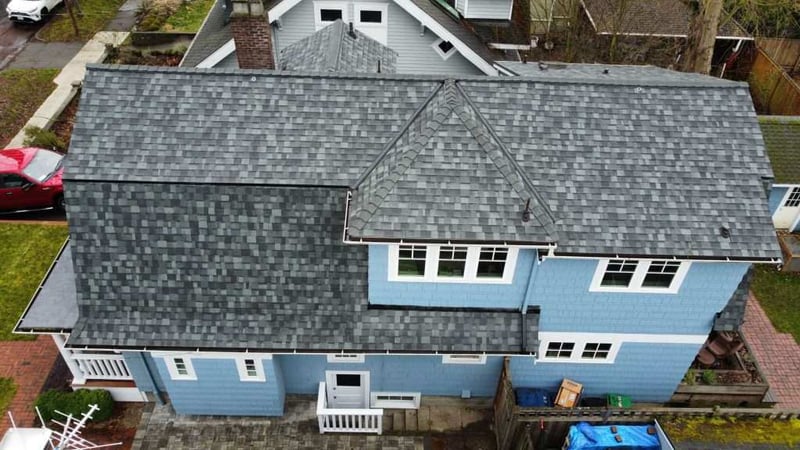
If your home is all on one level, usually your roof will cost more than if you have a 2 or 3-story house. This is because all of your living space and garage floor space has a roof.
However, a multi-story home can cost less because the roof might cover two floors at the same time. In the Seattle area, it is most common to see multi-story homes.
You might also have an outbuilding like a garage, or a workshop, that needs to be included in the price.
Can Limited Yard Access Make My Roof More Expensive?
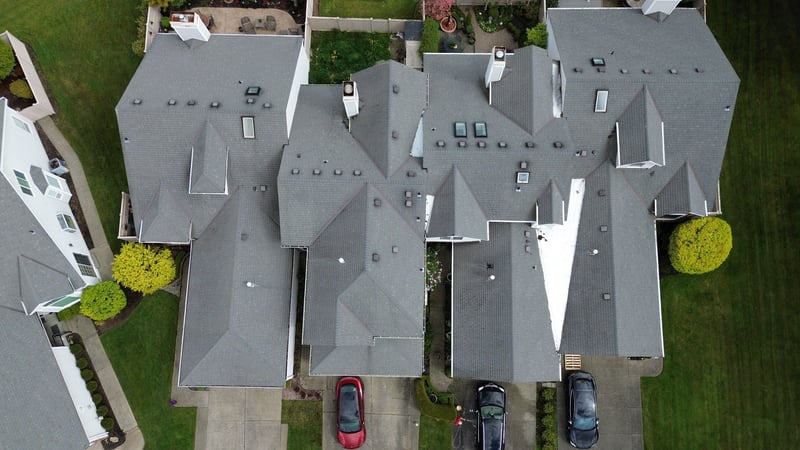
Some projects have great access, meaning that a shingle supplier can drive a truck-mounted conveyor belt to load up shingles right up to the roof.
It also means the removal of your old roof goes smoother because the dumpster can be parked right next to your house. This makes it very easy to toss away the old shingles.
When access is challenging, extra labor is required to load supplies onto the roof and to bring the shingles to the dump trailer. So, if your house is really close to your neighbor’s house or you have a lot of trees surrounding your house, this can make accessing your yard difficult and increase labor costs.
Does a Steeper Roof Cost More to Replace?
If your roof is easily walkable (even if it’s not flat), then the labor cost will be far less than if you’re working on something very steep (like a church steeple).
Steeper roofs require the crews to take extra precautions and can make it trickier to navigate the roof. Taking more safety precautions means labor costs will increase.
.jpg?width=800&height=1067&name=Steep%20Church%20(3).jpg)
What Unexpected Costs Might Increase My Roof Replacement Price?
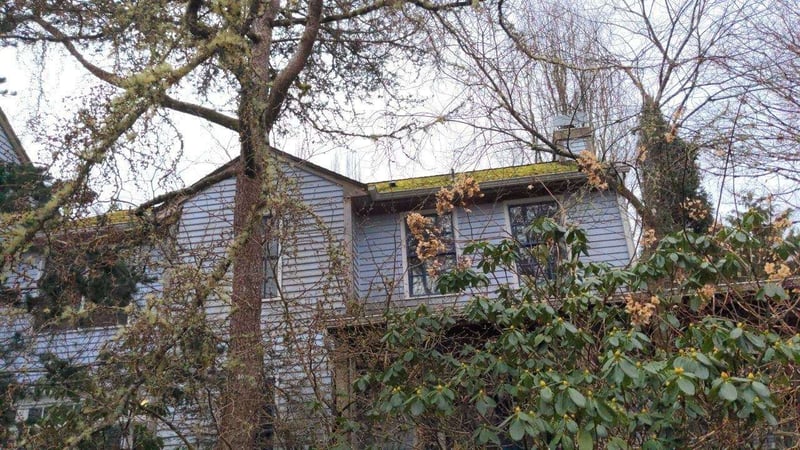
Sometimes your roofer will discover issues on your roof that must be fixed during the installation. Some of these issues (like mold or poor ventilation) can be found ahead of time during the inspection. However, sometimes your roofer cannot see something like rotting wood in the roof deck until the project has already begun.
Roof Decking
Roof decking is the base that your roof is installed on. It’s typically plywood or OSB.
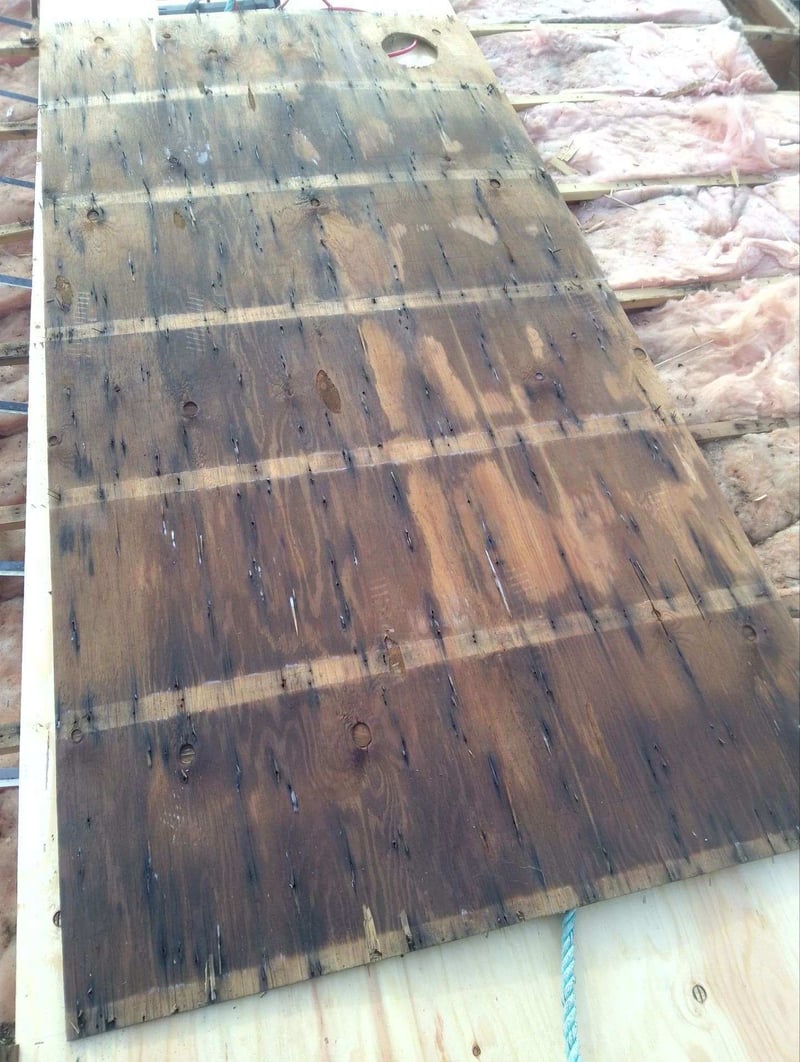
Sometimes there is a leak in your roof that goes unnoticed until your roofer begins tearing off your old roof. If your roof decking is moldy or rotting, it needs to be replaced.
In a rainy area like Seattle, it’s common for a few boards to need replacing. See below for cost estimates.
If water damage and rotting are bad enough, you might need to replace most or all of your roof decking. This can add $4k-$12k, depending on the size of the project.
Carpentry And Specialty Needs
If you’re fortunate, you won’t have any structural defects and no rotten wood or mold to address. But in this rainy Seattle area, there’s usually some hidden damage to fix.
Here are some common issues and the average cost of fixing them:
- Rotten framing or plywood– $1,000 to $2,000
- The wider range could be anywhere from $100 to $12,000+ depending on the extent of the work that needs to be done. Unfortunately, we won’t know until we get on the roof.
- Mold– $4,000 to $9,000
- The amount of mold varies from house to house. The worse it is the more it will cost.
- Ventilation defects– $1,000 to $3,000
- Fixing this can cost from $300 up to $15,000. You might only need one section of your roof’s ventilation system fixed, or you might have to replace the whole thing.
- Insulation– $2,000
- This can also vary depending on how much or how little insulation you already have. This could increase if the insulation is moldy and all needs to be replaced.
What’s the Next Step to Estimate Your Roof Replacement Cost in Seattle?
At the end of the day, replacing your roof is a big decision—especially in Seattle, where the weather and local building codes can impact costs significantly.
Now that you understand the major factors that influence pricing—from the size and pitch of your roof to material selection—you’re in a better position to estimate your own costs.
If you’re considering a roof replacement, your next step is to get a personalized estimate based on your specific home and roofing needs.
At RoofSmart, we take the guesswork out of roofing. Our expert team will walk you through a detailed inspection process and ensure you’re getting the best value for your investment.
Want to see every roofing topic explained simply? Visit our Roofing Resource Learning Center.
Learn the real difference between 30-year and 50-year shingles here: https://getroofsmart.com/blog/thirty-versus-fifty-year-shingle
Not sure if your roofer is qualified? Read this first: https://getroofsmart.com/blog/roofing-contractor-qualified
Frequently Asked Questions
1. What is the average cost of a roof replacement in Seattle?
For a typical 2,500 sq ft home, the average cost ranges from $20,000 to $45,000. This varies significantly based on the material chosen, the complexity of your roof, pitch, and local labor rates.
2. Why is roofing more expensive in Seattle than in other cities?
Seattle costs are higher due to several factors: higher-than-average labor rates, the need for specialized moisture barriers due to our rainy climate, and the high frequency of discovering rot or mold during tear-offs.
3. How long does a typical roof replacement take?
Most residential roof replacements in the Seattle area take between 2 and 5 days, depending on the weather and the size of the project.
4. What is the most popular roofing material in the PNW?
Asphalt composition shingles remain the most popular choice because they are cost-effective (averaging $20,000–$35,000) and perform well in damp environments when installed with proper ventilation.
5. Can I install a new roof over my old one to save money?
While "nail-overs" are sometimes legal, they are generally discouraged in Seattle. Trapping old moisture or failing to inspect the wooden decking underneath can lead to catastrophic rot and will often void the manufacturer's warranty.
6. How do I know if my roofing contractor is actually qualified?
Don't just take their word for it; check for specific licenses, insurance, and local standing. You can find a full checklist of what to look for in this guide on how to tell if a roofing contractor is qualified.
7. What is the difference between a 30-year and a 50-year shingle?
The industry has shifted away from these specific year-labels toward "Lifetime" designations. To understand the real-world durability and warranty differences, read about 30-year vs. 50-year shingles.
8. Why did "Lifetime" shingles replace the old 30/50-year ratings?
The change was largely driven by manufacturing standards and marketing shifts. You can learn the truth behind why 'Lifetime' shingles replaced 30 and 50-year shingles to see what it means for your coverage.
9. Which roofing companies in Seattle are considered the best this year?
If you are looking to compare local options, there is a comprehensive breakdown of the best roofing companies in Seattle for 2026.
10. How much should I specifically budget for my Seattle roof?
Because every home is different, it helps to see a price breakdown by material (metal, cedar, or shingle). For a deep dive into local pricing, get a ballpark for your home and see the average cost of a new roof in Seattle.
