

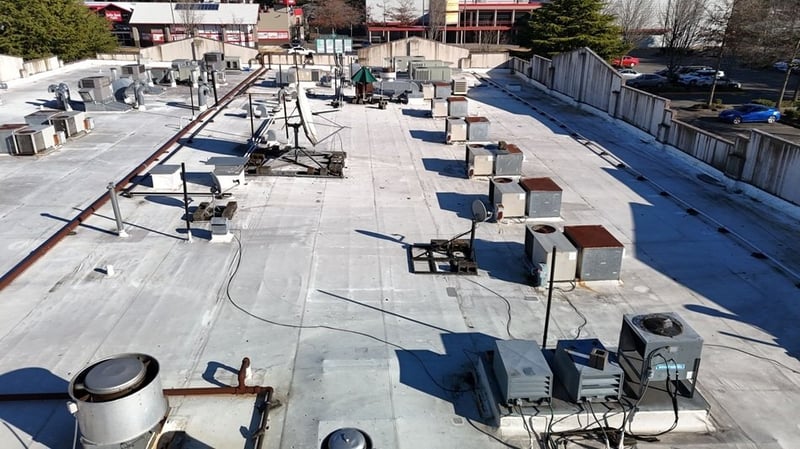
TL;DR: Summary
Commercial roofing projects take longer for a reason. Between stricter building codes, complex materials, safety planning, and large-scale logistics, installing a commercial roof involves many more steps than a typical residential project.
Have you ever wondered why a commercial roofing project seems to take months, or even years, when a residential roof might only take a few days? If you own or manage a commercial building in Seattle, are you worried about how long a roof installation might disrupt your business, customers, or tenants?
At RoofSmart, we do hundreds of commercial and residential projects each year. We know that commercial projects can be a long and costly process. In some ways, it’s obvious why. But there are also a lot of factors that owners don’t know about.
In this article, we’ll explain why commercial roofs in the Seattle area often take significantly longer to install than residential roofs. You’ll learn about the unique challenges roofers face, from safety requirements and building codes to specialized materials and health hazards, so you can better understand the timeline and costs of your project.
Commercial vs Residential Roofing (Why Commercial Takes Longer)
| Factor | Commercial Roofing | Residential Roofing | Impact on Timeline |
|---|---|---|---|
| Project Size | Large buildings, multiple sections | Single home | Much longer setup and execution time |
| Building Codes | Strict (IBC requirements) | Less complex codes | More inspections and steps required |
| Common Materials Used | Steel decking, flat systems (PVC, TPO) | Asphalt shingles, wood decking and framing | Slower installation methods |
| Safety Planning | Public safety zones, tenant coordination | Limited to homeowner/property | Adds planning and setup time |
| Occupancy | Active businesses and tenants | Typically unoccupied during work | Work must be phased carefully |
| Common Hazards | Asbestos, complex systems (HVAC, electrical) | Fewer hazards (sometimes) | Requires specialized handling |
| Equipment & Logistics | Cranes, staging areas, large crews | Basic tools and smaller crews (sometimes) | More coordination required |
| Inspections & Approvals | Multiple inspections required | Fewer inspections | Can delay progress |
| Warranty Requirements | NDL and enhanced warranties | Standard warranties | Adds installation steps |
What extra problems do roofers deal with on commercial roofing projects?
Commercial roofing is very different from residential roofing. Often, there are more specific building codes to follow, different techniques used, and new hazards to consider.
Here is an overview of some key ways commercial projects are different from residential projects:
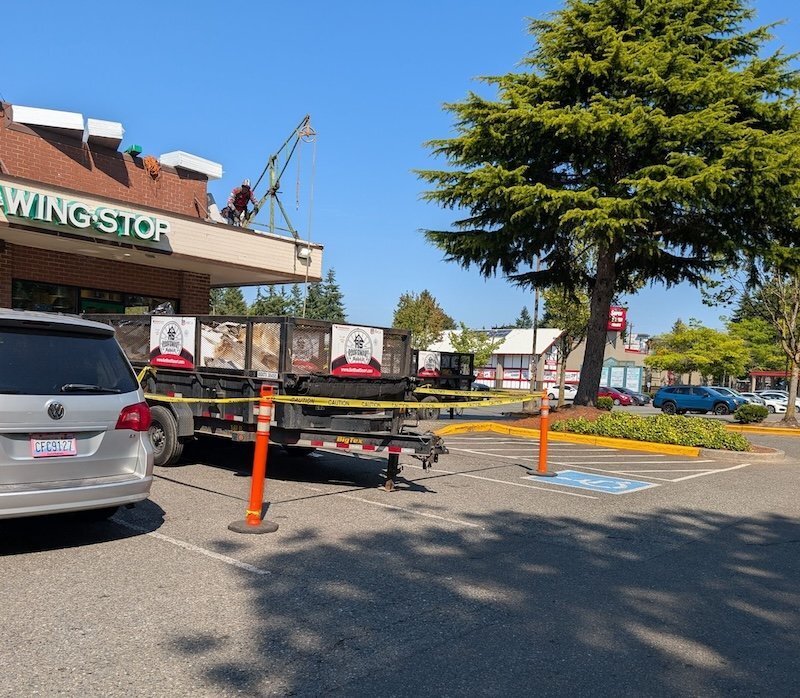
- Safety and Logistics Concerns: If we are working on a business that is open to the general public, then our top priority is making sure that they stay safe in an active construction zone. This means attempting crowd control by blocking off certain areas with caution tape before we begin any roof work. That way, people have a safe way to enter the building. For example, we put caution tape around our dump trailer so that everyone knew to avoid the area just in case we were tossing stuff into the trailer:
- Strict Building Codes: For commercial projects in the Greater Seattle area, roofers must follow the International Building Code (IBC). The IBC is more restrictive, especially for ventilation and fire blocking, so it takes more time to complete all the steps needed to meet their requirements.
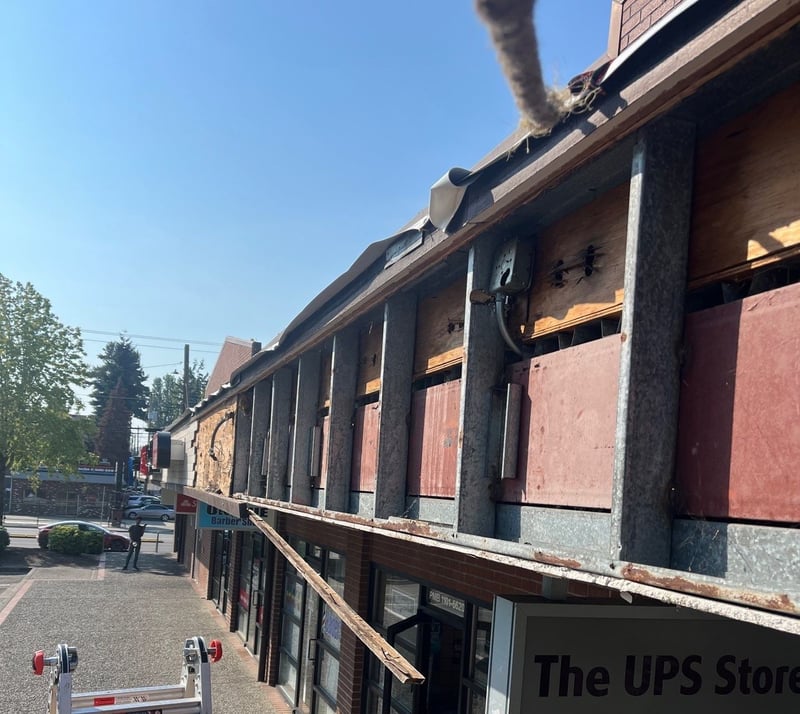
- Different Materials: In commercial roofing, it is common to use pan decks, which are a roof type made of steel framing. They require different fasteners and installation techniques than you might need on your residential roof with wooden framing. It can sometimes take longer to work with metal and follow these steps. This is what the steel framing can look like on the side of the building:
- Health Hazards: When working on a commercial building that has been around for a while, there is a higher likelihood of encountering asbestos. Some roofs have multiple layers that have hidden the asbestos layer. A trained professional team needs to come in to remove the asbestos, which will make the project take longer. Commercial buildings also have complicated electrical wiring setups, HVAC systems, and other obstacles that roofers need to be careful to work around.
Why do commercial roofing projects cost more than residential roofs?
Commercial roofs can easily cost astronomically more than residential roofs, not only because they’re usually a lot bigger but also because there are so many extra requirements to meet that make them more expensive.
These are the main reasons why commercial roofs cost more than residential roofs:
- Project Size and Scope: Commercial jobs are significantly larger and often cost hundreds of thousands of dollars. Commercial buildings are bigger, and sometimes they span multiple large buildings. In comparison, residential projects cover much smaller buildings (for the most part) and are only for one building a lot of the time. Commercial projects often take more time to plan and set up additional safety measures.
- Public Works Wages: Government-funded construction projects in WA State require prevailing wage, which can double labor costs and increase the total roof installation cost by 40–50%. Not all commercial projects require this wage increase, but when they do it has a major impact on the total cost.
- NDL Warranties: NDL warranties offer the ultimate coverage for your commercial flat roof. However, you have to spend a lot of extra money to meet extra installation requirements and pass additional inspections. It’s rare for this to apply to private projects due to the 20% cost increase for more frequent inspections and added engineering practices. However, a government-funded project might opt to get an NDL warranty because it has the funding.
Do all roofers take extra steps to properly install commercial roofs?
Since these projects are so expensive, people want to get things done for as low a price as possible. As a result, we see a lot of hack jobs and poor installation practices as we are repairing or replacing commercial roofs.
For example, here is a scupper box that we found on a recent commercial project. It’s super smashed and caked in layers of caulk. Whoever installed this was clearly looking to get it done as quickly as possible:
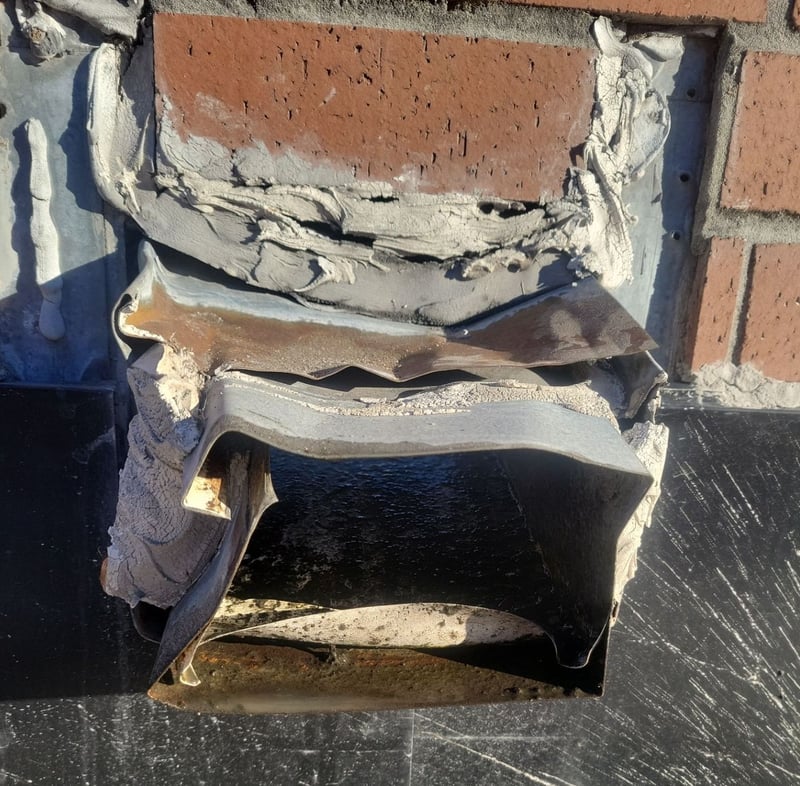
Caulking is not a good sealant for a scupper box because it’s not good at keeping out water. So, essentially, this is just a big mess for nothing. This use of the wrong materials and sloppy workmanship is incredibly common on commercial roofs (and on residential roofs).
At RoofSmart, we focus on quality and getting every detail right. Our goal is always to deliver a superior, long-lasting roof, no matter how many extra requirements we have to meet or mistakes we have to fix to get there.
Not everyone wants this because it makes the job more expensive, and on a commercial roof, this can really drive up the price. But it’s the only way to make sure that your roof is done right.
Why does warranty coverage matter for a commercial roof installation?
As you can see, commercial roofing projects take longer than residential ones because there are more regulations, safety concerns, materials, and logistical challenges involved. From coordinating around building occupants to meeting strict International Building Code requirements, every step must be handled carefully to ensure the roof performs properly for decades.
When you’re investing tens or even hundreds of thousands of dollars into a commercial roofing system, the warranty coverage becomes just as important as the installation itself. The type of warranty you choose can determine whether future repairs, material defects, or installation issues will cost you thousands.
In fact, many commercial roofing systems, especially PVC roofs, offer different levels of warranty protection, including enhanced options like No Dollar Limit (NDL) warranties. However, these warranties come with specific requirements and limitations that building owners should understand before starting a project.
Read our article “What Kind of Warranty Coverage Will I Get for My PVC Commercial Roof?” to learn what warranty coverage looks like for PVC commercial roofs and what building owners in Seattle should know before choosing a system.
Frequently Asked Questions About Commercial Roofing
1. Why do commercial roofs take longer to install than residential roofs?
Commercial roofs take longer because they involve:
- Larger project sizes
- Stricter building codes
- More complex materials and systems
- Additional safety and logistical planning
Each of these factors adds time compared to a typical residential roof.
2. How long does a commercial roof installation usually take?
It varies widely depending on the project.
- Small commercial projects may take weeks
- Large or complex buildings can take months or longer
The timeline depends on size, materials, and project complexity.
3. What are the biggest delays in commercial roofing projects?
Common delays include:
- Required inspections and approvals
- Weather conditions
- Discovery of hazards like asbestos
- Coordination with tenants or business operations
These factors can slow down progress compared to residential jobs.
4. Why are commercial roofing materials slower to install?
Commercial roofing materials like PVC, TPO, and metal decking require:
- Specialized installation techniques
- Precise fastening and sealing
- Additional layers and components
This makes the process more time-intensive than installing shingles.
5. Does safety planning affect commercial roofing timelines?
Yes, significantly.
Roofers must:
- Protect building occupants and the public
- Set up restricted work zones
- Manage debris safely
These extra precautions are essential but add time to the project.
Topics:
