


Are you scrambling to figure out how long you have to file an insurance claim after recent damage to your roof? Worried that your insurance company will deny your claim if you don’t notice the damage right away?
You’re not alone. After a windstorm or sudden damage, most Seattle homeowners feel overwhelmed and unsure about what to do next. And when it comes to insurance claims, even one small mistake or missed deadline can cost you thousands out of pocket.
At RoofSmart, we offer our customers assistance with their insurance claims. As a result, we are familiar with all the right things to include in your claim and what deadlines you need to follow so that you don’t get denied for falling behind.
In this article, we’ll walk you through exactly how fast you need to act after your roof is damaged, what your insurance company is required to do by law, and how to avoid the most common claim mistakes.
You'll also learn what to do if your claim is denied and how to push back if the process feels unfair.
Quick Answers
Washington insurers must acknowledge your roof claim within 10 business days of your notice (15 for group insurance), and under rules effective October 18, 2026, they must accept or deny it within 30 calendar days.
If they need more time, they must give all their reasons within those 30 days, then update you in writing every 30 calendar days.
How soon do I need to file a claim for damage to my roof?
As the homeowner, it is your responsibility to file a claim for damage “promptly” after you notice it. You should file a claim at most 1 to 2 weeks after noticing damage. Every insurance company has a specific process for filing a claim, either by phone, web, or app. Usually all 3 are available.
Ideally, you’ll be able to file a claim on the same day that the damage occurs, but sometimes that isn’t possible. Some roof damage is hidden within the roof, but it isn’t noticeable for a very long time.
Another example is when there are circumstances that prevent you from filing the claim right away. In the Seattle area, it is common for the windstorms that damage your roof to also take out power lines. If the power is out or you are in a dangerous situation, you won’t report the damage right away.
But once you are safe and have access to power, you should make sure to file an insurance claim so that repairs can begin as soon as possible.
What should I include in my roof damage claim to avoid slowing down the process?
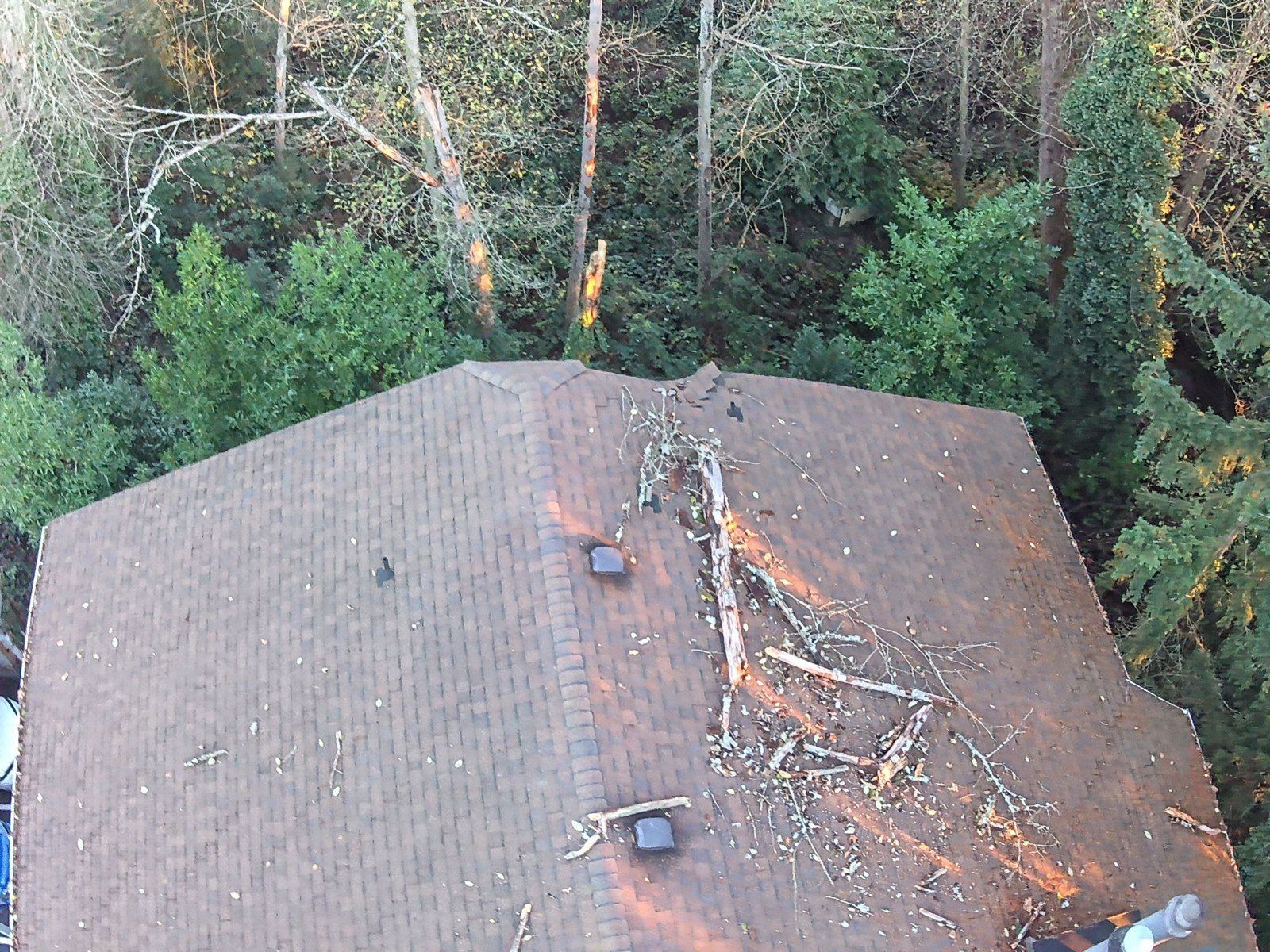
The most important thing to include in your insurance claim for roof damage (or any kind of damage) is evidence. Take plenty of pictures or videos that clearly show the damage from a variety of angles and submit them with your claim.
Make sure it’s clear in the pictures where the damage is. Do your best, but don’t rely on the insurance company to document things.
Take pictures of the damage as you inspect it, and then take pictures after you’ve done your best to clean up and minimize any further damage. Insurance companies expect that you’ll do this, so it’s helpful to show them this step.
You can also take detailed notes describing
- The damage you find on your roof
- Where the damage is
- When and how the damage happened
- When you first noticed the damage
Washington roof claim deadlines at a glance
Here's what your insurer has to do, and when, from the day you report your roof claim.
| Rule | Deadline | Source |
|---|---|---|
| Insurer acknowledges your claim | 10 business days after the notification of claim (15 business days for group insurance) | WAC 284-30-360(1) |
| Insurer sends claim forms, instructions and reasonable help | Promptly after the notification of claim (the rule sets no day count) | WAC 284-30-360(4) |
| Insurer replies to your questions and other claim messages that call for a response | 10 business days (15 business days for group insurance) | WAC 284-30-360(3) |
| Insurer approves your plan to limit further damage, such as tarping, when your policy requires you to protect the home after a loss | 5 business days after it receives your plan (the rule calls it your "scope of mitigation") | WAC 284-30-330(20) |
| Insurer finishes investigating your claim | 30 calendar days after the notification of claim, unless it can't reasonably be done in that time | WAC 284-30-370(1) |
| Insurer accepts or denies your claim (a denial based on a policy provision, condition or exclusion must be in writing and name it) | 30 calendar days after the notification of claim | WAC 284-30-380(1) |
| If the insurer needs more time, it tells you all of the reasons | Within the same 30 calendar days | WAC 284-30-380(3) and 284-30-370(1)(a) |
| Written updates while your claim stays open | Every 30 calendar days after that | WAC 284-30-380(3) and 284-30-370(1)(b) |
| You ask for the pricing data behind the estimate (database or estimating software) | On your request (the rule sets no day count) | WAC 284-30-380(8) |
| You ask for a copy of your claim file | 15 business days after the insurer receives your request | WAC 284-30-340(2) |
| Insurer pays a settled claim | 15 business days after it (or its attorney) receives your signed release or other settlement documents, unless a law or your policy sets the payment time | WAC 284-30-330(16) |
| Before suing under the Insurance Fair Conduct Act, you give "written notice of the basis for the cause of action to the insurer and office of the insurance commissioner"* | "Twenty days prior to filing an action." Mailed notice counts as received three business days after it's mailed. | RCW 48.30.015(8)(a) |
The WAC deadlines in this table are from Washington's claim-handling rules effective October 18, 2026. *The Insurance Fair Conduct Act notice comes from a 2007 state law, RCW 48.30.015, and isn't part of those rules.
How quickly does my insurance company need to respond to me about my roof damage claim?
Your insurance company is required to respond to your claim within 10 business days of receiving it (or 15 business days for group insurance), just like you have an obligation to submit a claim as soon as you can.
In Washington State, your insurance company must respond within 10 business days of receiving your claim (or 15 business days for group insurance). This includes acknowledging that your claim was received and answering any questions that you have as your claim progresses.
And WA state rules require your insurer to finish investigating your claim within 30 calendar days, unless that can’t reasonably be done.
As you’re filing your claim, your insurance company must also assist you with the process and provide you with the right paperwork as needed, as well as relevant coverage.
How quickly does my insurance company need to make a decision about my roof damage claim?
Your insurance company must tell you if your roof damage claim has been either accepted or denied within 30 calendar days of receiving notice of your claim. Under the rule that took effect October 18, 2026, that clock starts when you report the claim, not when your paperwork is complete.
If they need more time, they must notify you within those same 30 calendar days and give you all of the reasons why. Then, they are required to keep updating you in writing every 30 calendar days and explain why your claim is still unresolved.
If they choose to deny your claim, they must tell you in writing and specifically state why your claim does not meet the requirements of your insurance policy. They also can’t deny or refuse to pay your claim without a reasonable investigation, and that investigation can’t rely only on a database or estimating software.
If your insurer priced materials or labor with a database or estimating software, you can ask for the details. They must tell you when the data was collected, where it came from, and which businesses supplied the cost data.
How long does my insurance company have to pay me after accepting my claim?
Once your claim is settled, Washington rules expect your insurer to send payment within 15 business days of receiving your signed release or other settlement documents. In practice, you should usually receive your payment within a few weeks of getting your claim approved.
The check should be sent to you, but if it’s more than $10,000, your insurance company will send it to your mortgage company to sign off on it. Either way, they should notify you that your payment has been sent.
However, if your insurance company accepts your claim and then withholds your payment, you may be entitled to take legal action for unreasonable denial of payment of benefits.
How long do I have to resubmit my claim if it gets denied?
If you want to resubmit your claim, you can. There isn’t necessarily a set timeline for resubmitting a claim after you’ve already submitted one.
You can also ask your insurer for a copy of your claim file, including reports, estimates, photos, and claim notes. Under rules in effect since October 18, 2026, they have 15 business days to send it.
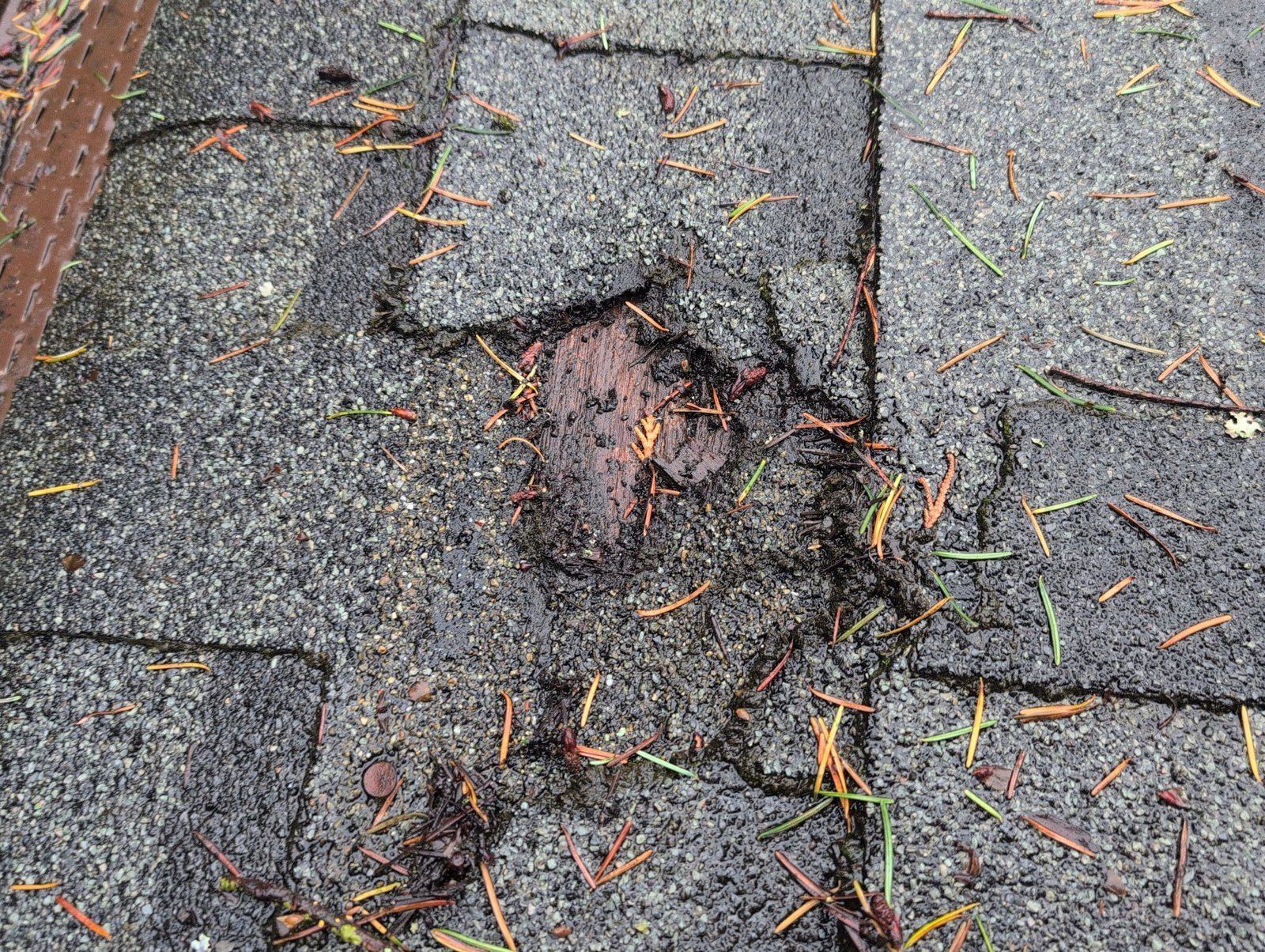
Make sure you understand why your claim was denied before you attempt to resubmit it. Ask your insurer if there’s anything you can do differently. You can bring in a roofing contractor to help you assess your roof’s needs more accurately.
If you feel that your roof damage claim was denied unfairly, you can take legal action. If your insurance company is truly being unreasonable in denying your claim, you might even be able to get coverage for your legal fees after winning the lawsuit.
What are the steps for filing an insurance claim for roof damage?
There are 4 steps for filing an insurance claim for roof damage: assess and document the damage, review your homeowners insurance and contact your insurance company, contact a trusted roofing company, and file your claim. Now that you understand how deadlines and timelines work in the insurance claims process, you're in a stronger position to protect your home (and your wallet) after roof damage.
Acting quickly and documenting everything is key, but knowing your rights and responsibilities is only the beginning. The next step? Learning how to file a claim the right way.
Read our article “4 Steps For Filing An Insurance Claim For Roof Damage After a Storm” for a clear, step-by-step guide that shows you exactly what to do after discovering roof damage, from documentation and contacting your insurer to getting estimates and securing repairs.
Not sure what your roof needs?
Free SmartMatch visit: your roof, plus your attic where safe. If you don’t need a new roof, we say so.
Want to see how we'd look at your roof?
Start with a SmartMatch™ Needs Analysis, or call (206) 487-4877.
Washington roof claim deadline FAQs
When did Washington's new insurance claim deadlines take effect?
Washington's updated claim-handling rules took effect October 18, 2026, after the Insurance Commissioner adopted them on August 18, 2026 (rulemaking R 2025-05).
The biggest change for homeowners is the accept or deny clock, which used to start when your insurer received your fully completed proof of loss paperwork and now starts at the notification of claim. The acknowledgment and investigation deadlines kept the same length.
What counts as "notifying" my insurance company that I have a roof claim?
Any report to your insurer or its agent, in writing or another way your policy or insurance contract accepts, that reasonably tells them the facts of your claim counts.
That's how WAC 284-30-320(14) defines a "notification of claim". Your insurer then has 30 calendar days after the notification of claim to finish investigating, unless it can't reasonably be done in that time (WAC 284-30-370(1)), and 30 calendar days after the notification of claim to accept or deny your claim (WAC 284-30-380(1)). Keep a record of when and how you reported it, and watch for these common claim filing mistakes.
Are Washington claim deadlines counted in business days or calendar days?
Both. Your insurer has 10 business days after the notification of claim to acknowledge your claim and 10 business days to reply to your messages (15 for group insurance, WAC 284-30-360(1) and (3)). It has 5 business days after it receives your plan to limit further damage to approve it when your policy requires you to protect the home (WAC 284-30-330(20)), 15 business days after it receives your request to send your claim file (WAC 284-30-340(2)), and 15 business days after it (or its attorney) receives your signed release or other settlement documents to pay a settled claim, unless a law or your policy sets the payment time (WAC 284-30-330(16)).
Calendar days apply to the rest. Your insurer has 30 calendar days after the notification of claim to finish investigating, unless it can't reasonably be done in that time, and 30 calendar days after the notification of claim to accept or deny your claim (WAC 284-30-370(1) and WAC 284-30-380(1)). While your claim stays open, it must update you in writing every 30 calendar days (WAC 284-30-380(3) and WAC 284-30-370(1)(b)).
Do these deadlines apply to every home insurance company in Washington?
Yes. WAC 284-30-310 says the rules apply "to all insurers and to all insurance policies and insurance contracts." The 30-day investigation and decision timelines leave out only medical professional liability claims, which don't affect a roof claim.
What has to be in my insurer's update letters if my roof claim takes longer than 30 days?
Each update has to explain why your claim is still unresolved and summarize the decisions or actions that matter to it.
Under WAC 284-30-370(1)(b), that includes the amount of loss, any service providers the insurer has hired or consulted, each item it's still waiting on, and, if a new adjuster took over, confirmation that the new adjuster has reviewed your file and is ready to keep going. The rule says the summary isn't limited to those items.
Does the 30-day deadline still apply if the adjuster can't inspect my roof right away?
Yes. Your insurer still has 30 calendar days after the notification of claim to finish investigating, unless it can't reasonably be done in that time (WAC 284-30-370(1)). If your insurer needs longer, WAC 284-30-370 requires it to tell you the reasons in writing and keep updating you, so save every letter to keep a clear timeline.
What can I do if my insurance company misses one of these deadlines?
Start by asking your insurer in writing for the status of your claim and the reasons for the delay. You can also file a complaint with the Washington State Office of the Insurance Commissioner on its website, and under WAC 284-30-300, breaking these minimum standards counts as an unfair claims settlement practice.
If your claim was denied, here's what to do next, and for lawsuits, see the next question.
Do I have to warn my insurer before suing over an unfair roof claim denial in Washington?
Yes. Before you sue under the Insurance Fair Conduct Act, RCW 48.30.015(8)(a) requires written notice of the basis for your lawsuit to both your insurer and the Insurance Commissioner "twenty days prior to filing an action," and mailed notice counts as received three business days after it's mailed. This isn't legal advice, and RoofSmart doesn't give it, so talk to a lawyer before you take that step.
Can I ask for my claim file while my roof claim is still open?
Yes. Under WAC 284-30-340(2), you can ask for any part of your claim file from time to time and at reasonable intervals, including reports, claim notes, estimates, bids, measurements, contractor reports, photos and videos.
The insurer has 15 business days after it receives your request to send it (WAC 284-30-340(2)), and when it sends the file, it must tell you whether it withheld or redacted any documents.
How can a roofing contractor help me keep my claim on schedule?
RoofSmart's team helps homeowners through the insurance claim process and provides detailed documentation of the damage.
A good first step is a free SmartMatch Needs Analysis, where one of our meticulous roofing nerds from the sales team walks your roof and, where safe, the attic. We can't promise what your insurer will cover or how fast it decides, but we'll give you a clear record of what we found.
Topics:
