

Are you worried about getting your roof replaced during Seattle’s cold, rainy season? Do you wonder if cold temperatures will affect how well your shingles seal, or even if they’ll crack during installation?
At RoofSmart, we install hundreds of asphalt shingle roofs every year, including during the cold winter months. We’ve learned what precautions we need to take in cold weather and how to make sure that shingles don’t get damaged during installation.
In this article, we’ll break down how temperature affects roofing materials, how to protect your investment during a winter install, and what smart homeowners can do to avoid damaged shingles.

Can you install shingles when it’s cold in Seattle?
Yes, you can still install shingles during the colder winter months. Most homeowners aim to repair or replace their roofs in the summer. If the timing works out, then there’s nothing wrong with doing this.
But don’t feel like you have to delay repairs or replacements until the warmer months. Seattle roofers can still safely and effectively install asphalt shingles in cold, cloudy weather.
Typically, shingles are easier to work with in warmer weather, but that doesn’t mean that you can never install them when it gets cold.
What’s the coldest temperature you can install shingles at?
The coldest temperature at which you can still install shingles varies based on the type of asphalt shingle you choose.
Standard architectural shingles usually shouldn’t be installed at temperatures lower than 40 degrees.
For example, Owens Corning, a major asphalt shingle manufacturer, cautions against installing their regular shingles in temperatures lower than 40 degrees in their installation instructions:
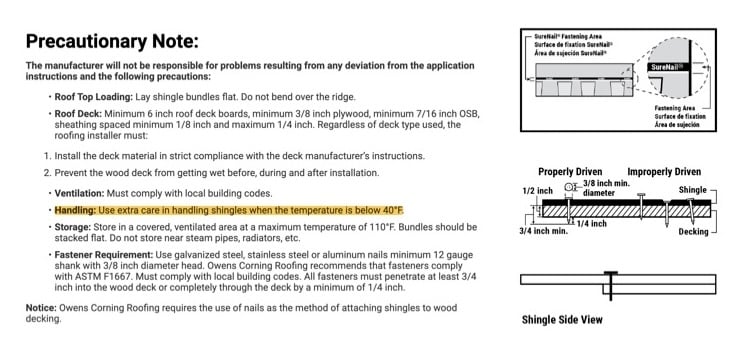
These precautionary measures are the same for pretty much all standard architectural shingles.
However, SBS-modified (rubberized) asphalt shingles can be installed in even lower temperatures because they retain their flexibility in colder weather (unlike regular asphalt shingles that get brittle).
Not all manufacturers provide info on the coldest temperatures that you can install their SBS-modified shingles in, but some roofers claim that they’ll install them with no problems at 0 degrees Fahrenheit.
Can asphalt shingles get damaged when installed in cold weather?
Standard asphalt shingles are not designed to be installed in temperatures much lower than 40 degrees. If they get installed when they’re too cold, then they can cause a bunch of problems:
- They get brittle and crack when you move them: In super cold weather, your asphalt shingles are going to be cold and brittle, which makes them prone to cracking. Even as you're just carrying them around and getting them into position on the roof, they are at risk of cracking. In the extremely rainy winters that we get in Seattle, this is going to cause a disastrous leak.
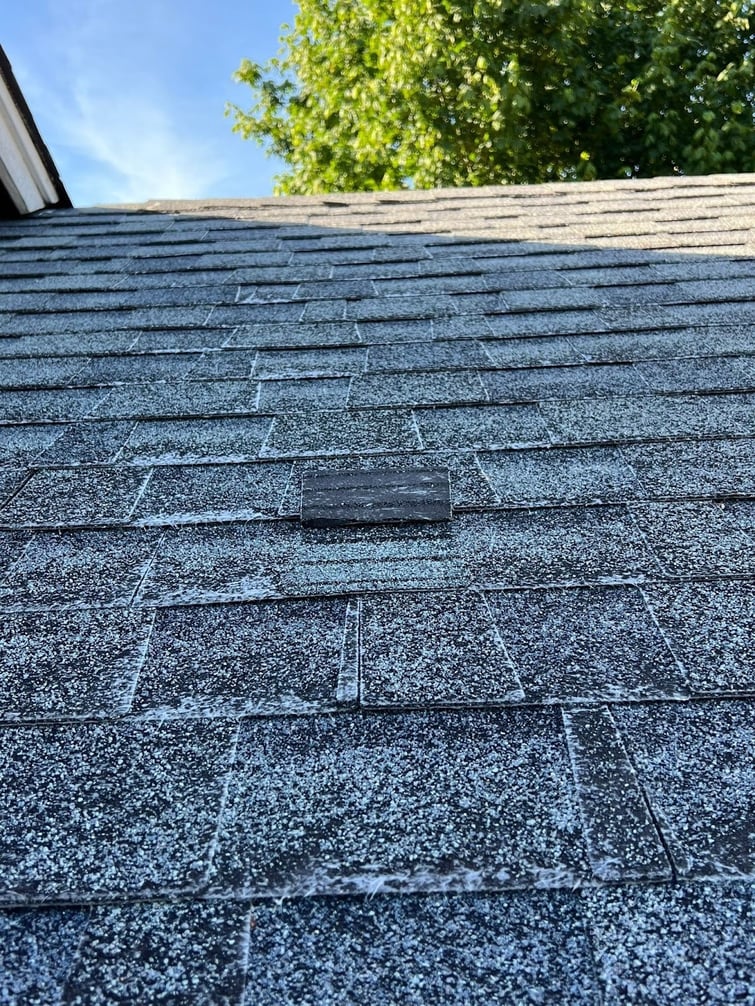
- Granule loss from too much movement: So it's really common to get a lot of granule loss from moving the asphalt shingles around when they are brittle. As you’re carrying them and adjusting them along the roof, they will shed a lot of granules if they get too cold. And that won’t be obvious until later, maybe even after six months or more. It'll look like a defect, but actually, it's because you did it when it was too cold.
This is what premature granule loss looks like:
- Cracking in the valleys: There are a lot of places where the shingle needs to bend a little bit (like in a valley) and that's where you're going to end up with more likely to have a crack during installation. The installer may not notice it. Having a crack in the valley is going to lead to a premature failure in your roof. Valleys are where a good portion of the water on your roof funnels to, so it’s the worst place to have a crack. If you put a good valley liner in (like metal or ice and water shield), it may not show up for quite a while.
How can my roofer prevent my shingles from cracking in cold weather?
Since you’re paying so much money to get your new roof installed, the last thing you want is a bunch of cracks and leaks that cost even more money to fix.
The good news is that these issues can be prevented. Here are some things your roofer can do to prevent your shingles from cracking during a cold-weather installation:
- Warm up the shingles: If it's cold (below 40 degrees), your roofer is technically supposed to warm up the asphalt shingles before installing them. So what that can look like is taking the shingles and putting them in the cab of their vehicle with the heat on until they warm up. They can also put warming blankets over the shingles. They should be at least 40 degrees so that they're minimally pliable.
- Let the sun warm the shingles: Sometimes, what your roofer will do is just wait until the afternoon, when the sun has been out for a little bit and shining on the shingles to help warm them up. And then they can lay the asphalt shingles in the afternoon after they’ve had a chance to warm up and regain some flexibility.
Of these two options, the second one is far more likely to actually happen. There aren’t many roofers who really go through the trouble of heating up the shingles in their car.
If it’s cold enough that they need to take that step, they’ll most likely wait for them to warm up in the sun and install them later in the day or the next day.
But the bottom line is that if you're not sure if it's going to be cold during the time that you're going to get your roof done, then it might be worth it for you to spend another 5% on the job and get a rubberized shingle.
It helps you avoid delays in your roofing project. In addition, rubberized shingles have other benefits, like increased durability and longevity of the roof.
What should I do if I think my shingles were damaged during installation in cold weather?
If you have something that looks like a shingle defect, then I recommend that you open a claim with the manufacturer. They will come out to your roof to take samples and determine what the issue is. They will let you know if it’s a manufacturing defect or a workmanship issue.
That way, you don't have to guess, and you have reliable, experienced professionals who can help you make that determination.
In general, they play it pretty fair, especially if it's a pretty new roof. You can present the shingle manufacturer’s findings to your roofer and then make a claim with your workmanship warranty if needed.
Are rubberized asphalt shingles the right choice for your Seattle roof?
If you’re worried about the risks of installing standard asphalt shingles in Seattle’s colder months, you’re not alone, and your concerns are valid. Cold weather can make shingles brittle, harder to seal, and more prone to long-term damage if your roofer isn’t careful. But there’s a better way.
Rubberized asphalt shingles are specifically engineered to stay flexible in cold conditions, making them a smarter, more reliable choice for winter roof replacements. So if you want peace of mind, better durability, and fewer weather-related headaches, they might be worth the investment.
Read our article “Rubberized Asphalt Shingles: Are They Worth It for Your Roof?” to explore the pros and cons of rubberized shingles and how much they cost to install.
Topics:
