

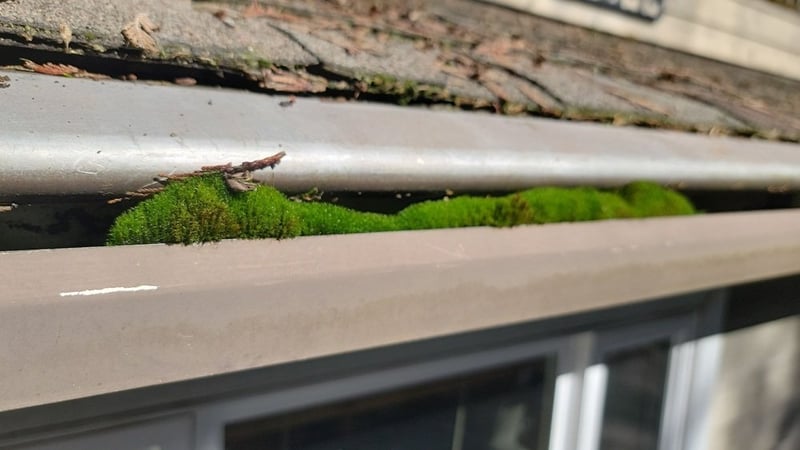
Have you noticed your gutters overflowing, even though they’re supposedly “clog-free”? Are you worried that all this moisture and debris buildup is quietly rotting your roof, foundation, or attic?
At RoofSmart, we inspect, repair, and replace gutters and guards in addition to the regular roofing services that we offer. We have seen hundreds of houses with all different types of gutter guards that are clogged with algae and debris, resulting in damage to the home.
In this article, we’ll break down:
- Why algae and moss grow so easily on gutter guards in Seattle
- What really happens when this buildup is left unchecked
- Which types of gutter guards clog fastest and which ones resist it
- What you can do to prevent it (without getting on a ladder every week)
Why do gutter guards clog with algae and moss in Seattle?
An asphalt roof is made with asphalt with a binding agent, typically limestone. Most Seattle homeowners have asphalt shingle roofs, so this is a prominent example (but gutter guards can grow moss and clog, no matter what kind of roof you have).
Limestone is just one of those things that moss and algae seem to love. So, as the shingle ages and wears, it washes away gradually.
And when that limestone starts to get exposed and washed down, then it stops at the gutter guard and can accumulate there with other debris that slid off the roof:
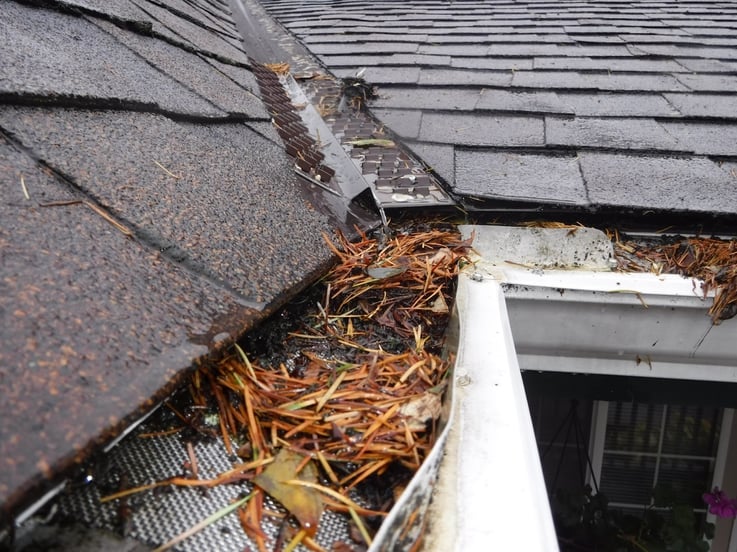
As the limestone and tree gunk sit there, they retain their moisture and begin to break down. This creates the perfect recipe for moss and algae to grow, especially if this stuff is all collecting in a shady area. It's almost like it was purpose-made to plug with algae.
Here’s an example of a gutter guard covered in tree gunk and other debris that’s beginning to grow moss and clog:
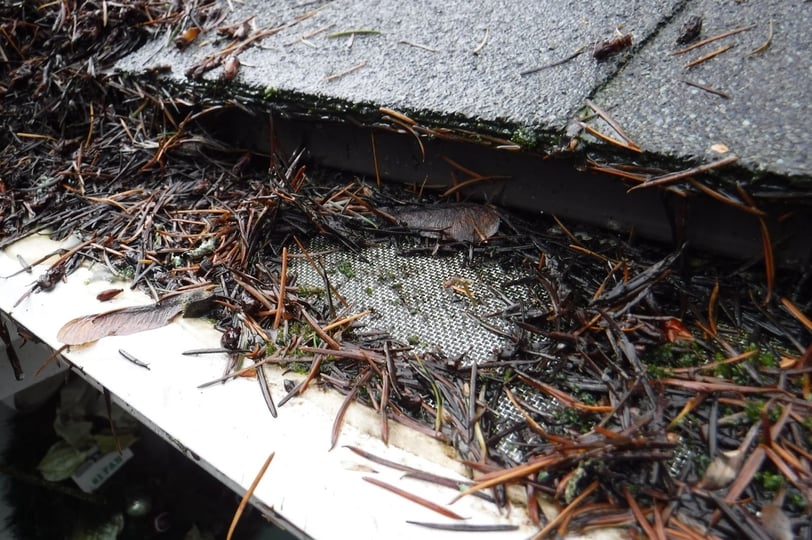
The pine needles and other debris that accumulated started to break down and form gunk. Most importantly, they collected moisture and kept that area consistently damp. As a result, moss began to grow and is slowly starting to clog the gutter guard.
What happens when the gutter guards clog with algae and moss?
It’s one thing to have gutter guards clogged with solid debris like leaves and pine needles because those can be brushed off.
However, once the debris begins to degrade into mush and grow moss or algae, it starts to sink into the gutter guard itself and prevents water from getting in.
If the gutter is clogged with moss and algae and doesn't work, then it's going to overflow all over the place.
This causes issues like:
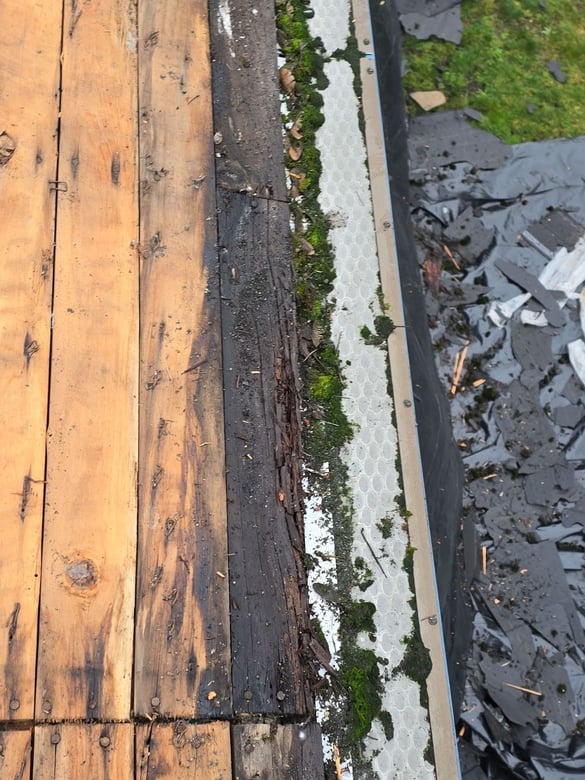
- Rotting the roof: If your gutter guard gets clogged with algae, water cannot flow through it properly. Sometimes the gutter guard gets so clogged that the water soaks into the roof, causing the roof decking to rot. Here’s an example of what that looks like:
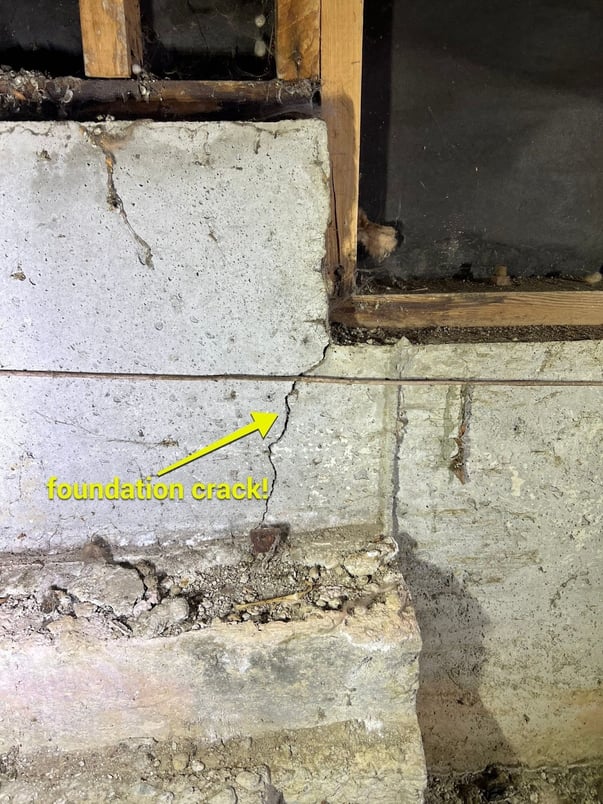
- Flooding your home’s foundation: If the gutter guard is clogged, it can also cause water to spill over the side and down onto the ground. Excess water collection on the ground near your home can cause your basement to flood and cause water damage in there. We saw this happen in a recent job where the foundation even started to crack because the structural integrity of the foundation was shifted and weakened from flooding:
- Water saturated the crawlspace leading to attic mold: Not only does flooding damage your foundation, but the excessive moisture evaporates and goes up into the attic, creating a build-up of moisture up there. Typically, this results in mold growing in the attic. We also found mold in the attic of the same customer who had that cracked foundation:
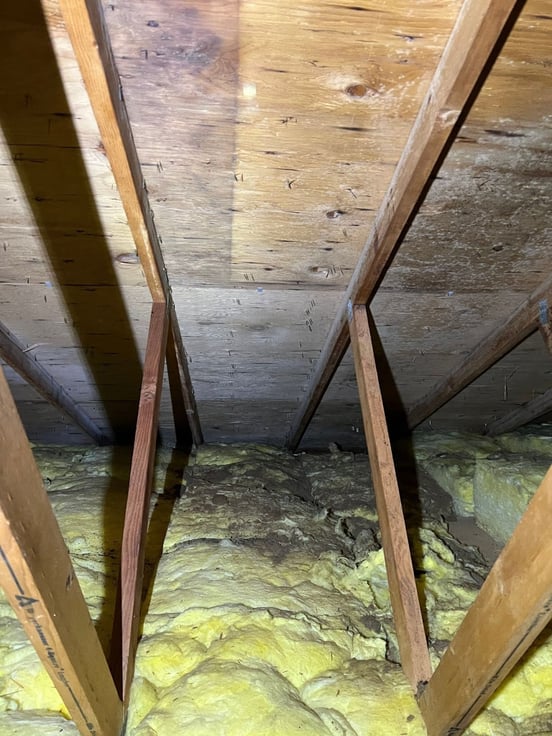
Having your gutter guards clog with debris is not only inconvenient, but it can also damage all parts of your roof. Your foundation, roof decking, and attic are all at risk. This will likely cost you thousands of dollars or more to fix.
Which gutter guards are most likely to clog with algae and moss in Seattle?
The truth is that any gutter guard might grow algae or moss in Seattle due to the excessive moisture and shade. However, the gutter guards that are most likely to clog and completely fail because of algae or moss growth are micromesh gutter guards.
Micromesh gutter guards have a bunch of tiny holes that can easily get plugged with algae and moss. Other gutter guard styles have wider openings, making it more difficult to get fully plugged by algae or moss.
However, not all micromesh gutter guards are susceptible to moss and algae growth. MasterShield is unique because it has copper woven in, which naturally prevents moss and algae from growing.
How do I prevent algae and moss growth in my gutter guards?
The best way to prevent algae and moss from growing in your gutter guard is to regularly clean debris off. If it sits there for too long, it can start the growth process.
If you want to avoid algae or moss growth without having to worry about cleaning off debris, then you might want to consider installing MasterShield. It is designed to naturally shed debris and prevent algae and moss growth.
If you already have algae growing in your gutter guard, then you’ll need to pressure wash it to remove the algae. Be careful not to pressure wash any part of your roof because this can damage it.
What’s the best gutter guard style to avoid moss and algae in Seattle?
If you're dealing with constant moss, algae, or clogs on your gutter guards, you're not alone. Seattle’s damp climate makes even the best gutter systems struggle, especially if they're not built for this environment.
As you now know, some gutter guard designs are more prone to trapping debris and growing moss than others, especially micromesh options that don’t contain copper or lack proper slope.
The key to preventing clogged, mossy gutter guards (without constant cleaning) is choosing the right gutter guard style for Seattle's climate from the start.
Read our article “Best Gutter Guards for Seattle Homes (2025)” to learn about the best-performing gutter guard styles for the Seattle area, based on local experience, material science, and real-world results on homes just like yours.

Topics:
