

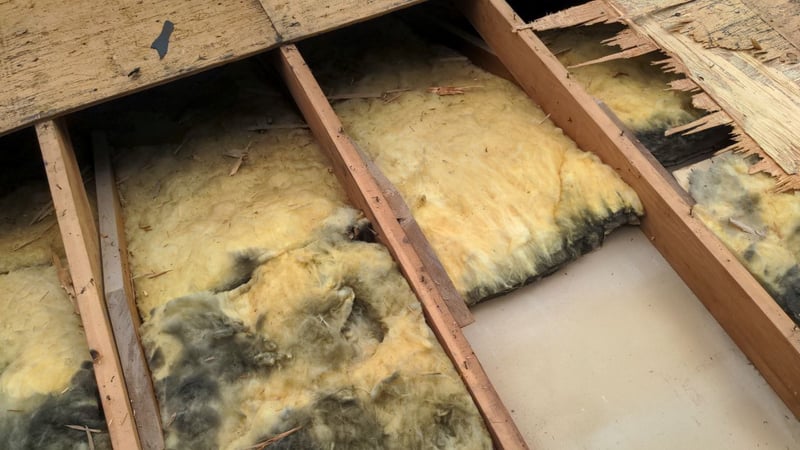
TL;DR: Summary
Cathedral ceilings are a major source of hidden roof rot in Seattle because they lack the open airflow of a traditional attic. Most contractors mistakenly "stuff" these narrow rafter bays with fiberglass insulation, which blocks the 1-inch air gap required by code. This trapped humidity leads to mold, delaminated plywood, and premature roof failure.
To fix this, RoofSmart recommends using baffling or rigid foam systems to restore airflow without sacrificing energy efficiency.
Have you noticed signs of mold, moisture, or warped wood and wondered if your ceiling’s ventilation is to blame? Are you concerned your last contractor didn’t install proper airflow and may have cut corners just to keep the insulation thick?
If you're asking questions like these, you're not alone. Cathedral ceilings in Seattle homes are notorious for ventilation problems that go unnoticed until they start to cost you thousands in hidden roof damage.
At RoofSmart, we replace hundreds of roofs every year. With each roof replacement, one of our top priorities is to make sure that every customer’s attic ventilation is up to code and working properly, including for more complex situations like cathedral ceilings.
In this article, we’ll show you why cathedral ceilings fail so often, how to spot the signs of poor ventilation, and what you can do to protect your roof from mold, rot, and premature failure before it’s too late.
Why do so many contractors get ventilation wrong in a cathedral ceiling?
Cathedral ceilings have the same ventilation requirements as traditional ceilings, but the problem is that cathedral ceilings have less space to work with. And, they’re usually set up completely wrong.
This is what a typical attic looks like:
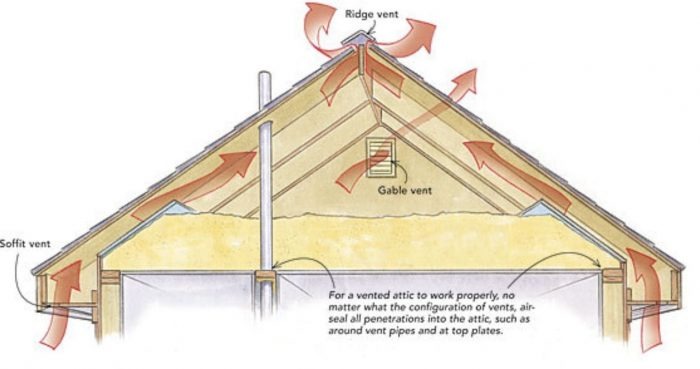
Image from Green Building Advisor
There is a large open space in the middle that allows air to flow freely. This makes it a bit easier to get the right airflow (although it does still get messed up a lot).
On the other hand, this is what ventilation looks like in a cathedral ceiling:
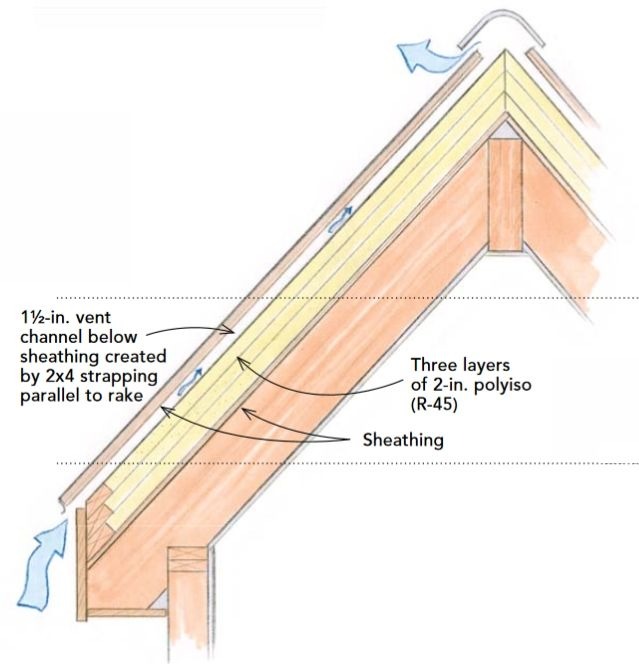
Image from Pinterest
Instead of an empty attic, cathedral ceilings usually only have a few inches of space between the ceiling and the roof decking. You can see the narrow gap you have for airflow just underneath the roof sheathing.
You're still supposed to have your minimum one-inch air gap, but for a variety of reasons, it's typically done wrong, and there’s no gap.
What usually happens is you have a general contractor who isn’t familiar with attic ventilation requirements. So they come in and stuff insulation up there, and then they fill the void.
If you were building it new, you would typically have 2x12 rafters, so you have enough room to put in the insulation that you need and still have an air gap. But an existing home usually has 2x4 rafters, or maybe 2x6, which hardly leaves any room.
One of the challenges we have is that we can't inspect it when we're going to replace the roof. You can't really see up there because there's no attic. It's all an enclosed space, and so it's a common change order to have it fixed on our jobs.
Can having poor ventilation in my cathedral ceiling cause damage?
Yes, having poor ventilation can damage your roof. The Seattle area is extremely rainy and humid, so if your attic doesn’t have proper airflow, then it can trap moisture. This can lead to issues in the attic, such as:
- Mold
- Rotting wood
- Delaminating wood
Here’s an example of moldy, delaminating wood we found on a current job with a cathedral ceiling:
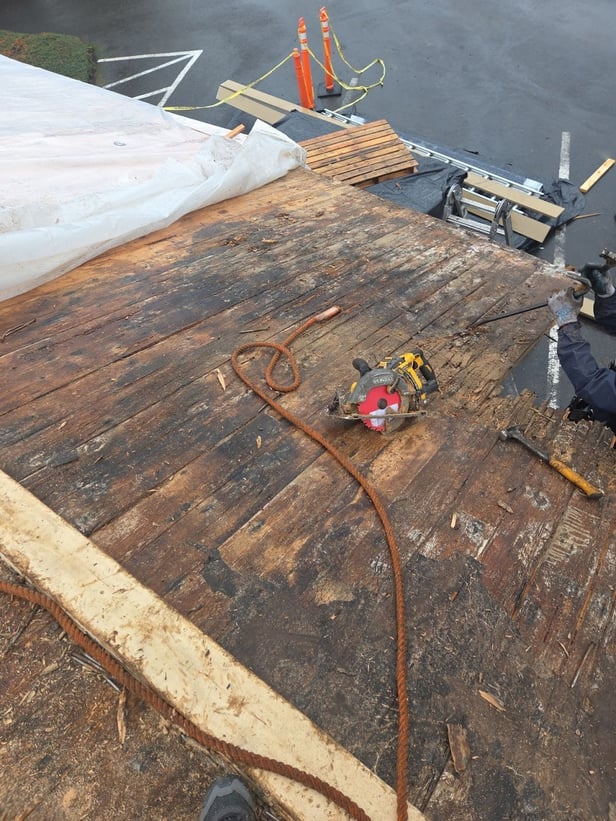
These issues add to the total cost of your roof replacement.
The problem is that people prioritize insulation over airflow because they think that's more important. Of course, you want to keep the heat in, or you keep the heat out if it's hot on that roof.
But without the airflow, it just doesn't matter how much insulation you have. Your roof can still get too hot and build up moisture. This combination can ruin your roof and cause it to fail prematurely.
How do I make sure that my cathedral ceiling has proper ventilation in Seattle?
If your cathedral ceiling had poor ventilation, there are two ways to fix it:
- Install baffling: Baffling looks kind of like an egg carton. When installed, it pushes down the existing fiberglass insulation so that you have your one-inch air gap. And the problem is that if you have two-by-four rafters and then you push down the insulation, you basically end up with no insulation. And if you compress that fiberglass, it doesn't do anything anymore (because it works by trapping air). So you compress it, and you have airflow. But now you’ll end up with condensation again.
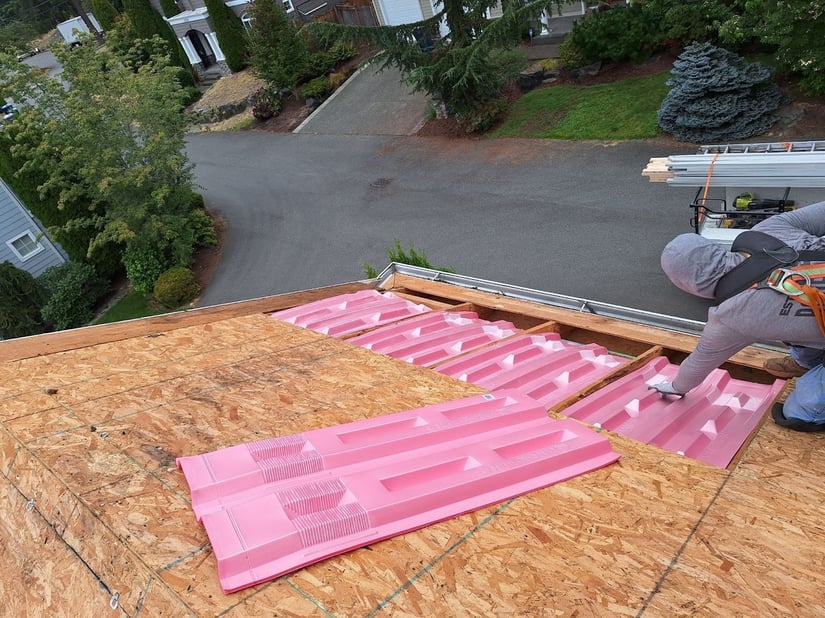
- Replace the fiberglass insulation with foam boards: You can also remove the fiberglass and put in rigid foam, which gives you a better R value. This restricts the flow of moisture, but only restricts it so much because all the edges you're still going to get vapor migrating up through the rafters at the wood itself and around the edges. And if you've got any wiring, light fixtures, or pipes sticking up through the roof, it'll sneak around that. It will be bleeding air and heat all around those spots all the time.
Usually, the right thing to do, if the budget allows, is to add rigid foam on top of the cathedral ceiling and build an air gap above it. You’d need to add a sleeper system of some kind to shim up another layer of plywood, then put another layer of plywood on.
The problem with this is that it adds a lot of expense, and it makes the roof taller, which means you have to replace the fascia and the gutters, and you've got some painting to do. You’d need to discuss with your roofer if you can afford this extra upgrade and see if it’s truly needed on your roof.
How should my contractor vent around skylights and valleys?
Since cathedral ceilings have so little room for airflow, your roofer needs to make modifications around skylights and valleys so that airflow doesn’t get cut off.
This is what a typical cathedral roof looks like before the roof decking and roofing material get installed:
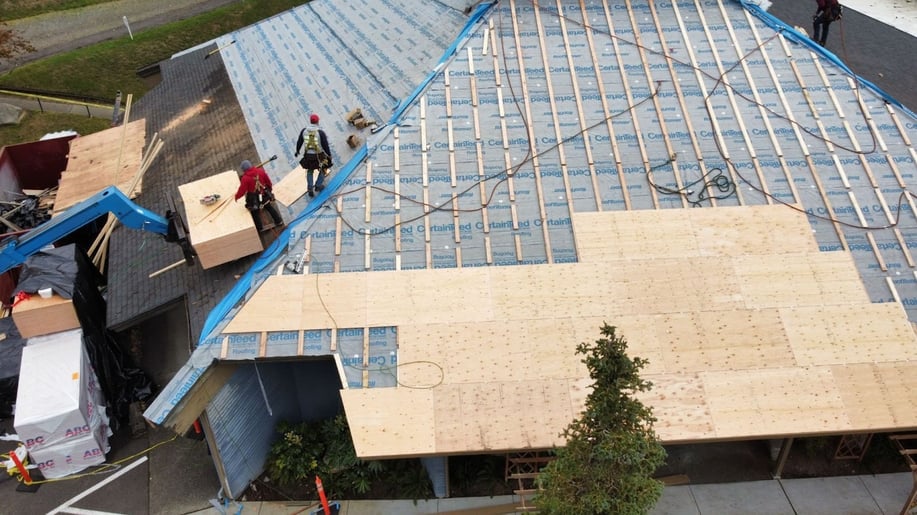
Each of those vertical sections is basically like its own attic. Air does not flow from side to side. It is meant to enter near the bottom and flow upward to exhaust vents near the top of the roof.
However, when a roof (like this one) has a hip (or a valley, which angles downward), then not all of the sections can reach the vent at the top.
So how do we fix that? Well, let’s take a closer look:
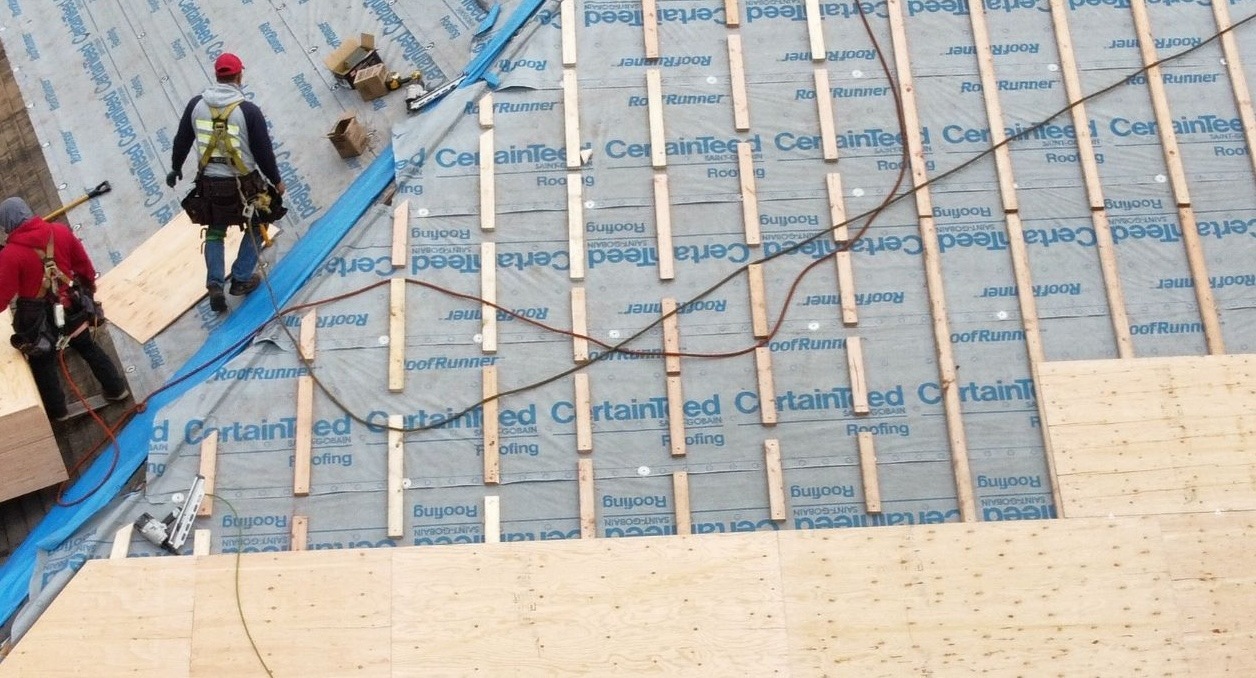
See how the wood pieces are cut so that there are gaps? That’s done on purpose to help air flow towards the closest peak (the hip), which will be vented.
The same thing is done in valleys to avoid airflow from being cut off. Here’s an example:
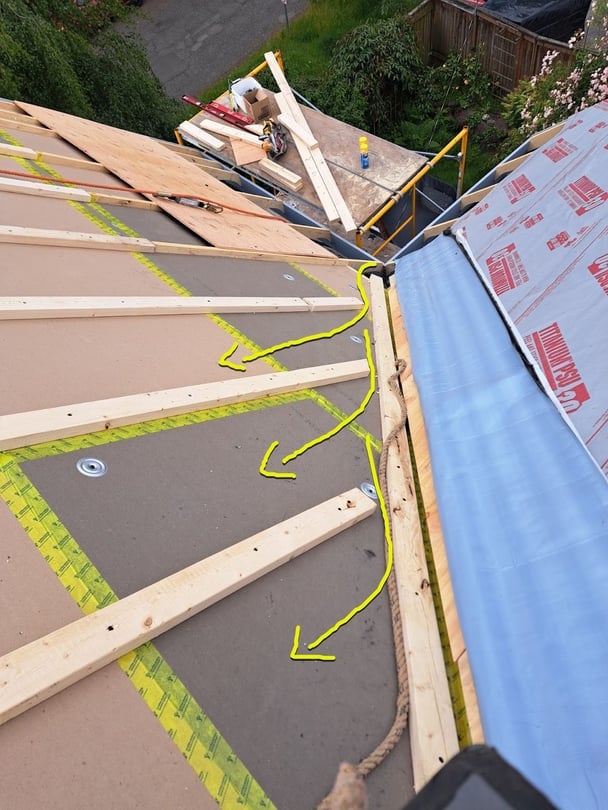
The wood is cut slightly short instead of meeting the piece in the valley. This leaves enough space for air to flow over and up (following the paths of the arrows).
When a skylight is installed, it cuts off air from flowing up the entire section to the vent at the top. To remedy this, your roofer should drill small 1-inch holes into the wood to allow air to flow through into the sections around it:
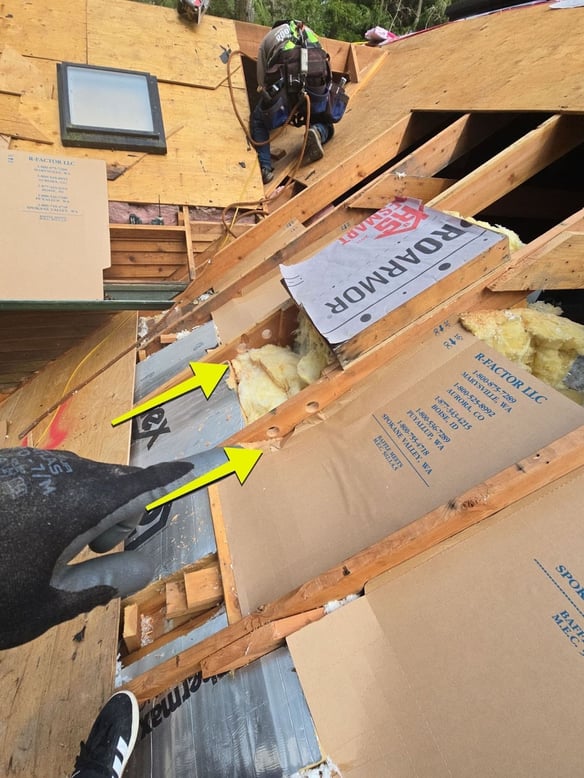
This helps air flow continuously throughout the roof.
With this type of roof, you typically want continuous ventilation like vented fascia (intake) and ridge vent (exhaust). These styles run along the length of the roof and are easier to install.
Otherwise, you’d have to install a vent for every 2-foot-wide attic section (sometimes this will be needed if the continuous ventilation doesn’t work out).
What are the ventilation code requirements for cathedral ceilings in Seattle?
As you’ve seen, cathedral ceilings present unique ventilation challenges that many roofers don’t handle correctly. Whether it’s blocked airflow, crushed insulation, or no ventilation path at all, these issues can lead to mold, rot, and costly damage to your roof structure over time.
That’s why it’s so important to not only understand the science behind proper ventilation but also to know what Seattle’s building codes actually require when it comes to airflow in enclosed ceiling systems like yours.
Check out our article “What Are Seattle's Attic Ventilation Code Requirements?” for an in-depth breakdown of Seattle’s attic ventilation code requirements.

Frequently Asked Questions
Why are cathedral ceilings more prone to moisture damage than regular attics?
Traditional attics have a large volume of open space that allows air to circulate freely. Cathedral ceilings only have a few inches between the ceiling and the roof deck. If this narrow channel is blocked by insulation, moisture becomes trapped against the wood, leading to rapid decay.
What are the signs of poor ventilation in my ceiling?
Common red flags include visible mold on the ceiling, warped or "wavy" roof shingles, a persistent musty smell, or wood that feels soft or damp. In the winter, ice dams or excessive icicles can also indicate that heat is being trapped in the roof structure.
How does "baffling" help a cathedral ceiling breathe?
Baffling involves installing plastic or foam channels (similar to an egg carton) that create a physical 1-inch air gap between the insulation and the roof deck. This ensures that air can travel from the soffit vents at the bottom to the ridge vents at the top.
Can I just add more insulation to fix the problem?
Actually, adding more fiberglass insulation can make the problem worse. If you compress fiberglass to make it fit, it loses its R-value (insulating power). If you overfill the space, you completely cut off the airflow, which is the primary cause of roof rot in the Pacific Northwest.
How do skylights affect my roof’s ventilation?
Skylights act as "dams" in a cathedral ceiling, blocking the vertical flow of air through the rafter bays. A professional roofer must drill bypass holes or use specific framing techniques to allow air to flow around the skylight and reach the exhaust vents.
What is a "sleeper system" for a roof?
A sleeper system involves building a secondary frame on top of your existing roof deck. This creates a dedicated "ventilation sandwich" that allows for maximum insulation inside the house while providing a completely unobstructed path for airflow underneath the new shingles.
How does Seattle’s climate impact attic ventilation requirements?
Seattle’s high humidity and frequent rain mean that even small ventilation errors can lead to major mold issues. You can learn more about local regulations in our guide to Seattle's Attic Ventilation Code Requirements.
Is it possible for my attic to have too much airflow?
While ventilation is crucial, there is a balance to strike to ensure you aren't wasting energy or creating pressure imbalances. For more on this, read our article on whether a Seattle attic can be over-ventilated.
How can I tell if my roofer’s quote includes proper ventilation repairs?
Ventilation is often overlooked in basic quotes, leading to "change orders" later. To protect yourself, check out our tips on red flags to look for when comparing roof proposals.
What if I find mold during a roof replacement?
Finding mold or delaminated wood can be stressful and expensive. To understand if your contractor is being honest about the extent of the damage, see our post on how to tell if your attic mold is actually a problem.
Topics:
