

TL;DR: Summary
Galvanic corrosion is an accelerated rusting process that occurs when two incompatible metals touch in the presence of an electrolyte (like Seattle’s constant rain). On a roof, this often happens when a "noble" metal like copper comes into contact with a more reactive metal like aluminum or zinc. To prevent your roof from literally eating itself, you must ensure your fasteners, flashing, and gutters are chemically compatible or separated by a protective coating.
Have you noticed strange rust streaks forming on your roof or heard horror stories about new gutters corroding just months after installation? Are you worried your roofer used the wrong type of fasteners, flashing, or gutter guards that could be slowly eating away at your roof?
A metal roof should last decades, but if the wrong metals are touching, you may only get a few years before rust takes over through a process called galvanic corrosion. If you have no idea what that is, you’re not alone. Most Seattle homeowners don’t know what it is until it’s too late.
At RoofSmart, we have installed hundreds of metal roofs and inspected hundreds more that were damaged. We’ve become skilled in identifying evidence of galvanic corrosion in roofs and have trained our crews to avoid mixing metals that aren’t compatible.
In this article, we’ll walk you through what galvanic corrosion actually is (in plain English) and which metal combinations are dangerous so you can avoid premature damage on your metal roof.
What is galvanic corrosion, and what causes it?
Galvanic corrosion is accelerated corrosion that happens when two incompatible metals react together with an electrolyte (in this case, it would be water). Moisture must be present for the corrosion to happen.
Some metals are more reactive than others:
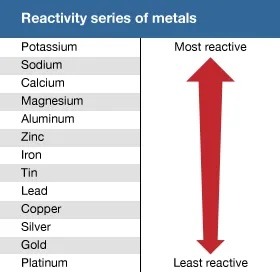
Image from Britannica
Cathodes are less active metals (like copper), and anodes are more active (like aluminum and zinc).
During galvanic corrosion, a galvanic couple forms. One metal in the couple is an anode, and the other is a cathode. When exposed to an electrolyte (aka water), the anode corrodes faster than it would alone, and the cathode corrodes slower than it would alone.
For this to happen, you need to have a large amount of the cathode and a small amount of the anode. For example, if you had a copper roof and aluminum gutters, you would notice galvanic corrosion when it rained.
The aluminum gutters would begin to corrode because it is the more reactive anode. Its corrosion is sped up by the copper and the electrolyte (rainwater). The corrosion that copper might normally face is slowed down because it is a less reactive cathode.
If you live in Puget Sound and your home is exposed to saltwater, corrosion between aluminum and copper happens much more quickly.
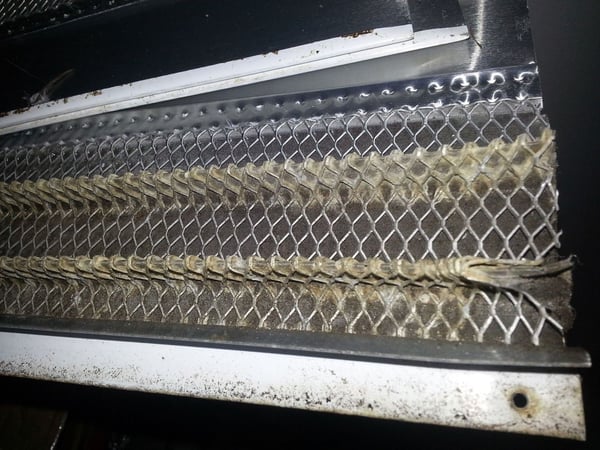
Here is an example of what galvanic corrosion looks like:
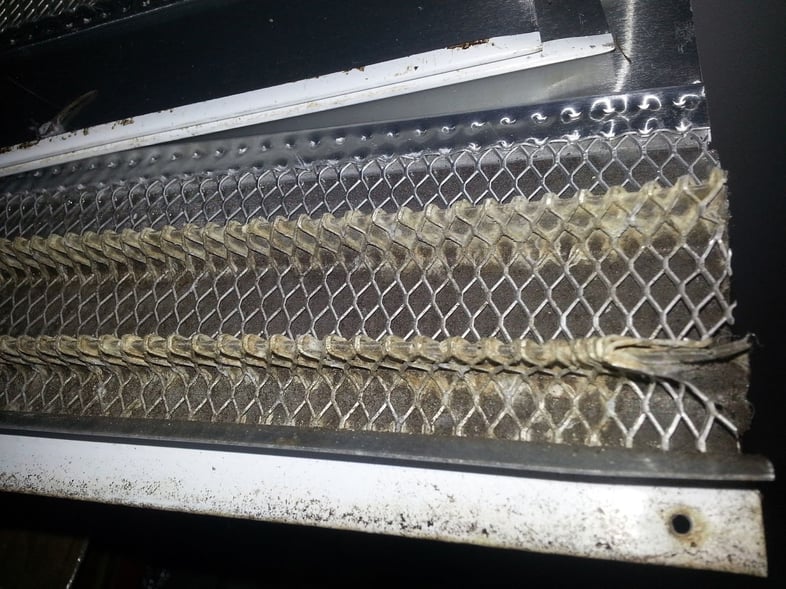
This is a stainless steel micromesh and then an expanded aluminum frame that is all fused together (this is what it looks like from underneath).
Here is the top:
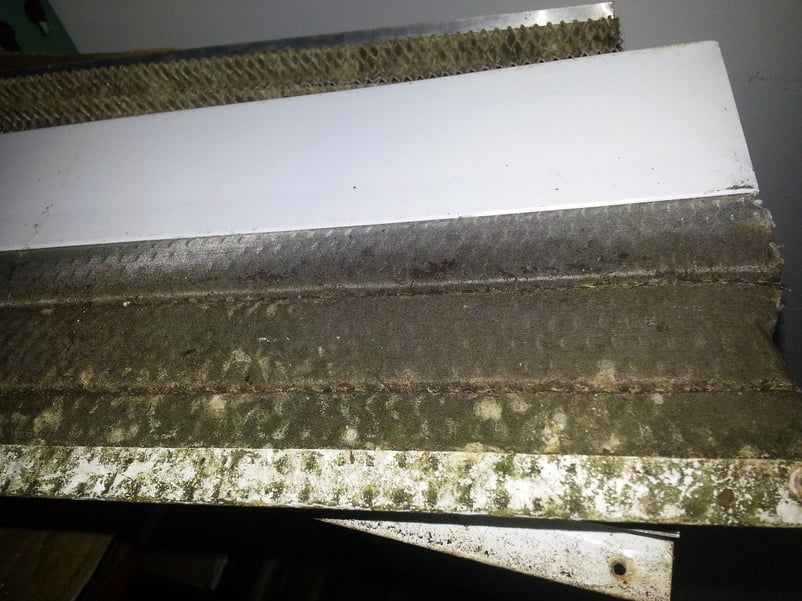
If you’re unfamiliar with galvanic corrosion (just like most people), then it’s easy to see this issue and dismiss it as a problem with micromesh gutter guards. This gutter guard also has a lot of algae, which doesn’t help.
However, galvanic corrosion should not happen and isn’t a typical issue for micromesh gutter guards. It shouldn’t be fusing shut on its own.
Which metals cause galvanic corrosion when mixed on my roof?
Some metals are more problematic and reactive than others, but there is potential for galvanic corrosion when you mix a wide variety of metals.
Some metals work well with other metals naturally, but some metals require coatings to work well together. It also depends on how much of each type of metal (anode vs. cathode) you have.
Stainless steel usually mixes well with other metals, but there are lots of different variations. Not all of them are compatible. If you’re worried about corrosion, you can choose to use 316L marine-grade stainless steel because that’s the most corrosion-resistant option out there.
Copper can mix with lead and stainless steel, but nothing else. It should not be used with steel, aluminum, or zinc. This is important to know because standing seam steel roofs are the most common type of metal roof installed in the Seattle area.
Zinc and aluminum are usually compatible, but in some cases, they will corrode when used together. A zinc-coated (galvanized) nail used on an aluminum roof will rust because it's a smaller anode on a larger cathode surface. However, the reverse (an aluminum nail on a zinc-coated roof) will not cause corrosion.
Which non-metal materials can also cause galvanic corrosion?
Even if you think that the materials you’re using together are fine because they’re metal with a supposed non-metal substance, you need to be cautious. Sometimes metal is present in other materials and can still cause galvanic corrosion.
Here are some examples of items that might not seem harmful but actually are:
- Graphite: This is the material used in pencils. It’s the part that you write with. This type of metal is very corrosive when used on aluminum, so you should not write on metal panels with a pencil.
- Pressure-treated wood: Can only be used with copper and certain types of stainless steel. If the pressure-treated wood gets wet, it will leak the copper residue from the treatment all over your roof. This will cause galvanic corrosion.
- Runoff from copper plumbing or other materials with copper: Similar to the issue you get with pressure-treated wood, runoff from copper materials can spread all over your roof and, as a result, leave a giant rust patch.
How can I make sure to avoid galvanic corrosion on my roof?
In order to know if your roof is at risk of galvanic corrosion, you need to know what kinds of metals are being used, how much of each is being used, and if there are any other metal materials being used.
You should also make sure to hire a quality contractor who knows what they’re doing. Look for someone who has installed a lot of metal roofs and is experienced in installing gutters and other additional metal materials on the roof. They will be more likely to know about galvanic corrosion and how to avoid it.
To prepare yourself for DIY additions to your roof or to prepare for a conversation with your contractor, do your research ahead of time about galvanic corrosion (reading this article is a great start!).
How can I be sure my roofer knows how to prevent galvanic corrosion?
Choosing the right materials is only half the battle. You also need a roofing contractor who knows how to install them properly.
Galvanic corrosion is just one of the many hidden issues that can cost you thousands if your roofer doesn’t fully understand how metal compatibility works, especially in a wet climate like Seattle.
If you’re installing a metal roof, replacing gutters, or even just adding skylights, your contractor’s attention to detail could make or break the lifespan of your roof. But how can you tell if they’re actually qualified or just saying what you want to hear?
Read our article “Is Your Seattle Roofer Actually Good? Here’s How to Tell Before It’s Too Late” to learn exactly how to tell if a roofing contractor is truly qualified, including the red flags to avoid.
Because when it comes to protecting your home, the right contractor is just as important as the right materials.
Frequently Asked Questions
1. What is the "Electrolyte" in the corrosion process?
In roofing, the electrolyte is almost always water. Moisture must be present for the chemical reaction between the two metals to occur. This makes galvanic corrosion a much faster and more destructive process in wet climates like the Pacific Northwest.
2. Which metal combination is the most dangerous?
The most common "roof killer" is copper mixed with aluminum or steel. Copper is a very "noble" (passive) metal, while aluminum and steel are reactive. If copper water runoff hits an aluminum gutter, the aluminum will corrode and fail rapidly.
3. Can non-metal materials cause metal corrosion?
Yes. Graphite (the material in pencils) is highly corrosive to aluminum. You should never use a pencil to mark cut lines on metal roofing panels. Additionally, pressure-treated wood contains copper and can cause corrosion if it touches steel or aluminum.
4. What is the safest metal to use for fasteners?
Stainless steel (specifically 316L marine-grade) is generally the most compatible and corrosion-resistant option. It can be used with a wide variety of other metals without triggering a significant galvanic reaction.
5. How can I tell if my roof already has galvanic corrosion?
Look for localized rust streaks, "fusing" of metal parts (like gutter guard mesh sticking to the frame), or rapid pitting in one specific area where two different materials meet.
6. How do I know if my roofer actually understands these chemical reactions?
Many roofers "slap on" shingles but don't understand metal science. You can learn how to vet your contractor's technical knowledge in our guide: Is Your Seattle Roofer Actually Good? Here’s How to Tell Before It’s Too Late.
7. Does this corrosion issue affect standing seam metal roofs?
Yes, especially because standing seam roofs rely on specific clips and fasteners. Check out our Standing Seam Metal Roof Panel guide to see how materials should be chosen.
8. Are certain gutter guards more prone to this than others?
Yes, especially if they use an aluminum frame with a stainless steel mesh. See our comparison of LeafFilter vs. MasterShield to see which systems avoid these traps.
9. Can a "maintenance" cleaning cause corrosion?
If the wrong chemicals are used on specific metals, it can trigger reactions. Review our RoofSmart maintenance process to see how we handle different materials safely.
10. What are the common red flags in a metal roofing proposal?
If a contractor doesn't specify the metal types for flashing and fasteners, they might be cutting corners. Use our list of red flags to look for when comparing roof proposals to stay protected.
Topics:
