

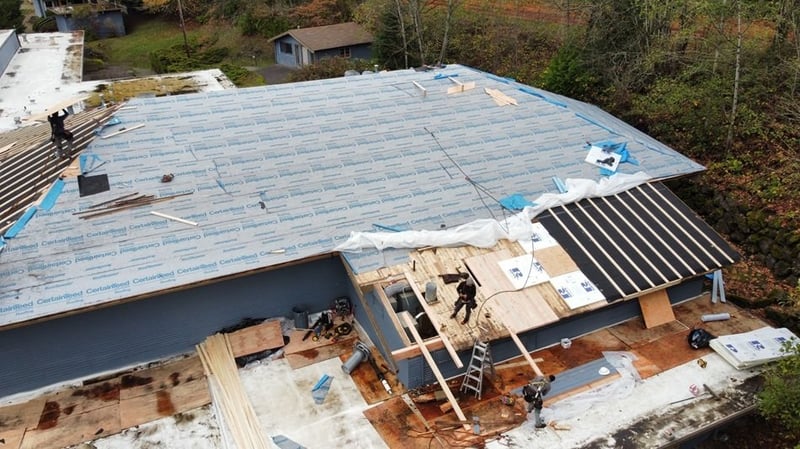
Have you been stressing over whether your attic, or the items stored inside, will get filthy during your roofing project? Do you want to protect your valuables but aren’t sure how to bring it up with your contractor?
Many Seattle-area homeowners don’t realize that roofing debris can fall through cracks in the roof decking or even right into the living space, especially if the roof structure is exposed or the decking is also the ceiling.
At RoofSmart, we want your roofing experience to be easy and smooth. Our goal is to inform each customer of issues that might come up along the way so that there are no surprises.
One thing that people don’t consider is the possibility of some dust or debris raining down during the roofing process, which is why we wrote this article.
In this article, we’ll break down when attics are most likely to get dirty during a roof replacement, how you can protect your stuff, and what you should ask your roofer before the work starts so that you know exactly what to expect.
Do roofing contractors usually clean the attic?
It is not typical for roofing contractors to clean your attic after a roofing job. Their focus is on cleaning the outside of your home.
Generally, that’s an area of the home that is already fairly dusty and dirty. So, even if the attic gets a little dirty during the roofing project, it’s pretty hard to tell.
Here’s an example of what a typical attic that we come across looks like:
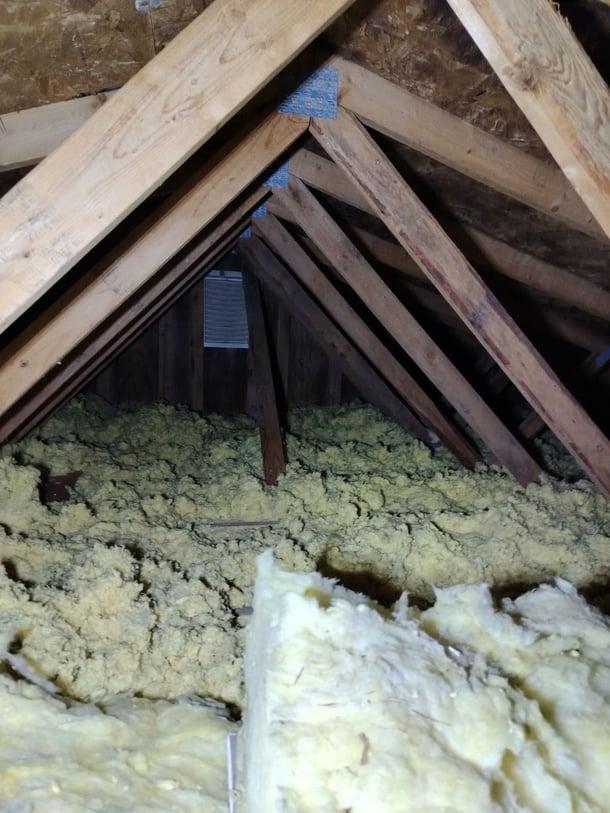
It’s usually dusty and dirty already, so most people don’t mind (or even notice) if the attic gets slightly dirtier during the roofing job.
However, if you’re reading this, then you’re obviously concerned about your stuff getting ruined. Keep reading to see how we prevent that.
Is it common for attics to get dirty during roof replacement?
On any roof, stuff works its way into the cracks as you walk on it more, and it's unavoidable.
On a normal roof with OSB or plywood roof decking, there might be a bit of dust or dirt that enters the attic, but it won’t be a lot. If your roof decking is rotting and needs to be replaced, then there might be some more dirt that gets through.
If your roof doesn’t have a ceiling (like in a garage or a storage room), then that’s when the dust or dirt from the roofing project can fall down onto your stuff and make a bigger mess.
Another place would be if your ceiling is made of tongue-and-groove. In this case, the ceiling of your living space and your roof decking are the same thing. This means that dust and dirt from the roofing project can fall directly into your clean living space (rather than an attic that’s already dirty. This is more common with flat roofs.
But if your roof deck is also your ceiling, or if you have precious items in your attic that need to be protected, then there are steps your roofer can take to protect your attic and home.
How can I protect items in my attic or home from getting dirty during a roof replacement?
If you’re concerned about your belongings getting covered in dirt and debris, let your roofer know, and they can make sure your stuff is protected.
They will tape up a plastic sheet to cover the stuff in your home or attic. For example, we recently did a job for a customer who has a flat roof with a tongue-and-groove ceiling. So, we had to tarp each room:
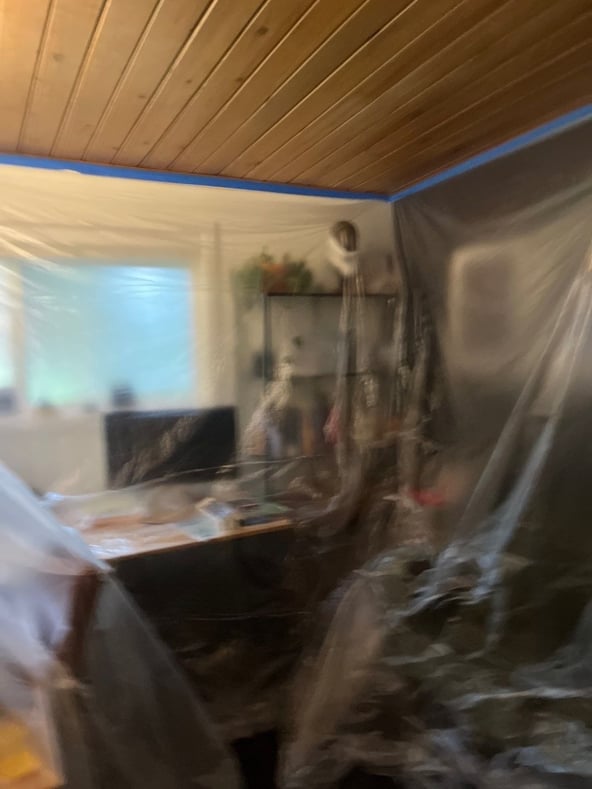
Putting up these tarps doesn’t take a super long time, but it does require some extra time and labor from your roofing crews. Therefore, asking your roofer to do this will increase the total cost of your project somewhat.
How do roofers clean up after a roof installation in Seattle?
After the roofing project is over, the roofers are focused on cleaning up the outside of your house. On a typical roofing project, this means looking around for stray pieces of shingles, nails, and any other debris that needs to be picked up from your property. It’s not standard for them to clean inside your house.
If there’s a tarp inside your home, your roofer will clear that away and make sure no mess is left behind. But otherwise, they will not enter your home.
Should I expect my roofer to protect my attic from getting dirty during the roofing job?
If you want stuff in your home or attic protected with plastic tarps, let your roofer know BEFORE the roofing job begins. That way, they know ahead of time and can come prepared.
If your roof decking is also your ceiling, then there’s a good chance that your roofer will recommend doing this anyway.
But if you have a regular attic and want your stuff protected, you definitely need to reach out to your roofer beforehand. Make sure you have exactly what you want done written in your contract.
It’s always best to make sure that you discuss your expectations with your roofer while you’re negotiating the roof work proposal so that you’re both on the same page. Sometimes there are things that you might expect them to do that they don’t automatically do.
It’s the same if any of your wood is replaced because it doesn't come painted to match your house. And nobody knows what color you want or has the color paint that you have, unless you talk about it ahead of time and make it part of your contract.
The same goes for if some of your siding is rotten and it gets replaced. It doesn't come in your color and will need to be painted. The roofer probably isn't going to do it, because they're not painters. If you expect paint, it needs to be in your contract.
What does the roof replacement process look like with RoofSmart?
If you’re worried about attic mess, debris falling into your living space, or how your valuables will be protected during a roof replacement, you deserve a contractor who understands those concerns and addresses them upfront.
At RoofSmart, we know your home is more than just a job site: it’s your space, your storage, and your peace of mind. That’s why we take extra steps to prevent messes, protect sensitive areas like attics and open ceilings, and clean up thoroughly when the job is done.
Wondering what that actually looks like in practice? Read our next article to see exactly what you can expect from RoofSmart’s repair and replacement process from prep to final cleanup: What Can I Expect from Roof Smart's Replacement or Repair Process?

Topics:
