

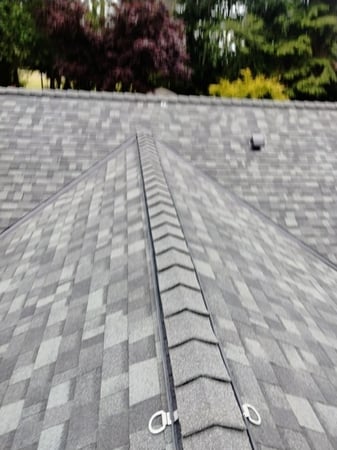
TL;DR: Summary
In Seattle’s wet and windy climate, choosing the wrong ridge vent can trap moisture, clog with debris, and slowly rot your attic from the inside out. Internally baffled vents (rolled plastic) often fail because they lack protection from wind-driven rain and provide an unnatural airflow path that plugs easily with debris and moss.
Conversely, externally baffled ridge vents use the Bernoulli effect to create a low-pressure vacuum that actively pulls air out of the attic while shielding entry points from rain. While more expensive and slower to install, externally baffled vents are the "Egghead" standard for preventing hidden moisture buildup and mold.
Have you ever noticed dark spots on your ceiling or musty smells in your attic and thought, “I didn’t even know there was a leak up there”? Or maybe you were told your roof has “plenty of ventilation,” but you’re still seeing signs of moisture damage… and wondering if your vents are actually part of the problem?
In Seattle’s wet and windy climate, most homeowners never think twice about what kind of ridge vent was installed on their home. But here’s the truth: choosing the wrong one can trap moisture, clog with debris, and slowly rot your attic from the inside out.
At RoofSmart, we don’t just replace your roof; we’ll also update your attic ventilation (or do any other extra work that you need). Attic ventilation is something that most other roofers ignore. But if your attic has poor airflow or cheap ridge vents, then you’re being set up for disaster.
This article will compare two styles of ridge vents (externally baffled and internally baffled), explain why the science behind airflow and rain protection in ridge vents matters, and help you understand which ridge vent style works best on your roof.
Can my ridge vent damage my roof?
A lot of homes in the Seattle area have ridge vents. It’s an easy way to ventilate your roof, and it works well on many different roof styles. The style of ridge vent isn’t something most people think about because… well, why would you care?
What a lot of people don’t realize is that in a rainy, windy area like Seattle, an internally baffled ridge vent can clog and even let water into your roof. The worst part is that the water enters your roof very high up and then goes into the attic, so this problem can easily go unnoticed for weeks (or even months).
There are two main styles of ridge vent that you can choose from: internally baffled or externally baffled.
Each one has its own pros and cons, but the major con of an internally baffled ridge vent is that it leaks and damages your roof. Installing an externally baffled ridge vent can change that.
What is an internally baffled ridge vent?
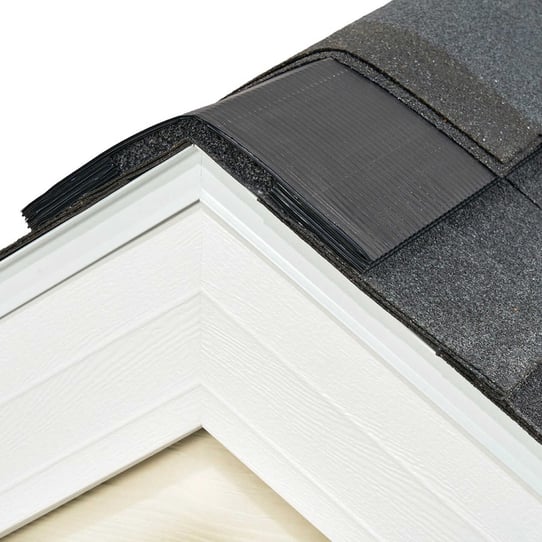
Image from Stone’s Home Centers
Internally baffled vents are a simple, rolled plastic vent with internal mesh. In the image above, you can see what it looks like installed on the roof. They are designed to bend over the peak of your roof.
Internally baffled vents rely on wind blowing through the vent and then pick up air in the middle at the peak for ventilation. This doesn’t really work, though.
With this setup, the air is supposed to flow up to the peak as it enters the vent, and then down. But it takes a lot of wind for the air to actually flow like that. It’s an unnatural path.
So what does this mean when it rains? Well, that’s where all of the problems start. In the rainy, windy Seattle weather, internally baffled ridge vents have the following problems:
- Plugs easily with debris and water: Since there isn’t really any protection from the wind, water, and debris can easily blow into the ridge vent openings. So the ridge vent is vulnerable to clogging from water and tree debris. This is also a great place for moss to grow, which can also plug the vent.
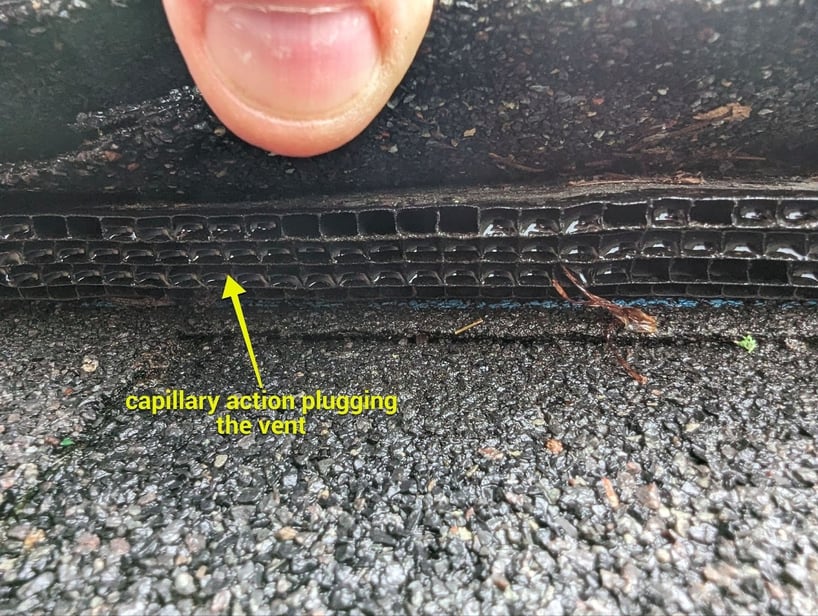
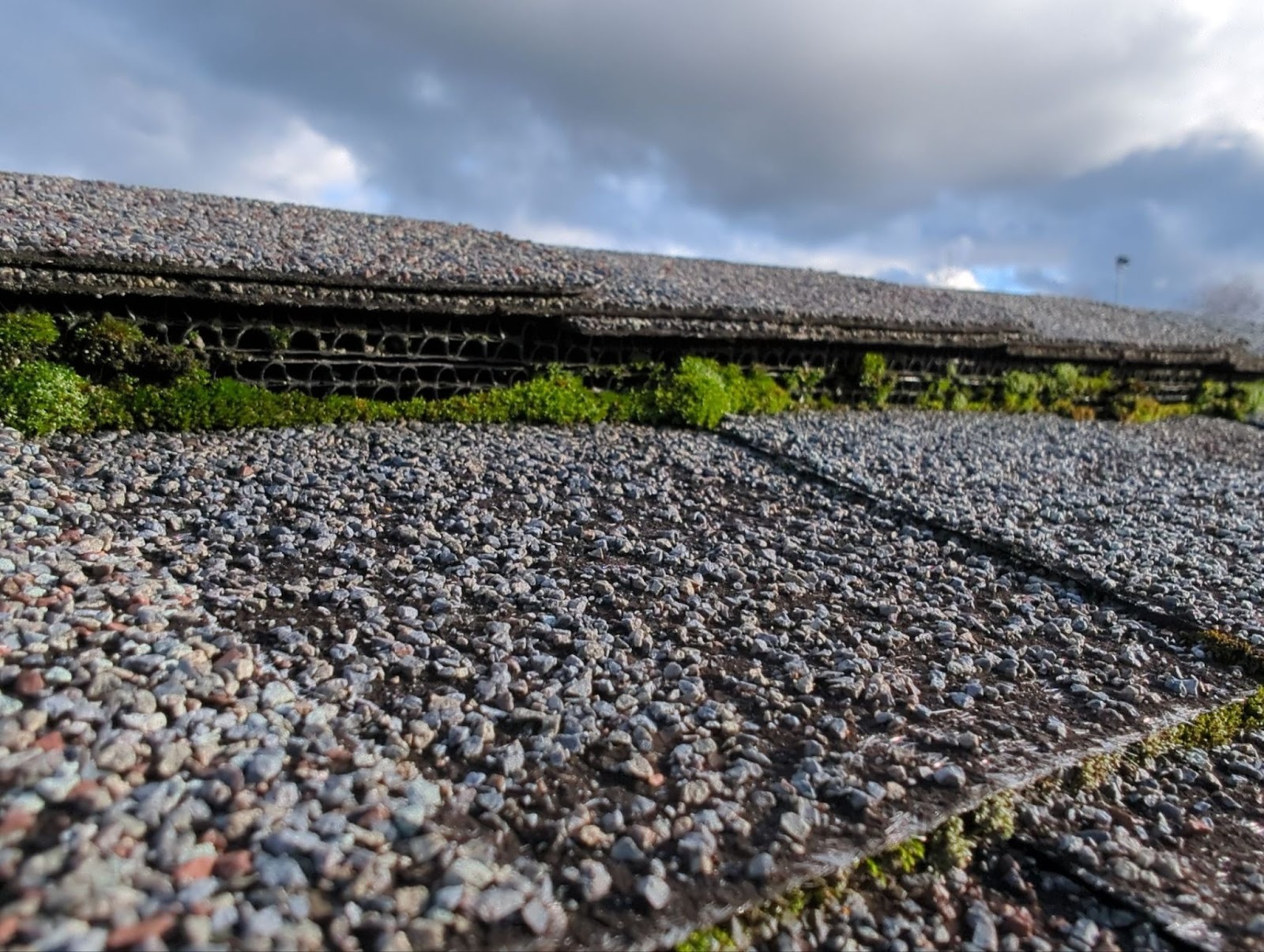
- Leads to moisture buildup, mold, and rot: Due to the lack of airflow at the peak of the roof, moisture can get in and build up on the underside of the ridge vent. Water can seep down to your roof decking, causing the wood to rot and potentially even turn moldy. Once this starts, the damage can spread throughout the entire attic.
At this point, you’re probably wondering why so many people have an internally baffled ridge vent if it can cause so many problems on the roof. In addition to not knowing about the potential damage, homeowners often choose to use this type of baffling because it is the cheaper option (around $1.50 per foot less). It is also much faster to install because it can just be stapled.
What is an externally baffled ridge vent?
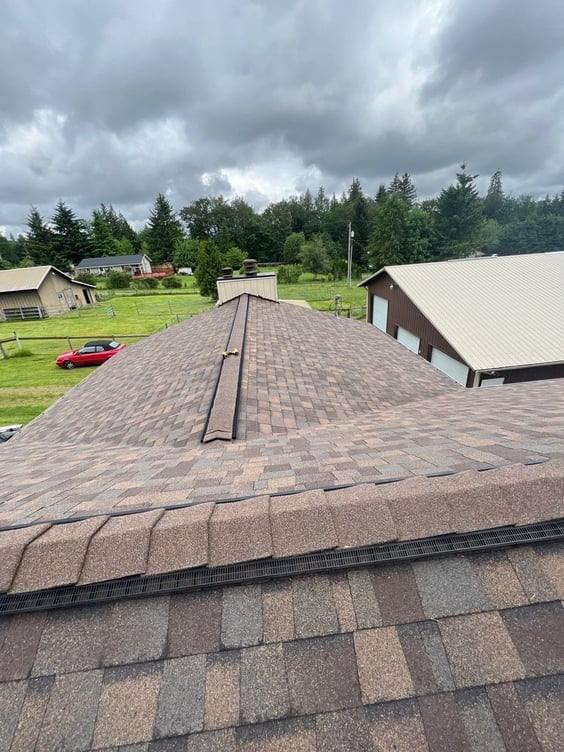
Externally baffled ridge vent is different from the internally baffled style because its design puts the openings at a different angle. It also has an external baffle that protects the entry points from wind-driven rain and debris.
Wind hits the baffle and deflects over the vent, which creates a low-pressure vacuum (Bernoulli effect) that actively pulls air from the attic. Air is naturally sucked out of the attic, instead of getting stuck in there like it does with an internally baffled vent.
This provides consistent ventilation that keeps the attic dry (plus, excess moisture can’t get in anyway due to the external baffle).
The reason that externally baffled ridge vents aren’t as common is that they are more expensive. Installation is also slower because this type of vent has to be hand-nailed rather than quickly being stapled down.
How do I know which type of ridge vent is right for my Seattle roof?
The externally baffled ridge vent offers much better protection for Seattle homes, so it’s the one that we always offer. In an area with so much rain and humidity, it’s important to do what you can to prevent moisture from entering the attic and staying there.
At RoofSmart, we do not like to use internally baffled ridge vents. We’ve found that the money saved from choosing this cheaper option doesn’t matter because of the rot, mold, and clogging that happens eventually. You’ll end up paying more to fix those issues.
Of course, the final decision is always up to you because it’s your roof. But a quality roofer will recommend an externally baffled ridge vent for the Seattle area because it gives you better protection from rain and moisture.
What if the ridge vent isn’t the only thing wrong with your attic ventilation?
If your ridge vent is letting in water, failing to move air properly, or even contributing to mold and rot, it’s a sign that your attic ventilation system as a whole might not be working the way it should.
In fact, many roofing contractors make critical mistakes when it comes to attic ventilation (like mixing incompatible systems, ignoring airflow calculations, or skipping intake vents altogether). These missteps can quietly cause condensation, structural damage, and even premature roof failure.
So if you’re dealing with moisture issues or ongoing attic problems, don’t stop at the ridge vent.
Read our article “What’s Wrong With My Attic Ventilation? Common Mistakes Roofers Make” to learn the most common attic ventilation mistakes roofers make and how to spot them before they cause long-term damage.

Frequently Asked Questions
1. Why is an internally baffled ridge vent considered "risky" in Seattle?
Internally baffled vents rely on wind blowing through the vent to move air. In our rainy, windy weather, this design allows water and tree debris to blow directly into the vent openings, leading to clogs and moisture seepage that rots your roof decking.
2. What is the "Bernoulli effect" in roofing?
This refers to the physics of an externally baffled ridge vent. When wind hits the external baffle, it deflects over the vent, creating a vacuum that naturally sucks stagnant, moist air out of the attic.
3. If internally baffled vents are worse, why are they so common?
They are popular because they are the cheaper option (roughly $1.50 per foot less) and significantly faster to install because they can be stapled down rather than hand-nailed.
4. Can a clogged ridge vent cause mold in my attic?
Absolutely. If a vent is plugged by moss or debris, moisture cannot escape. This leads to moisture buildup on the underside of the vent, which eventually turns into wood rot and mold that can spread through the entire attic.
5. How do I know which type of ridge vent I currently have?
An internally baffled vent is usually a simple rolled plastic mesh. An externally baffled vent is a rigid piece with a visible "wing" or baffle on the outside designed to deflect wind.
6. Is it true that ridge vents are "invisible" leak sources?
Yes. Because ridge vents are at the very peak of the roof, water that enters there can travel down the underside of the decking or stay trapped in the insulation. You might not see dark spots on your ceiling for months after the damage has already started.
7. Can I use a ridge vent on a low-slope roof?
It depends on the pitch. For roofs with a very low slope, you have to be extra careful about wind-driven rain. Learn more in Ridge Vent vs. Static Vent: Which One Is Best on a Low-Slope Roof?
8. What are the common signs that my ventilation is failing?
Look for musty smells in the attic, rust on roofing nails, or dark patches on the roof decking. These are often signs of condensation caused by poor airflow.
9. Do all roofing contractors check the ridge vent during an inspection?
Unfortunately, many roofers skip the attic and ventilation check entirely. A qualified roofing contractor will always inspect your attic to ensure your ventilation system is balanced.
10. What happens if my ridge vent is mixed with other vent types?
This is a major ventilation mistake. Mixing different systems can cause "short-circuiting," where air only cycles between the vents rather than pulling fresh air from the intake. Read more about common attic ventilation mistakes roofers make.
Topics:
