

TL;DR: Summary
In Seattle’s humid climate, choosing the right insulation is a balance of moisture resistance and thermal value. Fiberglass insulation remains the top choice for local homeowners because it is non-flammable and moisture-resistant, though it requires proper attic ventilation to prevent surface mold.
While organic options like cellulose offer a better air barrier, they are prone to rot and pests if leaks occur. For homeowners prioritizing safety and efficiency, Rockwool provides the highest R-value and natural fire resistance, though at a higher price point than standard fiberglass.
Are you worried that your attic insulation isn’t doing its job or worse, that it might actually be causing damage to your roof? Are you unsure which insulation type works best in Seattle’s wet, mold-prone climate?
In a region known for heavy rain and high humidity, choosing the right roof insulation isn’t just about comfort: it’s about preventing serious (and expensive) moisture damage.
At RoofSmart, we don’t just slap shingles on your roof and call it a day. We believe that looking at every component of the roof is important, including insulation. With each of the hundreds of roofs that we install each year, we ensure that your insulation is up to par.
In this article, we’ll walk you through the most common types of attic insulation used in Seattle homes, including what they’re made of, how well they perform, and what problems you should look out for before your roofer starts the job.
You’ll also learn which insulation types are safest, most energy-efficient, and worth the cost.
What are the most common types of insulation used in Seattle roofs?
Every attic needs some type of insulation to help regulate the temperature of your home and protect your attic and roof from excessive moisture build-up. Your home can have a wide variety of insulation types.
It’s important to note that these types of insulation are useful for slowing down the transfer of heat and moisture, but they don’t completely stop it. However, with proper ventilation in your attic, this shouldn’t be a problem.
You have to have proper ventilation for your insulation to work correctly (and vice versa).
Here are all of the types of insulation we’ve seen over the years on Seattle homes, ranging from very common to more rare:
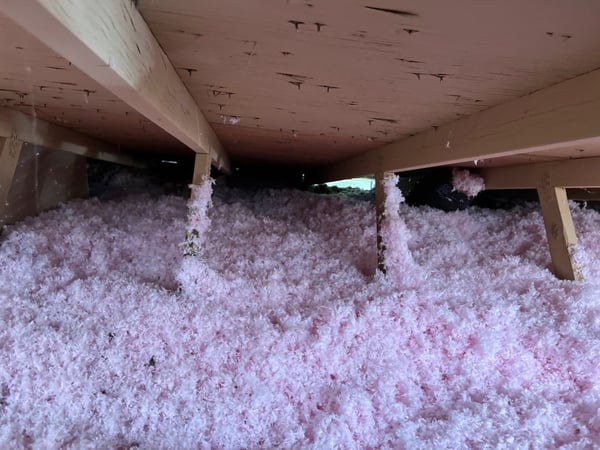
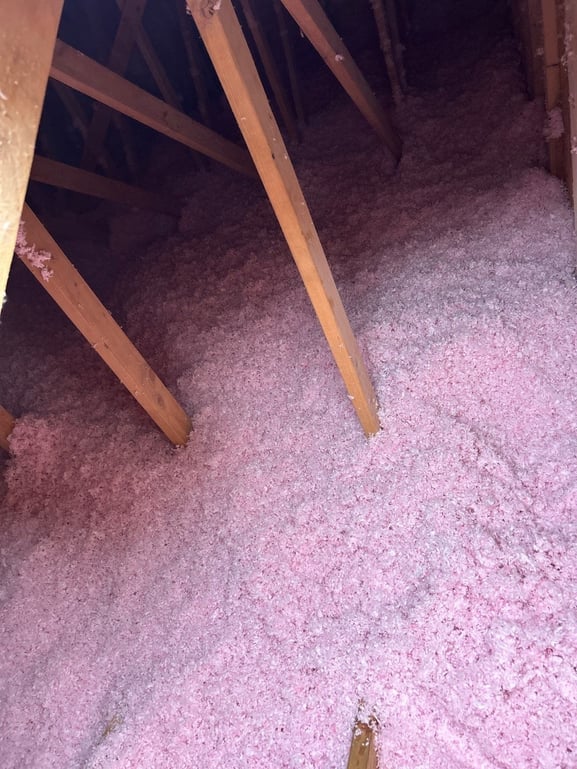
- Fiberglass: This is the most commonly used type of insulation in Seattle homes. Almost everyone had this in their attic. Fiberglass insulation comes in either rolls or batts, or more commonly, as loose fill blown in. What's useful about the loose fill blown in is, of course, it gets into all the little nooks and crannies. And so you get good even coverage, even over your trusses and light fixtures, and wires. It fills in everything. But the batts are nice because, you know, a homeowner can do it. You don't need a special tool. You just unroll the batt, cut it up, and fill in your attic. Because it’s made of glass fibers, it is non-flammable, non-absorbent, and moisture-resistant. Humidity doesn't really affect it. Although if you have a bunch of condensation on it, it can still grow mold.
This is what loose-fill insulation looks like:
- Cellulose: This is made of an organic (wood fiber) material, and sometimes it's shredded up newspaper. It’s probably the second most common one. And what they do is add a little bit of water to that wood pulp mix, and they shoot it all over your ceiling. It's like papier-mache in your attic. And it actually is pretty effective, but it's an organic wood-based material, so if you get excessive moisture or leaking, you can absolutely get rot. If that happens, you have to throw it away. And it's definitely not fire-resistant. Rodents and pests love it. Some people consider it more environmentally friendly because it's a natural product. It has a good seal and actually creates a pretty good air barrier.
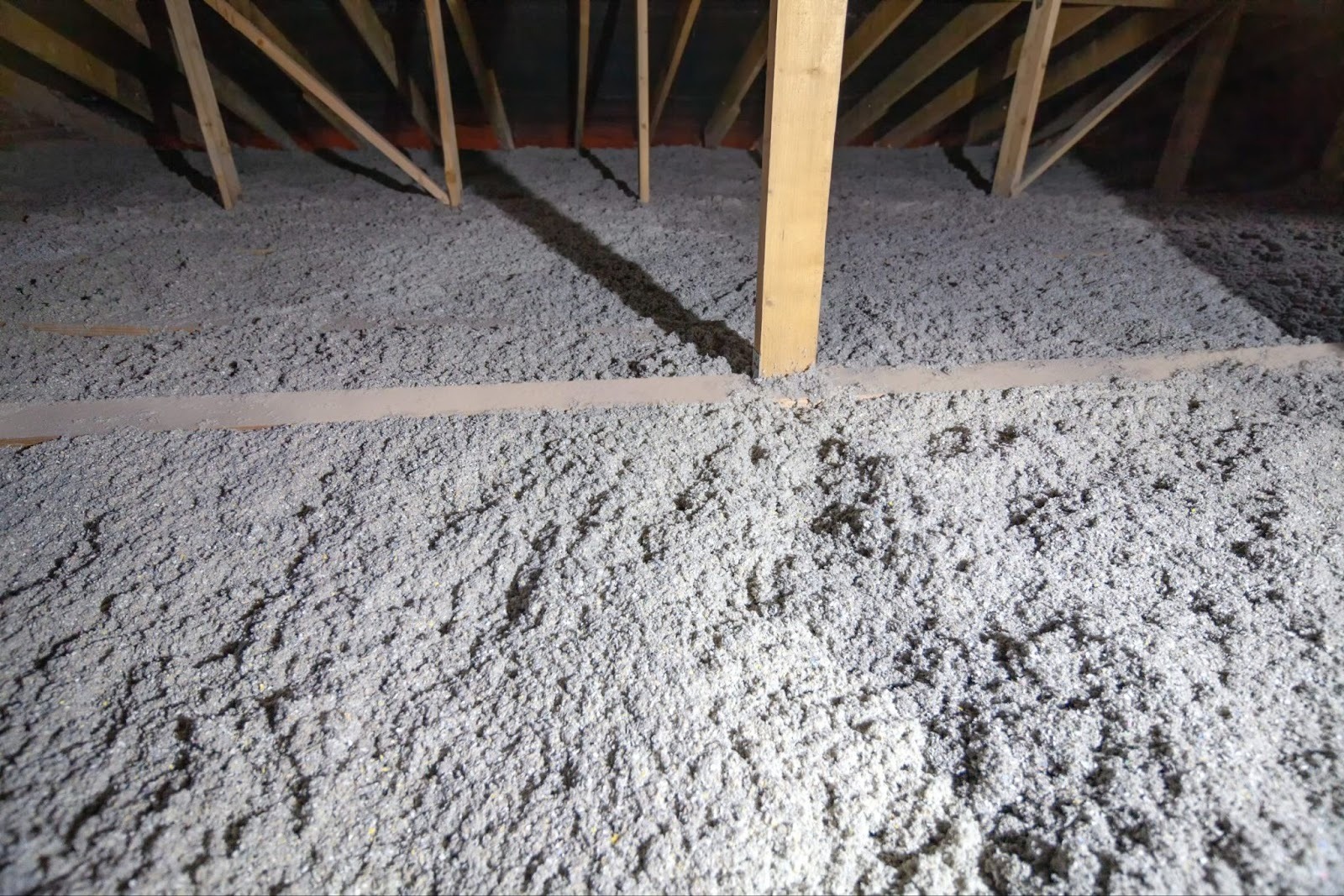
Image from Rite Way Insulation
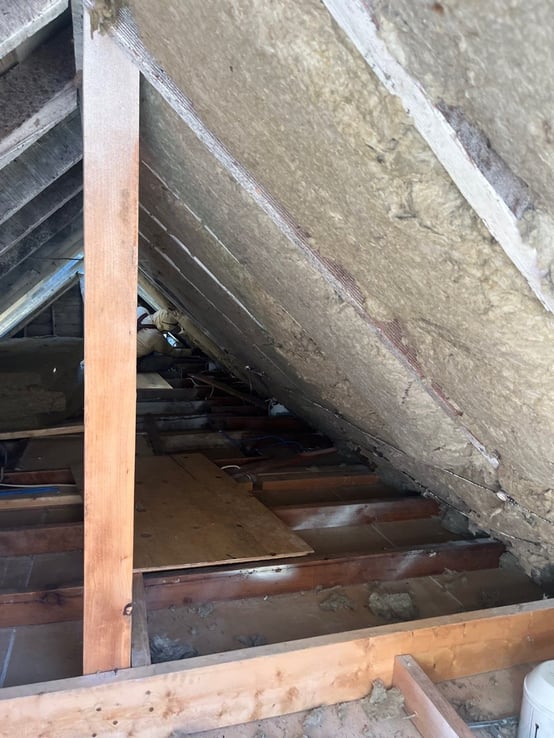
- Rockwool: This has good sound deadening and a higher R-value (higher insulation value) than fiberglass. One big advantage is that rodents and pests don't like it, so they're much less likely to choose your attic if they find it there. It also has good fire resistance and is made partially of recycled materials, making it more eco-friendly than fiberglass.
What issues might be in my attic that prevent my roofer from installing insulation?
In some cases, there are issues related to insulation that can slow down or even stop your insulation work from happening because they pose a risk to the health and safety of the crews working on your roof.
Here are some examples of potentially dangerous issues that can stop insulation work in your home:
- Vermiculite: This is another word for asbestos. It used to be used as insulation, but is no longer commonly used because it can be extremely dangerous. It looks like little rocks, and actually works well as insulation. However, if it gets moved or starts to deteriorate, the dust or runoff from the vermiculite can cause deadly health issues if breathed in. If you have it, you can pay for remediation to have it all vacuumed out. You’ll have to evacuate the house first. Or, you can leave it in place and just blow new insulation on top of it. Many roofers do not offer asbestos remediation services, so you’d have to call in specialists if you want it removed.
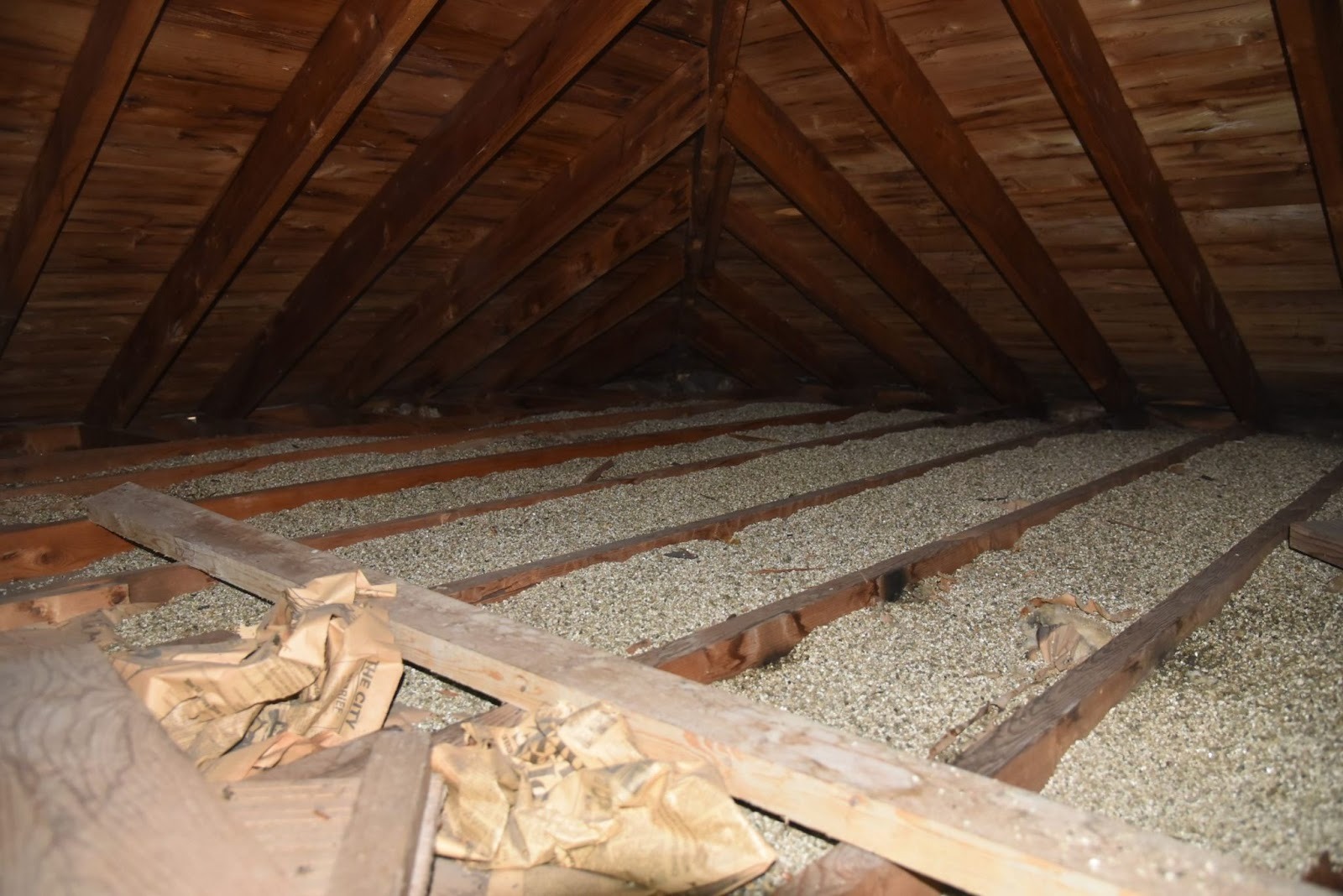
Image from Roar Engineering
- Knob & Tube Wiring: This is uninsulated wiring, and it's been known to cause fires when it's disturbed. Your roofer is not allowed to add insulation if you have knob and tube wiring. You’d need to call in an electrician or another professional to deal with it first.
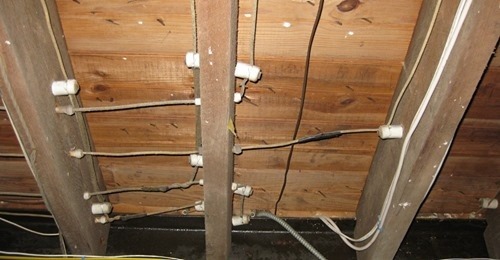
Image from Lamacchia Realty
Does it matter what kind of insulation my roofer uses?
At RoofSmart, we do fiberglass insulation because it provides the best value. It’s one of the lower-cost options, but it is still effective at keeping out moisture and regulating temperatures. That’s also the reason why it’s the most commonly used type of insulation.
The other options work fine as well, but they’re more expensive and less common. If you want one of the other types of insulation for any particular reason, let your contractor know. Otherwise, they’ll probably assume that you want fiberglass.
What happens if I don’t have enough insulation in my attic?
Now that you know which insulation types work best in Seattle’s rainy, mold-prone climate, there’s one more thing to consider: how much insulation do you actually have in your attic? Even the best insulation won’t protect your roof if there’s not enough of it.
Many Seattle homes are under-insulated and don’t meet modern energy standards, especially older homes built before updated codes took effect. This can lead to:
- Heat loss in winter and excessive heat in summer
- Condensation issues and mold growth in your attic
- Soaring energy bills and poor indoor comfort
So, what should you do if your attic insulation isn’t up to par?
Our next article breaks down how to tell if your insulation is insufficient, what signs to look for, and the safest (and most cost-effective) way to fix it: What Should I Do If My Attic Insulation is Wrong?
Frequently Asked Questions
1. What is the most common type of insulation used in Seattle?
Fiberglass is the industry standard for the Pacific Northwest. It comes in batts or "loose fill" (blown-in), which is excellent for filling the small nooks and crannies around trusses and wiring to ensure even coverage.
2. Can insulation actually cause mold growth?
Insulation itself (like fiberglass) is inorganic and moisture-resistant, but if attic condensation builds up on its surface due to poor airflow, mold can still grow on the dust and debris trapped within the fibers.
3. Is cellulose insulation better for the environment?
Many homeowners prefer cellulose because it is made from recycled wood fibers and newspaper. While it creates a great air barrier, it is highly absorbent; if your roof leaks, cellulose can rot and must be completely replaced.
4. Why do pests avoid Rockwool insulation?
Unlike cellulose or fiberglass, Rockwool is made from stone and slag. Its dense, prickly texture is naturally unappealing to rodents and pests, making them less likely to nest in your attic.
5. What is vermiculite, and is it dangerous?
Vermiculite is an older insulation type that often contains asbestos. If disturbed, it can release deadly fibers into the air. Most roofers will stop work if they find it, requiring a specialist for remediation before proceeding.
6. Can I add new insulation over "Knob & Tube" wiring?
No. Knob and tube is uninsulated, antique wiring that generates heat. If you cover it with insulation, it can cause a house fire. You must have an electrician update your wiring before a roofer can upgrade your insulation.
7. How much insulation does the Seattle building code require?
Most modern codes require significantly more insulation than was used in older homes. If your insulation doesn't meet these energy standards, you may experience high energy bills and "attic rain" (condensation).
8. What is the "R-value" and why does it matter?
The R-value measures an insulation's ability to resist heat flow. In our climate, a higher R-value means better temperature regulation in both the summer and winter. Rockwool typically has a higher R-value per inch than fiberglass.
9. Does my insulation need a specific type of vent to work?
Yes. Insulation and ventilation work as a team. If your intake vents are blocked by insulation, your attic will trap moisture, leading to mold regardless of which insulation material you choose.
10. How do I know if my current attic insulation is "wrong"?
Signs of insufficient or failing insulation include uneven room temperatures, ice dams, or mold growth on the underside of your roof deck.
Topics:
