

TL;DR: Summary
Ventilating a low-slope roof (less than a 3/12 pitch) is a unique challenge because traditional systems require at least 3 feet of vertical rise between intake and exhaust to function. While ridge vents are aesthetically pleasing and less prone to leaks, they can be easily compromised by wind-driven rain on a flat surface. Static vents act more like chimneys, providing better airflow and waterproofing, but require individual installation.
If your roof is too flat for either, you may need to convert to a "warm roof" design to prevent catastrophic moisture buildup.
Are you struggling to figure out how to ventilate your low-slope roof and worried that choosing the wrong vent could lead to mold, leaks, or even rot? Has your roofer mentioned ridge vents or static vents, but you’re not sure which one will actually work with your roof’s slope or design?
Low-slope roofs come with unique ventilation challenges that most homeowners (and even some roofers) aren’t fully aware of. If you install the wrong type of vent, your attic may not breathe properly, and moisture can build up fast.
At RoofSmart, we always pay meticulous attention to detail and prioritize getting everything right. This means that during each of the hundreds of inspections we do a year, our estimators are checking your attic to make sure the ventilation is working. Most of the time, it isn’t (but that’s why we check!), so we fix it during the roof replacement process.
This article will break down the pros and cons of ridge vents and static vents for low-slope roofs, helping you avoid common pitfalls and make the right call.
We’ll explain how attic ventilation works differently on low-slope roofs, when ridge vents or static vents make the most sense, and what to do if your roof pitch is too low for standard solutions.
How is attic ventilation different on a low-slope roof compared to a regular roof?
Standard ventilation fails on low-slope roofs (any roof that has less than a 3/12 pitch) because some low-slope roofs do not have enough room for regular ventilation to work. You need at least 3 feet of vertical rise between your intake and exhaust vents.
In other words, your intake vents need to be at least 3 feet lower (vertically) than the exhaust vents. Without that much space, the ventilation system will not work.
In those cases, you need to pivot from traditional ventilation and convert the attic to a "warm roof" design to prevent moisture issues. On a warm roof, there are multiple layers of insulation right underneath the roof deck.
With any roof design, you need to make sure that you account for water going uphill from wind-driven rain. Most roofers don't. They just assume water always goes downhill. So on a low-slope roof, you've got to account for that.
Should I choose a ridge vent or a static vent for my low-slope roof?
Since low-slope roofs can be difficult to ventilate properly, it’s important to understand which types of ventilation work best on a lower slope so that you don’t end up with mold and rotting wood.
Ridge Vent:
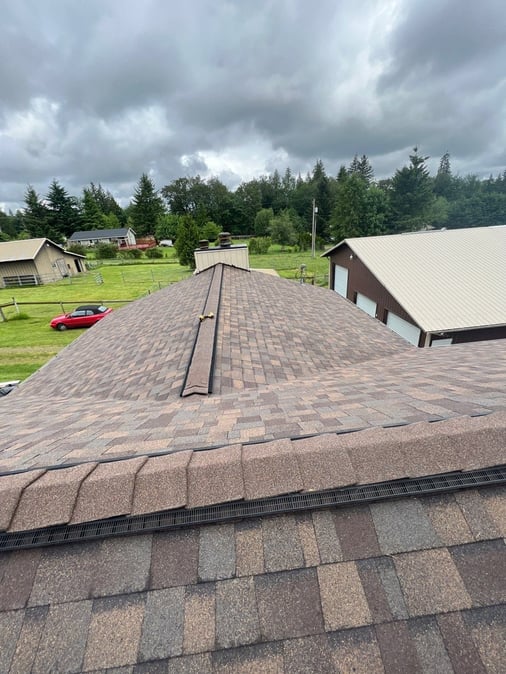
A ridge vent is a continuous vent that is placed along the peak of the roof. It is one of the most commonly used types of exhaust ventilation in attics because it has a simple design and is easy to install.
Pros:
- Hidden ventilation: Ridge vents naturally blend right into the roof because they are covered by the ridge cap. They don’t disrupt your roof’s aesthetic
- Less prone to leaks: Ridge vents are installed into the roof and covered, so they’re more protected from rain and leaks than can vents. No water is flowing into it.
Cons:
- Wind-driven rain can clog the ridge vent: There are different types of ridge vents out there. The standard option is not protected from wind-driven rain and can clog. The more advanced version has a baffle that protects the vent from getting clogged. If you choose the cheaper option, then your ridge vent might clog because it's pretty easy for wind to blow water into it on a low-slope roof.
- Framing Obstruction: Wide ridge beams, like the ones used on manufactured homes, can prevent proper installation. You need to get a wider vent, but they can look bulky
- Low-slope roofs might need extra height: In some cases, if your roof slope is too low (below 3/12), then you might need to raise the height of your ridge. Many mobile homes or manufactured homes don't qualify because they're at a 2/12 slope. But you can change the slope at the ridge so that it gets to a 3/12 just at the ridge. It looks kind of funny, but it works. You can bump it up just at the ridge with some shimming, or you can build essentially a two-by-six wall down the ridge and then make a cap over it. If you can't see the ridge from the front of the house, then this is something that we could recommend. If you can see it, we'd probably try to do something else.
Ideal Use: Ridge vents work best on metal roofs with a low slope where the vent is integrated into the ridge design. This makes it super easy to waterproof because the metal folds up the ridge, protecting it from water. It's basically built into the design already, so it works really well. If you're doing a single-ply membrane, then a ridge vent is best if you don't mind the look, and you can build up the mini parapet wall.
Static Vent:
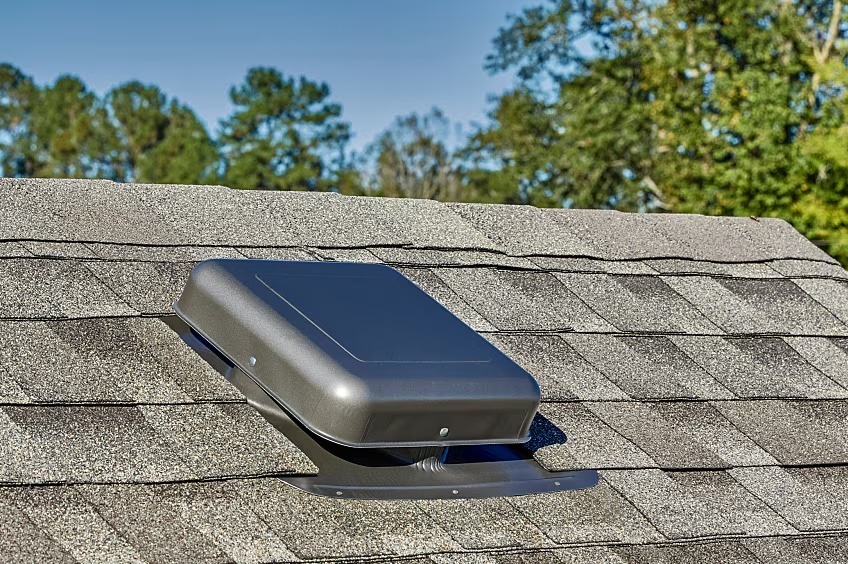
A static vent is another common option for exhaust ventilation. If a ridge vent won’t work on your roof, then your roofer might suggest a static vent instead.
Pros:
- Creates more vertical rise: With a static vent, you’re creating more of a chimney. This improves airflow and can sometimes give you the extra room you need to make regular ventilation work in a low-slope roof.
- Better waterproofing: With a static vent, it’s a lot easier to waterproof. You can get a good seal around the edges, and you don’t have to worry about wind-driven rain getting inside it.
Cons:
- More work to set up: Static vents have to be installed individually. For each one, you have to cut a hole through the roof and then install the shingles around it. It takes more time and requires more steps than a ridge vent installation.
Ideal Use: Static vents are a good option when a ridge vent is not right for your roof. They are a fairly low-cost option, making them a good alternative. For example, if you don’t want to build the mini parapet wall to accommodate your ridge vent, then you can try static vents instead.
What if standard ventilation isn’t right for my roof?
Whether you choose ridge vents or static vents for your low-slope roof, the most important thing is making sure your attic actually breathes. Without proper airflow, trapped moisture can lead to mold, rot, and long-term structural issues, especially in homes with limited vertical rise between intake and exhaust vents.
We’ve seen how even the best vents can fall short when your roof’s design doesn't allow for proper separation between intake and exhaust. If that's the case with your home, a traditional “cold roof” design may not be enough.
Your next step is understanding when a “warm roof” is the better solution, especially if your low-slope roof is too low for conventional venting.
Read our article “Warm Roof vs. Cold Roof Ventilation: Which One Is Right for Your Home?” so you can decide which roof system will truly protect your home from the inside out.
Frequently Asked Questions
1. Why does my low-slope roof need a different ventilation strategy?
Standard ventilation relies on the "stack effect," where heat rises. On a low-slope roof, there often isn't enough vertical space (you need at least 3 feet) for this natural cycle to occur. Without specialized low-slope solutions, moisture gets trapped, leading to mold and rot.
2. Are ridge vents safe for roofs with a very low pitch?
They can be, but you have to account for wind-driven rain. On a low slope, it is much easier for rain to be blown "uphill" into a standard ridge vent. To prevent this, you should use a ridge vent with a baffle to block water while still allowing air to escape.
3. What is a "Static Vent," and how does it help?
A static vent (sometimes called a box or can vent) is an individual exhaust port. They are often better for low-slope roofs because they create a chimney-like effect, improving airflow where a ridge vent might be blocked by framing or a lack of height.
4. Can I use a ridge vent on a mobile or manufactured home?
Many manufactured homes have a 2/12 slope, which is too low for standard ridge vents. However, we can often shimming the ridge or building a small parapet wall to increase the slope at the peak to a 3/12, making it compatible with a ridge vent system.
5. What is the "Warm Roof" alternative?
If your roof is too low to ventilate properly (a "cold roof"), your next step is a warm roof design. This involves placing multiple layers of insulation directly against the roof deck to prevent the dew point from ever forming inside your attic.
6. Why does my roofer keep mentioning "intake vents"?
Exhaust vents (like ridge or static vents) only work if they have air to pull from. Intake vents at the eaves are the other half of the system. If your intake is blocked by insulation, your exhaust vents will be useless.
7. Can a ridge vent clog?
Yes. In Seattle, wind-driven rain can carry debris into un-baffled ridge vents. It’s important to choose a high-quality vent that is specifically designed to resist clogging in wet, windy environments.
8. How do I know if my attic is actually breathing?
During a RoofSmart inspection, we don't just look at the shingles; we climb into the attic to check for signs of stagnant air, such as damp insulation or musty smells, ensuring your ventilation is actually moving air.
9. Is a ridge vent better for a metal roof?
Yes. Ridge vents work exceptionally well on low-slope metal roofs because the metal can be folded up the ridge, creating a naturally waterproof and integrated ventilation design.
10. What happens if I choose the wrong vent for my slope?
Choosing the wrong vent can lead to condensation and mold issues, which can rot your roof deck from the inside out. It's often more expensive to fix a moldy attic later than to install the right ventilation system today.
Topics:
