

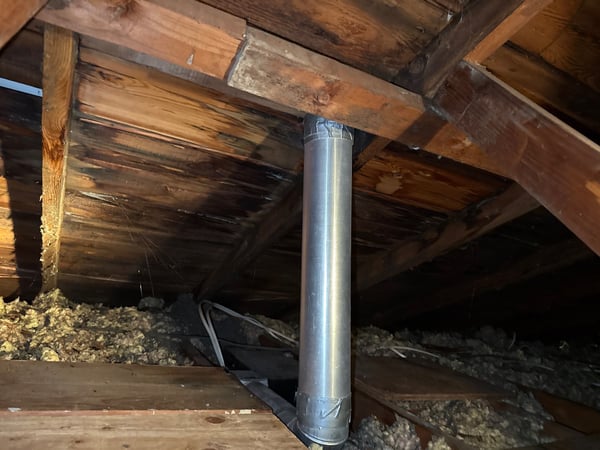
TL;DR: Summary
In Seattle, mistaking attic condensation for a roof leak is a common and expensive error. While a roof leak typically occurs during or immediately after rain and is localized to specific penetrations like chimneys or skylights, condensation is a seasonal winter issue. Condensation creates widespread moisture, rust on fasteners, and mold across the entire attic as warm indoor air hits the cold roof deck.
Correct identification is vital because fixing a leak requires a targeted repair, while fixing condensation requires upgrading attic ventilation to balance airflow.
Wondering why your ceiling only drips in winter? Concerned that your roof is rotting from the inside out without you knowing it?
In Seattle, one of the most overlooked causes of water damage is attic condensation, and the symptoms can look almost identical to a traditional roof leak. That means you could spend thousands trying to fix the wrong problem.
At RoofSmart, we inspect hundreds of roofs all over the Seattle area every year. This includes a thorough inspection of the attic to make sure that there are no leaks, condensation, or ventilation issues. This can ruin any roof, even if it’s new.
In this article, we’ll walk you through the exact signs to look for, the real difference between a leak and condensation, and how to tell what’s really going on in your attic or roof assembly. That way, you’ll know exactly what to ask your roofer and how to avoid paying for the wrong fix.
What are the key signs of a roof leak?
Roof leaks can stay hidden for a long time before you notice them. But even when you start to see evidence of water damage in your roof, how do you know that it’s a roof leak (as opposed to condensation)?
Often, it’s tough to tell the difference. Look for these key signs of a roof leak to help you figure out the problem:
- Leak occurs during or immediately after rain: This can be a sign that there is a hole or gap in your roof somewhere that is letting water in. The rain can easily find that spot and access the attic.
- Water often originates at roof penetrations: Places where things stick out of your roof (like chimneys, skylights, vents) can be vulnerable to leaks. If they weren’t flashed properly or the flashing failed after a while, then that leaves a gap where water can get in. This is a common reason for leaks on roofs all over the Seattle area. Usually, it's a flashing mistake or something that was held together with caulking that's finally failed. If the leak just started, then the first thing you want to do is find out if there's a hole in the roof.
- There’s a localized water trail: If you look around your attic and see drip marks or water streaming down (clear signs of water dripping and falling), then that indicates there is a leak. The important part of this is that the drip marks must be contained to a small part of the attic for it to be a leak. Damage from leaks can spread all over the roof, but drip marks can show you where the leak originated.
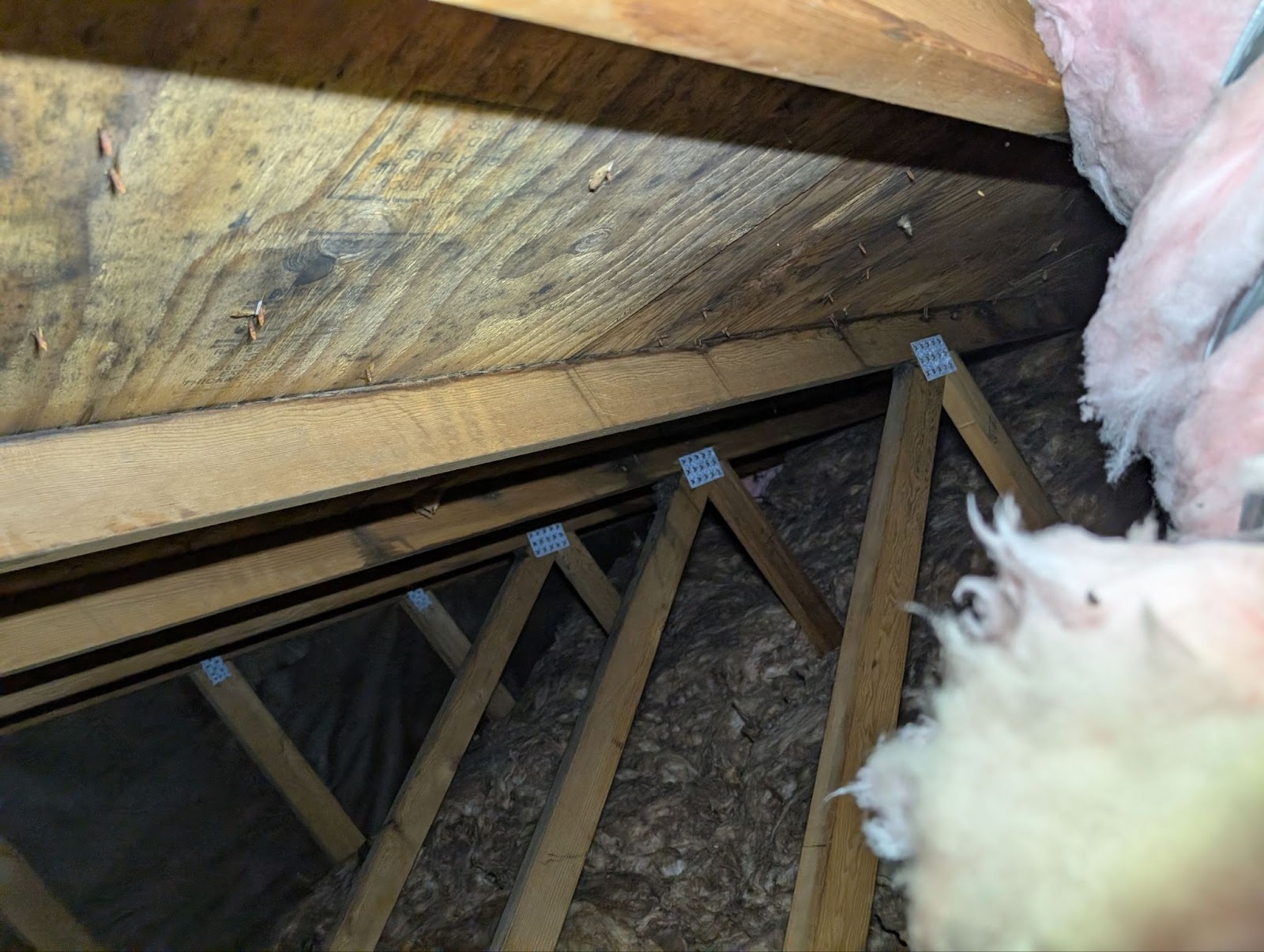
This image shows drip marks on the rafter. This is the type of thing you want to look for. However, you also want to confirm other signs of a leak as well. This image seems like a leak, but because of other issues we found in the roof (like rusted fasteners and blocked airflow), we determined that the issue is actually condensation.
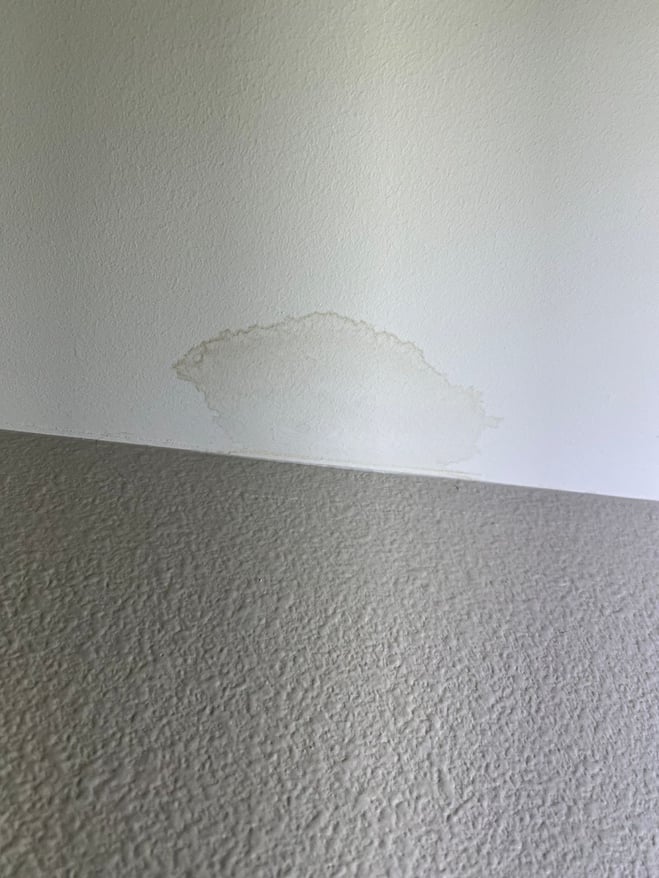
- Water stains in your roof: After a while, a leak will drip and collect long enough to finally seep through to the ceiling. So if you’re noticing water stains on your ceiling, that indicates that you have a leak.
What are the key signs of condensation build-up in my attic?
Condensation is more difficult to identify than a leak because it typically stays in the attic. You really can’t tell that it’s an issue unless you actually look in the attic.
Here are the signs that your attic has condensation:
- Moisture accumulates during cold weather or in winter: Condensation issues are more common in the winter as the warm air from your home rises and meets the cold roof in your attic. If your roof doesn't leak all summer, and then in the winter, you've got water showing up, it's probably condensation. But it doesn't really help if you're just seeing a leak for the first time. You need to establish a pattern before anyone can determine the problem for sure.
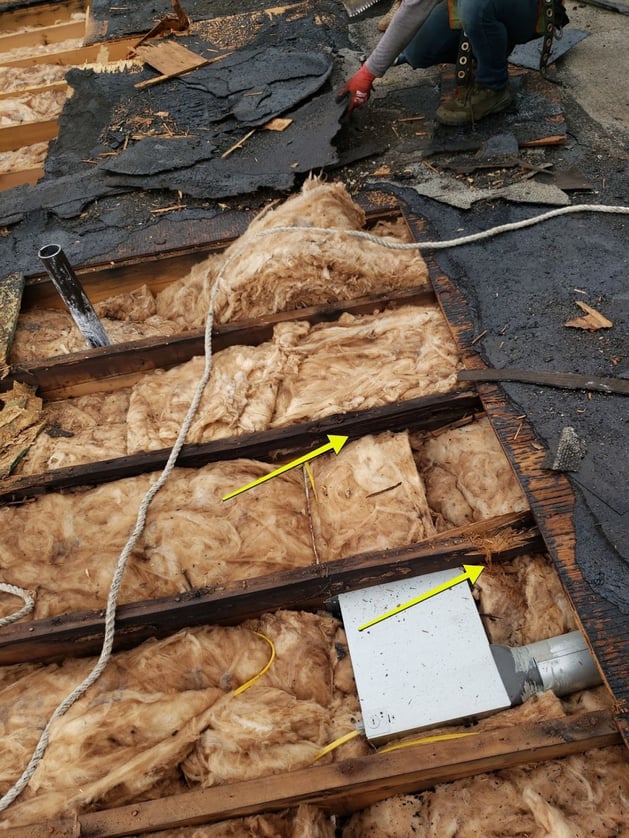
- There is widespread moisture, mold, rot, or rust in the attic: Unlike with a leak, condensation is immediately a widespread issue. You can see it in big patches on the wood. The rotting wood can spread all over. Here’s an example of rotting rafters that we uncovered in a roof that had a lot of condensation issues:
- You have high indoor humidity and poor attic ventilation: Attics with proper airflow prevent condensation from being a problem, so if your attic doesn’t have good ventilation and/or might have high humidity, then your roof is probably going to have condensation issues. All of these problems go hand in hand.
How do I tell the difference between a roof leak and condensation in my attic?
Although leaks and condensation can cause similar damage to the attic, the way they appear and some of the causes are fairly different.
To help you quickly and easily understand the key differences between roof leaks and attic condensation damage, here is a comparison chart:
|
Category |
Roof Leak |
Attic Condensation |
|
When the Moisture Appears |
Occurs during or immediately after rain |
Appears during cold weather or winter, often without rain |
|
Seasonal Pattern |
Can happen any time of year |
Most common in winter when warm indoor air meets a cold roof surface (but can still happen all year) |
|
Source of Moisture |
Rainwater entering through a hole, gap, or failed flashing |
Warm, moist indoor air condenses inside the attic |
|
Typical Entry Point |
Usually at roof penetrations (chimneys, skylights, vents) or flashing failures |
Not a single entry point—moisture forms throughout the attic |
|
Moisture Pattern in Attic |
Localized water trails or drip marks concentrated in one area |
Widespread moisture across the roof decking, framing, and metal components |
|
Appearance of Damage |
Visible drip lines, water streaks, or a defined path of water flow |
Large patches of damp wood, mold growth, or rust on fasteners |
|
How Quickly Damage Spreads |
Damage may spread over time, but the origin is usually traceable |
Damage is immediately widespread once condensation occurs |
|
Relation to Ventilation & Humidity |
Not directly caused by ventilation or indoor humidity (but these issues can make the leak worse) |
Strongly linked to poor attic ventilation and high indoor humidity |
|
Ease of Identification |
Often easier to spot once water becomes visible |
Harder to detect without entering the attic |
|
Most Common Root Cause |
Installation errors, failed flashing, or reliance on caulking that has failed |
Inadequate airflow, trapped moisture, and poor attic ventilation design |
How do I tell if there is a leak or condensation on my flat roof?
If you have a flat roof, it’s even more difficult to tell when you have a roof leak vs. condensation issues because flat roofs don’t really have attics. That means you have to rely on the signs you find on the roof:
- For a leak: Look for failed seams or standing water. This indicates that you might have gaps where water can get in.
- For condensation issues: If you live in an area with high humidity (like Seattle), it’s likely that you’ll have a condensation problem. Having high percentages of humidity and little to no ventilation is a strong indicator of condensation.
On a flat roof, leaks and condensation can happen at the same time and cause even more damage (this is a problem on standard roofs, too).
For example, if you get a lot of condensation damage, it can cause the plywood to delaminate. And then, as the roof system goes through thermal expansion and contraction throughout the seasons, the nails might not hold as well, causing them to back out and buckle. Then, all of a sudden, you've got a leak.
How do I fix water damage on my roof?
Knowing if your roof is leaking or has condensation can help you and your roofer decide if it's better to repair or replace your roof. They’ll make their choice based on what the cause of the water damage is and how extensive the damage is.
Here are some examples of when to repair vs. replace:
Repair: The good news is, if it's just a discreet leak, that argues for a repair. If the roof system is in good shape, then you might be able to save some significant money by doing a targeted repair.
Replace: If you've got major mold issues or condensation or delaminating plywood, that makes it really hard to justify a repair. This also applies if you have multiple leaks across the roof, and the mold and rot have gotten really bad.
On flat roofs, damage often requires full replacement. Repairs are risky because the membrane might have issues bonding.
How much does it really cost to repair a roof leak in Seattle, and what happens if you wait?
By now, you understand how critical it is to correctly identify whether you’re dealing with a true roof leak or a condensation problem. Getting that diagnosis wrong doesn’t just waste time. It can cost you thousands of dollars in unnecessary repairs while the real issue continues to damage your home.
The reality is this: once water shows up, the clock is already ticking. Even a small, localized roof leak can quietly soak insulation, rot plywood, and create mold long before you ever see a stain on your ceiling. And the longer the moisture is allowed to sit, the more expensive the fix becomes.
At the same time, many Seattle homeowners hesitate to act because they’re worried about cost. Is this a simple repair? Or is it the start of a much bigger project? That uncertainty is exactly why understanding what roof leak repairs actually cost (and what drives those costs) is the next step in protecting your home.
If you’ve confirmed (or strongly suspect) that you’re dealing with a roof leak (not condensation), this next article will break down realistic price ranges, what affects repair costs, and when a repair makes sense versus replacement.
Read next: Roof Leak in Seattle? Here’s What It Will Really Cost to Fix It
Knowing the numbers upfront puts you back in control and helps you avoid letting a small problem turn into a major one.

Frequently Asked Questions
1. Why does my ceiling only drip in the winter if there’s no rain?
This is the classic sign of attic condensation. When warm, moist air from your living space rises and meets the freezing underside of your roof deck, it turns back into liquid water. This "attic rain" can drip onto your ceiling even on a perfectly clear, sunny winter day.
2. How do I find the source of a localized roof leak?
Look for drip marks or water trails in the attic that originate from a specific point. Leaks often start where the roof is "broken" by a pipe, vent, or chimney. If the water damage is contained to one small area, it is likely a leak caused by failed flashing or installation errors.
3. What does "widespread moisture" look like in an attic?
Unlike a single drip line, condensation creates large patches of damp wood and mold growth across multiple rafters or the entire underside of the plywood. You may also see rust forming on all the roofing nails sticking through the deck.
4. Can poor ventilation cause a new roof to rot?
Yes. Even a brand-new roof can be destroyed from the inside out if the attic ventilation is inadequate. Trapped humidity leads to delaminating plywood and mold, which can eventually cause nails to back out and create actual leaks.
5. How do I tell the difference on a flat roof with no attic?
It is much harder to diagnose a flat roof. You have to look for failed seams or ponding water to identify a leak. If the building has high indoor humidity and zero ventilation, condensation is a likely culprit for internal moisture.
6. Is it cheaper to fix a leak or a condensation problem?
A targeted repair for a discreet leak is usually the most affordable option. However, if condensation has caused widespread rot or mold, you may be looking at a full roof replacement to replace the structural wood and upgrade the ventilation system.
7. Will a dehumidifier in my house stop attic condensation?
It can help by lowering the humidity of the air that eventually rises into the attic, but it isn't a permanent fix. The root cause is usually a lack of proper airflow that allows the moisture to escape the attic before it can condense.
8. What happens if I treat condensation as if it’s a roof leak?
You will spend thousands on repairs—like replacing shingles or flashing—only for the "leak" to return next winter. Until you address the underlying ventilation issues, the moisture will continue to accumulate.
9. How much does it cost to repair a leak in Seattle?
The cost depends on the size of the leak and how long it has been ignored. You can find realistic price ranges in our guide: Roof Leak in Seattle? Here’s What It Will Really Cost to Fix It.
10. What should I do if I find mold while checking for a leak?
Mold is often a byproduct of both leaks and condensation. If you find it, you need to determine if it's localized or widespread to decide on the best treatment. Check out: Will My Roof Mold Warranty Protect My Seattle Roof?
Topics:
