

TL;DR: Summary
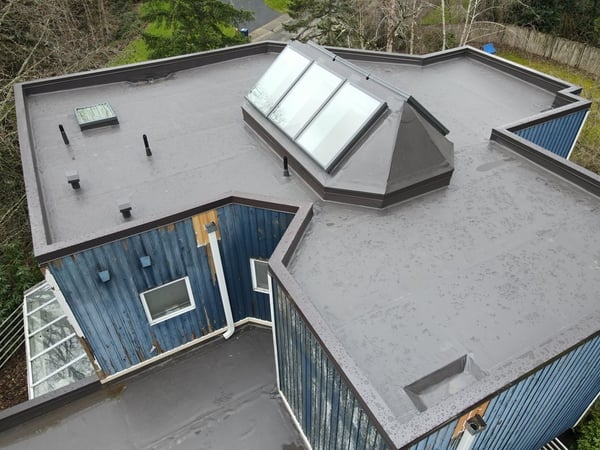
Choosing a PVC brand for a flat roof in Seattle involves balancing durability, waterproofing technology, and installation reliability. While brands like GAF, Johns Manville (JM), Firestone (Elevate), and Versico offer high-quality, budget-friendly options, Duro-Last 60 mil PVC stands out as the premium choice.
It features a thicker wear layer above the scrim (35–40 mil), a weft-inserted reinforced scrim, and is the only brand that chemically treats its membrane to be truly non-wicking. Additionally, Duro-Last’s factory-prefabricated sheets reduce field-welding mistakes because most seams are welded in the factory, making it the ideal solution for complex Seattle roofs.
Have you heard conflicting opinions about different PVC roofing brands and feel unsure what’s marketing fluff versus real performance? Are you worried that if you choose the wrong product, you’ll end up with costly leaks, premature wear, or warranty problems down the road?
You're not alone. Most Seattle homeowners don't know how to tell the difference between one PVC brand and another because the information out there is confusing, biased, or overly technical.
At Roofsmart, we help hundreds of customers every year to find the best roof for their needs. We consider your budget, your aesthetic preferences, and your roofs needs to help find the right fit for you.
This article will give you an honest, side-by-side comparison of five top brands (Duro-Last, GAF, Johns Manville (JM), Elevate (formerly Firestone), and Versico) so you can confidently choose the one that best fits your home, budget, and long-term peace of mind.
Why choose a PVC membrane for my Seattle roof?
PVC is one of the roofing materials that you can use on a flat or low-slope roof. In general, PVC is a good roofing material because it lasts for a long time and has good UV resistance.
Most PVC brands are good at keeping water out of the roof and resisting damage from grease, oil, or chemicals. It can also be repaired if needed (depending on the size of the hole or tear), and it is made with multiple layers for improved strength and durability.
There are a lot of good PVC brands out there, but it’s hard to know what to look for. This article will help you compare the features and benefits of PVC brands.
How do the top 60 mil PVC roofing brands compare?
If you don’t know anything about PVC, much like most Seattle homeowners, it can be difficult to weigh your options. How are you supposed to compare products when you don’t even know what your options are or what makes PVC good?
This article is a comparison of 5 different PVC roofing brands:
- Duro-Last
- GAF EverGuard
- Johns Manville JM
- Firestone (Elevate)
- Versico VersiFlex
To help you understand how each PVC brand holds up in real life, this section of the article will compare their performance in different scenarios. Each scenario will have a winner.
1.) Which PVC brand is most resistant to wind and impact damage?
Winner: Duro-Last and Firestone
Duro-Last uses a weft-inserted scrim with 18 X 14 threads per inch. “Weft-inserted” means that it has a knit reinforcement, while regular scrims are woven in.
Both options have a good amount of tear resistance, but the weft-inserted scrims are stronger and have better reinforcement. Firestone also uses a weft-inserted scrim.
GAF, JM, and Versico all use regular woven-in scrims.
2.) Which PVC brand lasts the longest?
Winner: Duro-Last
Once PVC wears down to the point where the scrim is showing, it's toast. So, you want a PVC brand that is thick on top of the scrim to make sure that your roof lasts as long as possible.
Duro-Last has a thickness of about 35 to 40 mil above the scrim, whereas all the other brands have a thickness of around 25 to 30 mil. It is designed to last for a long time.
3.) Which PVC brand is best at preventing water from damaging your roof?
Winner: Duro-Last
If you have a flat roof in the Seattle area, it’s guaranteed to collect water. You’ll want a roof membrane that is designed to prevent water from entering the roof.
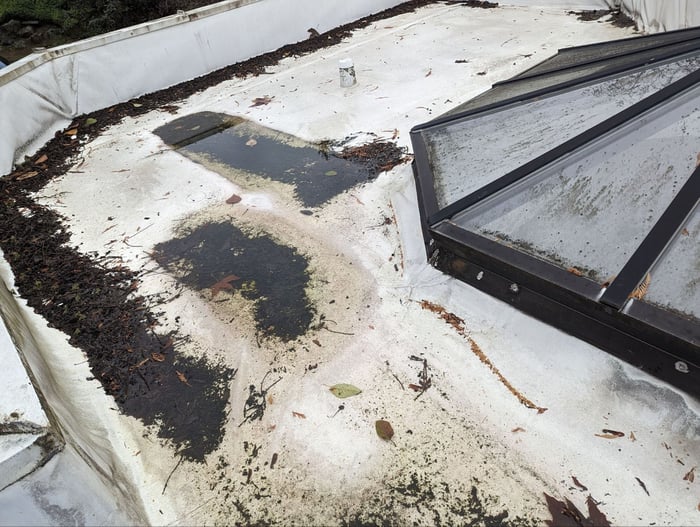
Duro-Last products have non-wicking membranes. They are dipped in polypropylene to prevent the edges of the membrane from absorbing water, even when they’re cut.
JM has a partially non-wicking membrane (the scrim), but Duro-Last is the only brand that chemically treats its membrane to protect it from water. None of the other brands has that level of waterproofing.
4.) Do any PVC brands attempt to reduce welding mistakes on the roof?
Winner: Duro-Last
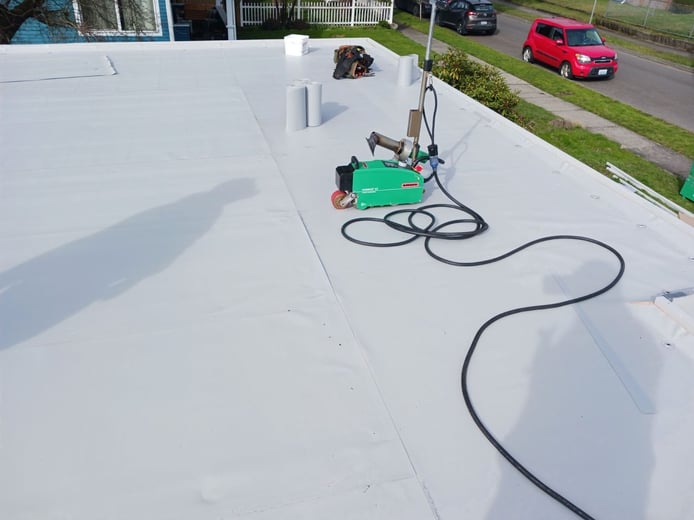
PVC is welded together on the roof using a heat gun. This is a tricky process because the heat gun needs to be at the right temperature (not too hot or too cold), and it has to be the right weather outside (no rain and not too cold). It’s easy to make mistakes during installation.
To help prevent welding mistakes and make the installation process more efficient, Duro-Last gives you the option to order pre-welded membranes. This means most of the welding is done by professionals in the factory, reducing the potential for welding mistakes during installation.
GAF, JM, Firestone, and Versico do not offer this option.
Which 60 mil PVC Roof Is Best for My Specific Needs?
With so many PVC brands out there, it’s difficult to know which one is the right fit for you. This comparison table will help you quickly compare the features and benefits of the top PVC brands in the Seattle market.
|
Key Feature |
Duro-Last 60 mil PVC |
GAF EverGuard 60 mil |
Johns Manville JM PVC 60 mil |
Elevate (Firestone) PVC XR 60 mil |
Versico VersiFlex 60 mil |
|
Total Membrane Thickness |
60 mil |
60 mil |
60 mil |
60 mil |
60 mil |
|
Thickness Above Scrim (Exposed Wear Layer) |
~35–40 mil (thickest in class) |
~25–30 mil |
~25–30 mil |
~25–30 mil |
~25–30 mil |
|
Scrim Type |
Weft‑inserted polyester, 18×14 threads/inch |
Woven polyester scrim |
Non‑wicking polyester scrim |
Weft‑inserted polyester scrim |
Polyester scrim |
|
Scrim Fiber Treatment |
Polypropylene‑dipped fibers (hydrophobic) |
None |
None |
None |
None |
|
Non‑Wicking Membrane |
Yes. True non‑wicking |
No |
Partial (scrim only) |
No |
No |
|
Cut‑Edge Sealant Required? |
No. Never required |
Yes |
Yes |
Yes |
Yes |
|
Anti‑Wicking Edge Protection |
Built‑in polypropylene grid extends beyond scrim |
Liquid edge sealant |
Liquid edge sealant |
Liquid edge sealant |
Liquid edge sealant |
|
PVC Coating Weight |
~8 oz/sq yd (heaviest in market) |
Lighter coating |
Lighter coating |
Lighter coating |
Lighter coating |
|
Primary Sheet Format |
Factory‑prefabricated sheets |
Field‑welded rolls |
Field‑welded rolls |
Field‑welded rolls |
Field‑welded rolls |
|
Max Sheet / Roll Size |
Up to ~1,500 sq ft (≈60 ft max dimension) |
10′ × 100′ rolls |
Up to 120″ wide rolls |
10′ × 100′ rolls |
10′ × 100′ (16′ wide option) |
|
Factory‑Welded Seams |
Most seams welded under QC |
0% |
0% |
0% |
0% |
|
Field Welding Required |
Minimal (10–20%) |
High |
High |
High |
High |
|
Backing Options |
Smooth or fleeceback |
Smooth or fleeceback |
Smooth or fleeceback |
Smooth or fleeceback |
Smooth or fleeceback |
|
Plasticizer Technology |
High‑mass PVC coating |
Standard |
Elvaloy® KEE (optional) |
KEE HP |
KEE HP |
|
Hail / Wind Performance |
Excellent (high tear + thick top ply) |
Good (fleeceback improves) |
Good (fleeceback improves) |
Good (fleeceback improves) |
Good (fleeceback improves) |
|
Leak Risk at Penetrations & Edges |
Lowest (non‑wicking + prefab) |
Moderate |
Moderate |
Moderate |
Moderate |
|
Residential Warranty |
15, 20, 25 or 30 yrs material-only; 20, 25 or 30 yrs NDL (labor and material); Lifetime option |
20–25 yrs |
20–25 yrs (system‑dependent) |
20 yrs (Red Shield) |
20–25 yrs |
|
Installed Price Range (Est.) |
$7–12 / sq ft |
$6–10 / sq ft |
$6–9 / sq ft |
$6–10 / sq ft |
$6–9 / sq ft |
|
Best For |
Complex roofs, penetrations and long‑term durability |
Budget‑friendly re‑roofs |
Cost‑effective longevity |
Chemical/grease resistance |
Faster installs, wider rolls |
Duro-Last residential warranties changed in 2026. Material-only terms now run 15, 20, 25 or 30 years. Upgraded NDL warranties (labor and material) come in 20, 25 or 30 years and require a Duro-Last inspection. The Lifetime warranty lasts for the life of the original owner, material only, prorated. See what changed in Duro-Last warranties.
Should I pay more for Duro-Last or choose a different brand?
Duro-Last won in all of the scenarios from the previous section. At RoofSmart, we encourage choosing Duro-Last if you’re considering installing PVC because it goes above and beyond in terms of durability and protection.
However, we also recognize that Duro-Last isn’t the right choice for everyone.
- Choose Duro-Last if you want superior waterproofing, strength, and durability for a higher price.
- Choose JM if you want a non-wicking scrim for a lower cost than Duro-Last.
- Choose Versico, Firestone, or GAF if you want good protection for a lower price, or if you need a bigger roll size than Duro-Last offers.
What should I expect to pay for a high-quality flat roof installation in Seattle?
Now that you understand how Duro-Last, GAF, JM, Elevate, and Versico compare in terms of durability, waterproofing, seam quality, and long-term performance, you’re one step closer to making an informed decision about your flat roof. But understanding product quality is only one piece of the puzzle: the next big question is cost.
How much should you budget for your flat roof installation? What drives the price up or down in Seattle’s competitive market? And how does the brand you choose affect the final quote?
To help you navigate those financial decisions, we’ve broken down all the cost factors, including material pricing, labor, project complexity, and more, in our next article.
Read “How Much Does It Cost to Install a Flat Roof in Seattle?” to get clear, transparent pricing expectations and learn how to avoid surprise charges or cheap materials that fail too soon.
Frequently Asked Questions
1. Why is "thickness above the scrim" so important for a PVC roof?
Once a PVC membrane wears down to the reinforcement (the scrim), the roof is essentially failed. While most brands have 25–30 mil above the scrim, Duro-Last provides 35–40 mil, significantly extending the roof's lifespan and resistance to the elements.
2. What does "non-wicking" mean, and why does it matter in Seattle?
Standard PVC can absorb water at the cut edges, leading to internal delamination. Duro-Last membranes are dipped in polypropylene to prevent this "wicking" effect, ensuring the edges stay waterproof even in our constant rainy weather.
3. How do factory-welded seams prevent leaks?
Most PVC brands require 100% of the seams to be welded by hand on your roof using a heat gun. Duro-Last pre-welds most of the seams in a controlled factory environment, drastically reducing the risk of human error and installation leaks.
4. Which PVC brand is best for a tight budget?
If cost is the primary concern, brands like GAF EverGuard or Versico offer solid protection at a lower price point ($6–$10/sq. ft.) compared to the premium Duro-Last system.
5. Is there a difference in wind and impact resistance between these brands?
Yes. Duro-Last and Firestone (Elevate) use weft-inserted scrims, which are knit rather than woven. This provides superior tear strength and impact resistance compared to the standard woven scrims used by GAF and JM.
6. How do I know if a PVC roof is better for me than Torchdown?
PVC is generally more durable and safer to install than Torchdown. You can find a detailed head-to-head comparison in our guide: Torchdown vs. Single-Ply PVC: Which is Best?
7. Does the color of the PVC membrane affect its performance?
Most PVC is white to improve energy efficiency by reflecting UV rays. However, if you are planning on a rooftop deck, you may want to consider different backing options or walkable membranes.
8. How much should I expect to pay for a flat roof in Seattle?
Installed prices for 60 mil PVC typically range from $6 to $12 per square foot, depending on the brand and roof complexity. Get a full breakdown in How Much Does It Cost to Install a Flat Roof in Seattle?
9. Can I install a new PVC roof over my existing one?
In some cases, yes, but it depends on the condition of your roof insulation. If there is moisture trapped in the old system, it must be torn off to prevent rot.
10. What kind of warranty comes with a commercial PVC roof?
Commercial warranties can be much more complex than residential ones. Learn about the "No Dollar Limit" (NDL) options in What Kind of Warranty Coverage Will I Get for My PVC Commercial Roof?
Topics:
