

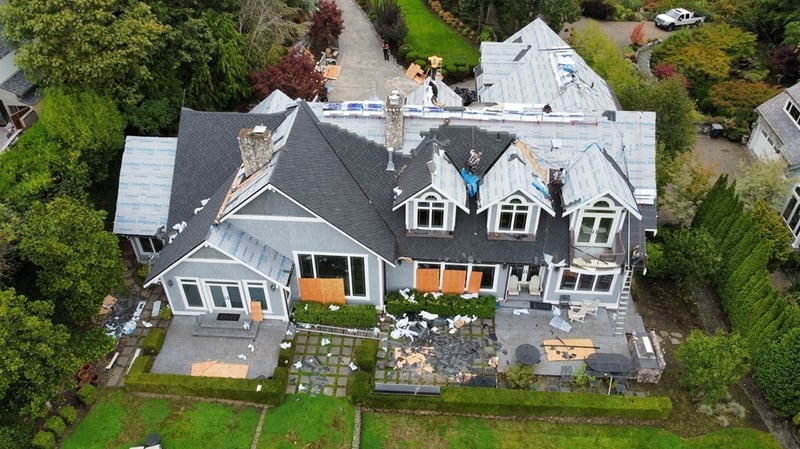
TL;DR: Summary
Most Seattle homes probably don't need an official Fortified roof, but it can make sense if your home takes a lot of wind and you want a roof built well past code. The IBHS standard seals the deck, fastens it with ring-shank nails and locks down the edges, so wind and rain stay out even if the shingles go. Expect at least 10% more cost and one extra day, and don't count on an insurance discount in Washington.
Are you worried the next big windstorm will push rain under your shingles, even if none of them blow off? Have you heard the term "fortified roof" and wondered whether it's worth paying more for, or whether your insurance company even cares?
At RoofSmart, we've been replacing roofs in Greater Seattle since 2011. We do 500+ full replacements a year and service 1,000+ roofs a year, and we're members of the NRCA and RCAW. (We're also rated 4.9 on Google, 400+ reviews across platforms.) So we see what happens when a roof is built to the bare minimum, and what happens when it's built to actually work.
In this article, we'll break down what a FORTIFIED roof is, why it matters even when your shingles stay put, and every component that goes into one. Then we'll get into the benefits, the downsides, the cost, and whether your Seattle-area home needs one.
What Is a Fortified Roof?
A fortified roof is a roof built to the FORTIFIED Roof standard, a voluntary, prescriptive set of installation requirements created by IBHS to keep wind and rain out during severe storms.
Here's the simple version. Fortified beefs up the parts of the roof besides the shingle (or whatever roof cover you have). Think better underlayment and better flashings. That way, if water does get under the roof cover, the roof is still protected.
It isn't only for asphalt shingles. According to FORTIFIED's roof page, FORTIFIED is a voluntary construction and re-roofing program, and FORTIFIED Roof works with just about any roof cover, including shingles, metal, tile, and low slope.
FORTIFIED Roof is also the first step of a bigger IBHS program. The 2025 FORTIFIED Home Standard has three levels: Roof, Silver, and Gold.
Who created the FORTIFIED roofing standard?
The Insurance Institute for Business and Home Safety (IBHS) created and runs the FORTIFIED program.
The 2025 Standard says the program was developed to reduce avoidable suffering and financial loss caused by hurricanes, high winds, and hail.
Is FORTIFIED roofing only for Florida and hurricane states?
No. The standard covers both hurricane-prone and high-wind regions of the U.S.
Fortified is often linked to hurricane states, but the standard also has a High Wind version that isn't limited to hurricane country. The 2025 Standard has separate Hurricane and High Wind designations, and the High Wind one applies where the design wind speed is 115 mph or less. Seattle's residential code sets a design wind speed of 98 mph, so the High Wind version is the one that would apply here.
And the state with the most FORTIFIED homes isn't Florida. The FORTIFIED incentives page says it's Alabama.
Can a Washington home get a FORTIFIED designation today?
Yes. IBHS says FORTIFIED designation is available for homes across the United States, and a Seattle home would follow the FORTIFIED High Wind standard. A designation needs both a certified FORTIFIED roofer and an independent evaluator, and RoofSmart is an official FORTIFIED roofing contractor.
What's the Difference Between Resilient Roofing and a Fortified Roof?
Resilient roofing is the broad category of roofs built to stand up to severe weather. Fortified is one specific, prescriptive standard inside that category.
| Resilient roofing | Fortified roof | |
|---|---|---|
| What it is | A broad category of roofs built to handle severe weather, and a roof "system," not just the covering | One specific, prescriptive standard within resilient roofing |
| How specific | Varies by roofer and product | Prescriptive: set nail type and spacing, sealed deck methods, and edge details |
| Proof it was done | Depends on the roofer | A third-party evaluator documents the work and IBHS issues a certificate |
| Insurance impact | Not automatic, so ask your agent | Discounts in some states, not guaranteed in Washington |
My take on how the two connect: the above-code wind and water details we care about (a sealed deck, locked edges, denser fastening) follow the same logic IBHS uses in its FORTIFIED Roof standard. I'll go deeper on resilient roofing in a separate post.
Why Does a Fortified Roof Matter if My Shingles Don't Blow Off?
Because wind-driven rain can get under shingles that stay in place, and what's under the shingles decides whether that water reaches your home.
You can have shingles that never blow off and still get water inside. In a storm, water goes uphill and sideways.
That's why Fortified focuses on the layers below the shingle. As we explain in our article on whether roof underlayment matters in the Greater Seattle area, your shingles might blow off in a windstorm, but your underlayment would still help protect the roof.
IBHS has tested this. Per FORTIFIED's roof page, sealing the seams of the roof deck can cut water intrusion by up to 95% if the roof cover is lost.
Here in Seattle, the weather isn't one big storm. It's months of moisture plus Pacific wind that drives rain sideways. Wind-driven rain finds the weak details first, like valleys, step flashing at sidewalls, pipe boots, skylight curbs, and drip edge, before the field of the roof fails.
Edge detail (edge metal and fastening) matters much more in a high-wind environment, such as homes that take wind off the Sound, like in Admiral, Alki, and parts of Ballard.
What Are the Components of a Fortified Roof?
A Fortified roof adds a sealed roof deck, stronger deck attachment with ring-shank nails, locked-down roof edges, a tested roof cover, and wind- and rain-resistant attic vents on top of a normal roof install. Here's each piece in plain English:
What is a sealed roof deck?
A sealed roof deck means the seams of the plywood under your roof are sealed, so far less water gets through the gaps if the roof cover gets torn off.

Picture the shingles stripped off and just the plywood deck showing. Fortified wants every one of those plywood edges sealed. The point is simple: they don't want the roof to rip off and let the storm pour in.
The 2025 FORTIFIED Home Standard gives a few approved ways to do it for shingle and metal roofs. You can tape every deck seam with self-adhering tape under approved underlayment, use a two-layer underlayment method, or cover the entire deck with a full layer of self-adhering membrane (ASTM D1970).
Sealing every seam isn't something we typically do on a RoofSmart roof today. In some cases, we cover the whole deck with ice and water shield to provide extra protection from leaks and water intrusion.
However, we typically only cover the penetrations, valleys, and skylights.
How many nails does a Fortified roof deck need?
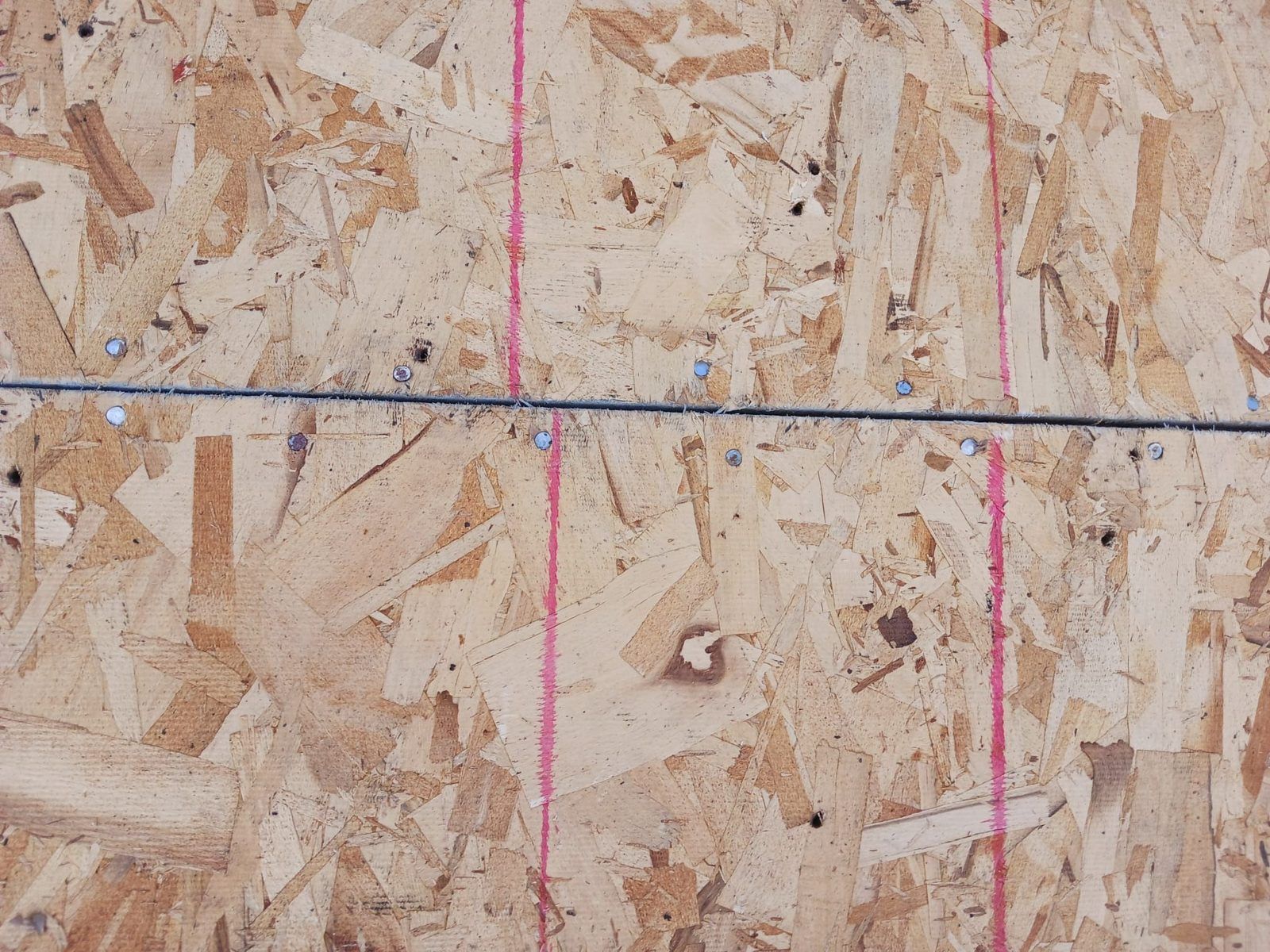
Fortified requires ring-shank nails spaced no more than 4 inches apart to hold the deck to the framing.
In practice, that's more nails per sheet of OSB: every 4 inches, compared with the 6-inch spacing Seattle's code sets for roof sheathing. At RoofSmart, we follow Seattle’s code (or the code of whatever city you are in).
The 2025 Standard calls for 8d ring-shank nails at 4 inches on center maximum in all areas of the roof on new sheathing (section 4.2.2), and extra ring-shank nails at 4 inches on center on existing sheathing (section 4.3).
Why ring-shank? The rings grip the wood. FORTIFIED's roof page says using ring-shank nails instead of common smooth nails nearly doubles the roof's strength against wind.
How does a Fortified roof protect the roof edges?
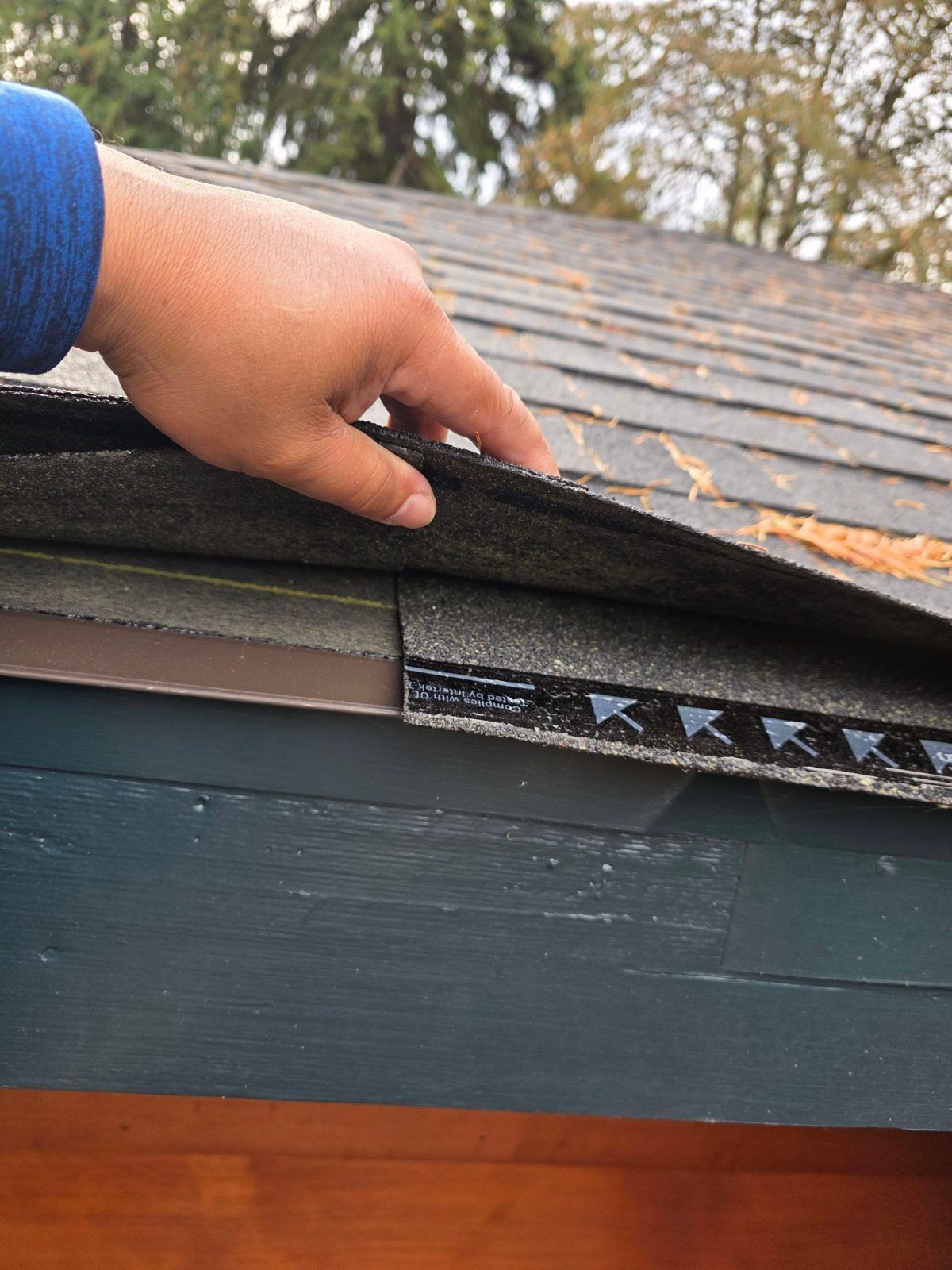
Fortified locks down the roof edges with a wider drip edge and a fully adhered starter strip, because wind damage often starts at the edge.
Every RoofSmart steep-slope job gets new drip edge. We don't reuse old edge metal.
What roof materials qualify for a Fortified roof?
Almost any roof cover can work, as long as it meets the standard's wind testing.
For asphalt shingles, that means the highest wind ratings: ASTM D3161 Class F or ASTM D7158 Class H. Metal, tile, and low-slope systems have to be tested for site-specific design pressures.
We install shingles rated to the wind class the product and the Seattle Residential Code require (ASTM D7158 / D3161). That's not the same as saying every shingle we install is Class F or Class H.
What about attic vents, underlayment, and flashing?
Fortified requires attic vents rated to resist wind and rain, plus approved underlayment installed to a set fastening pattern. Vents matter because sideways rain can blow straight in through a vent that isn't built for it.
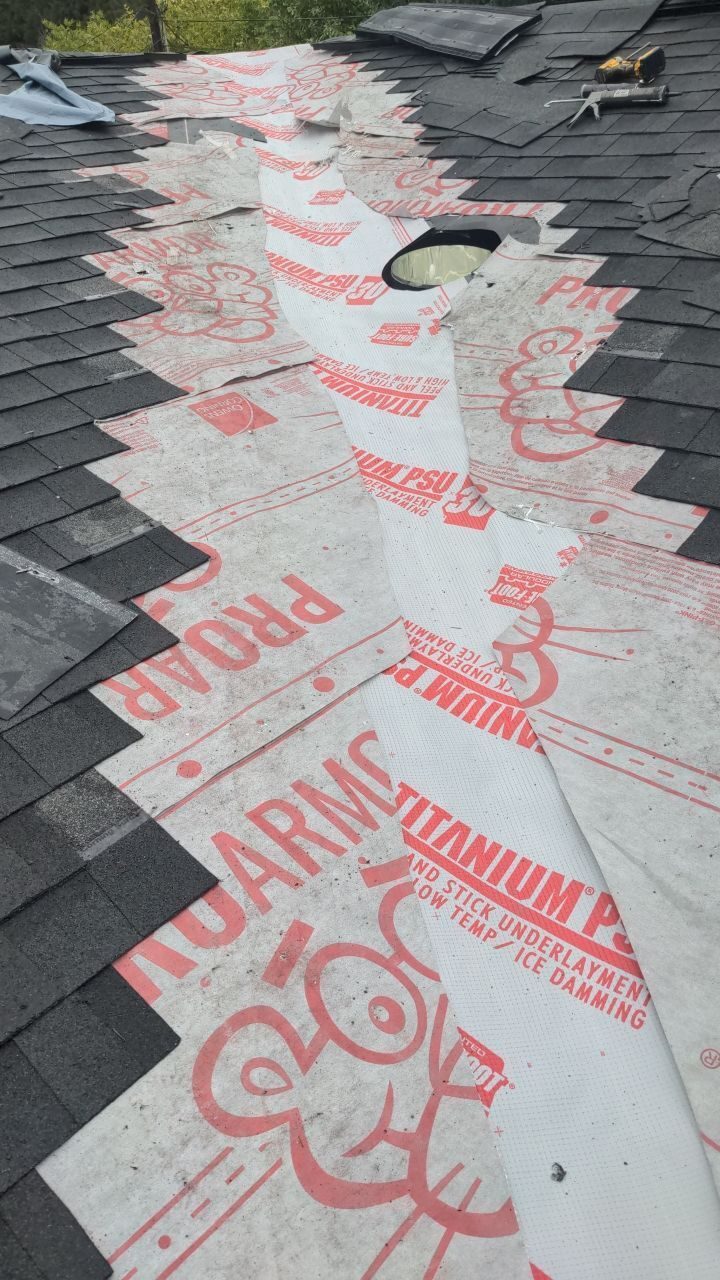
On a standard RoofSmart replacement today, we put ice-and-water membrane around penetrations, valleys, and skylights.
The field gets synthetic underlayment. We install new step and counter flashing and new pipe boots, and we balance intake and exhaust ventilation.
Here's how it all lines up.
| Component | What Fortified requires | Why it matters | Standard on a RoofSmart roof today? |
|---|---|---|---|
| Sealed roof deck | Tape every deck seam, use a two-layer underlayment method, or put a full self-adhered membrane over the whole deck | Keeps rain out if the roof cover is torn off (up to 95% less water) | Not typically. We use ice-and-water at penetrations, valleys, and skylights. |
| Deck nailing | 8d ring-shank nails, 4 in. on center max | Keeps the deck attached in high wind | Follows the state or city building code |
| Roof edges | Wider drip edge and a fully adhered starter strip | Wind damage often starts at the edge | New drip edge and starter on every job. |
| Roof cover | Shingles rated Class F or Class H; metal and tile tested for site design pressures | The cover stays on longer | Rated to the class the product and Seattle code require. |
| Attic vents | Wind- and rain-resistant vents | Stops sideways rain at the vents | Balanced intake and exhaust. |
| Underlayment and flashing | Approved underlayment and fastening pattern; better flashings | A second line of defense | Synthetic underlayment, new step and counter flashing, new pipe boots. |
How Is a Fortified Roof Different From a Regular Roof Built to Code?
A regular roof built to code meets the legal minimum. A Fortified roof adds specific upgrades under the shingles, because the basics don't hold up in every storm.
Fortified roofing is designed to give your roof better protection against damage from storms, and that added durability helps protect it from wind and rain.
To us, this is the difference between doing things to the minimum code and doing what's actually going to work. Our rule of thumb: code is the floor, not the target. We've written before about why doing it to code isn't enough. Simply meeting building codes isn't enough for a long-lasting roof.
IBHS goes further. Its incentives page describes FORTIFIED as a standard scientifically proven to be more resilient than homes built to ordinary building codes.
Is it required here? IBHS calls FORTIFIED a voluntary program.
What Are the Benefits of a Fortified Roof?
The main benefit is that a Fortified roof keeps wind and rain out of your home even when a storm damages the roof cover.
- Less water if the cover is lost. Sealed deck seams cut water intrusion by up to 95%, per IBHS.
- A deck that stays put. Ring-shank nails nearly double the roof's strength against wind.
- Built past code. IBHS says FORTIFIED is more resilient than homes built to ordinary building codes.
- Possible insurance help in some states. More on Washington below.
Does RoofSmart Already Install Roofs to Fortified Standards?
Partly. Many of the ideas behind Fortified match how we already build roofs, but some Fortified steps, like sealing every deck seam, aren't part of our usual install.
RoofSmart is an official FORTIFIED roofing contractor in IBHS's FORTIFIED Home program (Company ID 012367), and Jim Singleterry is a FORTIFIED Roofer. On a FORTIFIED job, we build the roof to the IBHS FORTIFIED standard.
Here's what's already on our standard replacement spec:
- A full tear-off, with rotten sheets replaced
- Ice-and-water at penetrations, valleys, and skylights
- Synthetic underlayment
- New drip edge
- Step and counter flashing
- Pipe boots. Wind-rated shingles and balanced ventilation.
That covers the spirit of Fortified roofing, but it doesn't include other requirements like sealed deck seams, ring-shank deck nailing at 4 inches, or an adhered starter strip. Those would be upgrades.
How Much Does a Fortified Roof Cost in Seattle?
Our estimate is that a Fortified roof adds at least 10% to the cost of a roof replacement, plus at least one extra day of work.
The extra cost comes from more material and more labor. It's a more expensive, longer project. On a commercial building, it could cost more, and the percentage could be higher.
For a starting point, our Seattle roof replacement cost page shows an asphalt shingle base of $9.42 per sq ft, about $23,500 for a 2,500 sq ft roof, before add-ons, plus tax. Those are replacement numbers, not repair costs.
For timing, a typical RoofSmart replacement is about 3 days on site, so one extra day is a real jump.
Can a Fortified Roof Lower My Home Insurance in Washington?
Maybe, but don't count on it. Fortified-specific insurance discounts are mostly offered in a handful of other states, and Washington isn't one of them, so ask your agent.
The FORTIFIED incentives page lists Fortified-specific incentives in Alabama, Georgia, Mississippi, North Carolina, Oklahoma, and South Carolina, plus related upgrade discounts in other states. Washington isn't listed. FORTIFIED's FAQ says insurers sometimes offer discounts and tells homeowners to contact their agent.
There's another catch. Many of those incentives require a third-party evaluator and an issued designation, not just the upgrades.
So here's our honest take. Washington isn't a FORTIFIED-discount state, so don't assume your carrier will cut your premium. Call your agent with the spec in hand to confirm.
Do I Need a Fortified Roof on My Seattle Home?
Most Seattle homes probably do not need an official FORTIFIED roof, but it can make sense if your home takes a lot of wind and you want a roof built well past code.
The answer is different for every home and every homeowner. If you’re worried about wind damage and you want the extra security, then a fortified roof is worth considering.
What are the downsides of a Fortified roof?
The biggest downsides are higher cost, a longer install, and installing extra precautions that some homeowners won't need in our climate.
It costs more, takes at least an extra day, and uses more material. When it comes to sealing every deck seam and the tighter nailing, that isn’t usually necessary for homes in the Seattle area.
An additional downside is the paperwork and logistics to get a designation.
According to the 2025 FORTIFIED Home Standard, a New Roof designation is only for new construction or re-roofs where the roof is installed to the standard and can be verified. Designation requires a certified FORTIFIED roofing contractor, an evaluator's documentation, and an IBHS certificate, and it lasts 5 years.
Who is a Fortified roof a good fit for, and who should skip it?
It fits homeowners with wind-exposed homes who plan to stay. It's usually not worth it if you're selling soon or just want the lowest bid.
Might be a good fit:
- Homes that take wind off the Sound, like in Admiral, Alki, and parts of Ballard
- Homeowners getting pressure from their insurance company
- People staying in the home long-term
Probably skip it:
- You're selling soon
- Your insurer doesn't care either way
- Your roof doesn't need replacing yet
Is a Fortified Roof Worth It for My Seattle Home?
A Fortified roof is worth it if you want a roof built past code to keep wind-driven rain out and you're OK paying at least 10% more for it. If not, a well-built standard roof may be enough.
Fortified is IBHS's voluntary, prescriptive standard within resilient roofing. It's about the deck, the nailing, the edges, and the underlayment, not just the shingles.
It costs more and takes longer. And in Washington, insurance savings aren't a sure thing, so ask your agent before you pay for the upgrade.
A lot of the thinking behind Fortified already matches how we build roofs. At RoofSmart, we pay meticulous attention to detail and build roofs that are set up to protect your home from Seattle weather.
The SmartMatch visit is where we'd tell you whether any Fortified upgrades make sense for your home.
Your next step
Not sure what your roof needs? Book a free SmartMatch visit.
Call (206) 487-4877 and a Meticulous Roofing Nerd will walk your roof and, if safe, your attic.
If you don't need a new roof, we say so.
Read next: Before you decide on upgrades, check out Seattle Roof Replacement Cost: Real 2026 Numbers to see what a replacement costs before add-ons.
Want to see how we'd look at your roof?
Start with a SmartMatch™ Needs Analysis, or call (206) 487-4877.
What Else Do Seattle Homeowners Ask About Fortified Roofs?
Is a Fortified roof required by building code in Washington?
No. FORTIFIED is a voluntary IBHS program, and we found no Washington law, state building code rule, or Seattle, King, Snohomish or Pierce County code that requires it. IBHS lists no Washington FORTIFIED incentives, so any insurance savings depend on your insurer; ask your agent.
Can I make my existing roof Fortified without tearing it off?
Sometimes. The 2025 Standard has an Existing Roof designation for roofs with more than five useful years left and no visible damage. Otherwise, you'd need a re-roof to the standard.
Does a Fortified roof work with a metal roof?
Yes. Metal panels can be used if they're tested for site-specific design pressures.
Do I need an official designation to get the benefits of a Fortified roof?
Not for the protection, but yes for many incentives. The upgrades work either way. Many incentives require a third-party evaluator and an IBHS designation.
Why does a Fortified roof use ring-shank nails?
They grip the framing better than smooth nails. That's why the standard calls for them on the deck.
How long does a Fortified roof take to install?
Our estimate is at least one extra day compared with a standard install.
Who certifies a Fortified roof?
IBHS issues the designation after a certified evaluator documents the work.
How long does a Fortified designation last?
Five years. After that, it can be re-designated.
What's the difference between Fortified Roof, Silver, and Gold?
Fortified Roof is the first level. Silver adds protection for other parts of the home, and Gold adds structural connections. Each level builds on the one before.
Does a Fortified roof cost more on a commercial building?
It could. On a commercial building, the cost could be higher, and so could the percentage. Also, FORTIFIED Home covers houses. Commercial buildings go through IBHS's separate FORTIFIED Commercial program, per the FORTIFIED FAQ.
