

Search for topics or resources
Enter your search below and hit enter or click the search icon.
Attic mold in Seattle is often an air problem wearing a roof costume.
It looks like a leak. It smells like an old gym bag. A home inspector writes “mold in attic — recommend further evaluation.” Then three companies show up and each owns one slice of the mess.
We go in the attic first. We tell you if this is condensation, a leak, soft wood, a bath fan dumping steam into the insulation — or some unhelpful combination of all four. Then we SmartMatch™ the work: remove or treat what is growing, fix the air path, and replace the roof only if the roof is actually finished.
 GAF Certified Plus
 CertainTeed ShingleMaster PREMIER
 Owens Corning Platinum Preferred
In our Greater Seattle inspections, attic mold is often condensation rather than a single roof leak: warm, moist house air reaches a cold roof deck and turns to water. We inspect the roof and attic first, remove or treat the growth, and fix the moisture path: ceiling air leaks, exhaust ducts, ventilation, roof leaks, or the roof itself.
Mold is the byproduct. Moisture is the job. Treatment is work, not a spell. If the attic is still a wet box, the growth has a way back.
A mold-only company can remove or treat the growth and still leave the airflow that wet the attic exactly the way they found it. A cheap reroof will put new shingles over growth already on the rafters. An insulation guy will add batts that make the deck colder and the condensation worse.
You do not need a fourth opinion. You need one inspection that treats the attic like a system — because that is what it is.
You might notice:
Want the longer first-signs read? What to do about mold in your attic
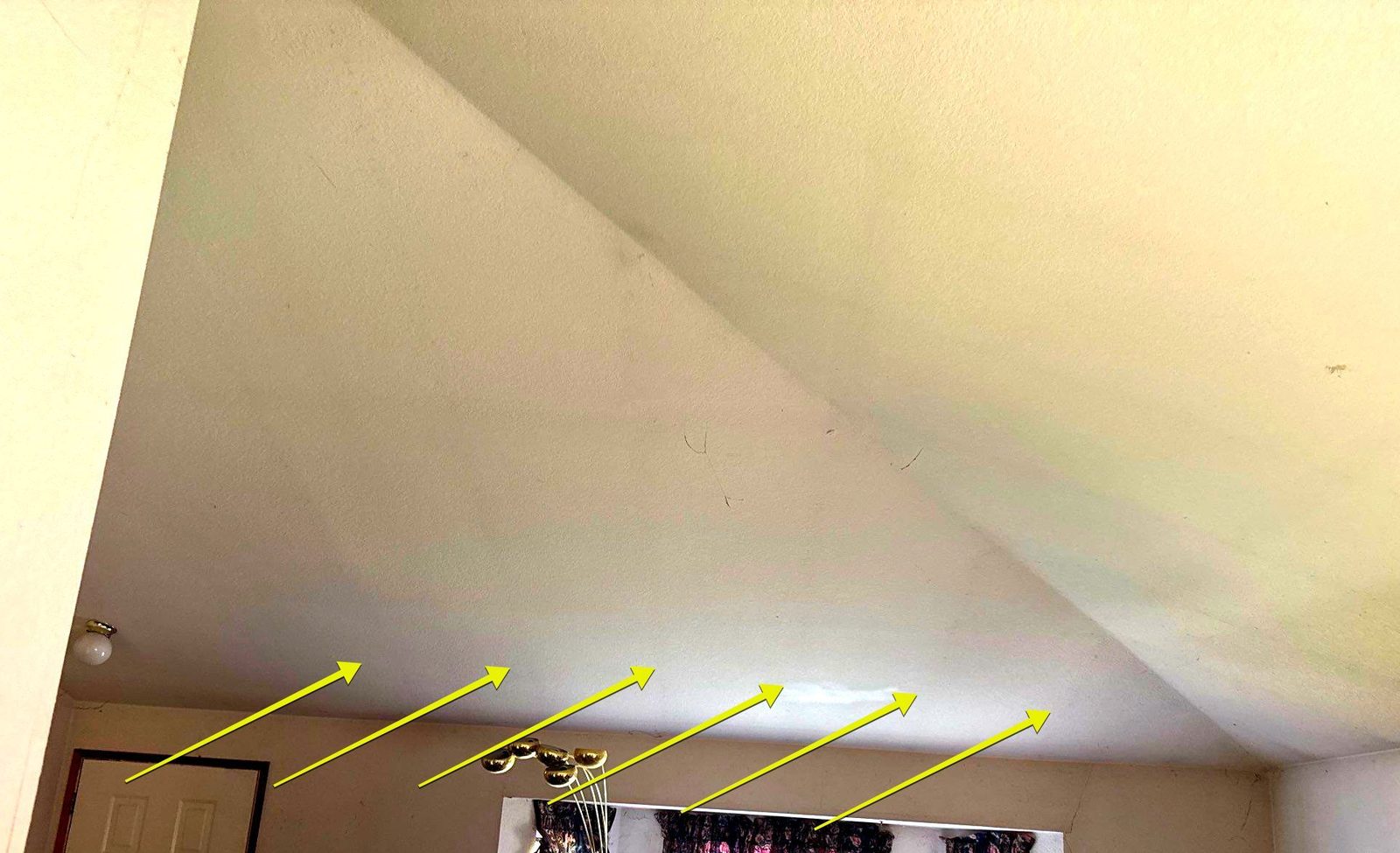
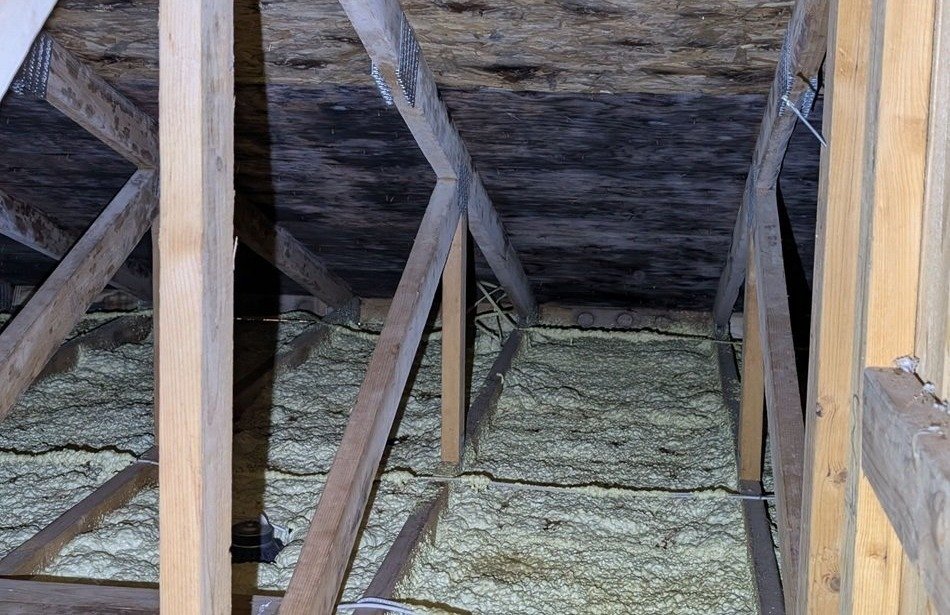
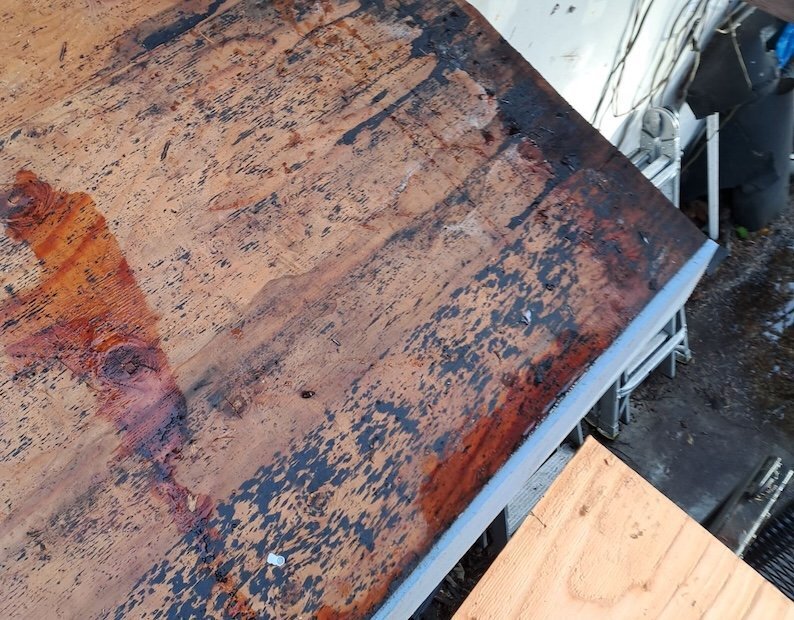
Left: ghosting on a vaulted ceiling, dust and soot on colder strips, not mold. Right: widespread spotting on the underside of a roof deck.
Seattle humidity sits high. Warm, wet air from the house hits a cold roof deck, hits its dew point, and turns into liquid water on the wood. That water feeds growth. It can drip. It can look exactly like a leak. It is not always a leak.
Usually one wet trail after rain — a pipe boot, a wall step, a dead valley.
Widespread across the deck. Often heavier on the cold plane. The bay over the garage is sometimes dry while the bays over the bedrooms are a science project — the garage is not pumping shower steam into the attic.
Most attic mold we treat starts with warm, moist house air leaking into the attic through ceiling gaps, not a roof leak. That air, plus bath fans dumping into the attic, meets a roof deck that clear winter nights chill below the dew point. Long wet winters keep that wood damp. Air sealing the ceiling is the strongest single step to prevent it. That is why air sealing and sending fans outdoors come before adding vents: more vents on a leaky ceiling can pull in more damp air and make it worse.
Both can leave wet insulation, stained sheathing, and growth. They do not get the same fix. Mold is what shows up after the water does. It is not the root. It is the receipt.
Want the photo guide? Roof leak vs. condensation photo guide
If the leak was real, new shingles stop tomorrow’s water. They do not clean yesterday’s growth off rafters, joists, or insulation. Leave the growth and the moisture that fed it, and you bought a prettier lid on the same problem.
If the problem was condensation, a reroof with the same blocked soffits and the same bath fan dumping into the attic gives you new shingles on the same wet box. Add floor insulation without opening the intake and you often make the deck colder. Colder deck, more dew point, more water.
That is why we will not sell you shingles and a handshake if the attic is still a greenhouse.
Condensation does not have one parent. Any path that puts warm moisture on a cold deck will do. What we keep finding:
Ventilation is often part of the story on our inspections. We check the attic on purpose. That is not an upsell. That is how you keep a roof from dying in dog years.
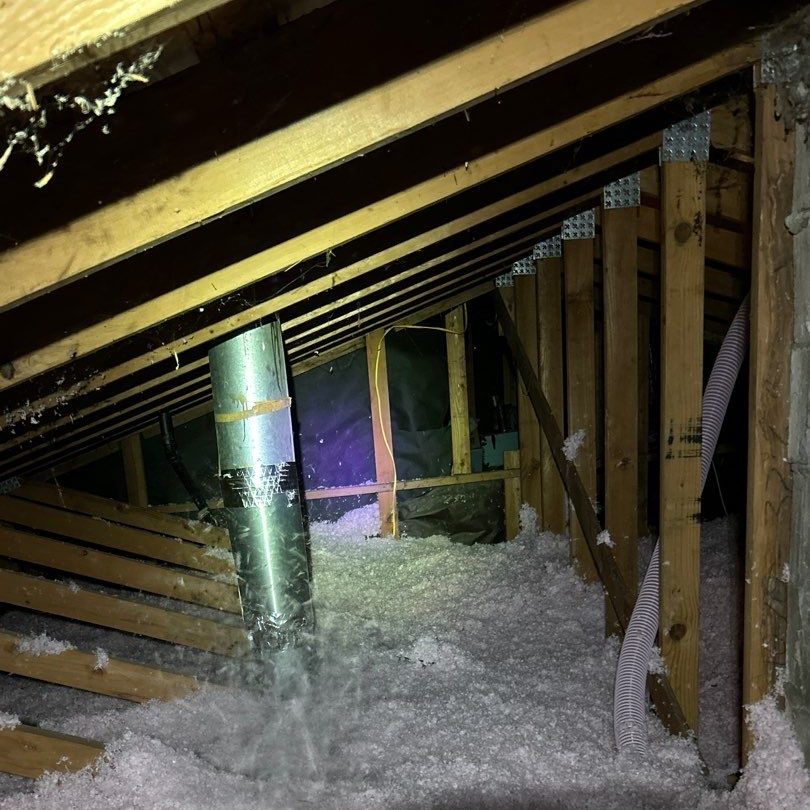
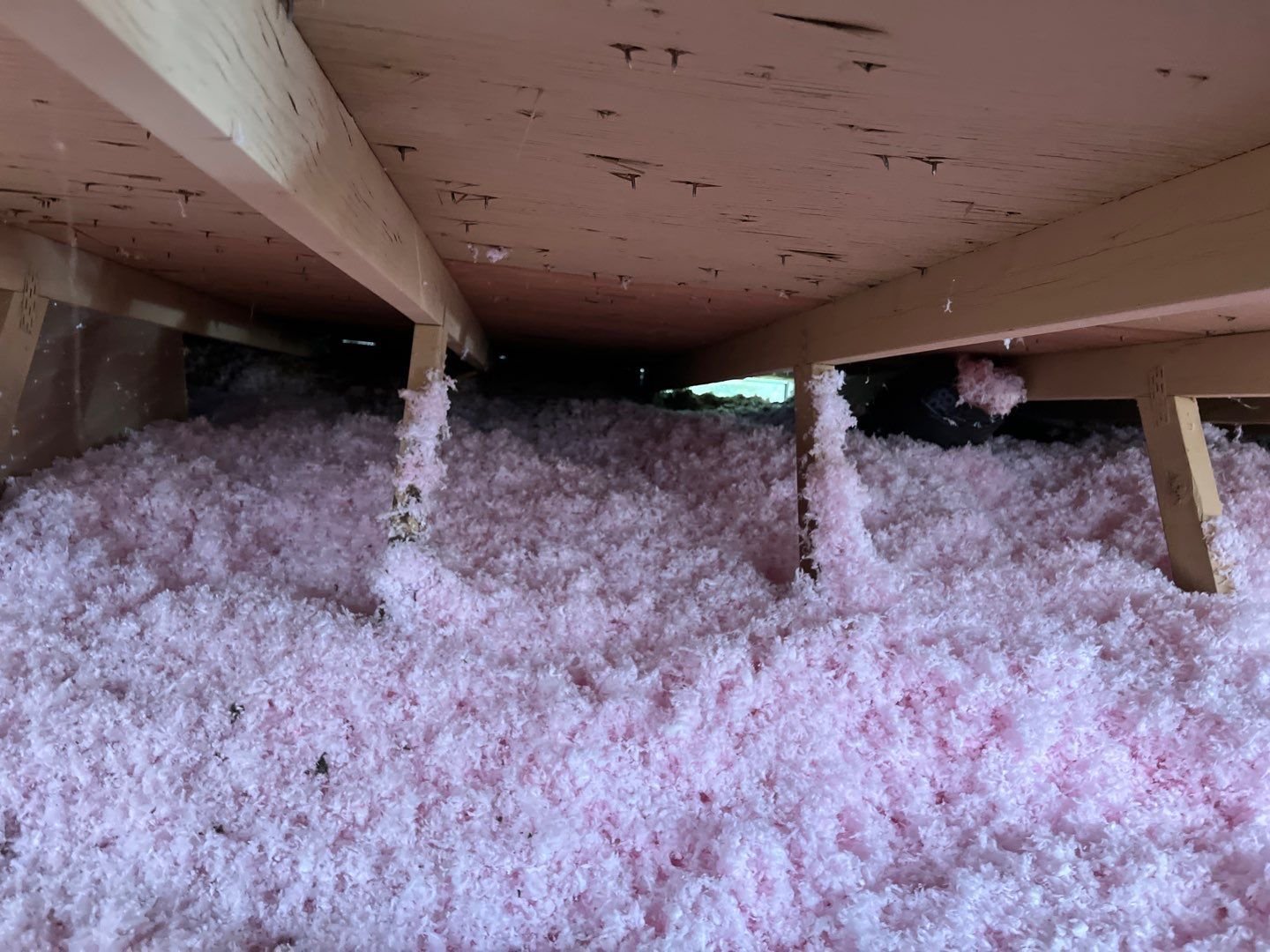
Left: an exhaust duct during an attic insulation upgrade. The duct has to run all the way outside. Right: soffit intake buried in insulation.
A dumped fan, a buried soffit, a cold deck, a damp crawl, a ceiling that leaks air — mold is the byproduct of whichever combination showed up in your attic. Removing or treating the growth without fixing the moisture path is how you get to buy the treatment twice.
SmartMatch™ is how we decide whether an attic needs treatment, ventilation work, a new roof, or some mix of the three, based on houses like yours in King, Pierce, Kitsap, Snohomish, and Thurston counties, the same areas we serve for roofing. It is pattern recognition from jobs we have already built. It is not a promise your house will behave the same. Your mileage will vary.
Definitive building-design plans come from an architect or engineer, who carries the professional-liability insurance for them. If the job or the jurisdiction needs stamped drawings, we will say so. A service page is not that stamp.
Same rule on the inspection. We take a hard look at the roof and the attic we can reach. We photograph what we see. We do not promise we found everything wrong with the property. If we did not open it, we did not see it.
Attic and roof-deck growth tied to the roof system. Sheathing. Insulation that has to move for the work. Exhaust through the roof. Intake and exhaust balance. Plywood that is too soft to leave. The reroof when the lid is done.
Bathroom tile mold, living-room drywall after a flood, crawl-only jobs with no roof connection, emergency water extraction, whole-house inspections, stamped architectural or engineering plans. We will tell you who that belongs to instead of stretching the brand until it snaps.
You hired roofing nerds. We stay roofing nerds who happen to handle the growth in the attic we are already standing in.
We inspect, we remove or treat the growth, and we fix the roof and the moisture path behind it. One company, one schedule. You call us.
We remove or treat the growth on the surfaces we can reach. We do not publish a product list. If anyone in the house wants occupant instructions before treatment day, ask us for the occupant information sheet, product label, and SDS.
This is attic work, on the surfaces treated. It is not a promise about the rest of the house. It is not magic. If the environment that grew the mold is still there — dumped fan, buried intake, open leak, wet crawl sending moisture up — the growth has a way back. Fix the moisture path or you bought a pause.
When the insulation is cooked, it comes out. We do not play hero with wet batts. Then the part that makes the warranty mean anything: ceiling air leaks sealed, roof leaks stopped, ducts tied outdoors, intake opened, exhaust that works in this climate — or, when SmartMatch™ says so, an unvented insulated deck that keeps the wood warm enough that the dew point happens outside the sheathing. A bath fan that runs quietly all the time and ramps up when you shower keeps indoor humidity down.
We do not sell a menu. We sell what this attic needs. The inspection points to one of these.
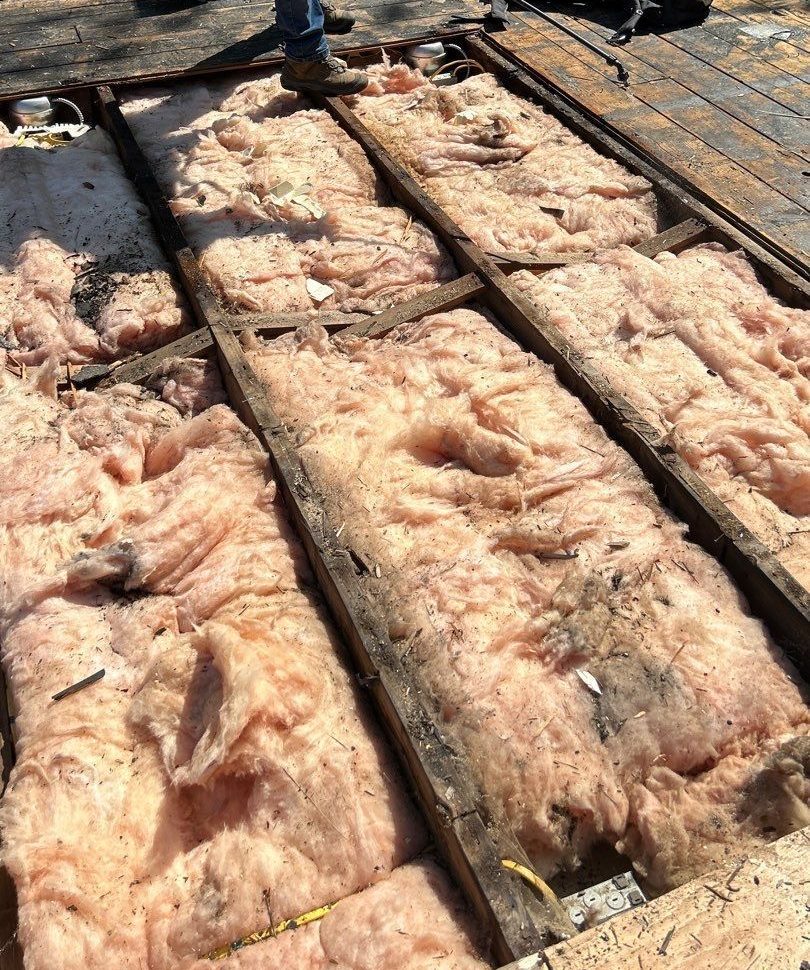
90-day warranty
Fits: Small, localized growth; wood sound; moisture source found and fixable.
Limit: Doesn’t cover the rest of the attic.
3-year warranty
Fits: Growth across much of the attic or deck.
Limit: Doesn’t fix the moisture path by itself.
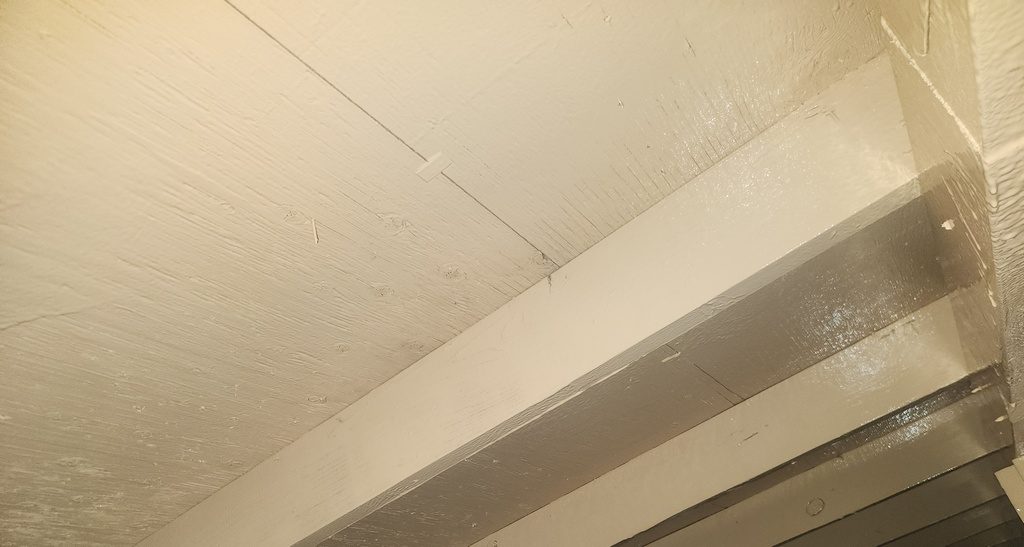
Lifetime warranty
Lifetime means the life of the home, and it transfers to the next owner, as long as the warranty conditions are met.
The white coat makes any regrowth easy to spot, which is how warranty issues get caught early.
Fits: Heavy or widespread growth where a sealed finish coat is worth it.
Limit: A coating doesn’t dry a wet attic. The moisture path still has to be fixed.
Conditions apply to every level: indoor humidity under 50%, exhaust vented outdoors, no new leaks, and remaining ventilation defects fixed within 45 days. Every level depends on fixing the moisture path, and the warranty depends on the ventilation and roof corrections on your plan being completed. Full terms are in your written warranty.
The level is a recommendation from the inspection, not a sealed design. Ventilation, duct, leak and roof work are scoped separately on the same plan.
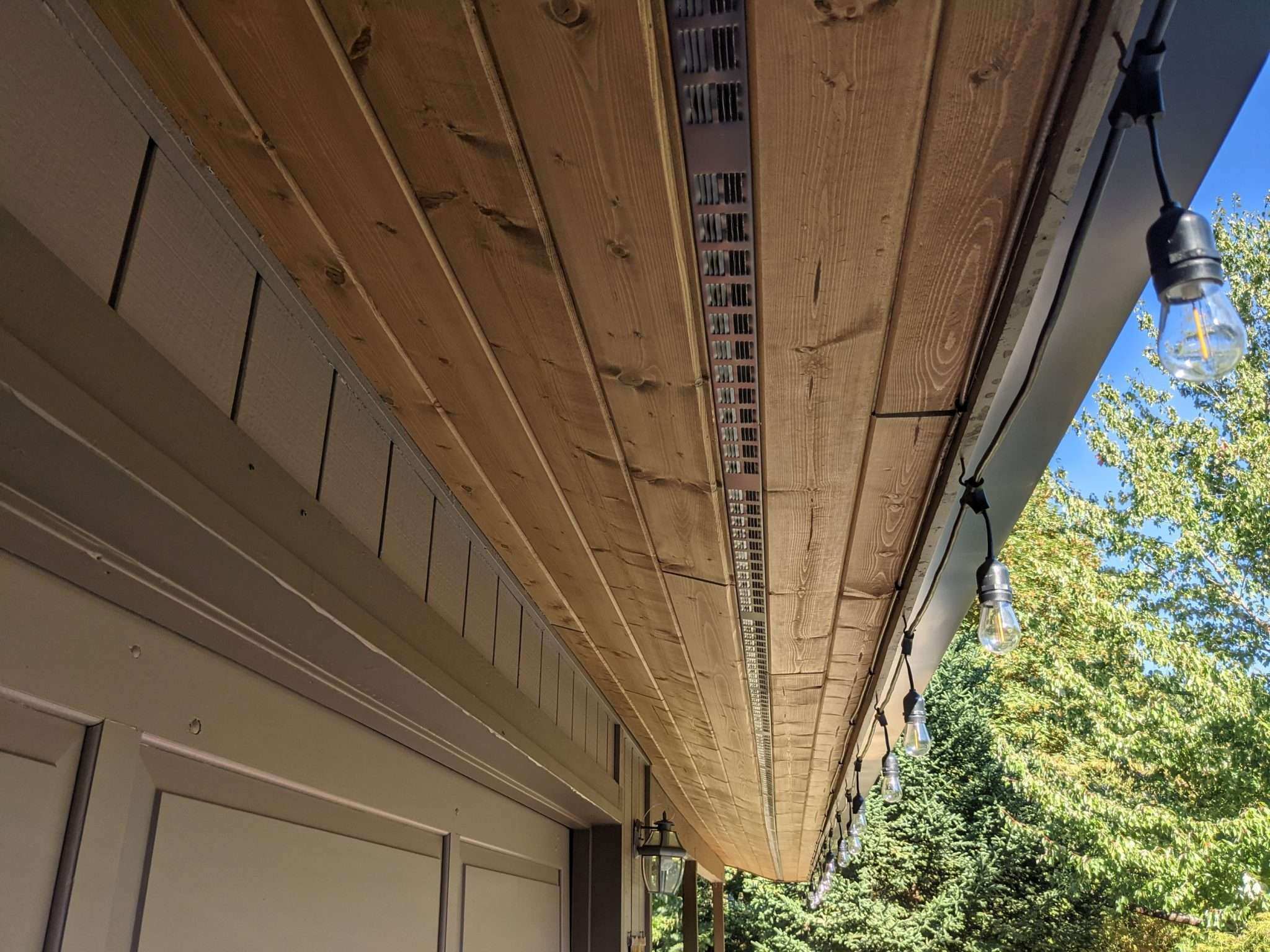
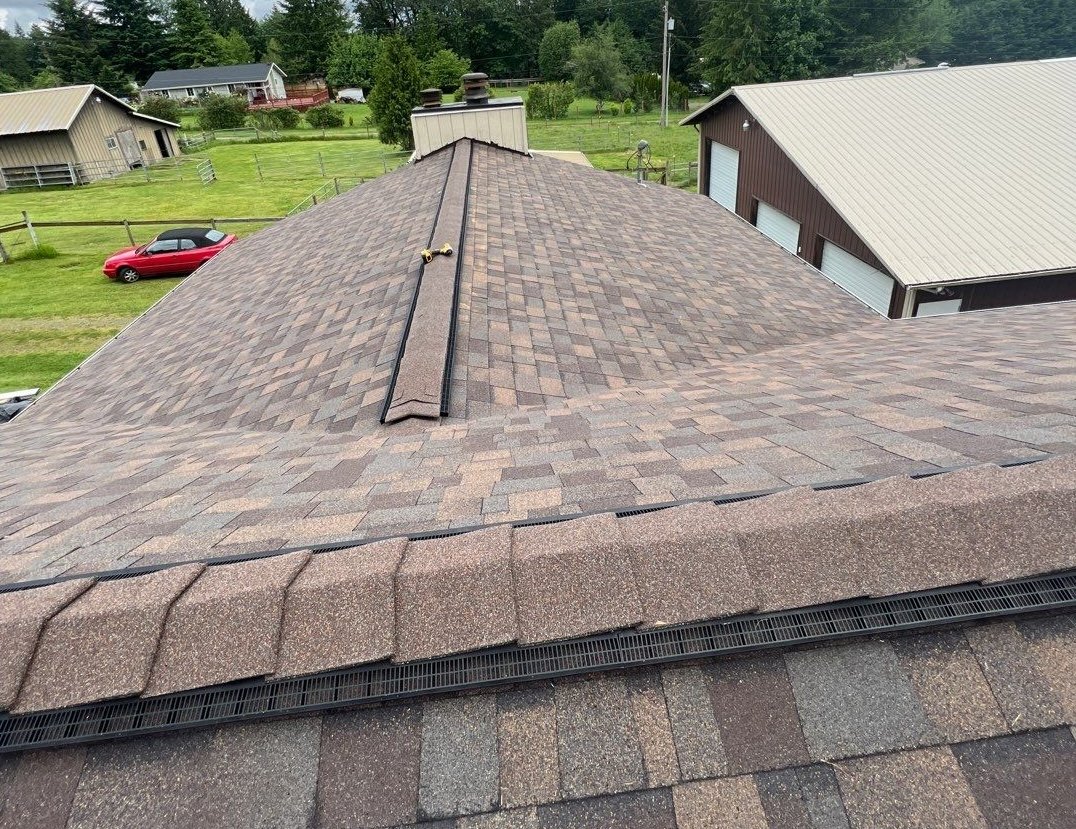
Open intake at the soffit, exhaust at the ridge.
Call us. Not a second company. If growth comes back on the treated surfaces, your written warranty spells out what happens next.
Full terms are in your written warranty. In plain English:
Two different humidity numbers. The warranty condition above is indoor relative humidity under 50%, measured in your living space. Separately, when we take a SmartMatch™ moisture reading in the attic, the SmartMatch™ target for attic air is under 40% relative humidity.
“I especially appreciate Annette's meticulous focus in helping me to prevent mold! Everyone I got to talk with has been great.”
“Based on the overall positive experience with RoofSmart, I would be happy to recommend them. They provided an excellent assessment of our roof/attic and a detailed estimate. The crew was professional, efficient, and friendly. It was a big job done in a challenging environment and feel confident it was done right.”
You book an inspection.
A nerd walks the roof and the attic — hatch, meter, photos, the fan ducts, the soffits. Drone if the lid is too steep to walk.
You get a line-by-line picture of what we could see: condensation vs leak, remove or treat / vent / wood / lid. No mystery lump sum. No claim we found every defect on the property.
If it is not our lane — including a job that needs stamped drawings — we say so before anyone sprays anything.
If it is, you pick a level. We schedule like a roofing company, not like a disaster van.
Phone: (206) 487-4877 · Contact us
Not always. In Greater Seattle attics we often find condensation instead: warm, moist air from the house reaches a cold roof deck, hits its dew point, and turns to water on the wood. A leak usually leaves one wet trail after rain, while condensation tends to wet the deck more evenly. They need different fixes, so we separate them on the inspection.
No. New shingles stop future rain, but they don't remove growth already on the rafters, sheathing, or insulation. If the mold came from condensation, a new roof over the same blocked soffits or a bath fan venting into the attic leaves the moisture source in place.
Sometimes. If the roof still has life, the wood is sound, there's no active leak, and the airflow already works, treatment without a new roof can make sense. If the attic is still wet from a dumped bath fan, buried intake vents, or an open leak, treatment alone is a pause, not a fix.
We do. RoofSmart removes or treats the growth as part of the same job, so you call one company, not a second one. We also handle the roof, the ventilation, the exhaust ducts, and any sheathing that needs replacing, and we schedule it as one project.
We choose the products for each job, and we don't publish product or chemical names. What we describe is the level of treatment: spot treatment for small, localized growth; a two-stage fogging treatment for growth across the attic; or a full treatment finished with a thick encapsulant coating. The inspection decides the level. Ask us before treatment day for the occupant information sheet, product label, and SDS.
Not by itself. Adding insulation on the attic floor without opening the soffit intake can make the roof deck colder, which can mean more condensation. Insulation, air sealing, and ventilation have to be planned together.
Usually not. Attic mold grows on the wood and on dust sitting on surfaces, not down inside the insulation. We replace insulation only when it's wet, damaged, or contaminated by pests, or when we're upgrading it anyway.
Call us, not a second company. Your written warranty lists the conditions, what happens if growth returns, and what a follow-up visit includes. The moisture source has to stay fixed for any treatment to last.
No. We work on attic and roof-deck growth tied to the roof system. Bathroom mold, flood-damaged living spaces, crawl-only jobs, emergency water extraction, and whole-house inspections belong to other trades, and we'll tell you who to call.
It depends on the attic. Treatment, used as labeled with the attic contained during the work, addresses the growth on the surfaces treated. If the moisture path is still open, the growth can return. Before treatment day, you can ask us for the occupant information sheet, product label, and SDS.
No. It is a system recommendation from other Greater Seattle jobs like yours. Stamped building-design plans come from an architect or engineer. If your job needs that, we will say so. Your house may not behave like the last one.
No. We inspect the roof and the attic we can reach. We tell you what we saw and what we did not open. That is not a whole-house home inspection.
We come back and look again. We will tell you whether this is a new leak, an attic that never dried, or work worth doing now.
Sometimes a sudden leak event has a path. Condensation and maintenance usually do not. We will not promise a check we do not write. We are not your adjuster.
Frost that appears and dries with real ventilation can be the attic working. Persistent wet, dark spotting, or damp insulation is not “character.”
In our climate zone (4C), the residential code allows an unvented roof only with at least R-10 of air-impermeable insulation tight to the underside of the deck, or rigid insulation on top of it. That keeps the wood warm enough to stay above the dew point. That R-10 is the condensation-control layer, not the whole job. The full roof assembly still has to meet Washington’s energy code R-value (generally R-49 to R-60), and Seattle adds vapor-retarder rules. Details belong on the inspection and in the permit and design — and on stamped drawings if the job needs them — not as a DIY spec from a service page.
Show us the hatch. We will tell you which problem we can see — water, air, wood, or all three — and give you one plan instead of three bids that refuse to talk to each other. Treatment has the best chance of lasting once the moisture source is fixed. That is the whole pitch.
Fill out the short form to pick your inspection time, or call us during normal business hours. Want a number first? The estimator below gives a roof-only ballpark; attic treatment is scoped after we see it.