

TL;DR: Summary
- Scheduling: We review newly signed projects every Wednesday. Andrew Magnani, our Production Coordinator, matches your job to the right crew and sends your reserved start date by email and text. The date is tentative, but if you don’t hear otherwise, it holds.
- Prep: Park on the street, move things away from the house, keep pets inside, and take down anything loosely mounted on walls and shelves.
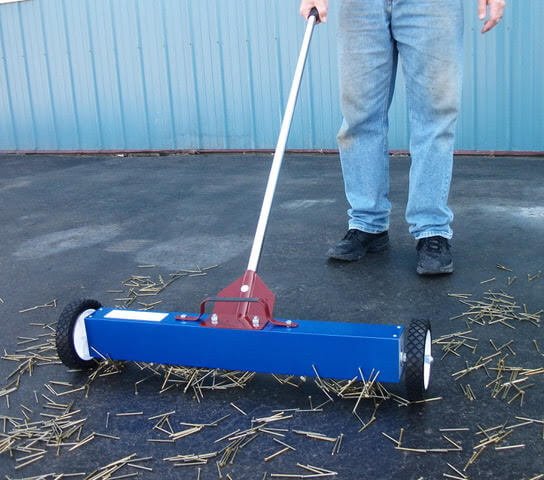
- The build: Roofing is loud and messy. We clean up during the job and at the end of every day, then finish with a magnetic nail sweep.
- Wrap-up: You get a full photo record of the work. After your punch list is done, Katie finalizes billing and registers your warranties.
You signed. Good. Here’s how the rest actually goes, laid out plainly, because projects run best when nobody is guessing.
How does RoofSmart schedule your roofing project?
Every Wednesday we review newly signed projects and add them to the calendar. Andrew Magnani, our Production Coordinator, leads this. He reads through each job, flags questions or specialty needs, and works out the right crew plus any other trades involved, such as carpentry, drywall, gutters or insulation.
Because several teams can touch one project, we coordinate schedules the way a general contractor would. Your start date depends on three things: crew availability, the specific skills your roof needs, and the forecast. When everything is lined up, Andrew sends your reserved start date by email and text, with an estimate of how long the work should take.
That date is tentative. If you don’t hear otherwise, it holds. Most jobs run on schedule, but a supplier delay, an equipment breakdown, a job ahead of yours running long, bad weather, or illness or injury (yours or ours) can move it. If you plan to take time off work or book a pet sitter, leave a little room in case we get unlucky. If anything changes, we’ll tell you as soon as we know.
RoofSmart’s own in-house crew does the roofing work. If your project includes plumbing or electrical work, licensed specialists handle it as subcontractors.
How will we communicate during the project?
If the job goes to plan, you probably won’t hear much from us while the crew works. We’ll reach out if something changes, if we need your decision, or if we find something that needs a change order. That contact will most likely be a phone call, with an email follow-up when it helps.
Your RoofSmart team
A few people you may work with:
- Andrew Magnani, Production Coordinator. Scheduling and material ordering. He sets the stage for your project.
- Katie. Billing and warranty registration.
- Nestor Martinez, COO (“The Wizard”). If something needs special attention or creative problem-solving, Nestor makes it happen.
How should you prepare your home before the roof work starts?
A little prep helps the job move faster and lowers the odds of anything getting damaged.
- Park on the street. Equipment will block your driveway.
- Clear the drop zone. If a dropped hammer could ruin it, move it away from the house.
- Keep the driveway clear. Move RVs and boats away from the house too, so the crew can work and park close and nobody gets blocked in the garage.
- Cover the space under skylights. Skylights come off during the work, and old trapped dust will fall. Put plastic or an old sheet underneath.
- Move planters, lawn furniture and hanging plants away from the house.
- Relocate satellite dishes on or near the roof beforehand. We can remove and dispose of them if needed.
- Tell the crew leader about anything precious or hard to move near the work area when they arrive.
- Check inside walls, ceilings and shelves. Vibration can shift pictures, chandeliers, shelf items and anything loosely mounted. Take them down and wait until the roof is finished to put them back.
- Keep pets inside during the work, for their safety and the crew’s. Please pick up any dog droppings in the work area.
- Unlock gates the crew needs to get through, and keep outside dogs in.
- Give your neighbors a heads-up. The noise and trucks won’t surprise them, and they’ll be more patient.
- Know your driveway. Delivery trucks, dumpsters and equipment are heavy, and a weak or poorly built driveway can crack. We can’t predict that ahead of time, and it isn’t something we or the supplier can be responsible for. If you’re worried, you can ask us to keep deliveries and dumpsters off it. That means extra hand labor, billed hourly as a change order.
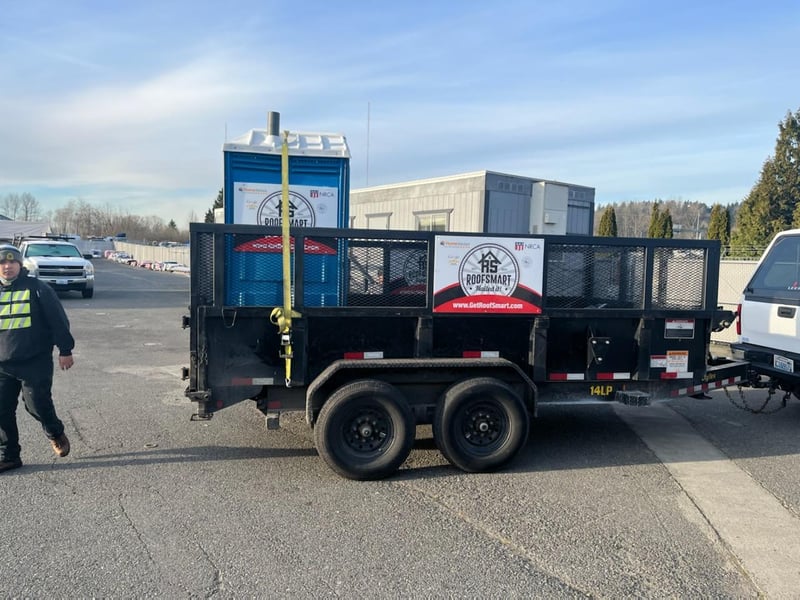
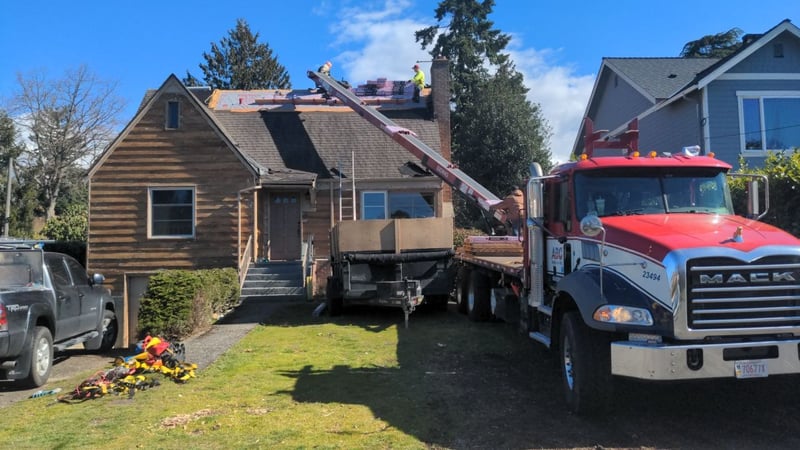
What is it like while the work is happening?
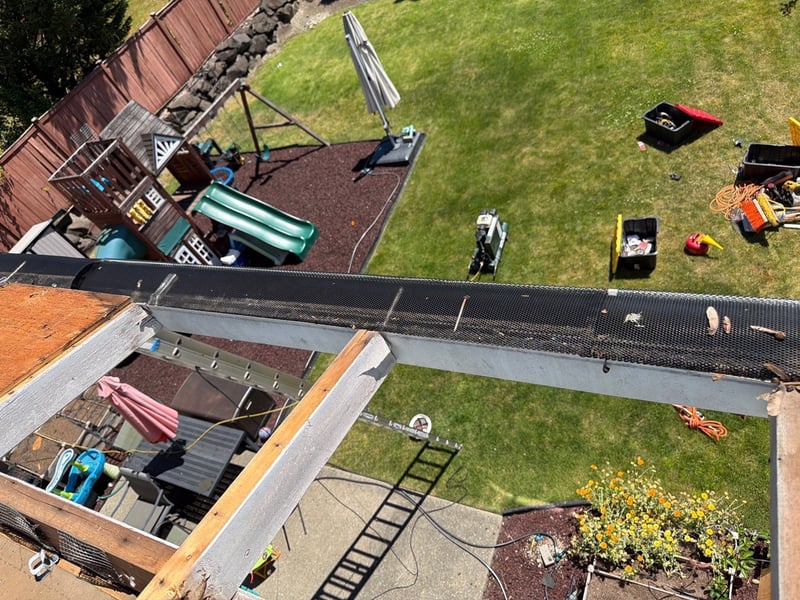
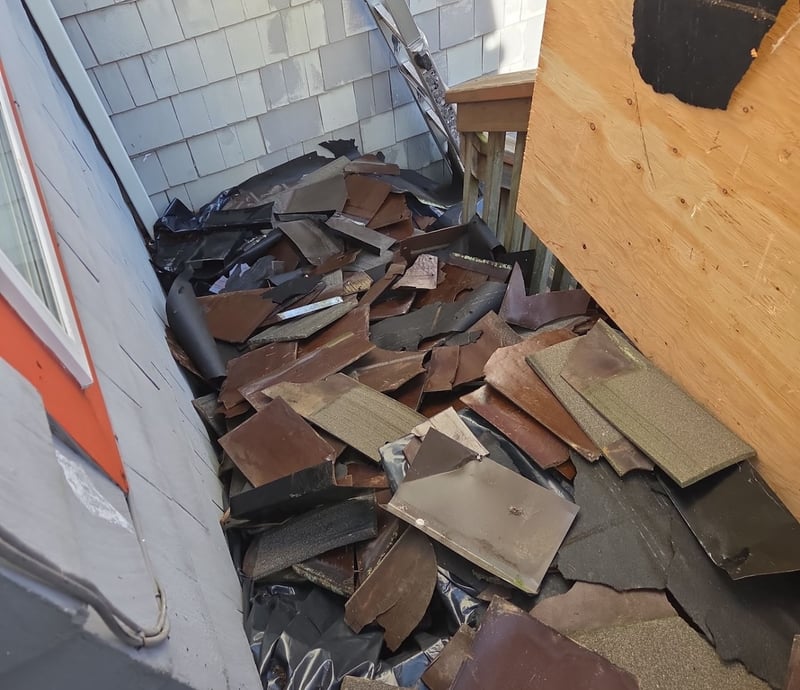
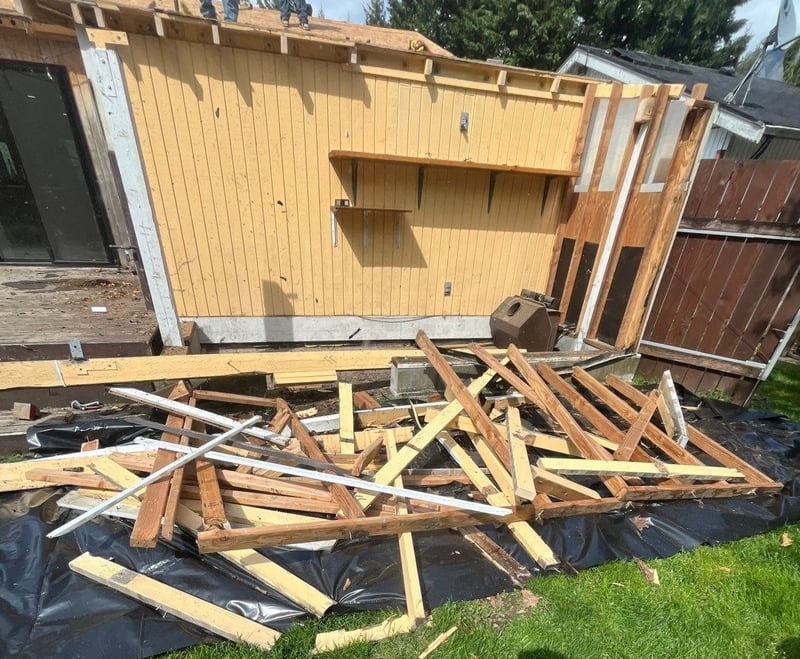
Tear-off is disruptive. In the middle of the job your property will look rough, with debris, materials and equipment around the house. That’s normal.
We clean up several times during the project and at the end of each day. With grass, flower beds and soft dirt, it’s close to impossible to catch every scrap, so please tell us if you spot something we missed, and wear sturdy shoes in the yard during and right after the job.
Why do we take photos during your roofing job?
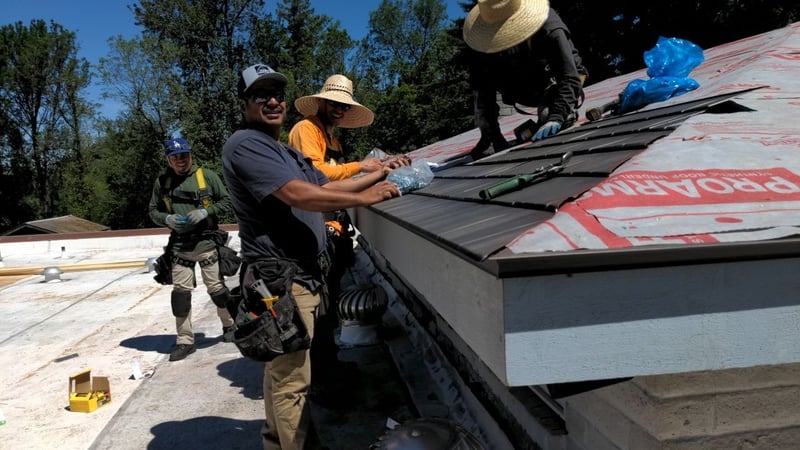
Our team photographs the work as it progresses. At the end, we share the full set so you have a clear record of what was done, including the parts that get covered up.
What happens on the last day?
We do a thorough cleanup, including a magnetic nail sweep, then walk the finished work with you. Please send your punch list as one written list so we can close everything out efficiently.
Katie handles final billing and warranty registration. Once the work is complete and payment is settled, she registers your warranties and sends you the documentation. If your roof qualifies for TripleGuard™, that means lifetime workmanship and lifetime material coverage on an eligible roof built to our expert design, plus our promise the work meets code.
What happens after the project is complete?
You should now have a properly installed roof system. To protect it, we recommend an annual check of flashings, penetrations and overall condition. Small issues caught early stay small. Maintenance is required to keep warranty coverage, but RoofSmart doesn’t have to be the one doing it. You can do it yourself, or our maintenance and repair division can keep an eye on things for you.
Help us keep getting better
If anything stood out during your project, good or otherwise, we want to hear it. A few questions to make honest answers easy:
Here are a few quick questions framed for easy, honest answers:
- Did the crew lead introduce himself when the team arrived?
- Was the crew courteous and professional the entire time?
- Did it seem like the team was making a real effort to respect your property and belongings?
- Was there any language or music that felt out of place?
- Were there any concerns you raised that didn’t feel addressed?
You can reply directly to your project coordinator by email.
Still have questions?
Once scheduling begins, Andrew is your main point of contact, and you can reply to his emails directly. Before then, or if you need someone specific (Andrew for scheduling, Katie for billing and warranty, Nestor for anything that needs special attention), call (206) 487-4877 or send us a note through the contact form.
RoofSmart has been doing this since 2011, with 4.9 on Google, 400+ reviews across platforms. Thanks for trusting us with your home.
Frequently Asked Questions
What if you find rotted wood under my old roof?
Nobody can see the deck until the old roof is off. If we find rotted, warped or damaged wood that we can’t safely build over, we photograph it and try to reach you right away to explain what we found and what the fix involves. The repair is billed as time and materials on top of your contract, and it appears as a change order on your final invoice.
If we can’t reach you, we’ll go ahead with the needed repair, because we can’t leave your roof open while we wait. You’ll still get the photos and a full explanation. Smaller issues we can work around, we’ll usually mention during or after the job so your project stays on schedule.
Do I need to be home during the work?
Usually not. Most of our work is on the exterior. We need an outdoor power outlet, a clear driveway and perimeter, unlocked gates, and no dogs loose outside. If any part of your project is inside, we’ll need access, and we’ll arrange it with you. Many homeowners plan to be out during tear-off because it’s loud.
What happens if bad weather is forecast for my start date?
We watch the forecast closely. If rain, snow or high winds are likely, Andrew will let you know about a new or adjusted start date. Washington weather does cause delays, so a little patience helps. We won’t tear off your old roof when weather would expose your home, and if weather moves in mid-project, the crew tarps and protects the roof until it clears.
Will my yard or landscaping be damaged?
We use tarps to shield flower beds, bushes and decks from debris, and we do magnetic nail sweeps. A stray nail can still hide in thick grass, so walk the yard in sturdy shoes during and right after the job.
Where will my materials be delivered?
The delivery truck needs driveway space to drop heavy pallets before the crew arrives. If you have a preference for where materials go, or where they can’t go, tell Andrew once your start date is set.
