

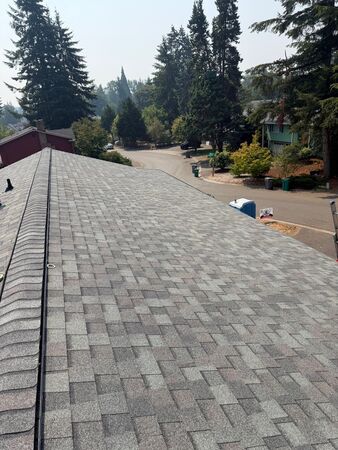
Free inspection when there is no active leak. We'll count your layers and check your deck.
Tear-off or overlay in Greater SeattleThe short answer
In Greater Seattle we almost always recommend a full tear-off.
All major shingle manufacturers require a clean deck install, with all existing layers removed.
Beyond the manufacturer rule, our wet climate is hard on a second layer: it can trap moisture, add weight, and hide deck rot you won't see until the old roof comes off.
Not sure your roof needs replacing at all? Diagnosis comes first. If you don't need a new roof, we say so.
- 4.9 on Google, 400+ reviews across platforms
- A+BBB
 GAF Certified Plus
 CertainTeed ShingleMaster PREMIER
 Owens Corning Platinum Preferred
What's the difference between a tear-off and an overlay?
An overlay (also called a roof-over, recover or layover) means new shingles go on top of the old ones.
It is less demolition up front. What you give up is the chance to see and fix the wood your new roof is nailed into.
-
Tear-off (roof replacement)
The existing roofing comes off down to the deck.
We inspect the deck, replace what's compromised, rebuild flashing, and install the new roof on a known base.
-
Overlay (recover)
A new layer of shingles goes over the existing layer.
The deck stays covered, so nobody sees what's underneath.
What code allows, and what the manufacturers require
An overlay is acceptable under building code.
Code allows up to 2 layers. Before the 2000 International Residential Code, the older model codes allowed up to 3.
The 2-layer limit came in with 2000 IRC R907.3 item 3, which replaced CABO R-810.3.
Today it sits in IRC R908.3.1.1, and Washington's residential code (WAC 51-51) adopts it without amendment.
In plain terms, one existing layer is the most an overlay can go over, which makes 2 layers in all. Code also rules out a recover over a wet or deteriorated roof.
But an overlay will not qualify for warranty coverage by the shingle manufacturer.
All major shingle manufacturers require a clean deck install, with all existing layers removed.
If a bid puts new shingles over old ones, ask the bidder to show you, in that shingle's current install instructions, where an overlay is allowed.
For how the two kinds of coverage differ, read workmanship warranty vs manufacturer's warranty.
Rules can vary by city, so confirm with yours.
Permits are a separate question: see when do I need a permit for roof work in Seattle.
Legal, but not guaranteed.
Why a second layer is riskier on a Seattle roof
-
Moisture gets trapped between layers
Seattle roofs live through long wet seasons.
When water finds a path, whether through wind-driven rain, a failed flashing or a worn valley, a two-layer roof gives it more places to hide.
The top shingles can look fine while the layers underneath stay damp.
-
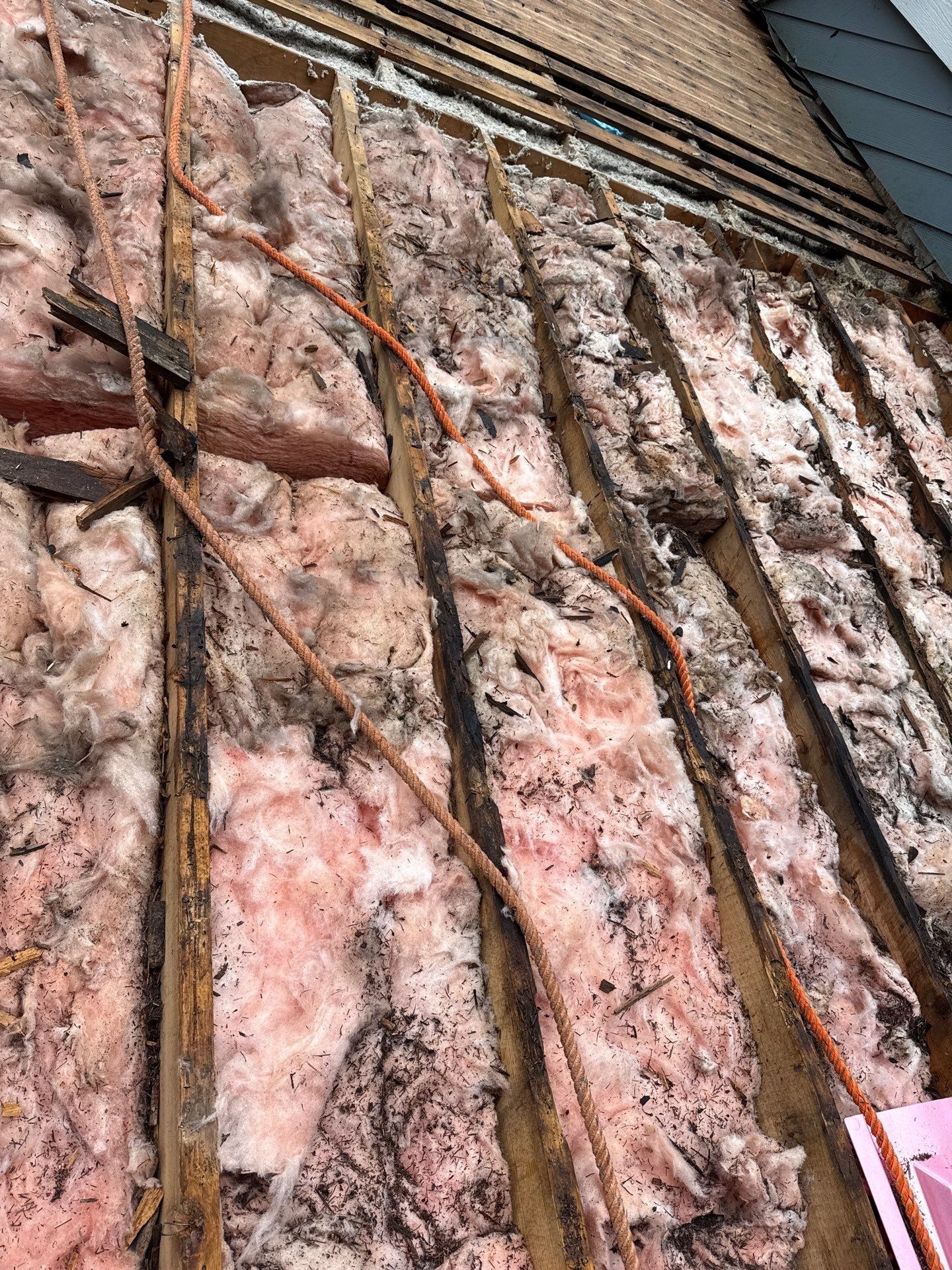
Deck rot you can't see
The deck (plywood, OSB or older plank boards) is the real structure under your shingles.
Soft spots, delamination and swollen OSB usually stay hidden until tear-off.
An overlay skips that look, so a new roof gets fastened into questionable wood.
-
Moss makes it worse
Moss holds water against the roof.
On a roof that already has moss and moisture problems, putting another layer on top covers the problem instead of finding where it started.
-
Weight adds up
Every layer adds load to your framing.
On one Bellevue farmhouse we found five stacked layers, with the edges cut back to hide them.
An overlay keeps the old flashings
With an overlay, you're not replacing the flashings.
Step flashing at walls, chimney and skylight details, and drip edge get reused or buried.
Some replacement roofers plan to do the same thing: reuse the old flashings. See it all the time.
It shaves a few hundred bucks and half a day on most jobs, so they can give you a sweet low price with 'the same thing.'
Jim Singleterry, founder
So check the flashing line on every bid, overlay or tear-off: new, or reuse existing?
More on decks: common problems with OSB roof decks.
-
A lumpy first layer shows through
You get lumpy shingles when they go on top of a lumpy surface to begin with.
After the roof settles in the hot summer sun, the first layer telegraphs through. The roof looks lumpy or wavy.
This uneven lay can also direct water sideways instead of down the roof.
At times that leads to leaks you can never find.
It's a similar problem to roofing over shiplap planks.
-
Ventilation gets ignored
Ventilation can get ignored when nobody opens the roof.
A new top layer does not fix a hot, damp attic.
When I'd say an overlay is fine
In wet Greater Seattle, I'd tell a homeowner an overlay is fine only when we've confirmed one sound layer, a dry adequate deck, and a clean flashing plan.
Even then, an overlay over that single layer is legal and may do the job, but it carries no manufacturer warranty, so I'll usually still push for tear-off so we can see everything.
"Done once, done right" beats a second layer that hides the next repair.
Jim Singleterry, founder
Flat roof or sloped roof?
An overlay is more viable on a flat roof than on a sloped roof.
If a membrane roof hasn't failed yet, it's a good candidate for a second layer.
Shingles are the worst choice for a second layer.
And on a shingle roof, an overlay doesn't save that much.
What it skips is the tear-off labor and the dump fees. On our jobs those typically come to about $1.46 per square foot, plus tax.
More on flat roofs: flat roof types, pros, cons and cost.
How to read a tear-off bid vs an overlay bid
Ignore the bottom line until the scopes match. Compare these lines first:
| Line item | What to look for |
|---|---|
| Layers to remove | Does the bid say how many layers come off, or does it say overlay, recover or layover? |
| Disposal | A tear-off should include haul-away of the old roofing. |
| Deck inspection and replacement | How is rotted deck handled, and who decides? |
| Flashing | New step, valley, chimney and wall flashing, or "reuse existing"? |
| Underlayment and ice barrier | What goes under the new shingles? |
| Drip edge | Is new drip edge called out? |
| Ventilation | Are intake and exhaust addressed, or is the bid silent? |
| Permit | Who pulls it if your city requires one? |
Questions to ask an overlay bidder
- How many layers are on the roof today, and how did you count them?
- How did you check that the deck is dry and sound?
- Do you understand an overlay carries no manufacturer warranty, and does your bid say so?
- Which flashings are new and which are reused?
- If you find soft deck later, how do changes get approved?
More on comparing bids: red flags when comparing roof proposals and comparing proposals from roofing contractors.
Have two bids that don't match?
We'll count your layers, look at the deck from the attic where it's safe, and tell you whether you need a new roof at all.
How to tell how many layers your roof has
-
Look at the edges. Thick, stacked shingle edges at the eaves and gables usually mean more than one layer.
Edges can be cut back to hide layers, so this isn't proof.
- Check the attic. Staining and daylight hint at leaks and age but rarely give a clean layer count.
- Get an inspection. That is the honest way to know. Please don't climb a wet or steep roof yourself.
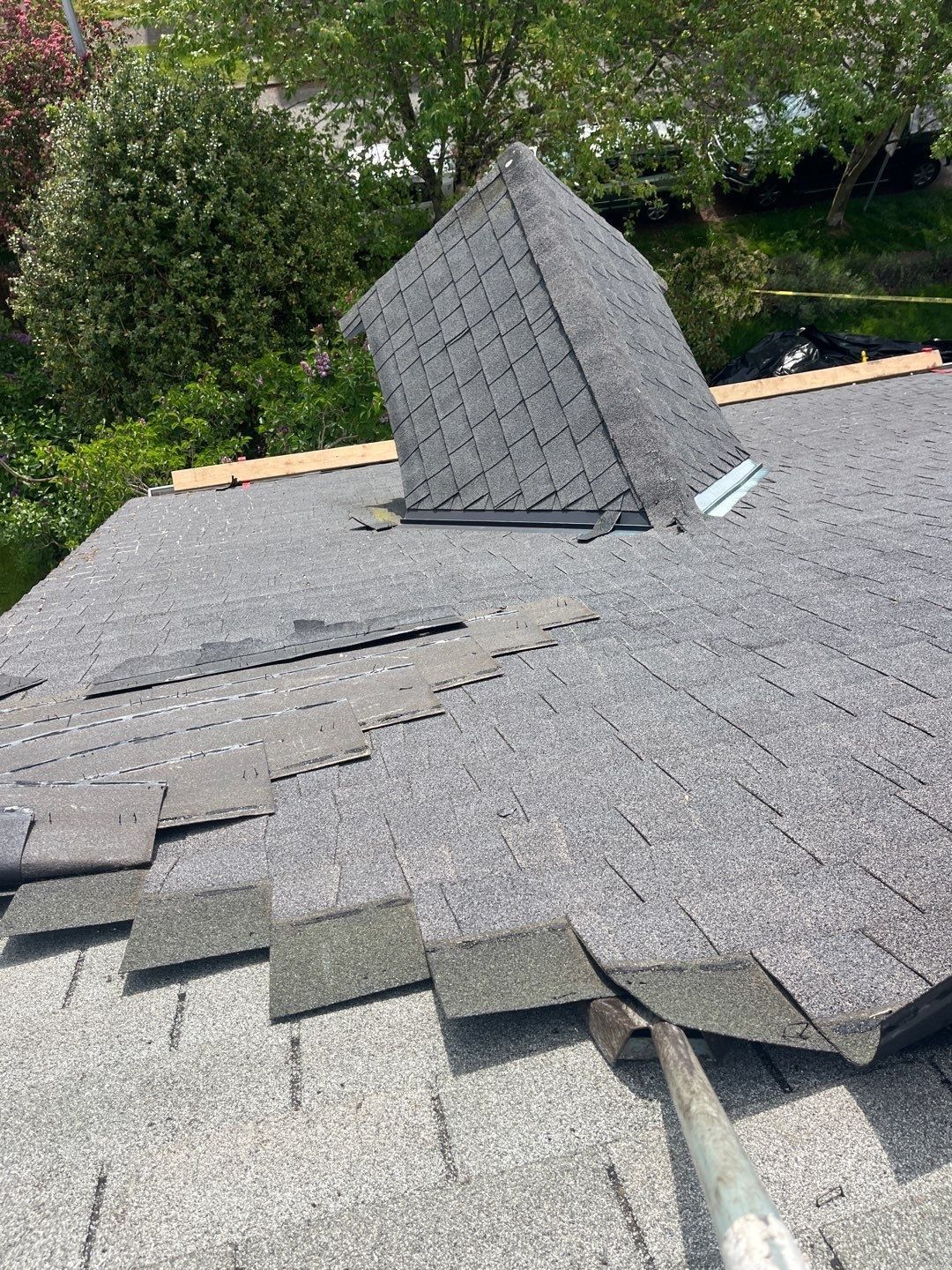
What a RoofSmart tear-off looks like
- We remove all existing layers down to the deck.
-
Our crew checks the deck and photo-documents what we find. If we find rotted wood, we replace it.
We get your permission before major changes, and if we find rotted wood and can't reach you, we go ahead with the needed repair.
- We rebuild flashing, underlayment, drip edge and ventilation as your roof needs, then install the shingle system we agreed on, such as Landmark or Duration.
- A replacement averages about 3 days on site.
Curious what a full replacement costs?
per sq ft plus tax for the asphalt shingle base, before add-ons.
Details: Seattle roof replacement cost. Only need a repair? Repairs are usually done within 1 week.
Tear-off vs overlay FAQ
Is it better to tear off a roof or put new shingles over the old one in Seattle?
For most roofs here, a tear-off.
All major shingle manufacturers require a clean deck install, with all existing layers removed.
A tear-off is the only way to see and fix the deck.
Can you put new shingles over old shingles?
Yes. Building code allows up to 2 layers, so an overlay over one sound layer is legal.
But it won't qualify for warranty coverage by the shingle manufacturer, and it hides the deck.
Legal, but not guaranteed.
How many layers of shingles are allowed in Washington?
Up to 2 under code, so one existing layer is the most an overlay can go over.
Before the 2000 International Residential Code, the older model codes allowed up to 3.
Washington's residential code (WAC 51-51) adopts the IRC limit without amendment. Code also rules out a recover over a wet or deteriorated roof.
For manufacturer warranty coverage, no old layer can stay: all existing layers must be removed.
Rules can vary by city, so confirm with yours.
Why is an overlay risky in a wet climate?
A second layer can trap moisture and adds weight.
It also hides deck rot and moss damage you won't see until tear-off.
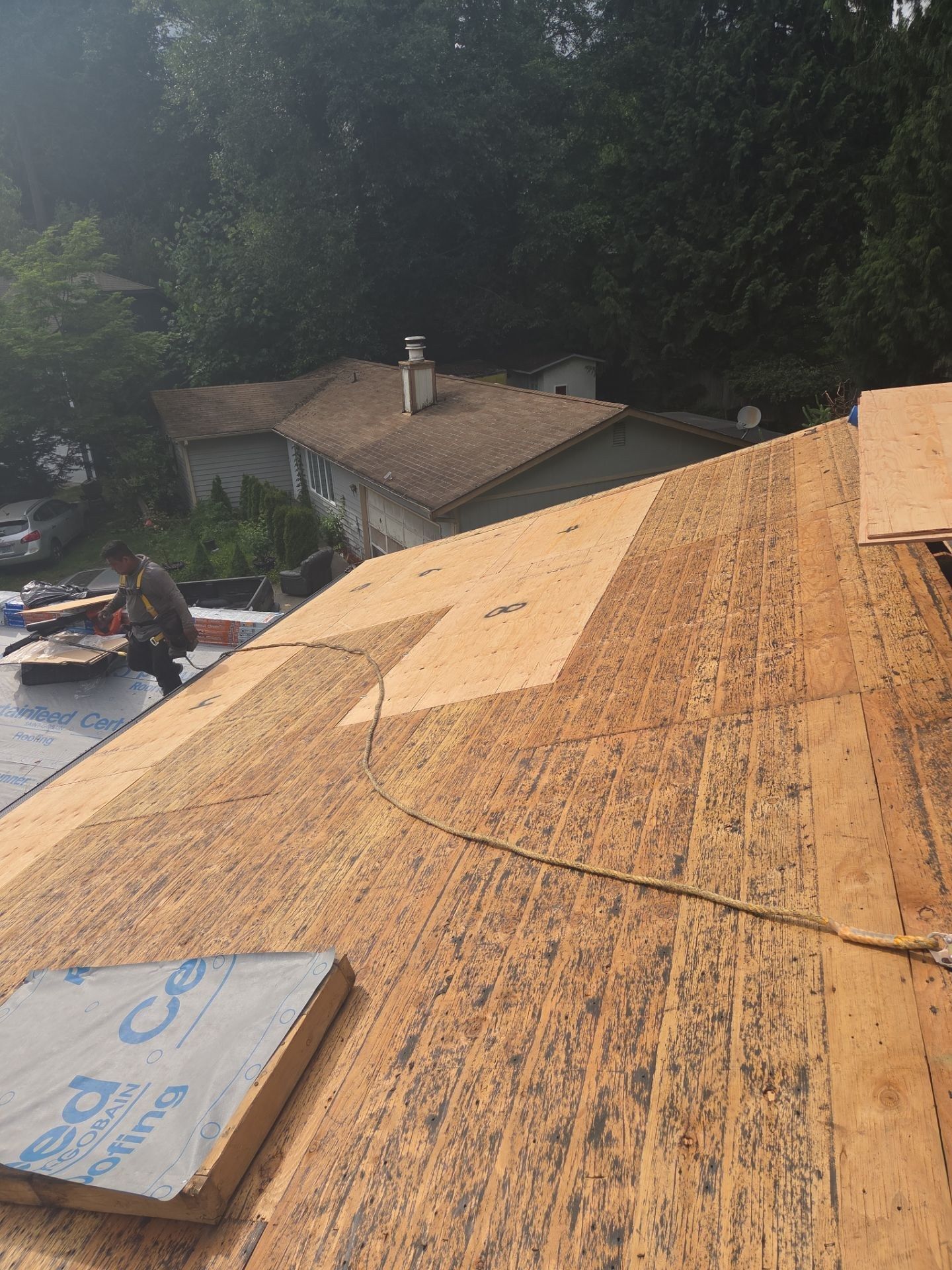
Why does an overlay roof sometimes look wavy?
After the roof settles in the hot summer sun, a lumpy first layer telegraphs through the new shingles.
That uneven lay can also direct water sideways instead of down the roof.
At times that leads to leaks you can never find.
Is an overlay cheaper?
Less up front, usually, because there's less removal and disposal.
On a shingle roof, though, it doesn't save that much.
You also don't get a look at the deck, and fixing hidden rot later can wipe out the difference.
And an overlay won't qualify for manufacturer warranty coverage.
Is an overlay a better fit on a flat roof?
It can be. An overlay is more viable on a flat roof than on a sloped roof.
A membrane roof that hasn't failed yet is a good candidate for a second layer.
Shingles are the worst choice for a second layer.
Does an overlay replace the flashings?
No. With an overlay, you're not replacing the flashings.
Ask any bidder which flashings are new and which are reused.
Do I need a permit to re-roof?
It depends on your city and the scope.
Before you choose, let us count the layers
We'll check your roof, count your layers and look at the deck where we can, then give you a plain-English findings sheet: repair, replace or monitor.
If you don't need a new roof, we say so.
4.9 on Google, 400+ reviews across platforms. Since 2011.
Related reading: when to replace your roof · repairing vs replacing · roof replacement
