

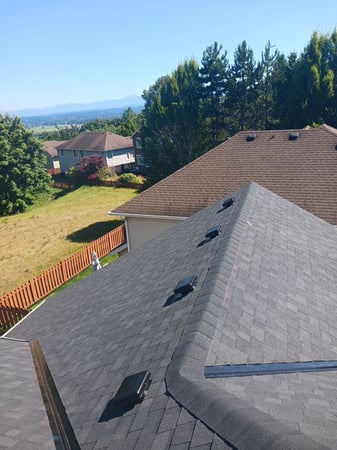
TL;DR: Summary
The best exhaust ventilation for your roof depends on its shape, attic design, and available intake airflow, not just what’s most common.
In Seattle, the three main options are ridge vents, static vents, and power vents. Ridge vents work for most homes with long ridgelines and proper intake. Static vents are ideal when ridge space is limited, and power vents are best when there’s not enough room for natural exhaust.
Choosing the wrong system can trap moisture, leading to mold, rot, and premature roof failure, especially in Seattle’s damp climate.
The key takeaway: proper ventilation isn’t one-size-fits-all. Your roof needs a system designed specifically for its structure and balanced with adequate intake airflow.
Are you worried that choosing the wrong type of roof ventilation could lead to mold, condensation, or premature roof failure? Do you feel unsure which exhaust vent actually works best for your specific roof shape, and are concerned your roofer might just default to whatever is easiest?
In a damp climate like Seattle, the wrong setup can trap moisture in your attic, leading to rot, mold, and expensive repairs down the road. Most roofers in the Seattle area will just install a ridge vent and move on, even if it’s not the best fit for your home.
At RoofSmart, we replace hundreds of roofs each year. Before each one, we inspect the attic to make sure that there aren’t any ventilation issues. We almost always find outdated or poorly working attic ventilation systems that need to be fixed.
In this article, we’ll break down the 3 most common types of exhaust ventilation used in the Seattle area, when each one works best based on your roof shape, and how to make sure your ventilation system is designed correctly so your roof can perform the way it’s supposed to.
Best Exhaust Vent Type by Roof Shape
|
Roof Condition / Shape |
Best Vent Type |
Why It Works |
When It Fails |
Key Requirement |
|
Long, continuous ridgeline |
Ridge Vent |
Even airflow across entire roof |
Not enough intake ventilation |
Balanced soffit intake |
|
Multiple ridges & complex gables (limited ridge length) |
Static Vents |
Can be spaced strategically |
Poor placement or insufficient quantity |
Adequate intake + spacing |
|
Very short or minimal ridge |
Power Vent |
Moves large volume of air from small area |
Mechanical failure or poor intake |
Strong intake ventilation |
|
Large attic with limited exhaust space |
Power Vent |
Covers more area than static vents |
Overpowering intake (imbalance) |
Proper airflow balance |
|
Roof with good intake but no ridge access |
Static Vents |
Flexible placement options |
Incorrect sizing or layout |
Intake/exhaust ratio |
|
Any roof with blocked soffits |
❌ None will work properly |
Airflow cannot function |
Leads to mold and moisture |
Clear intake ventilation required |
What are the most commonly used types of exhaust ventilation in the Seattle area?
Although there are many different types of exhaust ventilation options, the three most common types used on roofs in the Seattle area are:
- Ridge vent: Ridge vents are a common choice because they work well on most roofs and are fairly easy to install. This type of vent is installed over the gap at the ridge of your roof and then covered in a ridge cap to blend it in with the rest of your roof.
- Static vents: Installing vents is another option. These come in a variety of shapes and sizes, depending on the style and brand that you choose. These vents are installed near the top of the roof, usually close to the ridge.
- Power vents: Power vents are powered by electricity (some are solar-powered) and have fans that physically push air around. This is an option that can be used if you want a vent with more power or something that operates mechanically.
For most Seattle homeowners, one of these three options is going to be the right solution. There are some cases where your roofer may need to come up with alternative solutions, but these are the vents that you see most often.
How do I know which type of exhaust vent is the right fit for my roof style?
Knowing which type of exhaust vent is right for your roof depends on the style and setup of your roof and attic. You also need to meet building code requirements for how much ventilation your attic needs.
The standard building code in Seattle calls for 1 square foot of ventilation for every 150 square feet of attic space. This is the minimum requirement:
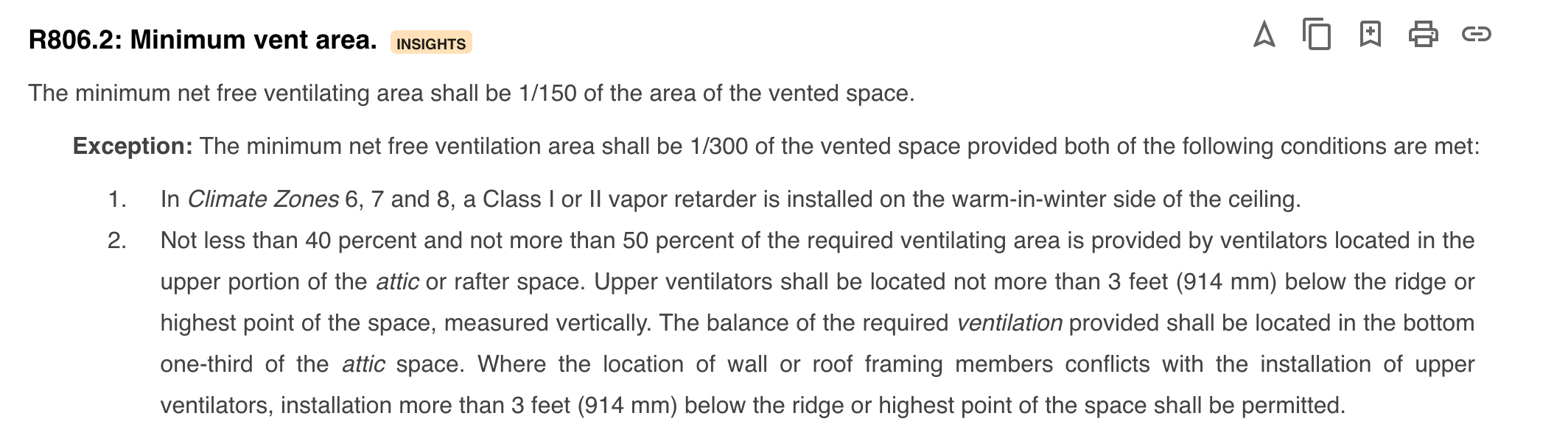
Keep in mind that these requirements are meant for a standard attic with regular attic ventilation (intake vents near the bottom and exhaust vents near the top).
In cases where the ceiling is vaulted or the attic system is too complicated, sometimes the best move in Seattle’s climate is to step away from traditional attic ventilation and create a different kind of insulation and ventilation setup.
The exhaust vents in this article need to be installed in an attic with traditional ventilation and paired with a balanced amount of intake ventilation.
When is a ridge vent the right fit?
80% of the time, the ridge vent is going to be the right fit for your roof. Most of the time, this is what a roofer will install on a roof. It works well on roofs with long ridgelines that have quality intake ventilation (no blockages).
Ridge vents get installed on most houses, but sometimes homeowners run into ventilation issues because they do not have enough intake ventilation, or the intake vents have accidentally been blocked by insulation.
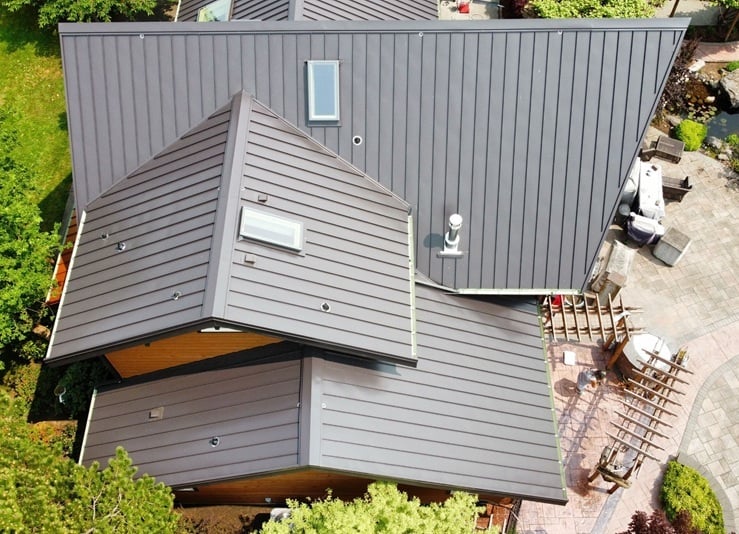
Ridge vent won’t work on a home that has a lot of ridgeline but very little room for intake ventilation. This isn’t common, but it can happen on a roof with a lot of intersecting gables like this one:
When is a static vent the right fit?
Static vents are a good option when you don’t have enough room to do a ridge vent, and the roof provides enough room for adequate intake ventilation. For example, on a roof like this:
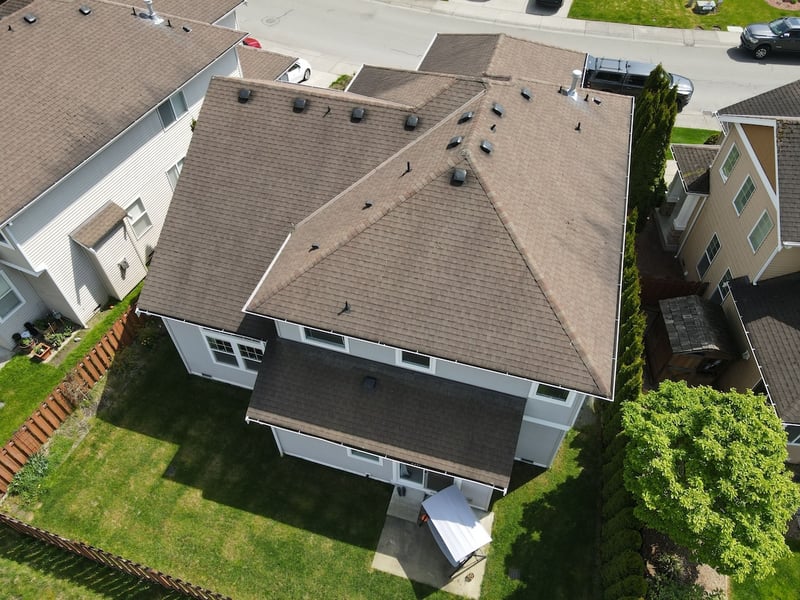
This is similar to the other roof because it has a lot of intersecting gables, but the major difference is that it has a lot of room for intake ventilation. Even though there isn’t enough ridgeline for ridge vent, there is plenty of room to install static vents and space them out properly.
We typically use static vents when we need ventilation in one spot, or we're trying to modulate how much exhaust there is so that it matches the intake.
When is a power vent the right fit?
Power vents are used when there is plenty of room for intake, but there is very little room for exhaust (ruling out ridge vents or static vents). The ridge is very small. For example, this is a fairly common roof structure in the Seattle area:
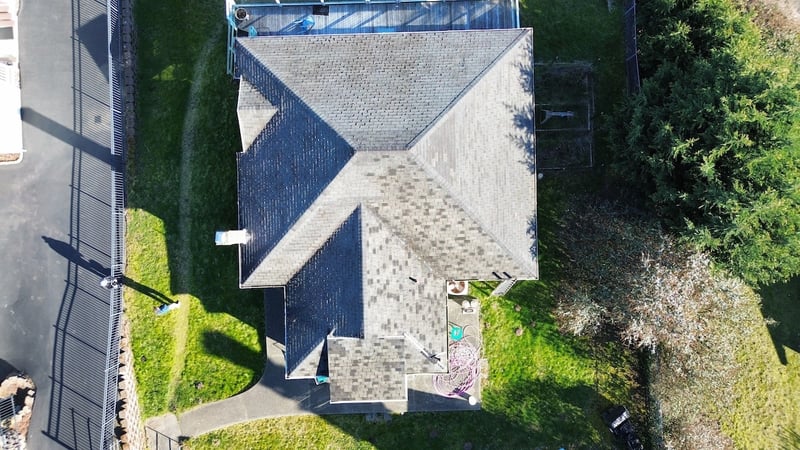
The ridge is so small that a power vent is needed to provide the right amount of airflow in the attic. A ridge vent wouldn’t work because the ridge is way too short, and there isn’t enough room to install enough static vents.
Power vents can provide ventilation to a larger area than a static vent, making them an ideal upgrade when you’re low on space.
Is Your Roof Meeting Seattle’s Attic Ventilation Code Requirements?
Choosing the right type of exhaust ventilation is only part of the equation. As you’ve seen, your roof shape, attic design, and intake ventilation all play a role in determining whether ridge vents, static vents, or power vents will actually work.
But even if you pick the “right” system, it still has to meet building code requirements.
Seattle’s ventilation codes are designed to ensure your attic gets enough airflow to prevent moisture buildup, mold, and premature roof failure. And the reality is, most roofs in the Greater Seattle area don’t meet these standards.
Read our article “What Are Seattle’s Attic Ventilation Code Requirements?”
This article will walk you through the exact ventilation requirements, how they’re calculated, and how to make sure your roof is set up to perform properly for the long term.
Frequently Asked Questions About Best Exhaust Vents Based on Roof Shape
1. What is the best type of exhaust ventilation for a roof?
It depends on your roof shape.
- Ridge vents work best on long, simple rooflines
- Static vents are ideal for complex roofs
- Power vents are best when exhaust space is limited
There is no one-size-fits-all solution.
2. Why do most roofers default to ridge vents?
Because they are:
- Easy to install
- Cost-effective
- Suitable for many homes
However, they are not always the best choice, especially if your roof design or intake ventilation doesn’t support them.
3. Can the wrong ventilation system damage my roof?
Yes. Poor ventilation can lead to:
- Moisture buildup
- Mold growth
- Rotting wood
- Premature roof failure
Choosing the wrong vent type can cause serious long-term problems.
4. Do I need both intake and exhaust ventilation?
Yes, both are required.
A proper system includes:
- Intake vents (soffits) to bring air in
- Exhaust vents to release air out
Without balance, your ventilation system won’t function properly.
5. When should I use a power vent instead of a ridge vent?
Use a power vent when:
- Your roof has very little ridgeline
- Static vents won’t provide enough airflow
- You need stronger, mechanical ventilation
They are especially useful for complex or compact roof designs.
Topics:
