

How Often Should You Get Your Roof Inspected in Seattle?

A Seattle roof needs a roof inspection at least once a year, and some roof types call for two. A roof isn't just shingles. It's a system of shingles, flashings, vents, gutters and attic ventilation, and in Western Washington that whole system stays wet for most of the year. Small problems don't stay small for long here.

We're RoofSmart, a Seattle-area roofer since 2011, and we think like Meticulous Roofing Nerds. This guide covers what a good annual inspection checks, which maintenance actually helps, when to schedule it, and what it costs. If you don't need a new roof, we say so.
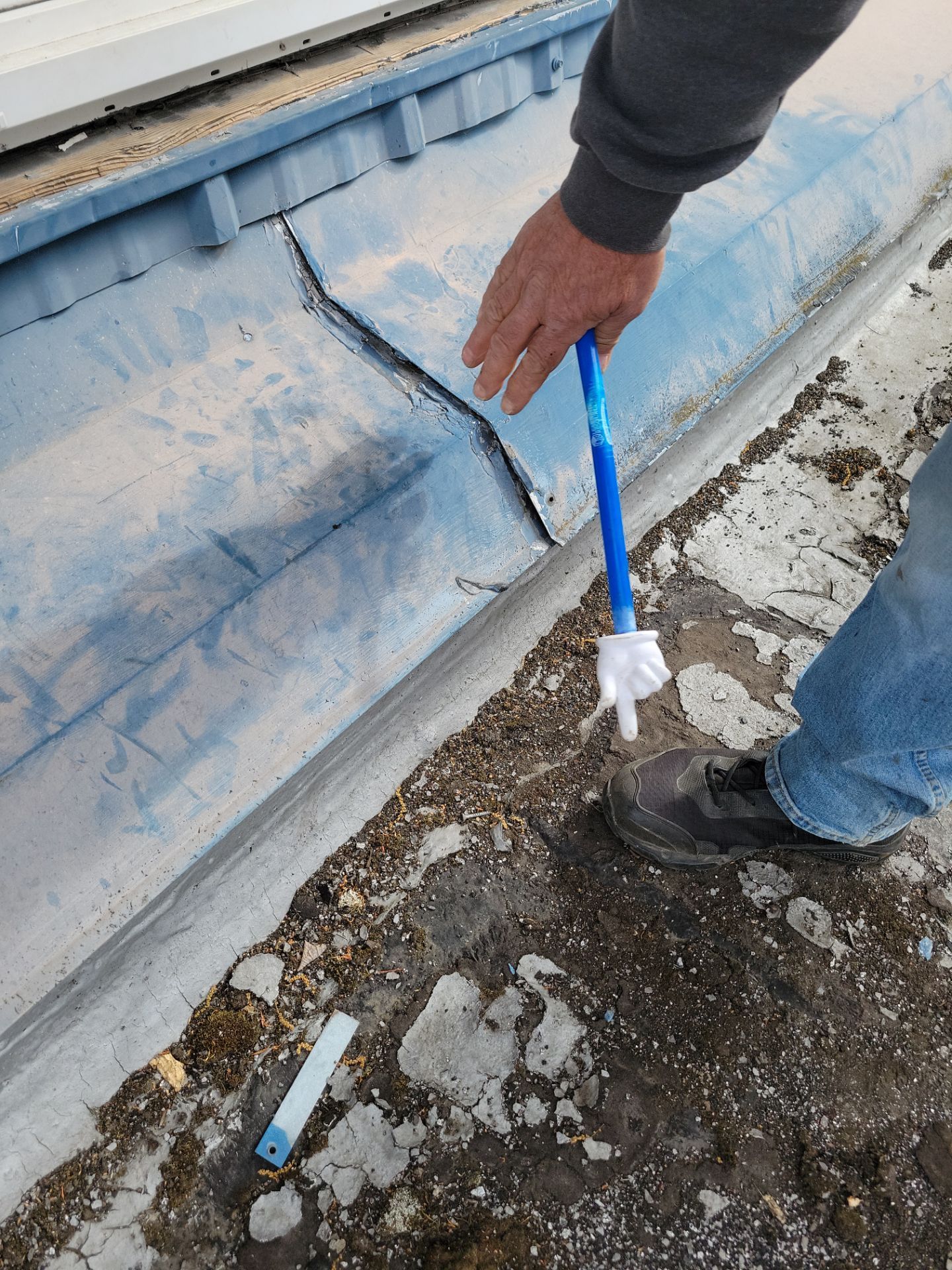
A person uses a blue-handled tool on a metal roof.

Quick Answers

  • How often? We recommend at least once a year. Several makers ask for twice a year, including every flat roof maker we install. Add a quick look after big wind or rain storms.
  • Why so often here? Sea-Tac averages 39.34 inches of precipitation over 156.2 wet days a year (NOAA 1991 to 2020 normals). Moss and debris hold that water against the shingles.
  • How long do shingles last? A shingle roof lasts 15 to 25 years. Care decides which end you land on.
  • What gets checked? Shingles, flashings, pipe boots and vents, valleys, gutters and, where it's safe, the attic.
  • What does it cost? The inspection is free and starts with our SmartMatch™ Needs Analysis, and you get photos and a plain-English findings sheet.
  • Best time? Late summer or early fall, while the roof is still dry enough to work on, with a second look in spring if your roof's maker asks for two.

Why do Seattle roofs need an inspection every year?

Our roofs almost never get a long dry stretch. At Sea-Tac, the 1991 to 2020 normal is 39.34 inches of precipitation and 156.2 days a year with at least 0.01 inch of rain. Shingles stay damp for months at a time, and anything that holds water against them speeds up the wear.

Moss is the biggest culprit. It works like a sponge, keeps the shingles wet for weeks, lifts their edges and loosens granules. Fir needles, leaves and cones do the same thing in valleys and behind chimneys. Wind-driven rain then finds any weak flashing or lifted edge.

Some leaks don't come from the roof surface at all. Warm, moist air leaking up from the house, plus poor attic ventilation, can turn into condensation on the underside of the roof deck, and that often looks exactly like a leak. A yearly look at the whole system catches these early, while they're still small repairs.

How often should each type of roof be inspected?

It depends on the roof, and the people who make the materials say so in writing. Here's what each maker we install publishes about inspections and upkeep. Where a maker gives no interval, we say that rather than invent one.

Roof type Maker What the maker publishes
Asphalt shingle Owens Corning No set inspection interval. A professional inspection "if concerns are found or the roof is aging," plus quick monthly visual checks.
Asphalt shingle IKO An inspection by a roofer twice a year, in spring and fall.
Metal Taylor Metal No set inspection interval. A thorough cleaning "at least once per year."
Rubber composite EuroShield Homeowner checks at least once a year, ideally two a year in spring and fall.
Cedar shake Cedar Shake & Shingle Bureau No set inspection interval. Gutters cleaned "usually in the spring and fall," and homeowners shouldn't walk the roof themselves.
Flat, PVC Duro-Last "Inspect at least twice per year; in the spring and fall."
Flat, TPO or EPDM WeatherBond Inspect "periodically or at least twice a year."
Flat, torch down Polyglass Two visual inspections a year by a qualified party, a figure it credits to the NRCA and ARMA.

Every flat roof maker here asks for at least two inspections a year, and IKO does too. EuroShield asks for at least one and suggests two. The rest give no set interval, which is why we recommend at least one a year. Some warranties put upkeep in writing too. Taylor's ArmorTech warranty says the metal "must be washed annually" and that rinses "must be documented," and Polyglass says skipping its maintenance guidelines "will void the warranty." Not sure which one is yours? Ask during your SmartMatch™ Needs Analysis.

What does a full annual roof inspection check?

One of our Meticulous Roofing Nerds walks the roof and, where it's safe, the attic. The goal is a clear picture of the whole waterproofing system, not just the shingles you can see from the street. Here's what we look at:

  • Shingles: granule loss, curling, cracking, lifted edges, moss or algae, and missing or damaged pieces.
  • Flashings: chimney, sidewall, step, valley and headwall flashings, counter-flashing and sealant.
  • Penetrations: pipe boots, vents and skylights, checked for cracks, shrinkage and failed seals.
  • Valleys, ridges and edges: debris, shingle overlap and the path water takes off the roof.
  • Gutters and downspouts: clogs, slope, attachment, and whether water actually leaves the system.
  • Attic, where accessible: moisture, mold and rot, daylight through the deck, insulation type and depth, and intake versus exhaust ventilation.
  • Around the roof: siding transitions, fascia, soffits and trees that drop debris.

You get photos and a plain-English findings sheet that says repair, replace or monitor, and why. See the full checklist on our SmartMatch™ Needs Analysis page.
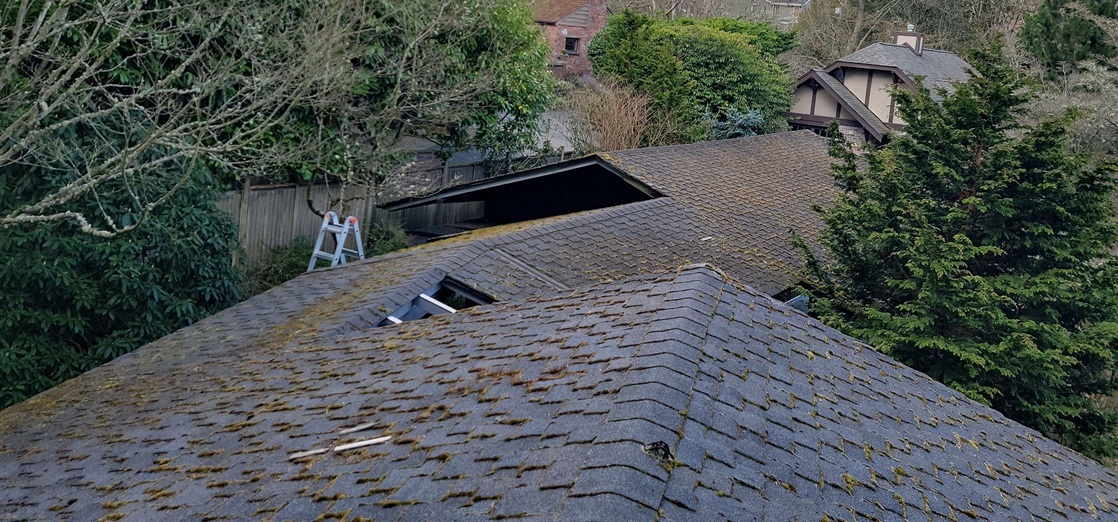
Gray shingle roof with moss and roof vents

Which maintenance makes the biggest difference?

In our climate, the work that pays off most is simple and focused. None of it is glamorous, but each item keeps water moving off the roof instead of sitting on it.

  • Moss and algae control. Treat just before the fall rains begin or in early spring. Zinc-based treatments are applied so the rain carries them across the roof, and heavy moss is removed after treatment.
  • Debris removal. Clear needles, leaves and cones from valleys, behind chimneys and from low spots, so water can shed and the surface can dry.
  • Gutter cleaning. Clean them at least twice a year, and more often under trees. Clogged gutters back water up under the roof edge and into the fascia or walls.
  • Small flashing and seal repairs. Reseal or replace failing pipe boots, cover exposed fasteners and close small flashing gaps before they turn into leaks.
  • Attic ventilation and moisture fixes. Balance intake and exhaust, and air-seal ceiling openings, so condensation doesn't rot the deck from underneath.

One thing to skip on shingles is pressure washing. Owens Corning warns that it can knock granules loose and shorten the roof's life. Gentle cleaning is the right approach.
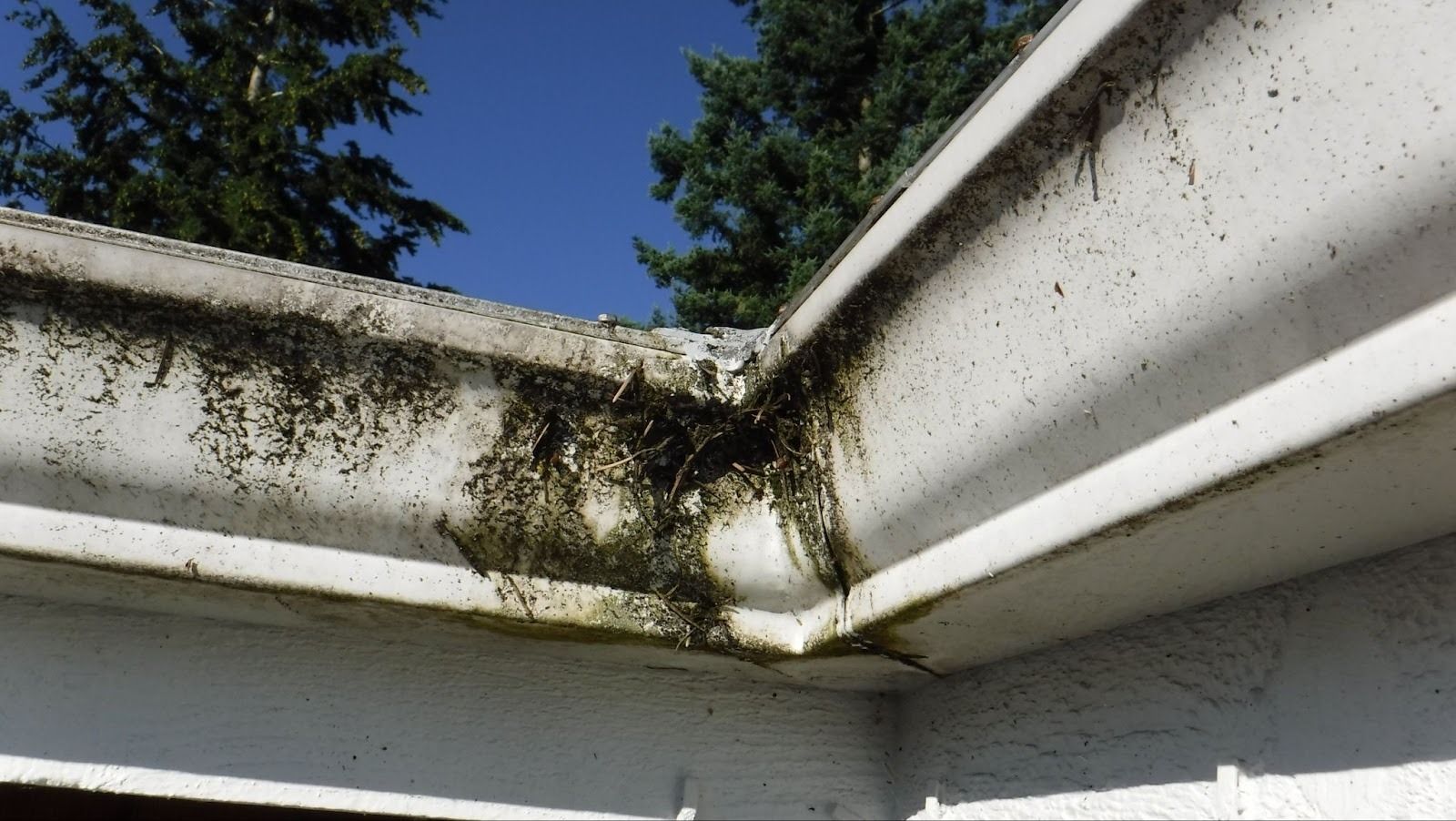
Gunk and dark staining at an exterior gutter corner

When is the best time of year for an inspection?

Timing matters because our wet season is so long. Here's the calendar we recommend for Western Washington homes:

  • Late summer to early fall (August to October): the best window for an inspection, and a good time for moss treatment just before the fall rains begin. It catches summer wear before winter, while the roof is still dry enough to work on.
  • Spring, after the rainy season: the second inspection for flat roofs and EuroShield, and a good look for storm damage, leftover debris and moss that grew back on any roof. Early spring is the other window for moss treatment, and a good time to clear the gutters.
  • After a big wind or rain storm: a quick look from the ground for lifted or missing shingles and debris. Call us if something looks wrong.
  • Gutters: late fall before the rains and again in spring. Homes under dense trees may need a third cleaning.

An inspection can happen in any dry enough window, but pairing it with fall maintenance saves a second trip.

What can I do myself, and what needs a pro?

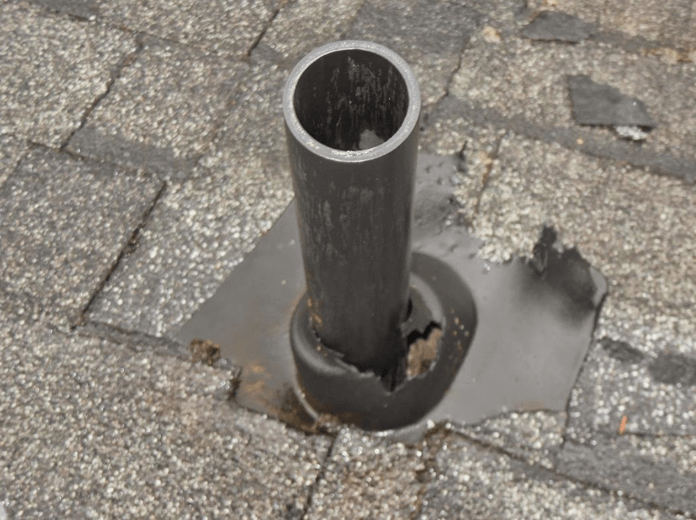
Vent pipe with a worn, cracked rubber collar on a shingle roof

Some of this is safe homeowner work. Clear the gutters and downspouts you can reach from a stable ladder, and don't do it alone. Brush light debris off low, safe sections with a soft broom or leaf blower, never a pressure washer. From the ground, watch for missing shingles, heavy moss, overflowing gutters and stains on your ceilings.

Call a pro for anything that means walking a steep or high roof, treating heavy moss, checking or repairing flashings and pipe boots, going into the attic, or working out where moisture is coming from. Those jobs are about safety as much as skill.

4.9 on Google from 197 reviews, 524 reviews across platforms. Serving the Seattle area since 2011.

What does maintenance cost, and is it worth it?

The inspection itself is free. Maintenance and repair work is billed at our standard service rates: a $475 starter fee covers a two-person crew's first hour, then it's $125 per worker per hour, plus materials and tax. Many simple tune-ups are done within that first hour. See our roof maintenance page for details.

See how the SmartMatch™ Needs Analysis works

Compare that with replacement. The median shingle option on our own proposals is $22,396 before add-ons. Catching a failing pipe boot or early moss costs far less than a mid-life repair or replacing the roof early, and a yearly check gives you time to plan a replacement instead of reacting to a leak in November.

Does skipping maintenance affect my warranty?

Maintenance is required, but RoofSmart doesn't have to be the one doing it. Like oil changes on a new car, it needs to be done and you should keep a record of what was done and when.

No roof warranty covers moss removal, "any more than car washes are included with your car warranty," as Jim puts it. Damage from moss, algae or debris buildup is billed as time and materials. See how our Triple Guard Warranty works.

Roof inspection FAQs

How often should I get my roof inspected in Seattle?

Why do Seattle roofs need inspections so often?

Does the inspection schedule depend on my roof type?

What does an annual roof inspection check?

How much does a roof inspection cost?

When is the best time of year for a roof inspection?

Can I pressure wash my shingle roof?

Do I need regular maintenance to keep my roof warranty?

Ready for your annual roof inspection?

Meet your very own Meticulous Roofing Nerd. We'll walk your roof and attic, show you photos, and tell you what the system actually needs. If you don't need a new roof, we say so.