

TL;DR: Summary
Seattle’s high humidity creates a higher dew point, making attic condensation nearly inevitable when warm indoor air hits a cold roof deck. This moisture fuels mold growth, rot, and rust. While traditional ventilation helps, the most reliable "Egghead" solution in the PNW is an unvented insulated roof deck (moving the insulation to the exterior with R-10 rigid foam).
This moves the dew point outside the structural wood, so the sheathing stays warm enough that condensation doesn't form on it.
Have you noticed moisture, frost, or even mold in your attic and wondered why it seems to happen so often in Seattle homes? Are you frustrated because your roof isn’t leaking, yet you’re still dealing with damp insulation, musty smells, or black spots forming on the wood?
You’re not imagining it: Seattle’s climate creates the perfect conditions for attic condensation and mold. But humidity alone isn’t the real culprit. The problem starts when warm, moist air hits a cold surface and reaches its dew point. And most homeowners don’t realize how easily that can happen inside their attic.
At RoofSmart, we inspect hundreds of roofs all over the Seattle area every year. This includes a thorough inspection of the attic to make sure that there are no leaks, condensation, or ventilation issues.
In this article, we’ll explain why condensation is more common in Seattle than in drier climates, when moisture turns into mold, and what real solutions actually work.
Why Seattle Roofs Are More Prone to Condensation and Mold
If you live in the Seattle area, you know that it is constantly humid and damp. So, humidity by itself doesn't really bother anything on the roof. The real issue happens when the humidity hits its dew point and condenses, turning to water on the roof.
Higher humidity in Seattle means a higher dew point, increasing the risk of attic condensation and mold compared to drier climates.
The colder the air gets, the less water it can carry. So if you've got 99% humidity, and it's really hot outside, the air can hold the water. But as it cools, it has to dump that water out because it's overflowing, so to speak. And so it ends up condensing on surfaces, causing issues like rot, mold, and rust.
Here’s an example of a roof with a lot of condensation:
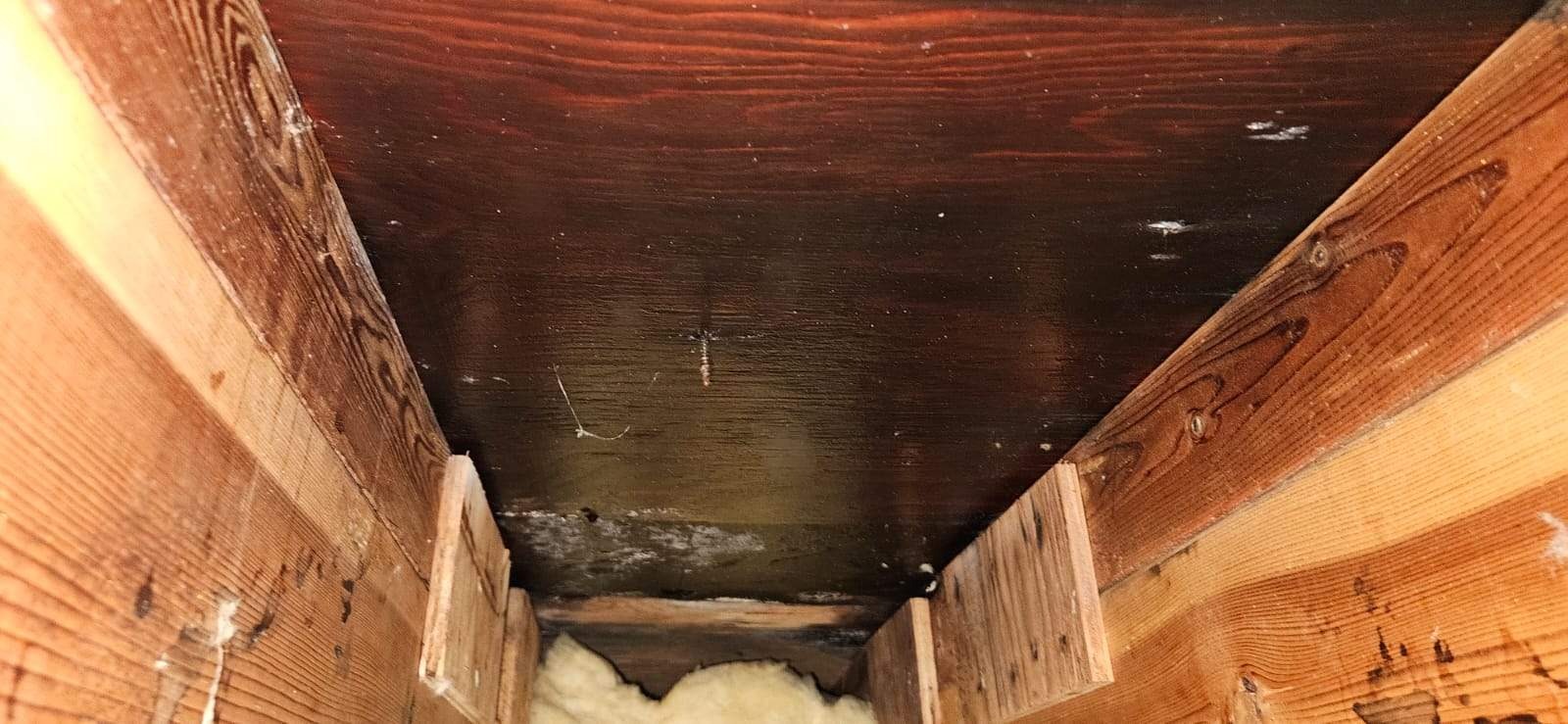
For example, in the winter, when the warm, humid air rises from your house to the attic, it hits the bottom of your roof, which is cold. This causes water in the air to condense, and then it collects in your attic.
But this process can still happen in the summer. Condensation is usually more obvious in the winter because the temperature outside is much cooler, but it is still a problem that can happen all year long.
Having frost on your roof is an example of water freezing after hitting the dew point and condensing. Frost from condensation can appear on your roof, underneath your roof, and even in your attic.
Does condensation in my attic always lead to mold?
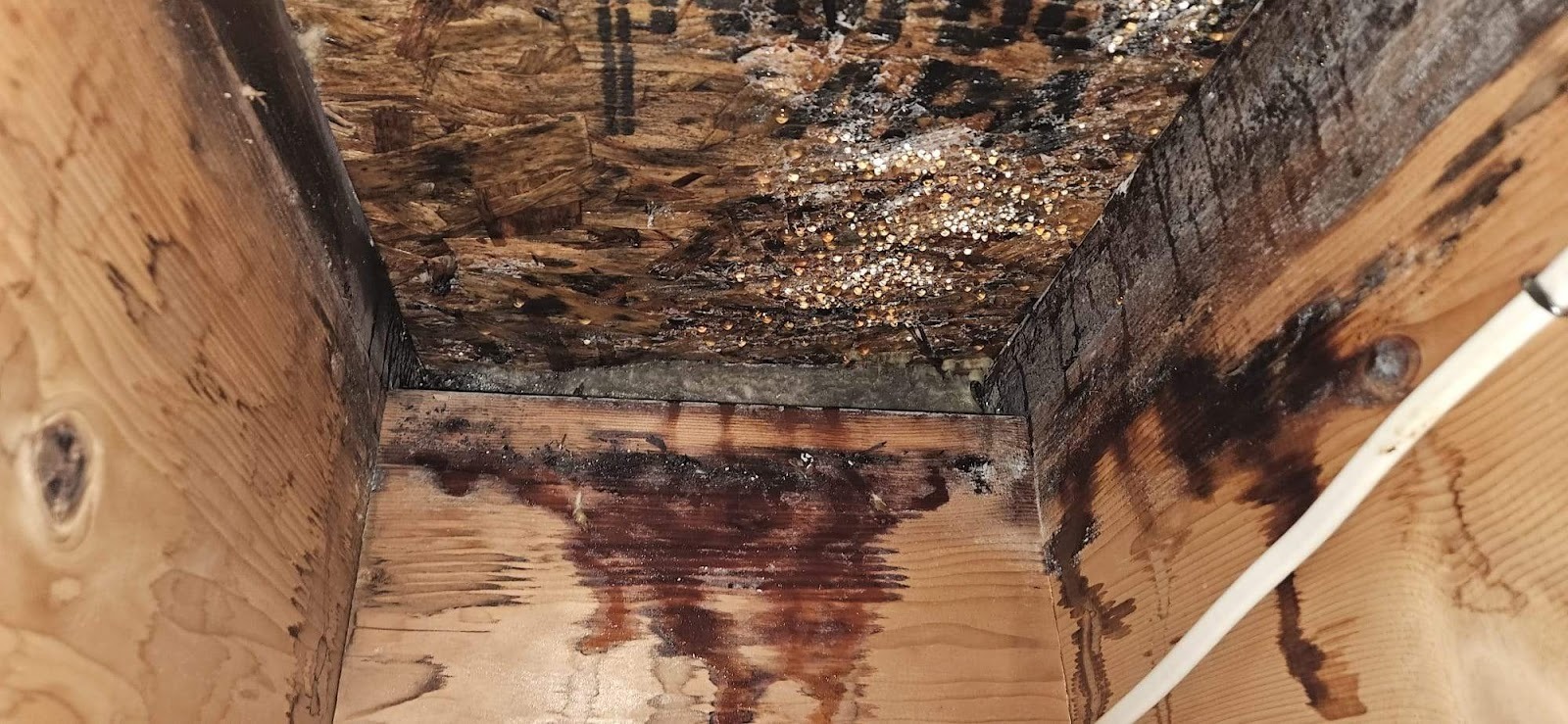
A little bit of condensation is okay. If you have decent attic ventilation, then your attic will be able to dry out well enough to prevent mold. If the condensation in your attic is a constant issue, then you've got a problem because that lingering dampness will lead to mold.
Mold thrives in damp attics with poor ventilation because it has everything it needs to thrive:
- Moisture
- Darkness
- Something to eat (wood)
In these conditions, mold will appear and can easily spread throughout the attic. We see mold all the time in houses everywhere across the Seattle area.
How do I make sure condensation and mold don’t build up in my attic?
| Solution | How It Works | Best For | Pros | Cons / Considerations |
|---|---|---|---|---|
| Unvented Insulated Roof Deck | Rigid foam (min R-10) above deck moves dew point | Any roof type, especially low-slope | Keeps the sheathing warm enough that condensation is unlikely to form on it | Higher upfront cost; code-compliant |
| Traditional Ventilation | Intake + exhaust vents dilute moisture | Most standard attics | Lower cost; allows drying | Less effective with humid incoming air |
| Sealed Attic + Dehumidifier | No vents + mechanical moisture removal | Rare cases | Controls indoor humidity | High failure risk; not ideal for most homes |
| Standard Insulation Only | Added below deck | Budget option | Improves energy efficiency | Insufficient alone in high-humidity PNW |
The most reliable way to prevent condensation on the roof deck is to move the dew point outside the structural wood by insulating above it. Traditional ventilation tries to dilute the problem by blowing air through the attic. But when the air coming in is also humid, you’re just moving the problem around. The solution is to create an unvented, insulated deck.
Typically, unvented roof decks are used on flat or extremely low-slope roofs, but they can be installed on any type of roof.
In Seattle, if you decide to create an unvented, conditioned attic by putting rigid foam insulation on top of your roof deck, you can't just guess at the thickness. You must follow the R-value ratio to ensure the "dew point" stays inside the foam insulation and not in your wood.
According to the Seattle Building Code (based on IRC Table R806.5), you must meet specific thermal resistance levels:
|
Location |
Minimum R-Value (Rigid Foam Above Deck) |
Purpose |
|
Climate Zone 4C (Seattle) |
R-10 |
Keeps the structural sheathing warm enough to prevent condensation. |
Here are the steps you should take to properly insulate your unvented roof deck:
- Air Seal: Ensure the roof deck is air-impermeable by putting down a membrane (like ice and water shield or a flat roof material).
- Rigid Foam: Install at least R-10 continuous insulation (usually 2 inches of Polyiso foam) on top of the plywood. There are different types of insulation to choose from, each with its own R-value and unique benefits. That R-10 is the condensation-control layer, not the whole job. The full roof assembly still has to meet Washington’s energy code R-value (generally R-49 to R-60), and Seattle adds vapor-retarder rules.
- The "Nail-Base": Place a layer of gypsum board over the foam to nail your shingles or metal roof into.
- Interior Insulation (optional): You can add additional R-49+ insulation below the deck to meet total energy codes.
Is an unvented deck always the right solution to prevent condensation?
Although the unvented deck is considered an ideal solution for preventing condensation, it’s very expensive to install and therefore not a realistic option for a lot of Seattle-area homeowners.
So, if you don’t want to commit to an unvented roof deck, there are two other options you can try:
- Standard Ventilation: You can keep your regular vented attic. However, you’ll want to make sure that the ventilation is updated and works properly. A lot of Seattle homes have ventilation that doesn’t work and isn’t up to code. With proper airflow in your attic, it will dry out any occasional condensation. This ventilation style is sufficient for most homes.
- Sealed Attic (Risky): Another option (that we don’t really recommend) if you’re worried about condensation is running a dehumidifier. However, for the dehumidifier to actually work, you’d need to seal off all the vents. This has a high risk of failure if the dehumidifier breaks, and it prevents your roof from breathing properly (which is necessary). And of course, this is a non starter for a cathedral ceiling where every joist bay is its own attic.
Is It a Roof Leak or Just Condensation in Your Attic?
By now, you understand why Seattle’s damp climate makes condensation a constant risk and how easily that trapped moisture can turn into mold if your attic isn’t designed or ventilated properly. In many homes, the issue isn’t a failing roof at all. It’s physics.
But here’s where things get tricky: condensation and roof leaks can look almost identical. Both can cause wet insulation, stained sheathing, dripping water, and even mold growth. And if you misdiagnose the problem, you could spend thousands fixing the wrong thing.
Before you assume your roof needs to be replaced, or ignore what looks like a “small leak”, it’s critical to determine whether you’re dealing with water intrusion from outside or moisture buildup from inside.
Read this article: Roof Leak vs. Condensation: How Do I Tell the Difference?
Understanding the difference could save you money, prevent unnecessary repairs, and help you fix the real problem at its source.
Frequently Asked Questions
1. Is humidity alone the cause of my attic mold?
Not exactly. Humidity is the ingredient, but the temperature difference is the trigger. Mold starts when warm, moist air from your house reaches its "dew point" against the cold underside of your roof, turning into liquid water that feeds fungal spores.
2. Can condensation happen in the summer too?
Yes. While frost and heavy dripping are more common in winter, Seattle’s high humidity means condensation can occur year-round, especially on cool nights following humid days.
3. Does a little bit of attic frost mean I need a new roof?
Not necessarily. A small amount of frost that dries out quickly via proper ventilation is manageable. However, if the moisture is persistent enough to cause black spotting or damp insulation, you have a structural issue that needs addressing.
4. What is the "R-10" rule for Seattle roofs?
In our climate zone (4C), the residential code allows an unvented roof only with at least R-10 of air-impermeable insulation tight to the underside of the deck, or rigid insulation on top of it. That keeps the wood warm enough to stay above the dew point. That R-10 is the condensation-control layer, not the whole job. The full roof assembly still has to meet Washington’s energy code R-value (generally R-49 to R-60), and Seattle adds vapor-retarder rules.
5. Why is traditional ventilation sometimes "less reliable" in Seattle?
Standard vents rely on pulling in outside air to dry the attic. If the air being pulled in is at 90% humidity (standard for Seattle), it doesn't "dry" the space as effectively as it would in a desert climate.
6. How do I know if the moisture is a leak or just condensation?
A leak is usually localized to one spot after rain, while condensation is widespread across the whole roof deck. You can find a visual guide in our article on Roof Leak vs. Condensation.
7. Is an unvented roof deck worth the extra cost?
For most homeowners it's a premium upgrade. For low-slope or high-moisture homes, it's often the most reliable way to keep the roof deck above the dew point. Learn more about how to fix attic ventilation in old houses without causing mold.
8. What should I do if my inspector already found mold?
Don't panic and buy a new roof immediately. First, determine the severity by reading is my attic company trying to upsell me or is my attic mold bad?
9. Can I just add more insulation to stop the condensation?
Actually, adding floor insulation without fixing ventilation often makes condensation worse by making the roof deck even colder. Check out what to do if you have mold in your attic.
10. How much does it cost to fix these issues during a roof replacement?
Adding insulation or redesigning a deck changes the project scope significantly. You can see how these technical upgrades impact your budget in our Seattle roof cost guide.
Topics:
