

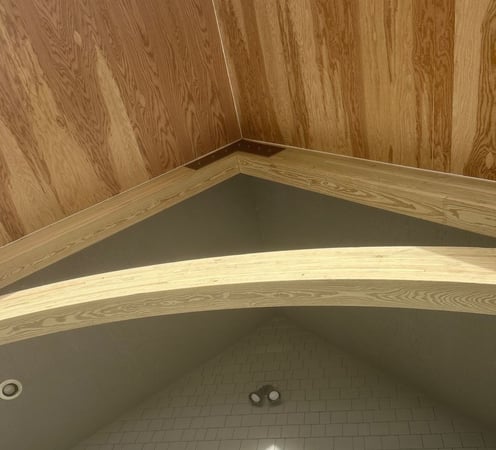
TL;DR: Summary
Rotten glulam beams are a serious structural issue, especially on exposed Seattle homes near the ocean, where moisture and salt air accelerate water damage.
Signs of failure include cracking, splitting, and severe water saturation, often hidden until the roof is opened up during replacement.
Replacing glulam beams is a complex process that requires structural support, specialty carpentry, heavy equipment, and extensive protection for the surrounding property during construction.
The key takeaway: exposed glulam beams can become extremely expensive to repair if rot goes unnoticed, so early inspections and proper moisture protection are critical for long-term structural safety.
Are you worried that the exposed beams on your home could be rotting from the inside without any obvious warning signs? Have you noticed cracks, sagging, or discoloration on your glulam beams and wondered if the damage is serious enough to become a structural problem?
The problem is that these beams often look mostly fine from the outside while severe rot spreads deep inside the wood. By the time obvious cracking or sagging appears, the beam may already be structurally compromised.
At RoofSmart, we do more than just install shingles on your roof. We also do carpentry and framing work. We’ve helped over 100 customers resolve framing issues on their roofs by repairing or completely redesigning their roof framing.
In this case study, we’ll walk you through the warning signs of severe glulam beam rot, what steps we followed to replace multiple glulam beams for a Seattle homeowner, and the extra precautions our roofing crew took to protect the homeowner’s property during this complex repair project.
Signs a Glulam Beam Has Severe Rot Damage
|
Warning Sign |
What It Means |
Why It Happens |
Risk Level |
Typical Solution |
|
Cracking Along Beam |
Beam has weakened structurally |
Long-term moisture absorption |
❌ Critical |
Replace beam |
|
Dark or Discolored Wood |
Water saturation inside beam |
Persistent moisture exposure |
❌ Very High |
Inspect for internal rot |
|
Soft or Spongy Areas |
Wood fibers are decaying |
Advanced rot |
❌ Critical |
Immediate replacement |
|
Delamination (Layers Separating) |
Glue bonds failing |
Moisture penetration |
❌ Critical |
Structural replacement |
|
Sagging Roofline |
Beam no longer supporting load properly |
Structural deterioration |
❌ Critical |
Engineering evaluation |
|
Exterior Exposure Near Ocean |
Salt air accelerating deterioration |
Coastal climate conditions |
⚠️ High |
Pressure-treated replacement |
|
Rusted Fasteners or Hardware |
Moisture damaging connections |
Long-term water exposure |
⚠️ High |
Replace hardware + inspect framing |
How do I know if the glulam beams on my Seattle roof are rotten?
Glulam beams are a popular option for Seattle homeowners because they cost a bit less and look nicer than other alternatives. Unfortunately, glulam beams do not hold up well when used on exposed patios because they easily absorb water and rot.
From far away, it can look like everything is fine, but when you get closer, the signs of rot are there. For example, we recently replaced the roof of a customer who has a house that was built by a Boeing engineer and has these beautiful curved beams that go from the outer porch all the way through the living room.
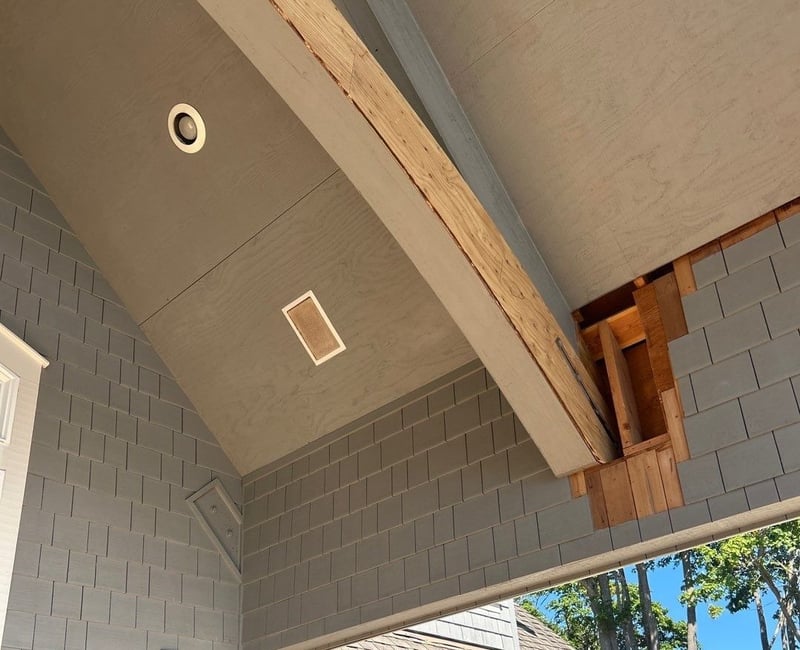
The problem is that his house is on the ocean, and the glulam beams that were installed outside were all rotten due to the exposure to moisture and the ocean air. When the beams were inspected closely, we found that they were cracked:
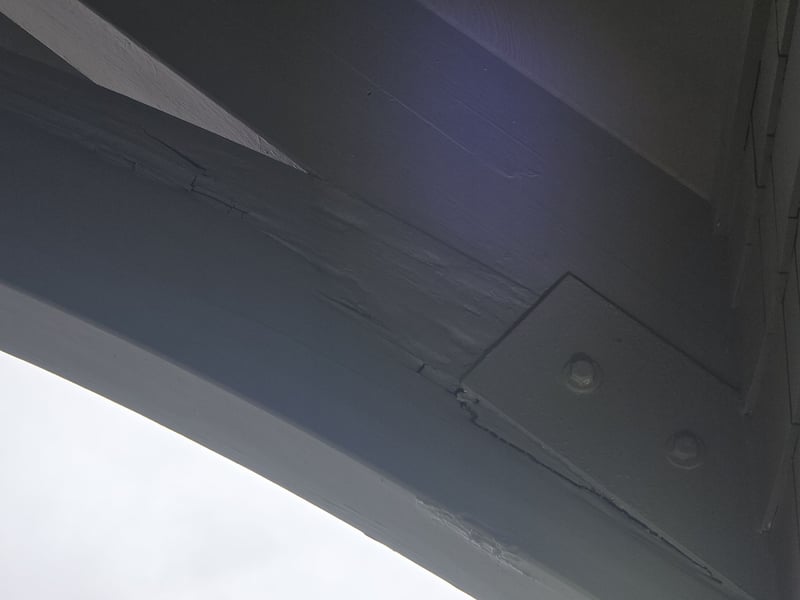
This is a clear sign that the glulam beam was so rotten that it was beginning to deteriorate and slowly fall apart. It was so saturated with water that it became a structural issue.
Sure enough, when our crew started to remove the beams, this is what it looked like:
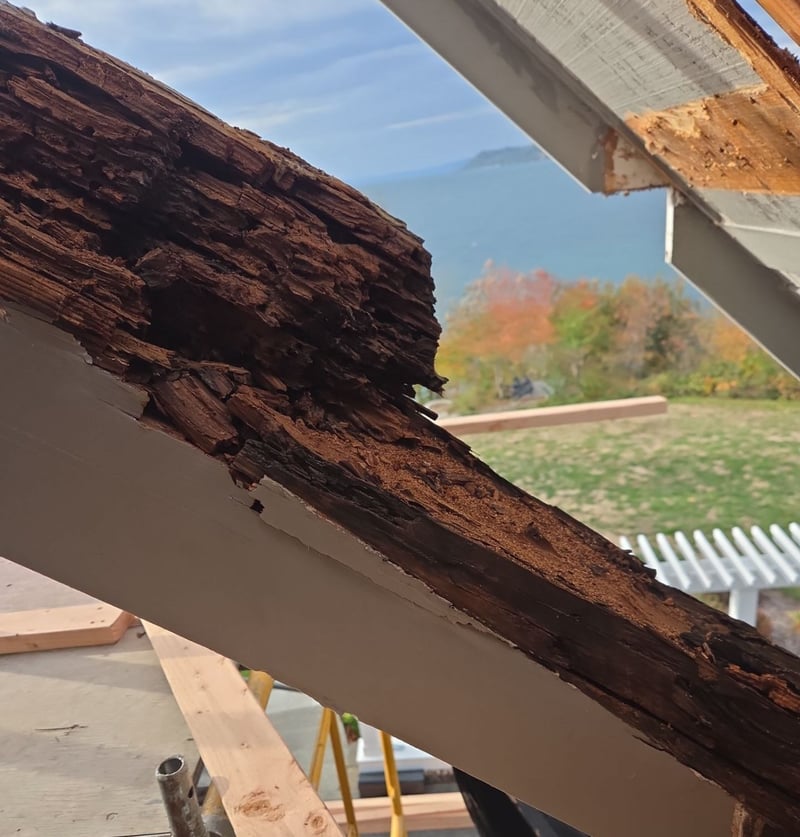
Sometimes the signs of water damage are minimal on the outside. There was some evidence of cracking, but that was it. However, the beam was completely rotten on the inside. These beams are thick, so it takes a lot of moisture to reach this level of rot.
These curved glulam beams are a specialty item. You need a massive steam press to put that whole thing together, and there are companies that do it, but it's expensive.
The problem is that it’s rare for companies that do pressure-treated curved glulam. And this customer really needed a pressure-treated beam, or he would just be dealing with this again.
What precautions should a roofer take to protect my property from damage while replacing my roof?
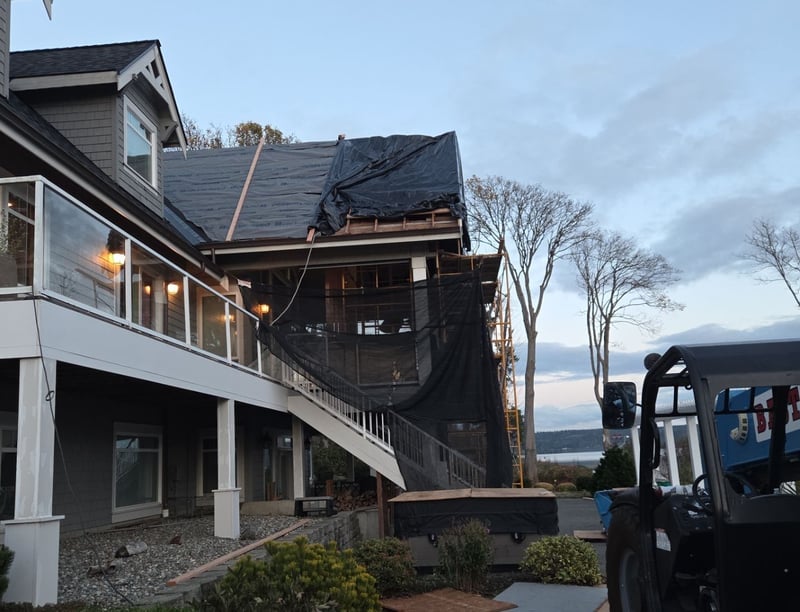
The first step in replacing the rotting glulam beams was making sure that the customer’s outdoor space below was protected. We laid down a lot of plywood and even built a protective layer over some of it.
We were being careful not to break:
-
The glass railing on the deck outside (we had to build this box around it to protect it)
- A hot tub
- Stairs leading down from the deck to the ground
- The copper gutters
Our crew had to be extra cautious on this job while working on the roof because there were so many things on the property that could potentially be damaged. At one point, our crew was tearing off the roof onto the forklift, over the hot tub, glass railing, and stairs.
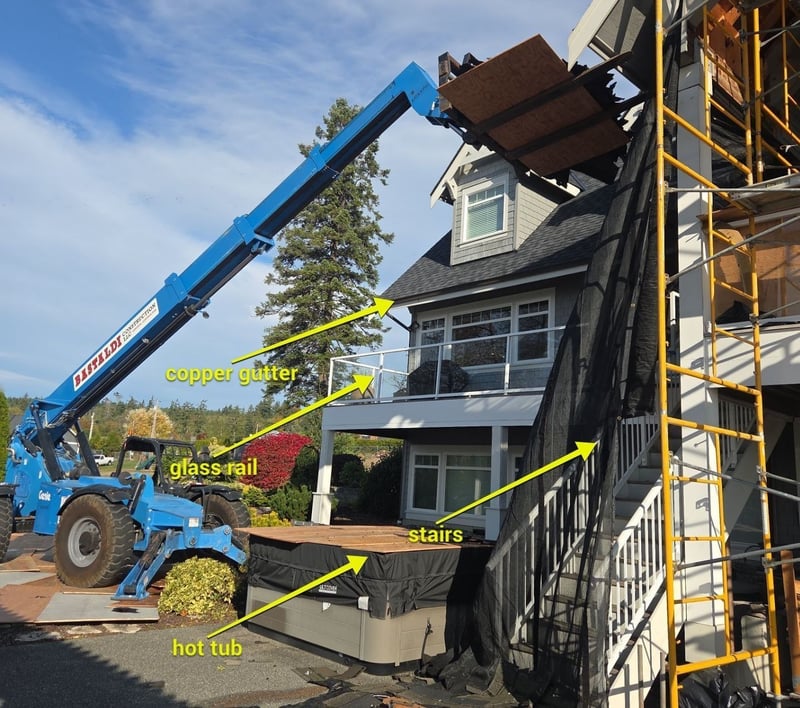
They also laid down plywood as a makeshift road over the customer’s grass so that his lawn wouldn’t get destroyed from driving over it with this 30,000-pound lift.
What’s the process for replacing rotten glulam beams?
Replacing glulam beams required a lot of extra labor beyond just replacing the roof. These beams are a crucial part of the framework and structural integrity of the roof, so the replacement must be careful and precise.
Here are the steps we followed to replace the curved glulam beams for our customer:
1. Prep work: The crew first placed plywood on the deck and hot tub, and built a protective casing over the glass railing to prevent accidental damage. They also laid plywood on the ground over the grass to protect it from damage as heavy machinery was driven over it.
2. Removing the siding and roof: To get the roof ready for the beam replacement, our crew had to pull part of the roof back and remove the shingle siding on the part of the roof that sat above the porch.
3. Replacing the beams: The porch had two curved beams that needed to be replaced. We set up scaffolding and support to access the beams and make sure that the roof remained structurally sound during replacement. We removed the old beams and then brought in the new pressure-treated glulam beams. Each one had 3 pieces total and had to be installed piece by piece.
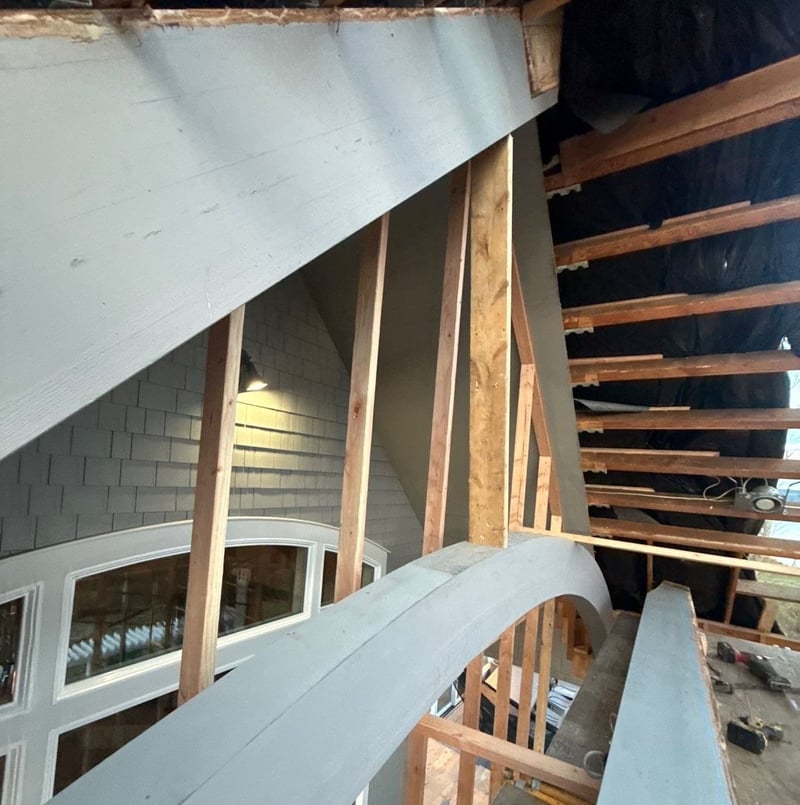
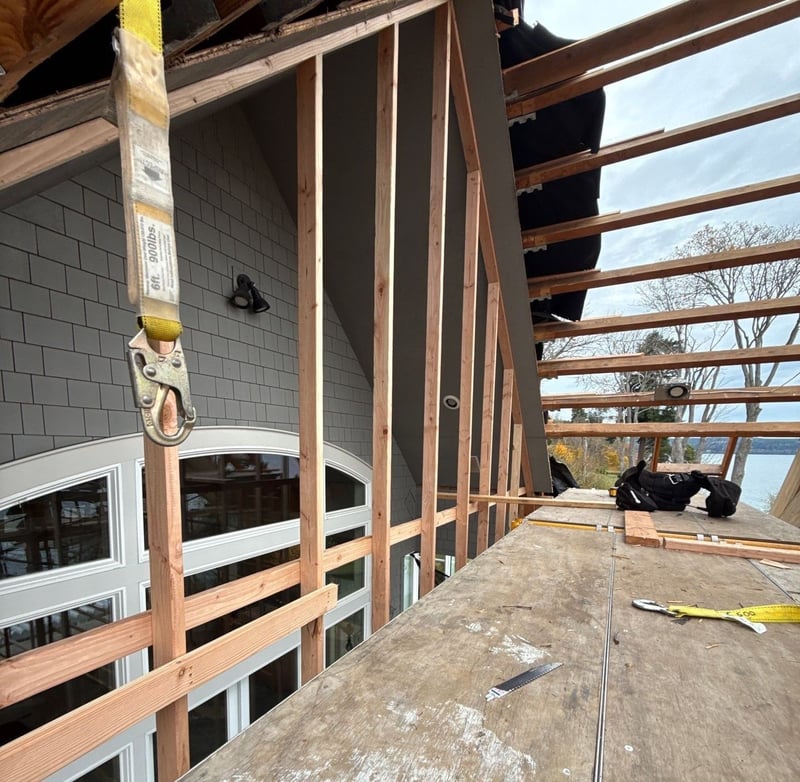
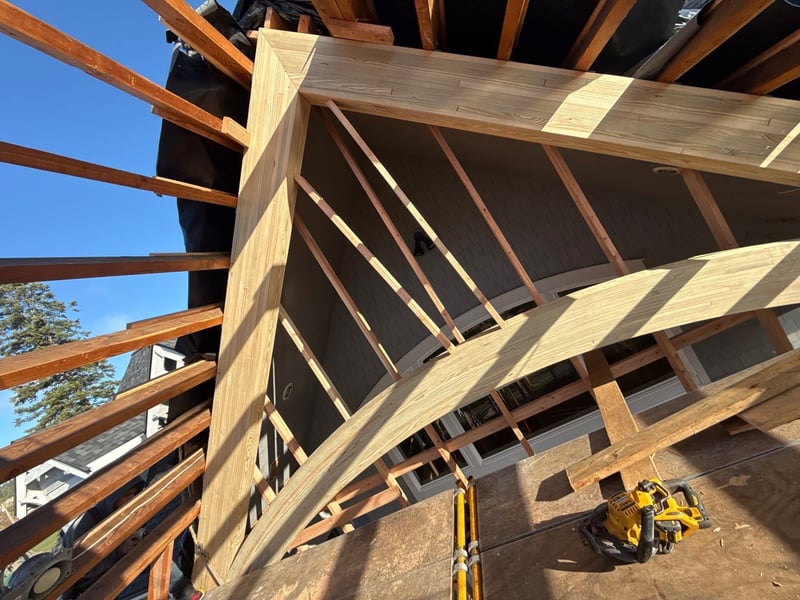
Between the heavy equipment, the scaffolding, the specialty labor, and the specialty beam, it was about $100,000 in extra rot repair.
The customer knew that he needed a roof, but he didn't know that the beams were rotten. He just thought he was getting a quote for a roof when he called us.
Obviously, he was disappointed to hear about all the extra work that his roof would need, but in the end, he was extremely pleased with the work that we did on his roof. He referred to our carpentry crew as “magicians” in his review, which we take as especially high praise since this customer is a retired engineer.
What other roof work can happen while replacing the roof and framing beams?
In addition to replacing the glulam beams, we also replaced this customer’s roof. He also wanted us to reuse his copper gutters and install gutter guards.
The roof replacement itself was relatively straightforward. We took off his old shingles and installed CertainTeed Northgate.
Our crew used special ladder supports to avoid leaning on the copper gutters, but in some places, the gutters were already kind of wavy. So our crew went up there and hammered it back into shape so that we could put a gutter guard on there for him.
Which Roof Beam Material Holds Up Best in Seattle: Glulam, Parallam, or Steel?
As you’ve seen in this case study, severe rot in a glulam beam can turn a “simple roof replacement” into a major structural repair project. While glulam beams are beautiful and cost-effective, they can become vulnerable when exposed to long-term moisture, especially in coastal environments where rain, humidity, and salt air accelerate deterioration.
That raises an important question for homeowners planning a rebuild or major repair: Is glulam really the best beam material for your home and environment?
Depending on your roof design, exposure to moisture, and long-term goals, other structural beam options like parallam or steel may offer better durability and performance.
Read our article “Which Roof Beam Material Is Best: Parallam vs. Glulam vs. Steel?” for a comparison of the strengths, weaknesses, costs, and moisture resistance of each beam material so you can better understand which option makes the most sense for your Seattle home.
Frequently Asked Questions About Replacing Rotten Glulam Beams
1. What causes glulam beams to rot on Seattle homes?
Glulam beams are highly vulnerable to moisture when exposed outdoors.
In Seattle, constant rain, humidity, and coastal air can allow water to soak into the beam over time, especially if the beam is not pressure-treated or properly protected.
2. How can I tell if my glulam beam has severe rot?
Common warning signs include:
- Cracks in the beam
- Dark or saturated wood
- Soft or spongy areas
- Sagging or structural movement
Many beams appear fine from a distance but show serious deterioration up close.
3. Are cracked glulam beams dangerous?
Yes. They can become a structural hazard.
Cracking often means the beam has absorbed significant moisture and weakened internally, reducing its ability to safely support the roof.
4. Why do exposed glulam beams fail faster?
Exposed beams experience direct contact with:
- Rain
- Humidity
- Salt air near the coast
- Temperature fluctuations
Unlike protected interior beams, outdoor glulam beams repeatedly absorb and release moisture, which accelerates deterioration.
5. Can glulam beams be repaired instead of replaced?
Minor cosmetic damage may be repairable, but severe rot usually requires full replacement.
Once the beam becomes structurally compromised, replacement is the safest long-term solution.
6. Why is replacing curved glulam beams so expensive?
Curved glulam beams are specialty structural components.
Replacement costs increase because of:
- Custom fabrication
- Heavy equipment requirements
- Extensive labor and scaffolding
- Structural support during replacement
These projects are much more complex than standard roof work.
7. How do contractors protect the property during major beam replacement?
Roofers often use:
- Plywood protection over decks and landscaping
- Protective barriers around glass railings and hot tubs
- Heavy equipment access roads made from plywood
This helps prevent accidental damage during construction.
8. Can hidden rot be discovered during a roof replacement?
Yes. This is very common.
Once roofing materials are removed, contractors may uncover:
- Rotting framing
- Saturated beams
- Structural damage hidden beneath the roof system
Many homeowners don’t realize the extent of the damage until demolition begins.
9. Is pressure-treated glulam better for exposed outdoor areas?
Yes.
Pressure-treated glulam is much more resistant to:
- Moisture absorption
- Rot
- Fungal growth
This makes it a better option for exposed patios and coastal environments.
10. Can replacing glulam beams happen at the same time as a roof replacement?
Yes, and it often makes sense to combine the projects.
Since the roof already needs to be opened up, replacing structural beams during the roof replacement process can:
- Reduce labor duplication
- Improve access
- Prevent future disruption
Topics:
