

TL;DR: Summary
Algae warranties (10–30 years) on copper-infused asphalt shingles help slow black streaks (mainly Gloeocapsa magma algae) in damp climates like Seattle, but they rarely provide meaningful protection. Coverage is often prorated after 10–15 years (partial shingle cost only, no labor), limited to one specific algae type, and voided by common issues like poor ventilation, debris, or non-specified installation.
Key Limitations:
- Doesn’t cover moss, other algae, or mold
- Manufacturers use “help prevent”, not a guarantee
- Payouts are minimal and at manufacturer's discretion
Key takeaway: Copper granules are better than standard shingles for slowing algae, but don’t rely on the warranty. Focus on proper ventilation, regular maintenance, and comparing full manufacturer warranties (CertainTeed, Owens Corning, GAF). Schedule a RoofSmart inspection for honest advice before choosing shingles.
Have you invested in asphalt shingles with an algae warranty only to notice black streaks forming anyway? Are you wondering if that 20- or 30-year algae warranty actually means your roof is protected or if it’s just marketing language?
While copper-infused granules can help slow algae growth, the warranty attached to them doesn’t always work the way homeowners expect. They sound great in theory, but have so many exclusions that it’s rare to get coverage.
At RoofSmart, our goal is to help customers make educated decisions about their roof. This means being honest about the pros and cons of each roofing material and its warranty protection.
In this article, we’ll explain why manufacturers add copper granules to shingles, what algae warranties really cover (and what they don’t), and whether upgrading to algae-resistant shingles is actually worth the investment for your home.
Why Algae Is a Big Problem on Asphalt Shingle Roofs in Seattle
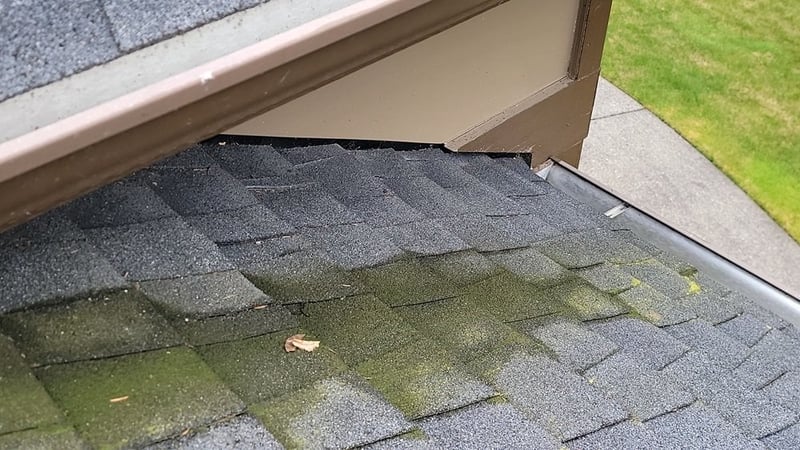
One common problem that asphalt shingles face is algae growth. This is a major issue in a damp, rainy area like Seattle because the constant moisture, combined with shade from all of the trees, creates the perfect environment for algae to grow on asphalt shingles.
If you live in Seattle or the surrounding area, there’s probably a good chance that your asphalt shingles will grow algae. In an effort to minimize this issue, top manufacturers offer certain styles of shingles with copper granules infused into them because copper is naturally resistant to algae growth. These shingles come with a special algae warranty.
The purpose of this is to try to make asphalt shingles as resistant as possible to algae growth, while still maintaining the same affordability. There are other materials that don’t grow algae, but they are more expensive.
Do copper granules actually prevent algae growth on my asphalt shingle roof?
Copper granules are marketed to help prevent algae. Keep in mind that the keyword that all of these manufacturers use to describe what the copper granules do is “help”.
For example, on the Owens Corning page about their algae resistance technology, help is the very first word (other top manufacturers also use similar language:
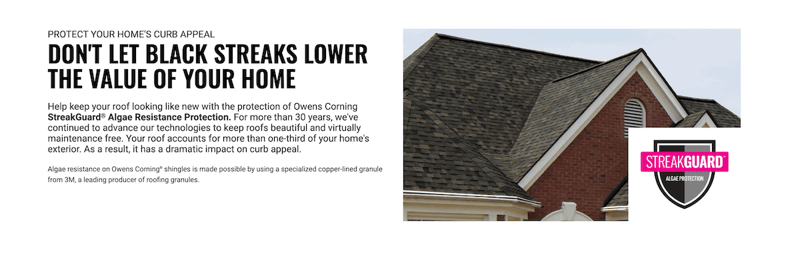
Since copper is really good at fending off algae, the granules can be helpful. But what does that really mean for your roof in Seattle’s rain?
It’s important to remember that there is no guarantee that you’ll never get any algae. They might hold off the algae for a while or minimize how much growth there is. But eventually your roof will get old and lose most of its granules, paving the way for algae growth.
Shingles infused with copper granules usually come with a specific algae warranty that protects your roof for a certain amount of time. This usually gives people assurance that they’re good to go if there is any algae growth, but the warranties aren’t that simple.
What kind of damage is covered on my roof with the algae warranty?
| Manufacturer / Feature | Algae Warranty Term | Prorated After | Covers Only Gloeocapsa Magma? | Labor Covered? | Common Exclusions | Best For Seattle? |
|---|---|---|---|---|---|---|
| CertainTeed (StreakFighter) | Up to 25–30 years (with AR) | 10 or 15 years | Yes | Early years only | Ventilation, debris, non-specified products | Good if full system used |
| Owens Corning (StreakGuard) | Up to 25 years (with AR + ridge) | 15 years | Yes | Early years only | Ventilation, debris, installation issues | Strong with Platinum system |
| GAF (StainGuard Plus) | Up to 25–30 years | Varies | Yes | Early years only | Similar exclusions | Competitive with full system |
No matter which manufacturer you’re considering using, the algae protection warranty is where things really start to get tricky. Many asphalt shingle manufacturers that sell shingles with copper-infused granules will offer an algae protection warranty ranging from 10 to 30 years.
The quality of coverage you get depends on the manufacturer and the level of warranty you choose. Standard warranties will probably only last 10 to 15 years, whereas standard warranties will last longer.
However, no matter how long your algae warranty lasts, what really matters is what’s covered during that time. Many warranties are very particular about what’s covered and have prorated periods that lessen coverage. Not to mention that it’s up to the manufacturer to determine if you’re even eligible for coverage.
For example, here’s an overview of what the CertainTeed and Owens Corning algae protection warranties offer:
- Coverage for one type of algae: Both manufacturers specifically state that they only cover one specific algae strain: Gloeocapsa magma. They don’t cover moss or other algae types.
- Prorated Compensation: With the Owens Corning algae warranty, coverage is prorated after 15 years. With the CertainTeed warranty, coverage is prorated after 10 or 15 years (depending on your warranty level). At this point, you’ll only get partial compensation for the cost to repair (which usually means clean) the algae-stained shingles. For both manufacturers, labor and extra costs are no longer included during the prorated period.
- Minimal Value: The compensation is for the shingle cost to the installer and is often too low to be worth the paperwork. This is especially true during the prorated periods when the amount of coverage is reduced based on how many years you’ve had the shingles.
- Strict Exclusions: The warranty can be voided if algae is caused by inadequate ventilation or debris. You have to make sure your roof is constantly cleaned off. Owens Corning also requires that you install one product (from a particular list), otherwise your warranty level will be lowered.
Having 20 to 30 years of warranty coverage for algae damage sounds nice, but when you read the fine print, it becomes clear that it’s very hard to get coverage, and even if you do, it probably won’t be that much.
Copper granules offer a benefit, but the warranty is more of a marketing tool than an assurance of coverage. These warranties make it very clear that all coverage decisions are up to the discretion of the manufacturer and that you have to meet very specific requirements to even be eligible.
Are shingles with copper granules ever worth it?
Having copper granules is better than having shingles without them because the copper does help to protect your roof from algae. But, don't count on the warranty to provide coverage because it is very rare to get quality coverage.
Having copper granules doesn't guarantee that there will be no algae growing on your roof. In fact, there probably will be algae eventually. Just make sure to read the warranty carefully and be prepared to pay for any maintenance out of pocket.
If you're somebody who cares about this, it's probably because your roof has grown algae before, so you know how easily it can happen. If that’s you, then it might be worth it to upgrade to shingles with copper granules next time you need a new roof.
Which shingle manufacturer offers the strongest premium warranty protection?
By now, you’ve seen that algae-resistant shingles with copper granules can help slow down black streaks, but the algae warranty itself often comes with fine print, prorated coverage, and strict exclusions that limit what you’ll actually receive.
The reality is that not all warranties are structured the same. Coverage length, non-prorated periods, labor inclusion, and eligibility requirements can vary significantly depending on the manufacturer and the warranty level you choose.
If you’re investing in a new roof and want real protection (not just reassuring marketing language), the next step is comparing the major brands side by side.
Read our article “CertainTeed vs GAF vs Owens Corning: Premium Warranty Comparison” to understand how these top manufacturers differ.
This will help you choose a roof system that gives you the strongest overall protection, not just against algae, but against the full range of roofing risks.
Want to see every roofing topic explained simply? Visit our Roofing Resource Learning Center.
Trying to decide which shingles are actually worth the investment? See the difference between 30-year and 50-year shingles here: https://getroofsmart.com/blog/thirty-versus-fifty-year-shingle
Have you found mold in your attic and wondered if your poor attic ventilation was to blame? Discover how crucial ventilation is for preventing attic mold: https://getroofsmart.com/blog/can-proper-ventilation-prevent-mold-in-attic
Frequently Asked Questions About Algae Warranties for Asphalt Shingles
Q: What does an algae warranty actually cover on asphalt shingles?
A: Most cover only one type of blue-green algae (Gloeocapsa magma) causing black streaks. They do not cover moss, other algae types, mold, or general discoloration from debris or poor maintenance.
Q: Why do algae warranties have so many exclusions?
A: Manufacturers limit liability for issues like inadequate ventilation, debris buildup, improper installation, or failure to use their specified ridge/hip shingles. These exclusions make successful claims rare in real-world Seattle conditions.
Q: Are copper granules in shingles worth it?
A: Yes. They help slow algae growth compared to standard shingles, especially in humid PNW climates. However, they don’t eliminate growth entirely, and the attached warranty often provides limited real protection.
Q: Which shingle brand has the best algae warranty?
A: CertainTeed (StreakFighter), Owens Corning (StreakGuard), and GAF (StainGuard Plus) all offer 25-year options with proper system installation. Compare full warranties (including labor and proration) rather than algae coverage alone. See our CertainTeed vs GAF vs Owens Corning guide.
Q: How can I prevent algae on my asphalt shingle roof without relying on the warranty?
A: Ensure excellent attic ventilation, schedule professional cleanings/inspections every 1–2 years, keep trees trimmed to reduce shade/debris, and consider upgrading to metal roofing for better long-term resistance in shaded or rainy areas.
Q: Does an algae warranty cover cleaning or replacement of my roof?
A: In the early non-prorated years, some warranties may cover cleaning or limited replacement for specific algae (Gloeocapsa magma). After proration (usually 10–15 years), coverage drops to partial shingle material cost only. No labor or full replacement.
Topics:
