

TL;DR: Summary
This article teaches you how to distinguish between a genuine chimney leak (usually a roof or flashing issue) and condensation, which is a common problem in Seattle during winter.
- Condensation typically occurs in winter/cold snaps, can happen without rain, and results in dark, saturated brick because modern fireplace inserts with liners prevent the chimney from heating up and drying out.
- True leaks happen year-round, are worse in heavy rain, and are localized near the flashing.
- A key diagnostic test is the tarp test: if covering the chimney stops the leak, it's condensation; if the leak continues, it's likely a flashing or roof issue.
- The recommended long-term solutions for preventing condensation and leaks are to install a chimney chase or to regularly apply a water sealant.
Are you noticing water around your chimney during the winter and worrying that your brand-new roof might already be failing? Does it feel confusing trying to figure out whether you’re dealing with a roof leak, a chimney leak, or something less obvious (like condensation)?
Chimney leaks in Seattle are one of the most misunderstood roofing problems, especially in the winter. Many homeowners assume the flashing or roof installation is to blame, only to spend time and money fixing the wrong issue.
At RoofSmart, we’ve done hundreds of repairs on and around brick chimneys. While we aren’t masons, we can still help by determining if your problem is the chimney or the roof and whether you’re dealing with a leak or condensation.
In this article, we’ll break down how to tell the difference between a true chimney leak and condensation, what causes each one in Seattle’s climate, and how to fix the problem correctly the first time.
Is Your Chimney Leaking or Just Experiencing Condensation?
|
Indicator |
Chimney Leak (Roof/Flashing Issue) |
Chimney Condensation |
Why It Matters |
|
Time of Year |
Happens year-round |
Mostly in winter or cold snaps |
Seasonal issues point to condensation |
|
Weather Dependency |
Worse during rain |
Can happen without rain |
Condensation forms from temperature differences |
|
Brick Appearance |
May look normal or slightly damp |
Dark, saturated, consistently wet brick |
Saturation indicates moisture absorption |
|
Interior Symptoms |
Localized leaks near flashing |
Widespread dampness or drip marks |
Condensation spreads through materials |
|
Moisture Under Shingles |
Often present |
Typically dry |
Helps rule out roof failure |
|
Chimney Condition |
Flashing or seal failure |
Cracks + cold chimney structure |
Structure vs system issue |
|
Response to Tarp Test |
Leak continues |
Leak stops when chimney is covered |
Key diagnostic test |
What causes moisture to build in my chimney in Seattle?
What's happening is that people don't have open fireplaces anymore. They put in fireplace inserts that, by code, must have their own chimney liner. This makes it so that the chimney itself isn’t getting hot anymore, which allows for condensation to build up and saturate the brick.
Here’s an example of a saturated chimney with condensation issues:
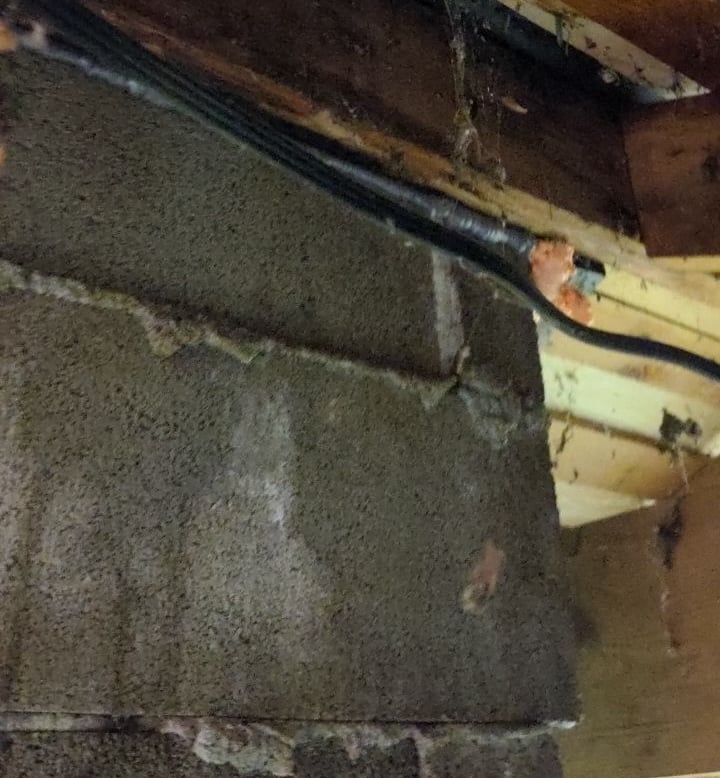
The darker spots (which cover most of it) are where moisture has built up. You can also see a few spots where water was running down.
In a typical open fireplace, the fire burning sends heat up through the chimney flue and warms up the entire chimney.
Around here, it tends to be pretty wet in the winter. So this brick is just getting saturated, and it's totally sopping wet all winter long. But the heat from the chimney dries everything up and pushes all the vapor out.
However, if you have a fireplace insert with a chimney liner, this pushes the fumes all the way out the chimney without heating it up.
If you have an oil furnace or an old 80% efficient gas furnace, then that can still heat the chimney up and dry it out. But a high-efficiency furnace with a PVC liner in the chimney will not heat up the chimney at all.
In the winter, when your chimney is already moist and venting warm air when it gets hit with a cold snap, that’s when you can get condensation building up on the outside and saturating the brick. This can happen outside on top of the roof as well as inside your attic.
Moisture can build up in the flue as well, causing moss, mold, and other organic growth to thrive:
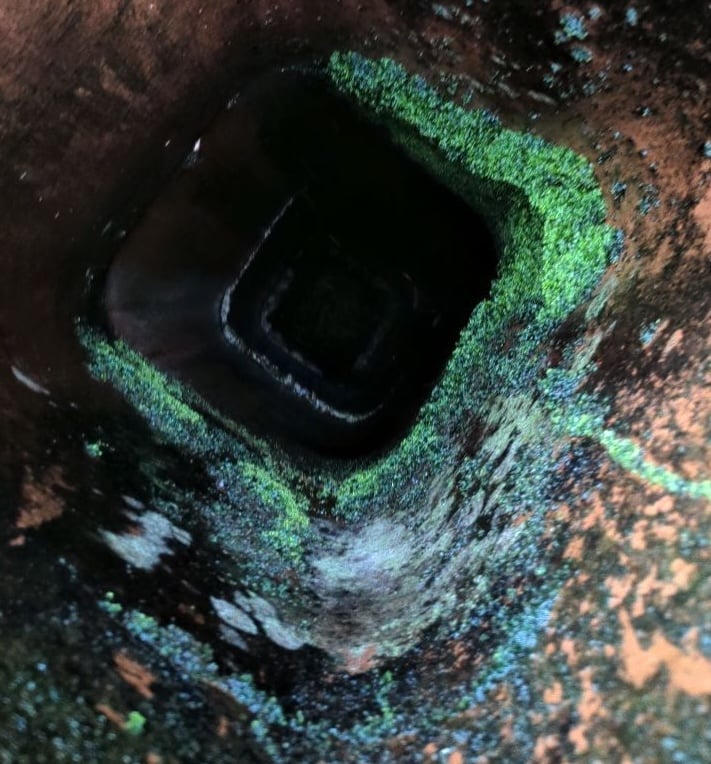
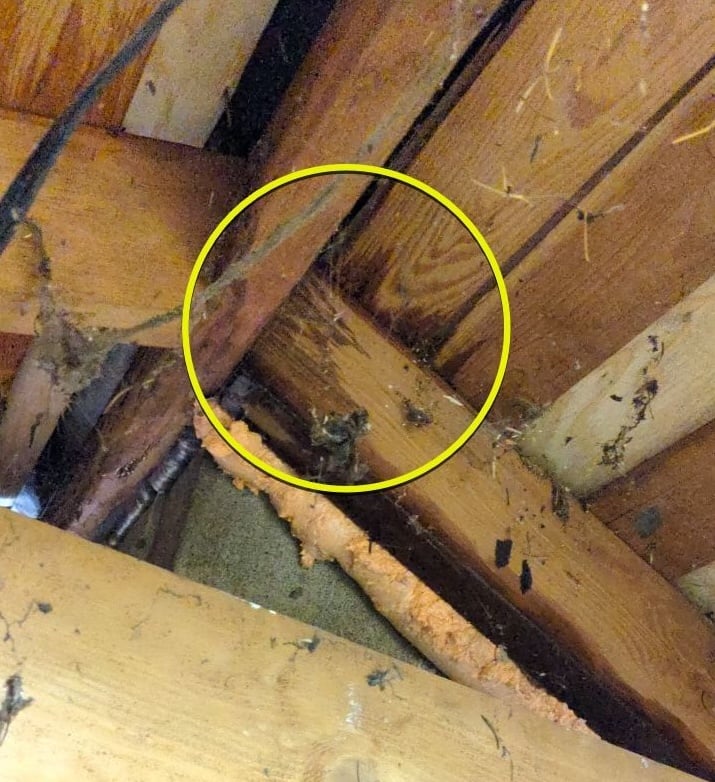
Your attic is cold, but your living space is warm, so this is another place where condensation can form. Even more condensation will form on any surface that’s touching the chimney (like the roof). That’s why we put ice and water shield underneath the chimney flashing, because it helps pull the moisture away.
Here’s an example of a saturated chimney causing wood in the attic to soak up condensation:
Is my chimney really leaking, or is it condensation?
You can tell that your roof is leaking if it’s a consistent problem no matter the time of year or what kind of weather we’re having. On the other hand, condensation really only happens in the winter.
But you can't really tell until you take a look at it, because there could be an error in the flashing or something that blew off.
How did we determine that a chimney had condensation issues, not a roof leak?
After replacing the roof on a customer’s house, they called a month later to say that their chimney was still leaking. We went to investigate and found that all the evidence pointed to issues with the chimney:
-
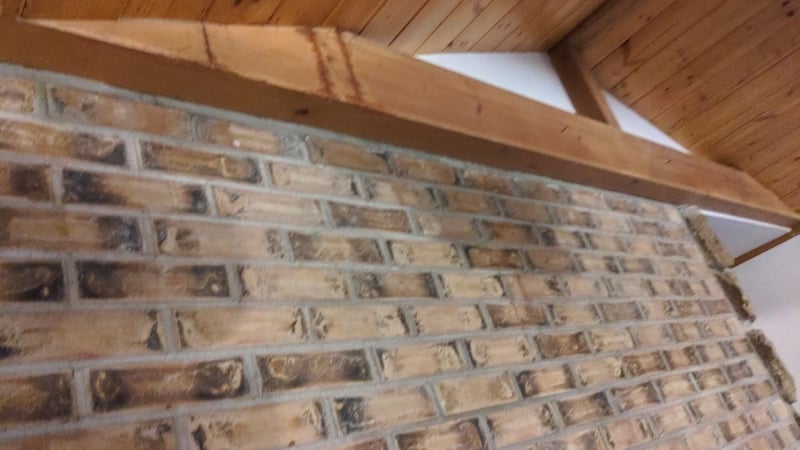
Saturated brick: In addition to what you’ve already seen of the saturated chimney on top of the roof and in the attic, it also looked like that inside the home. In some places, it looks like it has drip marks, which indicate a leak, but that much moisture in the brick is really only an indicator of condensation that has soaked into the bricks on the chimney.
-
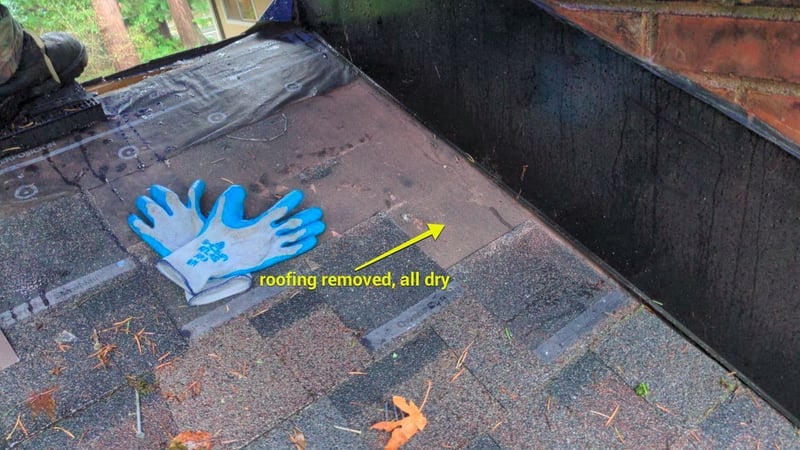
No moisture underneath the shingles by the chimney: We also check underneath the shingles right by the chimney to see if there is any moisture. We didn’t find any, which means that our flashing job was holding up and the moisture was coming from elsewhere. This rules out a roof leak.
-
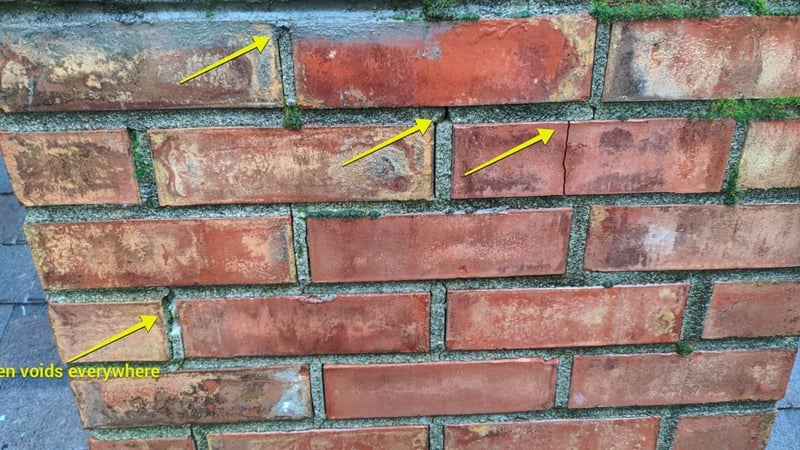
The chimney had cracks all over: The chimney also had cracks all over the sides and on the top, so any leaking that might’ve been happening would be within the chimney, not in the roof.
-
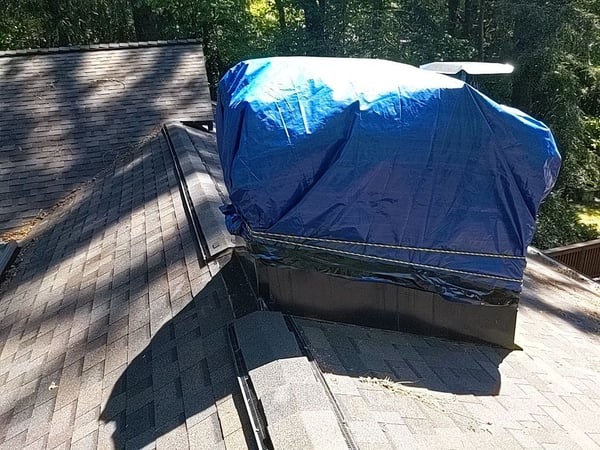
The chimney didn’t leak when covered with a tarp: The final test to rule out a roof leak at the chimney flashing is to cover the chimney with a tarp. So, we wrapped the chimney in a tarp but left the flashing exposed. The leaking stopped after we did this, which showed that the problem was the chimney.
How do I prevent leaks and condensation on my chimney during Seattle winters?
You can either build a chimney chase or you can seal it every year with water sealant.
If you want to keep the look of your chimney and don’t mind the maintenance, you can choose the sealant. Or, if you want a maintenance-free option, you can get a chimney chase installed to protect your chimney from moisture.
Here’s a before and after of the leaking brick chimney at our customer's house that we covered with a chimney chase:
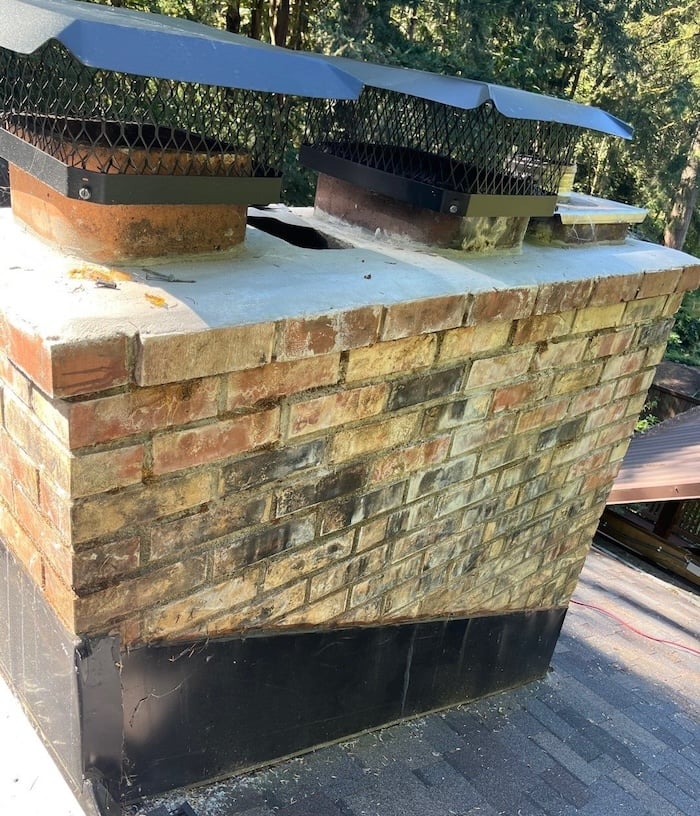
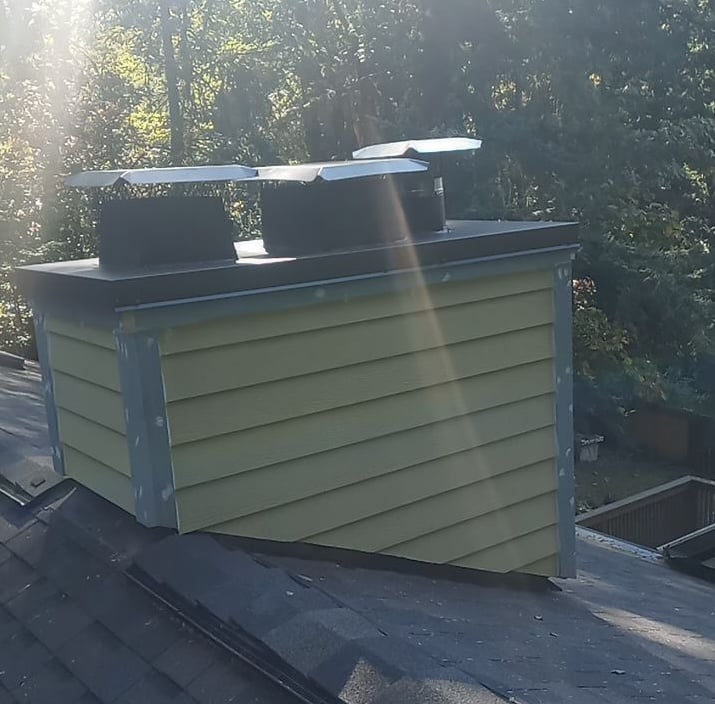
After determining that the chimney was leaking and having condensation issues, we determined that sealing the chimney was the best solution to prevent condensation and leaks.
If you don’t use your chimney at all, you can also remove it, but this can get pretty expensive.
How can you tell if your brick chimney is actually leaking or just holding moisture?
By now, you’ve seen that not all “chimney leaks” are actually caused by your roof. In many Seattle homes, what looks like a leak is often condensation saturating the brick, especially during cold, wet winters when the chimney isn’t being warmed from the inside.
That’s what makes this issue so tricky. The symptoms can look identical (drips, damp spots, even visible water damage), but the root cause (and the solution) can be completely different. If you assume it’s a roof problem when it’s really a chimney issue, you risk spending money on repairs that won’t fix anything.
Before you move forward with any repairs, it’s critical to properly diagnose the source of the moisture.
Read our article “How Do I Know If My Brick Chimney Is Leaking?” to get a walk-through of the key signs of a true chimney leak versus other moisture issues so you can confidently identify the problem and choose the right solution.

Frequently Asked Questions About Chimney Condensation and Leaks
1. Why does my chimney leak only in the winter?
If your chimney only leaks in winter, it’s most likely caused by condensation, not a roof leak.
In cold weather, warm air from inside your home meets the cold chimney exterior, causing moisture to form and soak into the brick. This is especially common in Seattle’s damp climate.
2. How can I tell if my chimney leak is condensation or a roof issue?
You can usually tell by timing and patterns:
- Condensation happens mainly in winter and during cold snaps
- Roof leaks occur year-round and during heavy rain
If the problem disappears in warmer months, condensation is the more likely cause.
3. Why do modern fireplace inserts cause chimney moisture problems?
Modern fireplace inserts use chimney liners that vent heat directly without warming the chimney structure.
Because the chimney stays cold:
- Moisture doesn’t dry out
- Condensation builds up inside the brick
- Water can soak into surrounding materials
Older fireplaces kept chimneys warm, which prevented this issue.
4. Can chimney condensation cause damage to my home?
Yes, over time it can cause:
- Saturated brick and cracking
- Mold or moss growth inside the flue
- Moisture damage in the attic or framing
If left untreated, it can lead to rot and costly repairs.
5. What’s the best way to prevent chimney leaks and condensation?
There are two main solutions:
- Apply a water sealant (requires ongoing maintenance)
- Install a chimney chase (long-term, low-maintenance solution)
Both options help prevent moisture from soaking into the chimney and causing damage.
Topics:
