

TL;DR: Summary
In short, no. You cannot have "too much" ventilation volume, but you can have an unbalanced system. In Seattle’s damp climate, the goal isn't just air volume; it's controlled airflow.
- The Myth: More vents = more problems.
- The Reality: Problems only occur if you have too much exhaust without enough intake, which creates a "vacuum" that pulls conditioned air (and moisture) from your living space into the attic.
The Fix: Always aim for a 1:1 balance between intake (soffit/eave vents) and exhaust (ridge/box vents).
Have you been told your attic has “too much ventilation” and now you’re worried that it might actually be causing problems? Are you concerned that making the wrong change (like removing vents or adding the wrong type) could lead to mold, heat buildup, or even early roof failure?
Many Seattle homeowners hear conflicting advice from different contractors, some saying you have too much ventilation, others saying you don’t have enough. The truth is, it’s not just about how much ventilation you have; it’s about whether your system is balanced and working properly.
At RoofSmart, we are one of the few roofing companies that actually pays attention to attic ventilation. Every year, we inspect hundreds of roofs that have poor ventilation and help our customers find an attic ventilation system that works for them.
In this article, we’ll break down what “too much ventilation” really means, when it’s actually a problem (and when it’s not), and how to make sure your attic is set up to properly control moisture, temperature, and airflow in Seattle’s climate.
What “Too Much Ventilation” Really Means in an Attic
|
Scenario |
What It Means |
Is It Good or Bad? |
Impact on Your Attic |
What to Do |
|
Balanced Ventilation (Meets Minimum) |
Equal intake and exhaust at required levels |
Good |
Proper airflow, moisture control |
Maintain system |
|
Balanced Ventilation (Exceeds Minimum) |
Equal intake and exhaust above required levels |
Good |
Improved airflow and drying क्षमता |
Safe to keep or increase |
|
Unbalanced Ventilation (Too Much Exhaust) |
More exhaust than intake |
Bad |
Backflow, poor air circulation |
Add intake ventilation |
|
Unbalanced Ventilation (Too Much Intake) |
More intake than exhaust |
Bad |
Stale air, reduced airflow |
Add exhaust ventilation |
|
Mixed Vent Types (Same Category) |
Multiple exhaust or intake types combined |
Bad |
“Short-circuiting” airflow |
Stick to one type per category |
|
Insufficient Ventilation |
Not enough total ventilation |
Bad |
Heat buildup, moisture, mold |
Increase total ventilation |
What does it mean for an attic to be over-ventilated?
When someone describes an attic, it can mean one of two things: either there’s an imbalance of ventilation or the attic exceeds minimum ventilation requirements (one is bad and one is good).
Let’s break down the difference between the two options:
1. Imbalance of ventilation: This is not a good thing. It means that you have too much of one kind of attic ventilation (exhaust or intake). When you have significantly more of one kind of ventilation, it messes up the ventilation system. For example, on this roof, our customer told us that other roofers recommended that he remove his static vents and put in ridge vent.
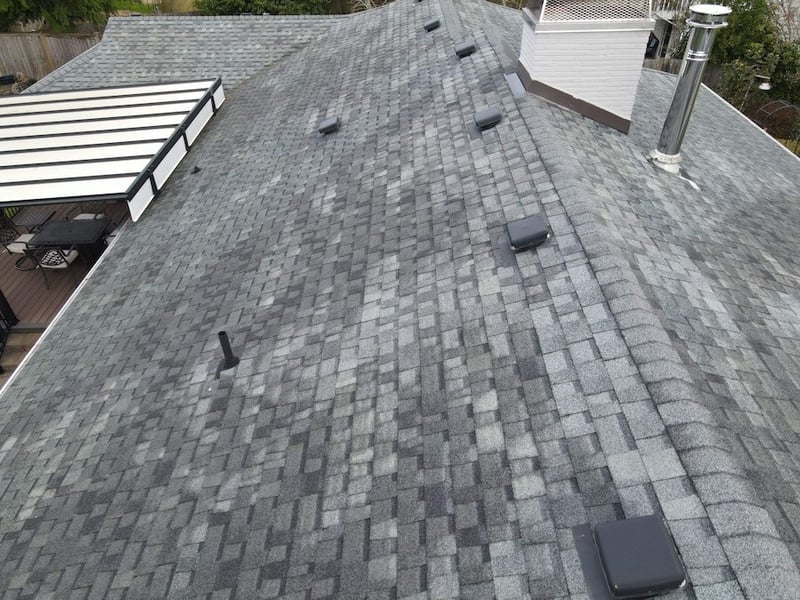
What that's going to do is it's going to get them to something like 1,400 square inches of exhaust, but there's only 320 square inches of intake. So it will be dramatically over-ventilated on the exhaust side, which will create a back-flow effect because there's no intake. Air will try to flow in from the exhaust vents to compensate for the lack of air coming from the intake vents. This means that no air is circulating through the attic.
2. Attic exceeds minimum ventilation requirements: This means that your attic ventilation is balanced between exhaust and intake, but you’ve exceeded the bare minimum amount of ventilation needed for the total size of your attic. There’s nothing wrong with doing this. For example, in the Seattle area, you’re required to have 1 square foot of ventilation for every 150 feet of attic space at a minimum. You might choose to double this amount. This is fine because it means you have great airflow throughout your attic. Lots of people seem to think that you cannot exceed what’s written in the building code, but it’s completely fine as long as your ventilation remains balanced.
Is having too much attic ventilation a myth?
If you exceed the bare minimum amount of attic ventilation required by Seattle’s local regulations (1 square foot of ventilation for every 150 feet of attic space), some roofers say that you have “too much” ventilation and try to correct it. This is unnecessary.
As long as you make sure you’re keeping a good balance between how much intake and exhaust ventilation you have and only use one kind of vent for each ventilation type, then you’ll be fine.
If you want to add more ventilation, only add more of what you already have (1 type of exhaust ventilation and 1 type of intake ventilation). Don’t add a second type of exhaust or intake ventilation because this will cause the same short-circuiting problem as having super-unbalanced ventilation.
Are there negative consequences of having too much attic ventilation?
There aren’t any negative consequences of exceeding the minimum amount of ventilation needed in your attic. However, if you have way too much of one kind of ventilation, then it can cause problems in your attic and on your roof:
-
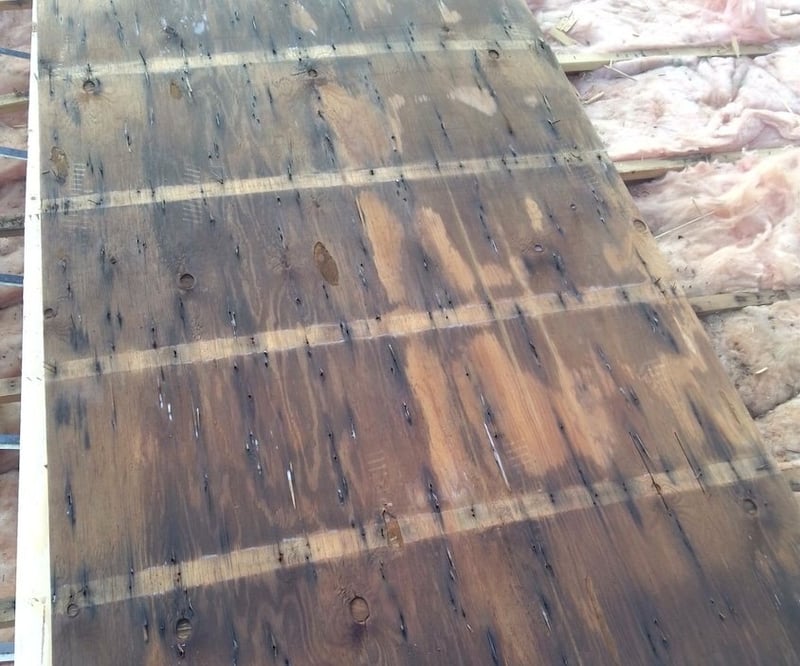
Moisture build-up: Without proper ventilation, your attic will not be able to dry itself out. This means that the moisture in the air from humidity and the daily activities that you do in your house (like cooking or showering) that travels up to the attic will just stay there. Or, if your roof has a leak, your attic won’t be able to help dry it out at all. This is what your roof decking might look like:
-
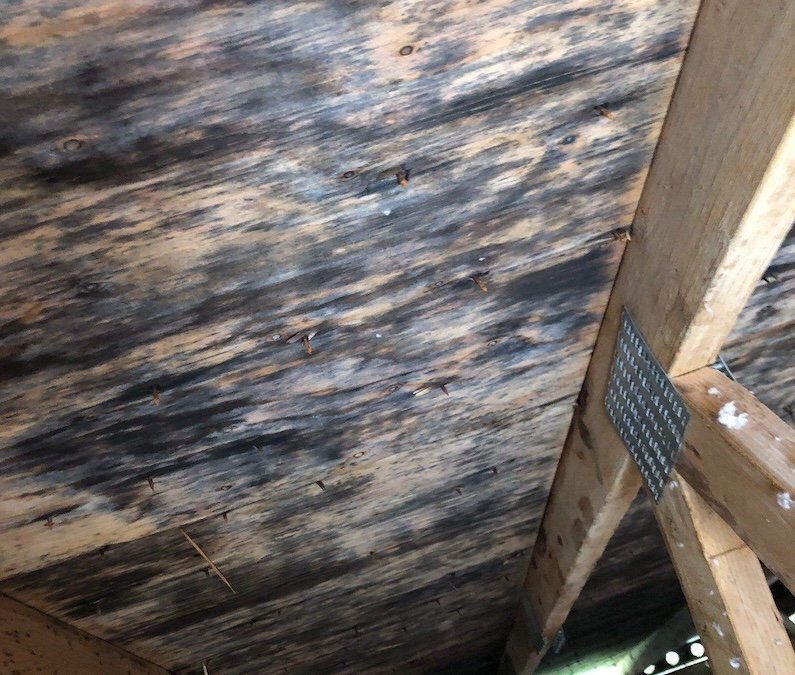
Mold: Mold thrives in dark, damp environments. Attics that don’t dry out properly and have rotting wood create ideal conditions for mold to grow. Having rotting wood or a leak in your attic doesn’t automatically guarantee mold, but it is an extremely common issue in the Seattle area. We see it all the time.
-
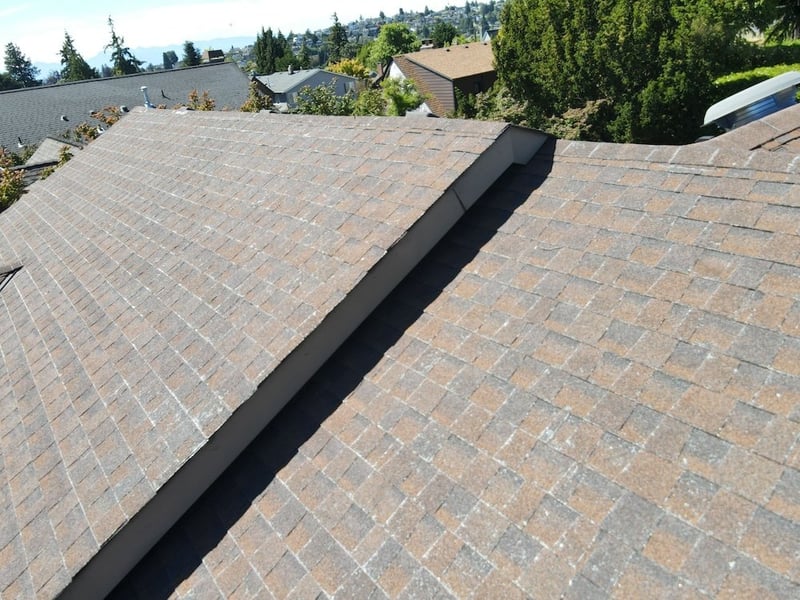
Excessive heat: Something that Seattle homeowners don’t always consider is that not having proper air flow in your attic will make it really hot in there. Attic temperature is mostly associated with insulation, but ventilation also plays a pretty important role in cooling down your attic and regulating the temperature. If your attic is constantly hot and reaches really high temperatures in the summer, it can cook your roof. This dries out your shingles and causes them to fail prematurely by losing too many granules and cracking.
How do I make sure the ventilation in my attic is balanced?
To make sure that your attic has the right amount of ventilation, you have to do the math to calculate how much ventilation you need based on the size of your attic (or you can consult with a professional to have them do this for you).
Here’s how to calculate the amount of attic ventilation you need:
1.) Calculate the total square feet of your attic by multiplying the length by the width.
2.) Convert that number to square inches. You can convert the total square feet of your attic to square inches by multiplying it by 144 (because that is 12 X 12 square inches per square foot).
3.) Divide the number you get by 150 to know how much ventilation you need.
So, for example, let’s say your attic floor space is 50 ft long and 20 ft wide. Multiply those numbers and get 1,000 square feet. Then, you would multiply 1,000 square feet by 144 and divide the total by 150. The number you get is how many square inches of ventilation you need. In this example, it is 960 square inches.
We recommend splitting that number in half so that you have equal amounts of intake and exhaust ventilation. This will guarantee that you have a good balance of ventilation in your attic.
Remember that in this example, 960 square inches is the minimum amount of ventilation that your attic needs. You can increase this number if you want more airflow capacity in your attic. Just make sure that you keep a balance between intake and exhaust.
What are the actual attic ventilation code requirements in Seattle?
As you’ve seen, the idea of having “too much ventilation” is often misunderstood. The real issue is making sure you have the balance right between intake and exhaust and avoiding mistakes like mixing vent types or creating airflow imbalances.
But this brings up an important question: how much ventilation do you actually need in the first place?
Understanding the baseline requirements is key. Seattle’s building codes provide clear guidelines for minimum ventilation, but they don’t always explain how to design a system that truly works in the real world, especially in a damp, moisture-heavy climate.
Read next: What Are Seattle’s Attic Ventilation Code Requirements?
https://getroofsmart.com/blog/what-are-seattles-attic-ventilation-code-requirements
This article breaks down the exact code requirements and how to apply them properly so you can make sure your attic ventilation is not just compliant—but effective.
Frequently Asked Questions About Attic Ventilation
Still unsure if your attic has too much ventilation or not enough? These common questions will help clarify how attic ventilation really works.
1. Can an attic have too much ventilation?
No, an attic cannot have too much ventilation if the system is balanced.
Problems only occur when there is too much intake or too much exhaust compared to the other. Balanced ventilation, even above minimum requirements, actually improves airflow and moisture control.
2. How do I know if my attic is over-ventilated?
Strictly speaking, you cannot have too much ventilation. However, you can have an unbalanced system. If you notice signs like moisture buildup or unusually high heating bills, it likely means you have too much exhaust and not enough intake. This creates a "vacuum" that pulls warm, conditioned air from your home into the attic.
3. What happens if attic ventilation is unbalanced?
Unbalanced ventilation can cause:
- Poor air circulation
- Moisture buildup
- Mold growth
- Excess heat in the attic
For example, too much exhaust without enough intake can create a backflow effect, preventing proper ventilation.
4. What is the proper attic ventilation ratio?
The standard guideline is:
- 1 square foot of ventilation per 150 square feet of attic space
It’s recommended (but not technically required) that this ventilation should be split evenly between:
- 50% intake
- 50% exhaust
5. Is it bad to exceed minimum attic ventilation requirements?
No, exceeding the minimum is not a problem.
As long as intake and exhaust ventilation remain balanced and consistent in type, adding more ventilation can improve airflow and help your attic dry out more efficiently.
6. What causes attic ventilation problems in Seattle homes?
Common causes include:
- Too much exhaust ventilation (like adding ridge vents without intake)
- Mixing different vent types
- Not enough total ventilation
- Moisture from daily activities (cooking, showering)
Seattle’s damp climate makes proper ventilation especially important to prevent mold and wood rot.
7. Can I mix different types of roof vents?
No. Mixing different types of exhaust vents—such as combining a ridge vent with a powered fan or box vents—is a common mistake. Because air follows the path of least resistance, one vent may begin to act as an intake for the other, short-circuiting the system and leaving the rest of your attic stagnant.
8. What is the 1:150 rule for attic ventilation?
The 1:150 rule is the standard building code requirement. It states that for every 150 square feet of attic floor space, you need 1 square foot of "Net Free Area" (NFA) for ventilation. For a truly high-performing system, this should be split 50/50 between intake (soffit vents) and exhaust (ridge or box vents).
9. Why is attic ventilation so important in Seattle?
In the Pacific Northwest, our high humidity levels make moisture control your attic's biggest challenge. Without proper airflow, damp air gets trapped against the roof deck, leading to mold growth and "roof rot." Proper ventilation keeps the roof deck dry and extends the life of your shingles.
10. Will more vents make my house colder in the winter?
No. Your attic is supposed to be cold in the winter—ideally the same temperature as the outside air. Your home’s insulation, not the ventilation, is what keeps your living space warm. If your house feels drafty, the issue is likely a gap in your attic floor’s air seal, not your roof vents.
Topics:
