

TL;DR: Summary
Converting a cedar shake roof to asphalt shingles is a "lifestyle" change for your home, not just a material swap. While asphalt is more affordable long-term, the initial conversion requires structural upgrades that standard roof replacements don't.
- The Hidden Foundation: You can’t just nail shingles to your current roof. Cedar usually sits on spaced "skip sheathing." To support asphalt, your roofer must install a solid plywood deck first.
- The Ventilation Shift: Cedar "breathes" naturally. Asphalt shingles seal your roof tight, meaning your roofer must redesign your attic’s airflow (intake and exhaust) to prevent shingles from "cooking" and to keep your warranty valid.
- The "Mess" Factor: Tearing off old cedar is significantly dirtier than asphalt. Expect fine wood dust and old nails to fall into your attic; covering your storage items is a must.
- Cost Paradox: While asphalt shingles are cheaper than cedar, the conversion labor (decking + ventilation) makes this project more expensive than a simple shingle-to-shingle replacement.
Are you worried that switching from a cedar shake roof to asphalt shingles might come with hidden costs or unexpected complications? Are you concerned that your roofer might skip critical steps when converting from cedar shake to shingles?
Converting from cedar shake to asphalt shingles is more complex than most homeowners realize. What looks like a straightforward material swap actually requires major structural updates, like replacing the roof decking and redesigning ventilation.
At RoofSmart, we repair and replace hundreds of roofs every year. A common request from our customers is to convert their cedar shake roof to asphalt shingles. Cedar shake roofs are fairly common in the Seattle area, but many homeowners want to switch to a roof that’s cheaper and easier to maintain.
In this article, we’ll break down what changes when you convert from cedar shake to asphalt shingles, the challenges you should expect, and how these updates impact total roof cost and overall performance so you can plan your project the right way from the start.
Cedar Shake vs Asphalt Shingle Roof Requirements
|
Category |
Cedar Shake Roof |
Asphalt Shingle Roof |
What Changes During Conversion |
Why It Matters |
|
Roof Decking |
Skip sheathing (spaced boards) |
Solid plywood or OSB |
Full deck replacement required |
Shingles need a continuous surface |
|
Ventilation |
Minimal / built-in airflow |
Requires intake + exhaust ventilation |
New ventilation system installed |
Prevents mold and moisture buildup |
|
Underlayment System |
Looser, breathable setup |
Sealed, continuous barrier |
Full underlayment redesign |
Changes how moisture and airflow is managed |
|
Installation Style |
Allows airflow through gaps |
Fully sealed roofing system |
More precise installation required |
Less forgiving if done incorrectly |
|
Tear-Off Process |
Brittle wood shakes |
Standard shingle removal |
Messier, more debris created |
Cleanup and disposal costs increase |
|
Maintenance Needs |
Treated wood can resist moss |
Prone to moss growth over time |
Maintenance still required |
Environment still impacts roof |
|
Code Requirements |
Different roof decking requirements |
Strict modern IRC requirements |
Must meet updated building codes |
Ensures safety and compliance |
What updates do you have to make to the roof when switching from cedar shake to shingles or metal?
Although you can’t tell by looking at the outside of the roof, cedar shakes have completely different installation instructions and requirements than asphalt shingles. This means that it takes extra work to prepare the roof when switching from cedar shake to asphalt shingles (or pretty much any other kind of roofing).
Here are 4 examples of factors you will need to consider when getting rid of your cedar shake roof and replacing it with asphalt shingles:
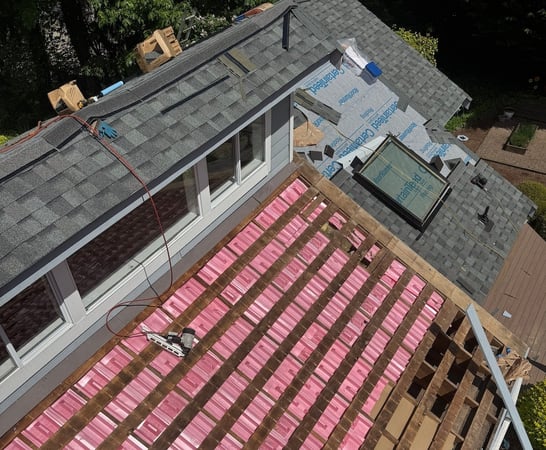
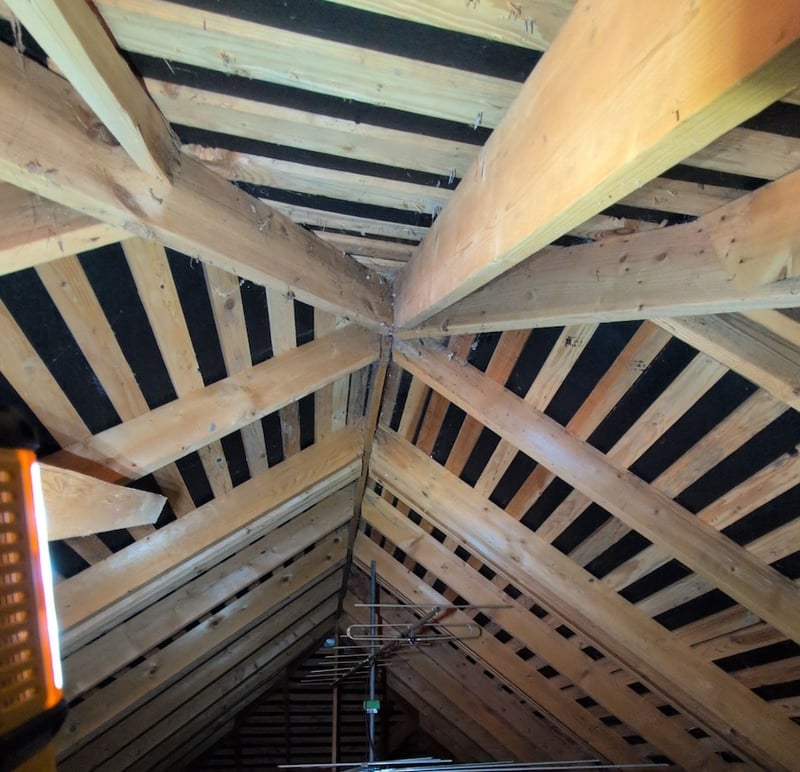
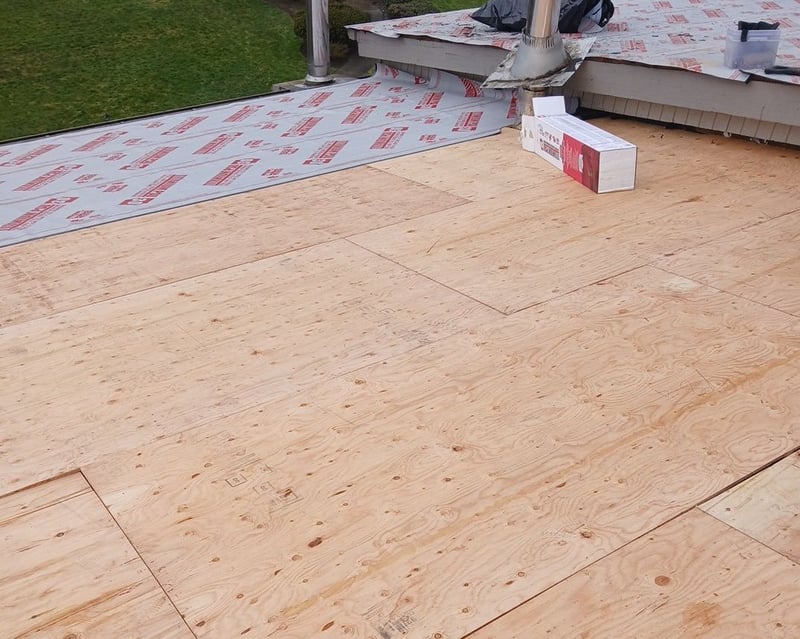
1. Roof Deck Replacement: To convert from cedar shake to asphalt shingles, you must first change the roof decking. Cedar shake uses a type of roof decking called skip sheathing, whereas asphalt shingles require either OSB or plywood sheathing. Skip sheathing is basically just a bunch of 1x4s spaced out so that every other row is an empty gap. Plywood sheathing covers the entire roof. The IRC (building code used in the Seattle area) is very strict about what kind of sheathing you can have based on the roofing material you choose.
2. Updating Attic Ventilation: Cedar shake roofs don’t have the traditional attic ventilation that asphalt shingles need, so you have to make sure that you add in ventilation when converting from cedar shake to asphalt shingles. Cedar shake has underlayment over the skip sheathing, but the underlayment has gaps in it. Wood shakes are designed to sweat out moisture, and this setup helps with that. It also means that you don’t really need to worry about attic ventilation. However, most other roofs have OSB or plywood sheathing, and the roof is sealed in, preventing the airflow you’d get in a cedar shake roof. A lot of times, roofers who don’t pay attention to proper ventilation only install ridge vents when converting from cedar shake to asphalt shingles. As a result, the attic cannot breathe properly and grows a bunch of mold. You have to remember to install intake and exhaust vents when installing asphalt shingles.
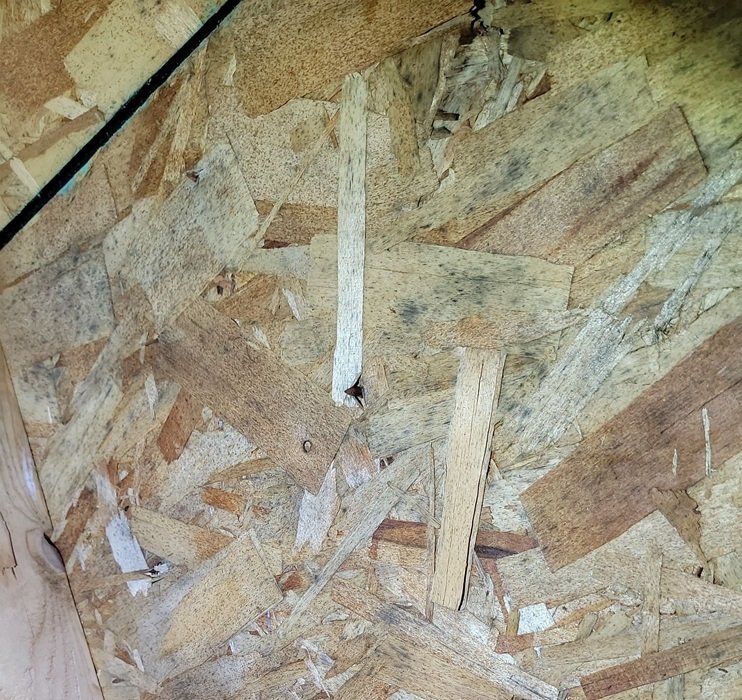
3. Potential for Debris and Mess: Removing an old cedar shake roof creates a lot of little wood chips. For the most part, your roofer will control the mess, but it’s likely that some of them might fall into your attic or garage because of the open skip sheathing on the roof. And the older the roof is, the more of a crumbled mess it becomes.
4. Don’t Forget Maintenance and Upkeep: Remember that even though you’re changing the type of roof material you have, you’re not changing the environment that you live in. So, in the Seattle area, both cedar shake and asphalt shingles are subject to moss growth and need regular maintenance to clean off debris (like leaves and pine needles). Premium cedar shake can be chemically treated to prevent moss growth and help it last longer, but there’s not much you can do for asphalt shingles. Eventually, they will grow moss.
How much does it cost to replace the roof decking and add attic ventilation to my roof?
Every project is different, so there isn’t one set cost for replacing roof decking and adding attic ventilation. However, each of these extra steps will likely cost several thousand dollars or more.
Here’s the breakdown of what contributes to the cost:
Roof decking
- Tearing off and disposing of the old roof deck
- Material costs for OSB or plywood
- Installing the new roof decking material
Attic ventilation:
- Material costs for intake and exhaust vents
- Installing intake and exhaust vents
There is a lot of room for variation in price depending on factors such as:
- The size of your roof
- How accessible your roof is
- Is your ventilation situation standard or complicated?
A lot of attics just need intake and exhaust vents (after doing the math to make sure it’s the right amount). But more complicated situations might arise if you have an old, drafty house, cathedral ceilings, or a roof with a lot of hips and ridges.
The more complicated or time-consuming the project becomes, the more expensive it will be.
Note: Failing to account for proper ventilation according to current building codes will typically VOID any material warranties on day 1.
Do these same challenges apply when replacing your cedar shake roof with other roof materials?
Pretty much every other type of roofing material requires plywood or OSB sheathing and traditional attic ventilation, so most roofs will face these same challenges when converting from cedar shake.
This includes:
- Metal (standing seam and stamped)
- Euroshield
- Synthetic shingles (imitation shake and tile)
- Some kinds of tile
The other material that sometimes uses skip sheathing is tile, but pretty much everything else needs OSB or plywood to meet code requirements. And even tile roofs typically need plywood now to meet earthquake codes.
Note: It's worth noting that an asphalt system (shingles + plywood) is actually heavier than a dry cedar shake roof. Ensure your roofer confirms your rafters can handle the load (though most standard homes are fine).
Flat roofing is a completely different scenario that requires a different sheathing and insulation setup.
Which asphalt shingle brand should you choose for your Seattle roof?
By now, it’s clear that converting from cedar shake to asphalt shingles requires major updates to your roof structure, ventilation, and overall system to make sure everything performs the way it should.
Once those critical upgrades are handled, the next big decision is choosing the right shingles.
And this is where many homeowners get stuck. With brands like Owens Corning, GAF, and CertainTeed all offering similar-looking products, it can be hard to tell what (if anything) actually sets them apart and whether one is truly better for your roof.
Read our article “Owens Corning vs GAF vs CertainTeed Standard Shingles: Which Is Right for My Seattle Home?” to learn the real differences between these top manufacturers so you can confidently choose the right shingles for your newly updated roof system.
Frequently Asked Questions About Converting a Cedar Shake Roof to Asphalt Shingles
1. Why can’t you install asphalt shingles over cedar shake?
Because cedar shake uses skip sheathing, which has gaps between boards.
Asphalt shingles require a solid roof deck (plywood or OSB) to properly support the nails and prevent movement. Installing shingles over skip sheathing would lead to failure.
2. Do I need to replace the roof decking when switching from cedar shake?
Yes, in most cases.
Switching to asphalt shingles requires:
- Removing the old shake and skip sheathing
- Installing new plywood or OSB decking
This is one of the biggest cost drivers in a roof conversion.
3. Why do I need to add attic ventilation when converting my roof?
Cedar shake roofs naturally allow airflow, but asphalt shingles do not.
When you switch systems, you must install:
- Intake vents (soffits)
- Exhaust vents (ridge or roof vents)
Without proper ventilation, your attic can develop mold, moisture, and heat buildup.
4. How much more expensive is it to convert from cedar shake to shingles?
It typically costs at least several thousand dollars more than a standard roof replacement.
Additional costs come from:
- New roof decking
- Ventilation installation
- More complex tear-off and cleanup
The total cost depends on roof size and complexity.
5. Are these challenges the same for other roofing materials?
Yes, for most materials.
Roof types like:
- Metal
- Synthetic shingles
- Euroshield
Also require solid decking and proper ventilation, so they face similar challenges when replacing cedar shake.
Topics:
