

TL;DR: Summary
Many Seattle homeowners blame new gutter guards (like MasterShield) when leaks appear near gutters or valleys. In this real case, the leak was not caused by the gutter guards, the gutters were flowing properly with minimal debris.
The actual cause was a small gap in the roof flashing (poorly cut with no underlayment) that allowed heavy rain to splash behind it, causing hidden rot in the soffit, trusses, and deck over time.
Quick Diagnosis Guide:
- Gutter guard / overflow issue: Gutters are clogged or overflowing even with guards; water backs up under shingles.
- Roof issue (flashing): Only one specific valley or corner leaks; gutters flow normally; visible gaps or missing underlayment.
Key takeaway: Don’t assume gutter guards are at fault. Get a close-up professional inspection with the gutter guard temporarily removed. Proper flashing is critical in Seattle’s heavy rain. Schedule a RoofSmart inspection for accurate diagnosis and warranty guidance.
Did you discover a roof leak and immediately start wondering whether your roofer or your gutter guard installer is to blame? Are you stuck between two companies pointing fingers at each other, all while your soffit, decking, or framing continues to rot?
You’re not alone. When a leak shows up near a gutter corner or valley, it’s not always obvious whether the problem is the roof itself or something added later, like gutter guards. And unfortunately, that uncertainty can delay repairs and make the damage worse.
At RoofSmart, we prioritize thoroughly inspecting your roof and the surrounding areas when we come out to do an estimate. That way, we know what problems we’re working with and how to fix them.
Real Seattle Case Study: Roof Leak Diagnosis (Not Caused by Gutter Guards)
In this case study, we’ll walk through a real Seattle-area home where a leak appeared years after a roof replacement. You’ll see how we determined whether the gutter guards or the roof flashing were responsible and learn the key signs that help you pinpoint the true source of a leak before costly repairs spiral out of control.
Why Homeowners Blame Gutter Guards for Roof Leaks in Seattle
A homeowner in the Greater Seattle area bought a house about 6 to 8 years ago that had just gotten a roof replacement, and new MasterShield gutter guards were installed. Everything looked good and was performing well for a while.
This is typically what you would expect after getting a new roof installed, right? You assume that your new roof was done right and that there will be nothing to worry about until the roof gets really old.
However, in January 2026, the homeowner noticed that the soffit in one corner looked really wet. He pulled off some of the wood to check and found that the trusses and roof deck were not just wet but rotting due to a leak somewhere in that corner:
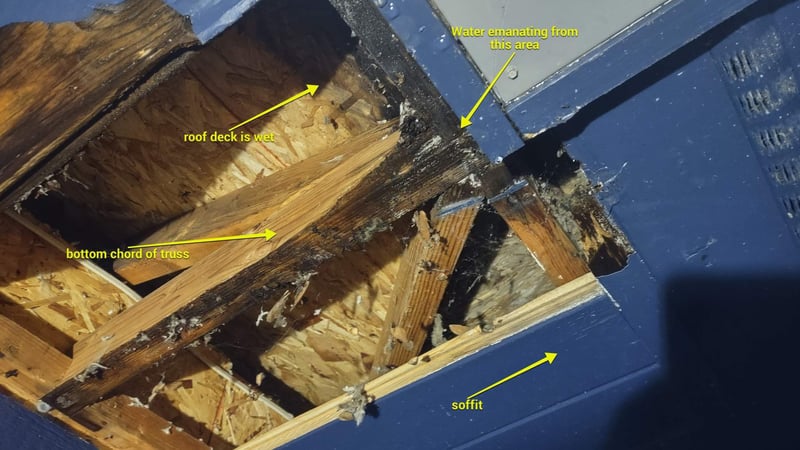
Where exactly was this customer's roof leak coming from?
This leak is located under the inside gutter corner below a major roof valley. While it was clear that there was a pretty bad leak somewhere, the homeowner wasn’t sure what caused the problem (the roof or the gutter guards), so he called out the roofer who installed the roof to do an inspection.
The roofer took a look at the leak point and said that the issue was the gutter guards. The homeowner then decided to call up MasterShield (the gutter guard manufacturer), who directed him to us at RoofSmart. I personally went out to inspect the problem.
I first removed the corner piece of the gutter guard to get a better look inside:
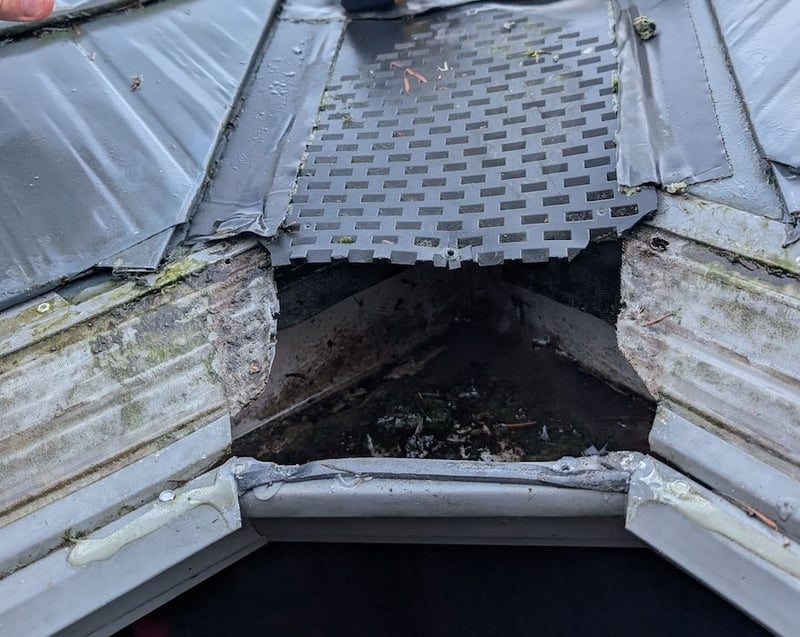
This is the corner of the roof where the leak was found (underneath this is where the soffit was removed and the rotting wood was discovered).
How to Tell If a Gutter Guard Is Causing Your Roof Leak
You can see water and some grime collecting in the gutter, but it’s nowhere near a level that would cause it to overflow.
A clogged gutter would be filled to the brim with debris and gunk, preventing water from flowing through it. The only option is for water and debris to keep building up until the water flows over the sides of the gutter.
This gutter has a bit of water and debris, but it can still easily flow to the downspouts and drain properly. If the gutter were overflowing, the homeowner would be able to see water flowing over the edges of the gutter.
What did RoofSmart find when we inspected the flashing for a leak?
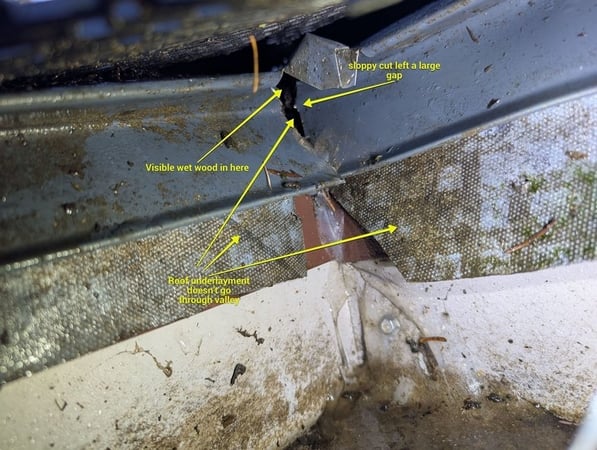
I looked further back into this corner and found a small gap in the flashing at the corner of the roof:
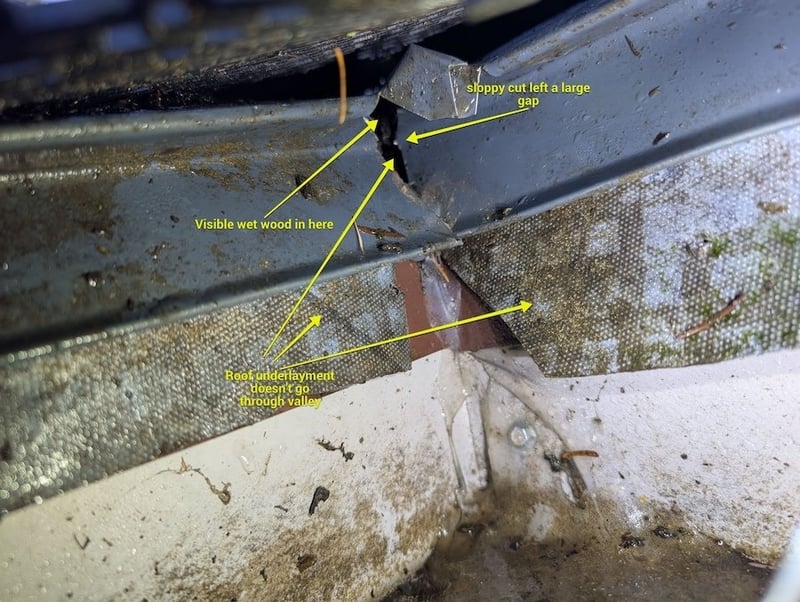
You can see that the flashing was cut poorly, resulting in a gap. There isn’t even any underlayment covering it. And, if you look closely, you can see wet wood peeking through the gap in the flashing.
Was this leak caused by a roof installation problem or a gutter guard problem?
This gap in the flashing was clearly the source of the leak, but was this a problem in the roof or in the gutter?
Here’s how I determined it was the roof:
- Only one valley (out of 6 in total) had a flashing gap
- Other valleys had gutter guards but no leaks
- The flashing was cut improperly in this corner
- No underlayment covered the gap (aka there was no extra protection from leaks)
- There was visible wet wood through the gap
Because there are six valleys on this roof, but this was the only one with a gap in the flashing and a leak, it means that this is not a consistent failure caused by the gutter guards. In fact, the roof and the gutter guards were installed separately, so the gutter guards had no impact on the roof.
This gap was the result of sloppy workmanship that only happened in this specific corner of the roof.
Based on this evidence, I determined that the problem is actually a roof leak, caused by the gap in the flashing.
Why would a small gap in flashing cause major rot?
The gap in the flashing would leak when a big surge of water flooded into the gutter (which happens often in Seattle when we get heavy rain) and start to fill up the gutter.
This causes a lot of splashing, which can easily splash into the gap because it’s not protected from water in any way. This happened so consistently that it caused significant amounts of rotting wood inside the roof in that corner.
This is common with roof leaks. Since they are often hidden in the roof, it can take a long time for them to be discovered. By then, the damage and rot are already pretty extensive.
This roof was most likely leaking since it was installed, so it had plenty of time to slowly get wet, begin rotting, and build up enough water that it started seeping out and became an obvious leak.
This homeowner didn’t notice the leak for years because it took such a long time to reveal itself. It happens all the time in Seattle-area homes.
How do you fix roof damage caused by improper flashing?
The rotting wood will have to be removed and replaced, and the flashing will need to be replaced so that it can be sealed correctly. Even though the flashing gap is so small, this is a much bigger fix because it has been leaking.
This is going to require removing a section of the roof to get to the rotting wood inside. So, in addition to the internal work, you’ll also need to replace that section of the roof once everything else is done.
What to Do If You’re Not Sure Who’s Responsible (Roof vs Gutter Guard Installer)
| Symptom | Likely Cause | Evidence / Next Step |
|---|---|---|
| Gutters overflowing or clogged | Gutter guard / maintenance | Clean or inspect guards; check flow |
| Leak only in one valley/corner | Roof flashing gap | Remove guard section; check for gaps/underlayment |
| Water backing up under shingles | Overflow from guards/gutters | Look for debris on top of guards |
| Hidden rot with normal gutter flow | Improper roof flashing | Professional close-up inspection |
| Multiple valleys leaking | Widespread roof issue | Full roof evaluation |
If your roof has a leak or some sort of damage and you aren’t sure what to do, here are some steps you can take:
- If the roof is under workmanship warranty → Call original roofer. You can file a workmanship warranty claim right away or wait until they inspect the roof.
- If the warranty has expired → Hire a new roofer to do an inspection.
- If the gutter guard is installed separately → Call the gutter guard installer or file a claim with their warranty.
In this case, I advised that the homeowner call up his original roofer and file a claim using his workmanship warranty, if possible. This is an installation mistake that should be corrected by the roofer for free.
Of course, we can fix this issue for him, but if he can get it done for free, then he should pursue that option first. Some roofers allow their workmanship warranties for new roofs to be transferred, but it also depends on how long the warranty lasts.
How much does it cost to repair a roof leak in Seattle?
As you saw in this case study, not every leak is caused by clogged gutters or faulty gutter guards. Sometimes, the issue comes down to something as small as a poorly cut piece of flashing, and that tiny mistake can quietly cause years of hidden rot.
The frustrating part is that leaks like this often go unnoticed until the damage becomes visible. By then, you’re not just fixing a small gap, you’re replacing rotted decking, repairing framing, and reinstalling sections of roofing.
If you’re currently dealing with a leak (or suspect one), your next question is probably about cost. And the answer depends entirely on what’s happening beneath the surface.
Read our article “Roof Leak in Seattle? Here’s What It Will Really Cost to Fix It” to get a breakdown of what factors affect repair pricing, from minor flashing fixes to major structural repairs, so you know what to expect before scheduling the work.
Frequently Asked Questions About Roof Leaks and Gutter Guards in Seattle
Q: Can gutter guards cause roof leaks?
Gutter guards themselves rarely cause leaks if properly installed. However, they are often blamed unfairly. In many cases, the real issue is improper roof flashing or missing underlayment that allows water to splash behind the gutter during heavy rain.
Q: How do I know if my roof leak is from gutter guards or the roof?
Check if gutters are overflowing (suggests guard/clog issue) or flowing normally (points to roof flashing gap). Remove a section of the guard for inspection. Look for gaps in flashing or wet wood visible through small openings.
Q: What causes hidden rot behind gutters in Seattle?
A small flashing gap combined with heavy rain surges allows water to enter and sit against wood framing. This can cause significant rot over years even without obvious interior leaks.
Q: Should I remove my gutter guards if I have a roof leak?
Not necessarily. Have a roofer inspect with the guard temporarily removed first. In the case study, the guards were not the problem and could stay.
Q: Who is responsible for fixing a roof leak near newly installed gutter guards?
If your roof is still under warranty, contact the original roofer. If gutter guards were installed separately, contact that installer. A thorough third-party inspection helps determine responsibility.
Q: How much does it cost to repair a roof leak caused by flashing in Seattle?
Costs vary widely depending on damage extent (from a few thousand for localized flashing/wood repair up to tens of thousands if rot has spread). Early detection saves money.
Topics:
