

TL;DR: Summary
Tile roofs in Seattle are durable but require ongoing maintenance due to heavy rain, debris, and moisture.
The most common repairs include clogged valleys that trap water, broken or missing tiles, cracked flashing, edge rot, and leaks caused by water overwhelming the underlayment, especially with porous concrete tiles.
Many issues happen beneath the tiles, meaning your roof can look fine from the ground while hidden damage develops underneath.
If problems are isolated, repairs may be enough. But widespread leaks, aging materials, or structural damage often mean it’s more cost-effective to replace the roof.
Do you have a tile roof on your Seattle home and worry about what happens when it starts leaking or deteriorating? Feeling stressed about your tiles or flashing failing, even when the roof still looks good from the ground?
Tile roofs can last a long time and look beautiful, but they aren’t maintenance-free. Tiles can break, grow moss, absorb water, or even fall out. Not to mention all the ways that a tile roof can leak and cause internal roof damage.
At RoofSmart, we’ve repaired and replaced tile roofs all over the Greater Seattle area. In the 15 years that we’ve been in business, we have encountered and fixed just about every kind of issue that a tile roof can have.
In this article, we’ll walk through the most common repairs tile roofs need in the Seattle area, from clogged valleys and broken tiles to failing flashing and edge rot. By the end, you’ll know what problems to watch for and how to decide whether a repair is enough or if it’s time to start thinking about replacing your roof.
What Typically Goes Wrong On a Tile Roof (and How It’s Fixed)
| Problem | What It Looks Like | What Causes It | Risk Level | Typical Repair |
|---|---|---|---|---|
| Valley Clogs & Failure | Debris buildup, water pooling | Leaves and pine needles blocking drainage | ❌ Very High | Full valley clean-out and rebuild |
| Water Saturation (Concrete Tile) | Damp tiles, leaks underneath | Porous tile absorbing water | ⚠️ High | Improve drainage and underlayment |
| Broken or Missing Tiles | Cracked, slipped, or missing pieces | Impact damage or aging | ⚠️ High | Replace individual tiles |
| Cracked or Failed Flashing | Leaks around pipes or penetrations | Aging lead flashing | ❌ Very High | Replace flashing components |
| Edge Rot (Barge/Fascia Boards) | Rotting wood at roof edges | Water intrusion under tile edges | ❌ Very High | Replace wood and improve edge detail |
| Underlayment Failure | Leaks despite intact tiles | Aging waterproof layer | ❌ Very High | Partial or full roof tear-off |
| Moss & Debris Growth | Green buildup on tiles | Moisture retention and shade | ⚠️ Moderate | Cleaning and maintenance |
What common problems do tile roofs have?
Tile roofs are a great way to boost your home’s curb appeal and give it a classic, timeless look. But before you make your final decision, it’s good to be aware of the repairs that your roof will need.
Here are some examples of the common repairs that tile roofs usually need:
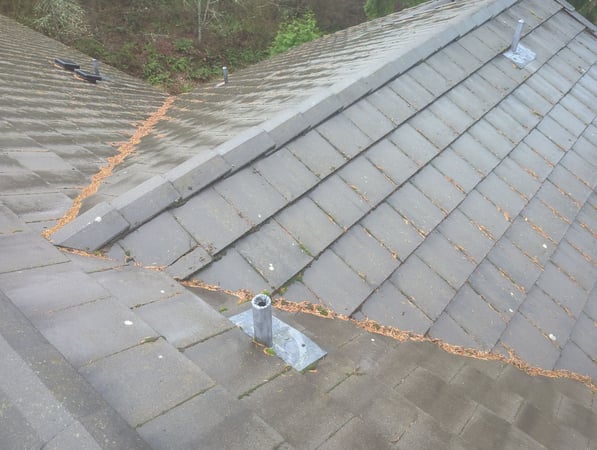
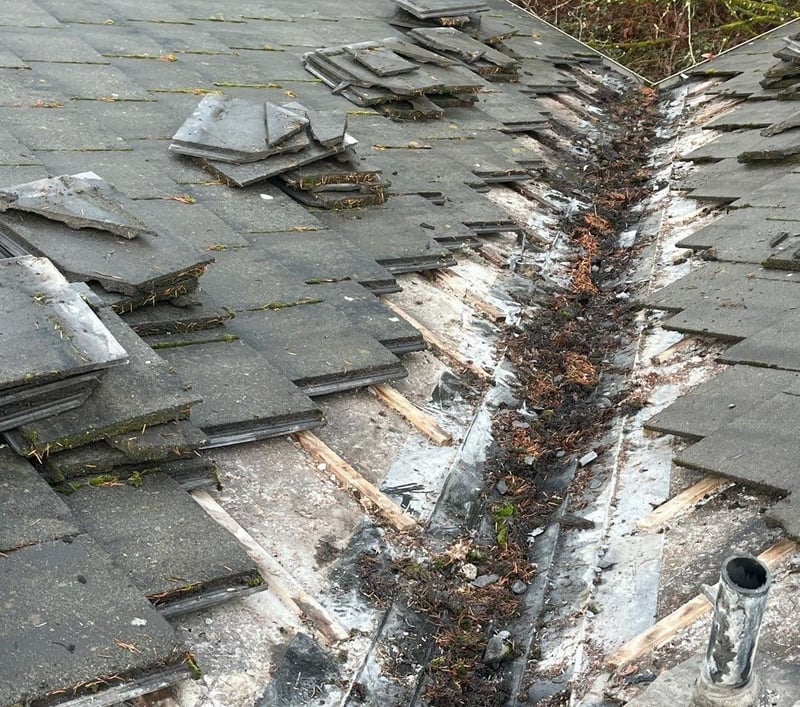
- Valley Failure: Debris from trees (like leaves and pine needles) falls on the roof all the time in wooded areas like Seattle. The debris flows to the valley and gets underneath the tiles, causing the valley to clog. The valley is triple-ribbed, which is supposed to keep the water from going sideways. But when the valley is clogged with debris, the water hits it and goes sideways. Water can soak into the wooden battens and start to rot them. Also, water might start leaking through the nail holes. You have to take everything out to properly clean out the valley. A proper installation to prevent water from trapping includes a 1-foot underlayment overlap and anti-ponding foam at the gutter edge to create a ramp. You’ll need to clean out your valley every 10 to 15 years, depending on how many trees you have and how well-protected the valley is.
- Excessive water causes leaks: Water isn't necessarily saturating through the tile, although it can. Most people have concrete tile, not clay tile. Concrete tile is porous, so when it gets wet, it soaks through. It's water-shedding, but it is not waterproof. And you have this wet piece of concrete, and it's basically a heavy sponge. Underneath it, you've got tar paper, and that's what's keeping the water out. That doesn't last forever, and you can overwhelm it. So that can cause leaks, even though the tiles are in there correctly. This can happen anywhere on the tile roof where you have excessive water flow.
- Broken or missing tiles: Sometimes, you might notice that a tile on your roof is broken. This can happen due to old age, impact damage (like a falling tree branch), or stepping on the weak part of the tile. Tiles can also fall out due to deterioration and old age, leaving the roof vulnerable to leaks.
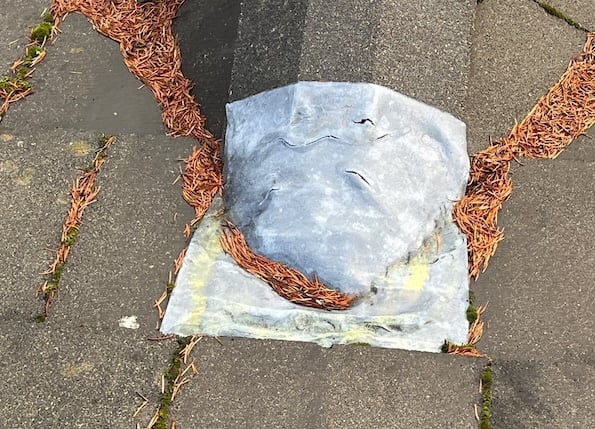
- Cracked lead flashing: Lead flashing on the roof and around pipes cracked. Damaged or cracked flashing can cause leaks. Lead flashing does not hold up well over time, so the tile roof was bound to outlive it.
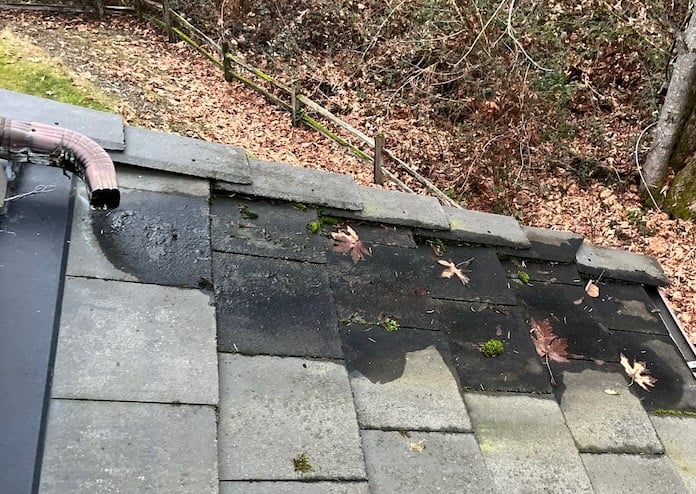
- Rotting boards on edge of roof: Some roofers don't take extra precautions at the edge of the roof. Water can run sideways and get underneath the hip cap. From there, it can flow down to the barge board, causing it to rot.
How do you know when to repair vs. replace your tile roof?
Tile roofs are expensive to replace, so it’s understandable that you’d want to repair it instead if possible. But keep in mind that the repairs can get expensive as well, so you’ll want to consider how much money you’re spending and if a repair is worth it.
Cleaning the valley is a repair and maintenance item, but that alone can cost tens of thousands of dollars. But, if your roof is otherwise in good shape, then it’s the right move.
You should get a repair on your tile roof if:
- Your roof issues are contained to one or two small areas
- Your roof issues can be fixed by a simple cleaning or quick repair
- Your roof is still in good shape (aside from the spot that needs a repair)
You should replace your entire tile roof if:
- There are problems present all over the roof
- Your roof is leaking all over and causing rot
- Your roof is old, worn, or damaged all over
When deciding whether to repair or replace, it’s important to also consider how much longer you want to live in your house and what your realistic roofing budget is. Sometimes a repair is all you can afford. You can also replace the tile with something cheaper.
Are tile roofs a good roof material for Seattle's weather?
Concrete tile is unsuitable for Seattle's climate, but clay tile is a good option. Because concrete tile is so porous, it is vulnerable to absorbing water. This is the last thing you want in a rainy area like Seattle.
This can cause leaks, or if the concrete tile freezes while it’s wet, then ruin the integrity of the shingle. It’s also susceptible to growing algae and moss, and requires frequent cleaning to keep debris off of it. Clay tile doesn’t have the moisture absorption issues, but it does collect debris.
Slate, Euroshield, and synthetic materials (like Brava or DaVinci) are all good alternatives if you want the look of tile without worrying about moisture problems and having to clean out the valleys.
How Do You Choose a Roofing Contractor Who Can Properly Repair a Tile Roof?
Tile roofs can be beautiful and long-lasting, but as you’ve seen, they come with very specific repair challenges in Seattle’s rainy climate.
Many of these repairs require removing and reinstalling sections of tile, cleaning debris hidden underneath, and fixing the underlying waterproofing layers. If the contractor doesn’t understand how tile roofs are designed to shed water, a simple repair can easily turn into a bigger problem later.
That’s why the quality and experience of the roofer you hire matters just as much as the repair itself. Tile roofs require specialized knowledge, careful handling of materials, and a strong understanding of how water moves across the roof system.
Before you move forward with repairs or decide whether it’s time for a replacement, it’s important to make sure you’re working with a contractor who truly knows what they’re doing.
Read our article “Is Your Seattle Roofer Actually Good? Here’s How to Tell Before It’s Too Late” to learn how to tell if a roofing contractor is actually qualified to work on your roof, so you can avoid costly mistakes and choose the right professional for the job.

Frequently Asked Questions
1. What is the most common repair on a tile roof?
One of the most common repairs is cleaning and rebuilding roof valleys.
In Seattle, debris collects in valleys and blocks water flow, which can cause leaks and rot if not properly maintained.
2. Do tile roofs leak even if the tiles look fine?
Yes, they can.
Tile roofs are water-shedding, not waterproof, meaning the underlayment beneath the tiles is what actually prevents leaks. If that layer fails, leaks can occur even when the tiles look intact.
3. How often do tile roofs need maintenance in Seattle?
Maintenance frequency depends on your environment, but typically:
- Valleys should be cleaned every 10–15 years
- Roofs in heavily wooded areas may need more frequent attention
Regular maintenance helps prevent major repairs.
4. Is it better to repair or replace a tile roof?
It depends on the extent of the damage.
- Repair is best for isolated issues
- Replacement is better if problems are widespread or the underlayment has failed
A professional inspection is key to making the right decision.
5. Are tile roofs a good choice for Seattle’s climate?
It depends on the type.
- Concrete tile can absorb water and may not perform well in Seattle
- Clay tile and synthetic alternatives tend to perform better in wet conditions
Choosing the right material is critical for long-term performance.
Topics:
