

TL;DR: Preventing Condensation on Low-Slope Metal Roofs in Seattle
Low-slope metal roofs in Seattle’s cold, humid climate are prone to condensation when warm, moist indoor air meets a cold roof deck. Without proper insulation and ventilation, this leads to hidden rot, mold, and damage.
Best Prevention Methods (ranked by common use):
- Vented roof deck: Create a 1" air channel with furring strips + polyiso foam (best for airflow).
- Warm roof (no ventilation): Thick polyiso foam above the deck to warm the surface and block moisture.
- Traditional ventilation + polyiso: Add foam boards while keeping attic vents.
- Ventilation mat underlayment: Mesh layer over ice & water shield for micro-ventilation, drainage, and noise reduction.
Key takeaway: Any extra insulation + vapor control is far better than standard installation. Always ask your roofer for their specific condensation prevention plan. Schedule a RoofSmart inspection for expert low-slope metal roof solutions in the PNW.
Have you heard that low-slope roofs don’t ventilate well, and are now wondering if metal might actually make the problem worse? Are you wondering what your roofer should do to make sure condensation won’t become a problem later?
You’re right to think about condensation before installing a low-slope metal roof. In Seattle’s humid environment, moisture control is critical. Without the right insulation and ventilation strategy, condensation can quietly build up and damage your roof from the inside out.
At RoofSmart, we repair and replace hundreds of roofs every year. Whether they are regular, low-slope, or flat roofs, a lot of the roofs we work on have condensation issues. Each time, we find the right balance of insulation and ventilation to protect our customers from dealing with condensation issues ever again.
In this article, we’ll explain why condensation is such a common issue on low-slope roofs, what makes them different from traditional pitched roofs, and the proven methods roofers use to prevent moisture buildup so you can install a metal roof with confidence instead of regret.
Why Condensation Is a Big Problem on Low-Slope Metal Roofs in Seattle
Condensation is a major concern on flat and low-slope roofs in the Seattle area, no matter what roofing material you use. The air here is very humid, and when it gets cold, the air can no longer contain its moisture, causing condensation.
A common example of this is when the warm air rises from your home and hits your cold roof, causing condensation to collect in your attic. In a regular roof with proper attic ventilation, this is not a big concern because the natural airflow in the attic will dry it out. But a low-slope roof isn’t typically ventilated well.
Many low-slope roofs don’t have enough vertical space for traditional attic ventilation to work properly. When this happens, the moisture will just collect in the attic and never dry out, eventually causing wood to rot and mold to grow.
So, you have to set up your roof a bit differently to prevent condensation (if you have a low-slope roof) to make up for the fact that you might not have traditional ventilation.
How Roofers Prevent Condensation on Low-Slope Metal Roofs
If you have a low-slope roof, then your roofer needs to take some extra steps to protect it from condensation. There are a variety of ways that your roofer can prevent condensation on your roof. The key is to make sure that your roof has enough insulation and ventilation to get rid of condensation.
4 Proven Methods to Stop Condensation (Comparison)
| Method | Ventilation Type | Key Materials | Best For | Pros | Cons |
|---|---|---|---|---|---|
| Vented Roof Deck | Active air channel | Furring strips + polyiso foam | Most airflow needs | Excellent drying, code compliant | Adds some height |
| Warm Roof (No Ventilation) | None | Thick polyiso foam | Minimal height change | Simple, blocks moisture well | May require gutter adjustments |
| Traditional Ventilation + Polyiso | Attic vents | Polyiso boards + existing vents | Retaining current setup | Familiar to many roofers | Limited effectiveness on true low-slope |
| Ventilation Mat Underlayment | Micro-vent space | Mesh mat + ice & water shield | Noise & oil canning control | Drainage + drying + quiet | Higher cost |
Here are some options if you want to install a metal roof on a low slope:
1. Vented deck with polyiso → The best way to prevent condensation on a low-slope roof is to create a traditional warm roof setup (a vented deck). This usually requires putting down foam boards with wood strips on top to create a 1" vent space (like a mini attic). This insulates the attic to keep it warm and prevent condensation while also letting the roof breathe by making sure that the ventilation is up to code.
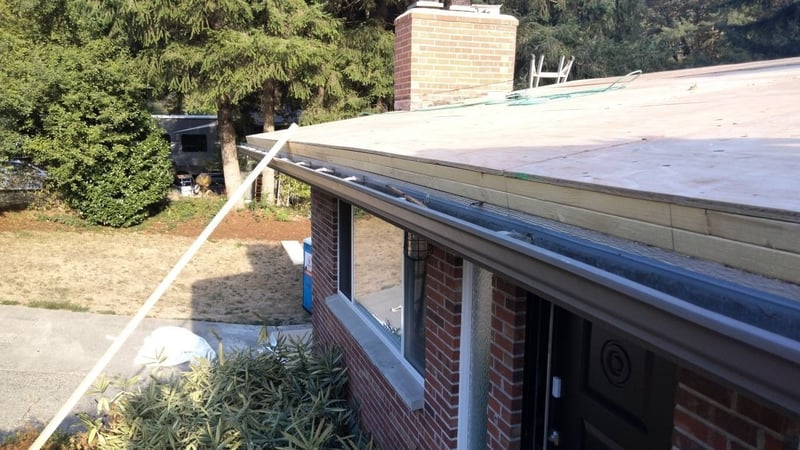
2. Warm roof with no ventilation → Another option is to fill in the attic completely with fiberglass insulation and then add polyiso above the sheathing to block condensation and keep the roof deck warm. After that, you can install another layer of plywood sheathing and then the metal over top of that. No ventilation needed because the roof has the thick foam polyiso that prevents condensation. This does make the roof a lot taller, so you need to adjust the gutters. Here’s an example of the added height:
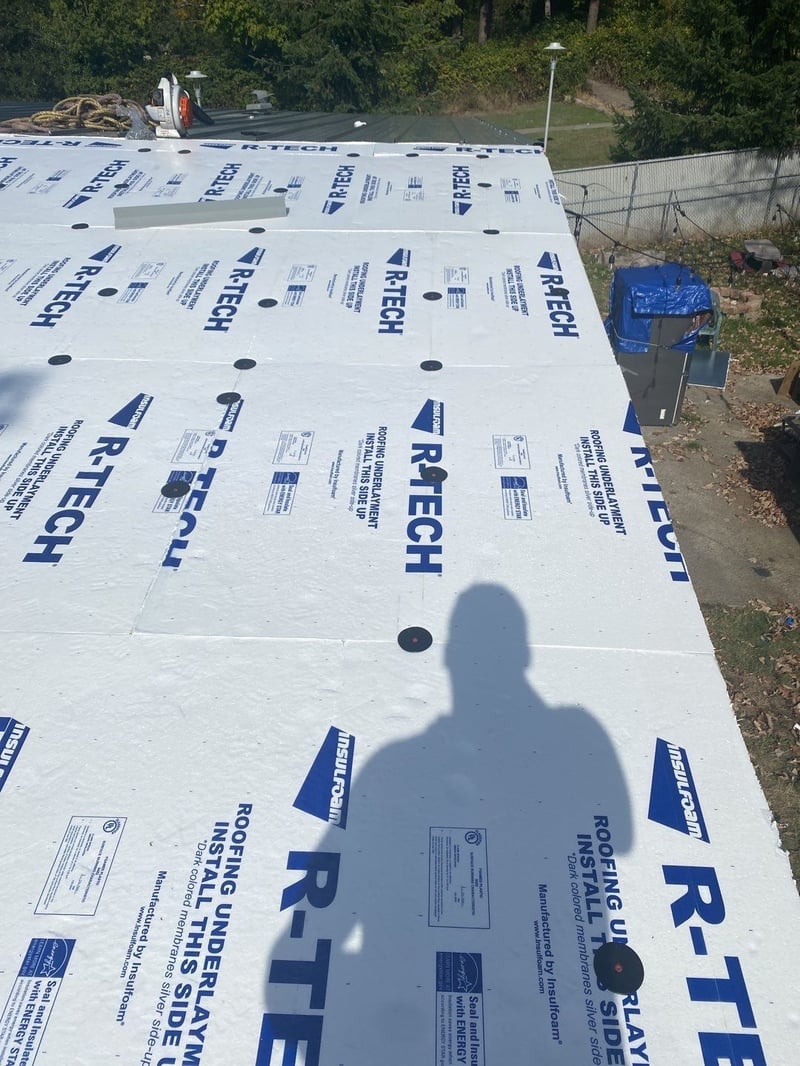
3. Roof with regular ventilation and polyiso → Instead of filling in the roof with insulation, one option is to keep the traditional ventilation and add extra insulation. This means adding a layer of foam boards. We have done this before and installed the metal directly on top of insulation, using plastic caps to keep the metal from scratching as it moves. This is what the plastic caps look like:
4. Ventilation mat underlayment over full ice & water shield and polyiso → A final option is to use ice and water shield and a product called cedar breather, which is a mesh underlayment that helps to reduce noise and prevent oil canning. It also provides micro-vent space for drainage and air movement. It makes it so that if there's water vapor underneath the roof, which of course there will be, it has a chance to dry and drain. First, you put down the plywood sheathing with a layer of foam on top. Then the ice and water shield goes on, and the ventilation mat goes on top of that. The metal goes on directly on top.
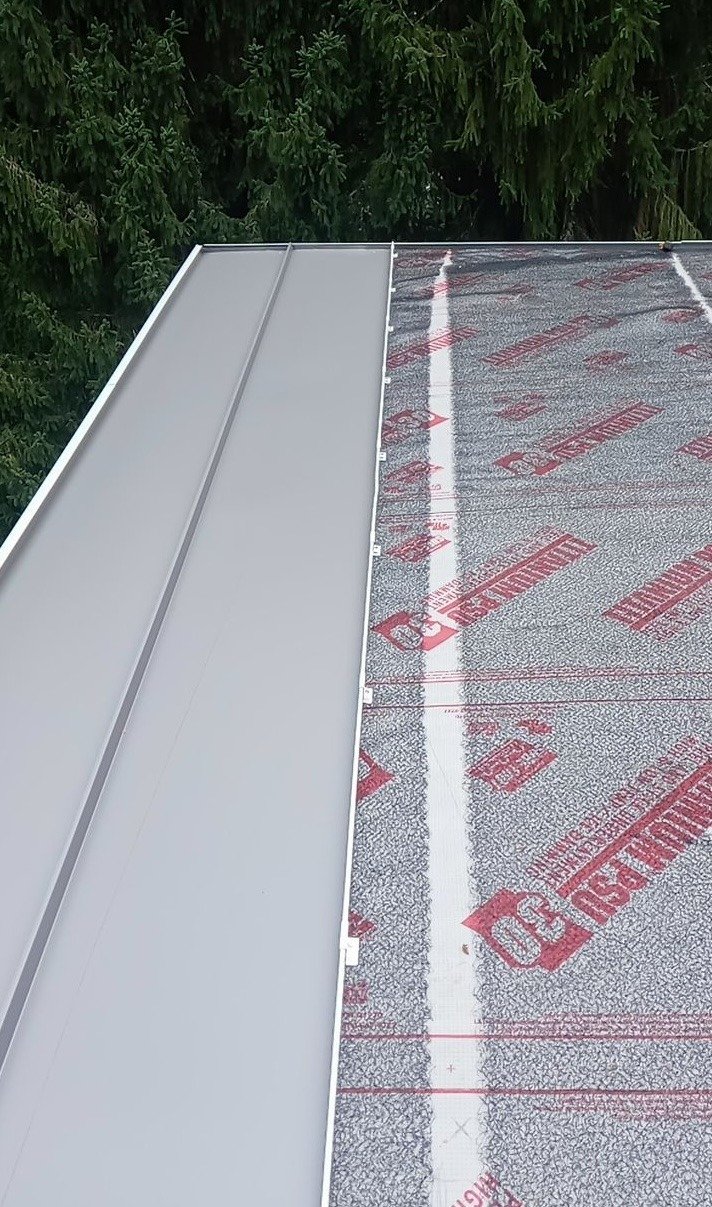
In this image, you can see the layer of ice and water shield with the mesh layer on top of that. The metal is being installed directly over it. The mesh has great benefits, but it increases the job cost, so most people don’t choose to use it.
These are all options that we have used on our customers’ homes. Each method has its own pros and cons, and some options are a lot more expensive than others. The one that your roofer chooses depends on your budget and your roof’s needs.
Any one of these options is better than leaving in the traditional ventilation and not adding in any extra insulation. Low-slope roofs in Seattle don’t really have the power to fight off condensation on their own.
When you’re looking for a roofer, make sure to ask them what their plan is for preventing condensation on your low-slope roof. If they can’t come up with a good answer, then move on to your next option.
Is it a roof leak or condensation on your low-slope metal roof?
Now you know that condensation is a very real concern on low-slope metal roofs in Seattle and that preventing it requires intentional insulation and ventilation design. When moisture control is done correctly, your roof can perform beautifully for decades.
But here’s where many homeowners get stuck: when they see water stains, damp insulation, or dripping moisture, they immediately assume the roof is leaking.
In reality, condensation and roof leaks can sometimes look almost identical, especially on low-slope roofs where ventilation is limited. Misdiagnosing the problem can lead to unnecessary repairs and ignoring the real issue while damage continues.
Before you replace panels, tear apart flashing, or assume your installer made a mistake, you need to determine whether the moisture is coming from outside the roof or forming underneath it.
Read our article “Roof Leak vs. Condensation: How Do I Tell the Difference?” to understand the difference that could save you thousands and ensure you fix the right problem the first time.
Frequently Asked Questions About Condensation on Low-Slope Metal Roofs
Q: Why is condensation more common on low-slope metal roofs in Seattle?
A: Seattle’s humid, cold winters cause warm moist air from inside the home to hit the cold metal roof deck. Low-slope roofs have limited natural airflow compared to steep roofs, so moisture condenses and can lead to rot or mold if not properly managed with insulation and ventilation.
Q: Can a roofer completely prevent condensation on a low-slope metal roof?
A: Yes, with the right combination of insulation (like polyiso foam) and ventilation strategies. No system is 100% foolproof, but the methods above dramatically reduce risk when installed correctly.
Q: What is the best way to prevent condensation on a low-slope metal roof?
A: A vented roof deck with polyiso foam is often the most effective for balanced airflow and insulation. For simpler installs, a warm roof system using thick foam boards works well. The choice depends on your roof’s structure, budget, and height constraints.
Q: Do I need a ventilation mat under my metal roof?
A: It’s not always required, but it provides excellent micro-ventilation, drainage, noise reduction, and helps prevent oil canning. It’s especially useful over ice & water shield in humid climates like Seattle.
Q: How much does it cost to add condensation protection to a low-slope metal roof?
A: Extra insulation and ventilation layers typically add several thousand dollars to the project, depending on roof size and method chosen. It’s usually a worthwhile investment to avoid future rot or mold repairs.
Q: Is condensation the same as a roof leak?
A: No. Condensation forms from inside moisture (warm air meeting cold surfaces), while leaks come from outside water intrusion. Proper diagnosis is critical. See our guide on distinguishing roof leaks from condensation.
Topics:
