

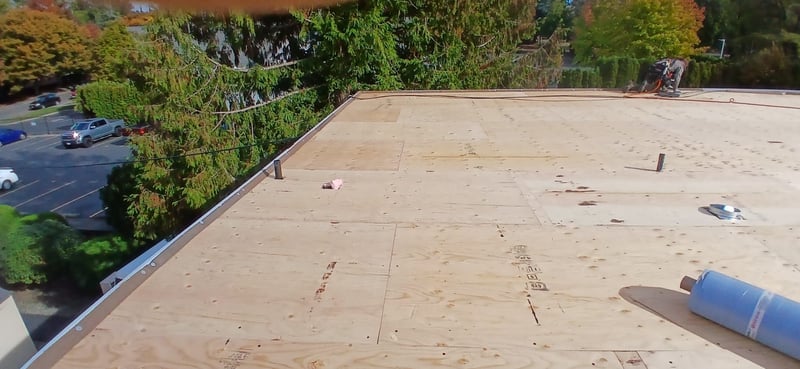
TL;DR: Summary
A cant strip is a triangular wedge installed at 90-degree transitions (where the roof meets a wall or parapet) to create a smooth, 45-degree slope. In Seattle’s climate, they are mandatory for torch-down (modified bitumen) roofs because that material is too thick and brittle to bend at sharp angles without cracking.
While not technically required for flexible membranes like PVC or TPO, adding them is a low-cost "Egghead" upgrade that improves drainage, prevents debris buildup, and eliminates stress points that lead to leaks.
Did your roofer mention installing a cant strip on your flat roof, and now you’re wondering if it’s actually necessary or just another extra charge? Are you worried that skipping a small component like this could lead to leaks or expensive damage later on, especially with Seattle’s constant rain?
Flat roofs in Seattle face unique challenges. A cant strip isn’t required for every type of membrane, but is needed when you install torch down. It helps prevent cracks that can cause tens of thousands of dollars in damage.
At RoofSmart, we’ve installed and repaired hundreds of flat roofs all over the Seattle area. We are familiar with the rules and requirements for installing each material and pay meticulous attention to detail so that your roof comes out great every time.
In this article, we’ll explain what a cant strip does, when it’s required on a flat roof, and whether it’s something your Seattle roof actually needs.
Cant Strip Requirements by Roofing Material
| Roofing Material | Is a Cant Strip Required? | Why or Why Not | Risk Without One |
|---|---|---|---|
| Torch Down (Modified Bitumen) | ✅ Yes (Required) | Thick, inflexible membrane can’t bend at 90° angles | Cracking, tearing, leaks |
| PVC Roofing | ❌ No | Flexible membrane can handle corners | Minimal risk |
| TPO Roofing | ❌ No | Flexible and designed for corner transitions | Minimal risk |
| EPDM Rubber | ❌ Not typically | Flexible material adapts to edges | Low risk |
| Any Flat Roof (Optional Upgrade) | ⚠️ Optional | Adds slope and improves drainage | No downside, but added cost |
What does a cant strip do on a flat roof?
A cant strip is a triangular fitting that is installed in the corner of your flat roof to prevent a sharp bend in the membrane that can lead to tearing. This is a concern with torch down because the membrane is too thick to make that 90-degree bend.
Here’s an example of what a cant strip looks like and how it’s installed on the roof:
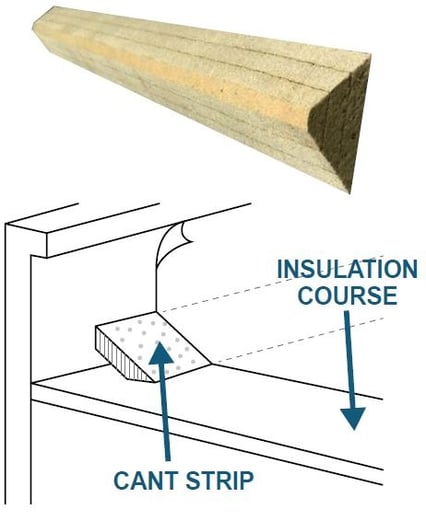
Image from Blue Ridge Fiberboard
As you can see, it creates a smooth, angled plane rather than fitting the membrane to the shape of the corner or edge. Cant strips run along the entire perimeter of your roof.
You're supposed to adhere the membrane to a parapet wall, and you can't really do that if you're trying to get this thick torch down to go at a 90- degree angle. It's never going to bond in the corner, whereas PVC actually will.
As it gets cold, the corners of your flat roof can become stress points. And a lot of times, that's where there's building movement: the wall might move, or the roof deck might move at the corner. Torch down will tear with this kind of thermal expansion and contraction.
The last thing you want on a flat roof is a tear in the membrane because it’s definitely going to turn into a leak, especially with all the rain that we get in Seattle.
Flat roof leaks are hard to spot because there isn’t an attic to check. This means that the leak can happen for a long time before you notice, and end up causing significant rot and deterioration within your roof. We see extensive damage from flat roof leaks all the time in the Seattle area.
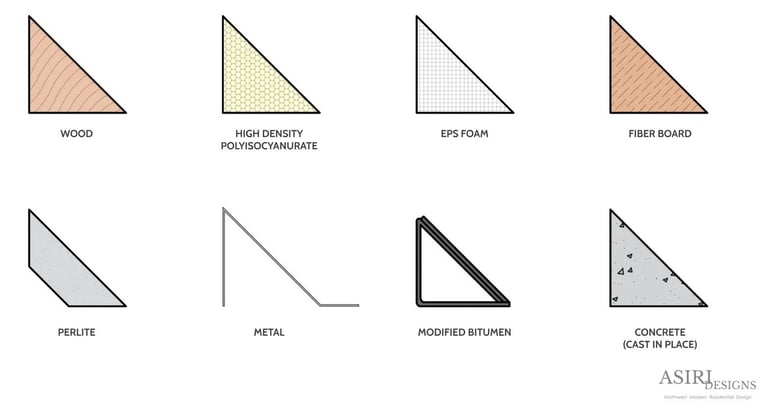
Cant strips are typically made of wood because it’s an affordable option. They can also be made of other materials, like EPS foam, metal, or even modified bitumen (which is another term for torch down). Here are some examples from Asiri Designs:
Is my roofer required to install a cant strip on my Seattle flat roof?
A cant strip is recommended for all roof assemblies, but it's only required for torch down because it is at risk of cracking or tearing without one.
Torch down is a thick fiberglass mat, which is not very flexible. The thicker the membrane, the more important it is to have a cant strip.
However, other flat roof membranes, like PVC and TPO, are much more flexible and can handle small shifts the building might make. These products can be installed tight to the corners without concern of tearing or cracking.
You can choose to have them installed on your roof if you’re not using torch down, but it’s not necessary. Roofers usually skip this step on PVC or TPO roofs.
What are the benefits of installing a cant strip on a flat roof in Seattle?
Although installing a cant strip can add a little extra cost to your project, it’s a pretty minimal amount because the wood is fairly cheap (It's like a dollar a foot or less). Aside from that, there are really only benefits:
- Prevents tearing: Cant strips protect your torch down roof from tearing at the corners, which leaves your roof vulnerable to leaks. It can sometimes cost tens of thousands of dollars to repair the damage that leaks can cause. Requiring a cant strip on torch down protects your roof from these overwhelming expenses.
- Improves drainage: Adding an extra little slope in the corners of your flat roof both prevents debris (leaves and pine needles) from building up in the corners, and it gives water and debris some momentum to flow toward the scuppers so the roof can drain properly.
- Easier maintenance: Digging leaves, pine needles, and other tree debris out of the corners of your roof can get pretty tedious, so having a cant strip makes maintenance a little bit easier. This is something to consider if you have a lot of trees on your property.
Should all flat roofs in Seattle have a cant strip?
It's never a bad idea to do a can't strip. It never hurts your roof, but it’s only needed on a torch down roof. It’s completely fine to skip this step if you have TPO or PVC.
Aside from the other benefits, you might want a cant strip because you prefer the aesthetic of a slope rather than a tight corner. This is an easy preference to accommodate.
If you really want cant strips on your roof, talk to your roofer to see what they think. They can help you decide if it’s a good move or just an unnecessary extra step.
How much does it cost to install a flat roof in Seattle?
As you’ve seen, even a small component like a cant strip can play an important role in how well a flat roof performs, especially if you’re installing a torch down membrane that needs protection from stress at corners and edges. Details like this help prevent tears, improve drainage, and make maintenance easier over the life of your roof.
But they also highlight an important reality about flat roofing projects: the final cost isn’t just about the membrane you choose. The price of a flat roof installation depends on the entire system, which includes roof material, insulation, drainage details, labor, and smaller components like cant strips that help the roof function properly.
If you're planning a flat roof project in the Seattle area, understanding the full scope of what goes into the installation can help you budget realistically and compare contractor estimates more confidently.
Read our article “How Much Does It Cost to Install a Flat Roof in Seattle?” to get a breakdown of the real factors that influence flat roof pricing so you can better understand what you’re paying for and why.
Frequently Asked Questions
1. What exactly is a cant strip made of?
Most cant strips are made of wood (like cedar or treated lumber) because it's affordable and durable. However, they can also be made of specialized foam (EPS), metal, or even strips of modified bitumen.
2. Why does torch-down roofing require a cant strip?
Torch-down is a thick, fiberglass-reinforced mat. If you try to force it into a sharp 90-degree corner, it won't bond properly and will eventually crack or tear due to thermal expansion (the roof "moving" as temperatures change).
3. Will my PVC roof fail if I don't have cant strips?
No. PVC and TPO are highly flexible and designed to be "heat-welded" directly into corners. While cant strips offer extra drainage benefits, these single-ply membranes are perfectly safe without them.
4. How much do cant strips add to the total project cost?
Very little. The material cost is usually around $1.00 per foot or less. It is a minor investment that can prevent "tens of thousands" in potential rot damage caused by corner leaks.
5. Can I add cant strips to an existing roof?
Typically, no. Cant strips must be installed underneath the roofing membrane. Retrofitting them would require tearing off the edge of your existing roof, so they are almost always installed during a full roof replacement.
6. How much does a full flat roof replacement cost in Seattle?
The total price depends on the membrane, insulation thickness, and drainage needs. For a detailed look at local pricing, see our guide on how much it costs to install a flat roof in Seattle.
7. Are there other ways to prevent flat roof leaks in the corners?
Yes, proper drainage is key. You should check if your roof has or needs secondary scuppers to prevent leaks and rot.
8. Is my flat roof more prone to mold because of Seattle’s humidity?
Flat roofs often hide moisture issues longer than sloped roofs. Learn why Seattle roofs are more likely to have condensation and mold issues and how to spot them.
9. What kind of warranty covers a flat roof installation?
Warranties for flat roofs can be tricky. Make sure you understand what level of coverage you get with a PVC residential warranty before you sign a contract.
10. How do I know if my roofer is including these important details?
A good proposal should be line-itemed and specific. Use our checklist to spot red flags when comparing roof proposals to ensure your roofer isn't cutting corners.
Topics:
