

TL;DR: Summary
For low-slope homes near the ocean, a mechanically seamed metal roof is often one of the best long-term roofing options when installed with marine-grade materials and proper corrosion protection.
Oceanfront roofs face two major challenges: salt-air corrosion and slow water drainage on low slopes. Steel roofing can perform exceptionally well in these conditions, but only when it has a marine-grade paint system, protected cut edges, corrosion-resistant fasteners, and professionally sealed seams.
Unlike asphalt shingles, which tend to retain moisture and deteriorate quickly on low-slope roofs, mechanically seamed metal panels create a watertight system designed to handle standing water and harsh coastal conditions.
The key takeaway: if you live near the ocean and have a low-slope roof, a properly installed mechanically seamed metal roof can provide superior durability, weather resistance, and longevity compared to traditional asphalt shingles.
Are you worried that living near the ocean or having a low-slope roof limits your roofing options and that choosing the wrong material could lead to rust, leaks, or premature roof failure? Have you been told that asphalt shingles are "good enough" for a low-slope roof while others say they’re not, leaving you unsure what to believe?
At RoofSmart, we pair hundreds of homeowners every year with the right roof material for their home by taking into account their budget, aesthetic preferences, and their roof’s needs. It’s our goal to be upfront about the pros and cons of each product so that you can make an informed decision.
In this case study, we'll explain which roofing materials perform best on low-slope homes near the ocean, why some products fail prematurely in Seattle's coastal climate, and what one Gig Harbor homeowner did to protect their home with a roofing system built to withstand both salt air and standing water.
Seattle Coastal And Low-Slope Roofing Problems and Solutions
|
Coastal And Low-Slope Roofing Problem |
Cause |
Best Solution |
|
Rusting metal panels |
Salt-air exposure |
Metal with a marine-grade paint system |
|
Corroded fasteners |
Coastal moisture and salt |
Marine-grade fasteners |
|
Roof leaks |
Poor drainage on low slopes |
Mechanically seamed metal, PVC or TPO |
|
Moss growth |
Constant moisture |
Metal roofing or routine maintenance |
|
Rotting roof decking |
Long-term water infiltration |
Replace decking and upgrade roofing material |
|
Ponding water |
Insufficient roof slope |
Roofing designed for low slopes |
|
Wind-driven rain intrusion |
Storm exposure |
Enhanced flashing and seam systems |
|
Premature shingle failure |
Moisture retention |
Replace with metal or membrane roofing |
|
Chimney leaks |
Failed flashing |
Install new flashing and cricket |
|
Salt-related deterioration |
Coastal climate exposure |
Use materials designed for marine environments |
Can you install a steel roof on an oceanfront home?
Steel is not naturally corrosion-resistant, so if you want to install it on your home near the ocean, then you need to make sure that it is protected with the right paint system.
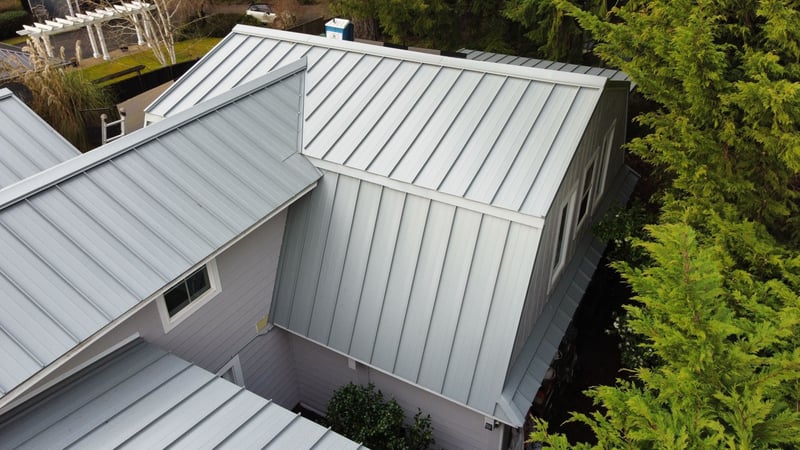
Recently, we installed a steel standing seam roof for a customer living in Gig Harbor. She originally had an asphalt shingle roof, but wanted something that she wouldn’t have to replace again in another 20 to 30 years.
Here’s how it turned out:
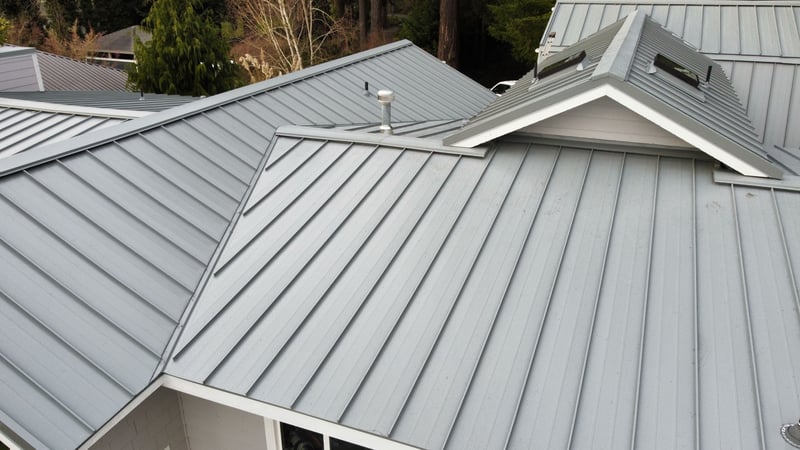
We gave her some recommendations, and she chose steel. And since steel is prone to rusting, especially in the salty ocean air, we made sure to order the panels with the manufacturer’s marine-grade paint system, which even comes with its own warranty.
A lot of Seattle homeowners are hesitant to install a metal roof on their home near the ocean because they worry that it might rust. This is a valid concern, but as long as you choose the right material and take the proper precautions, then a metal roof can work great.
What other precautions should you take when installing a steel roof on a home near the ocean?
The paint system works great on the steel panels, but if your roofer has to cut the panel and leaves the cut edge exposed to the ocean air, it becomes vulnerable to rusting.
It’s important to make sure that you hire an experienced roofer so that there are no exposed cut edges.
A roofing contractor who has installed several roofs near the ocean knows that you need to take extra precautions to protect the exposed edges of the panels. They also make sure that every detail is taken care of, like using marine-grade screws that won’t rust.
At RoofSmart, we’ve installed hundreds of metal roofs, including many on homes along or near the ocean. As a result, this customer knew that she could trust us to get the right kind of material and do a top-quality installation.
This expertise, paired with our recommendations for protecting the steel panels from the ocean air, confirmed to this customer that we were the right roofing company for her.
Will a metal roof work on a home with a low slope?
The other concern we had with the house in Gig Harbor is that it had a low-slope roof, which means that you need to be cautious about which roofing material you choose to use. Metal roofing can be installed, but it needs to be mechanically seamed.
A lot of low-slope roofs in the Seattle area have asphalt shingles on them, but this is one of the worst options you can choose because asphalt shingles absorb moisture and take forever to dry out. Plus, they are not meant to handle standing water.
When they’re installed on a low-slope roof, especially in a rainy, humid area like Seattle, they retain moisture, deteriorate prematurely, and start leaking like crazy.
Even though manufacturers say that you can install asphalt shingles on some low-slope roofs, we don’t recommend them on anything lower than a 4:12 pitch.
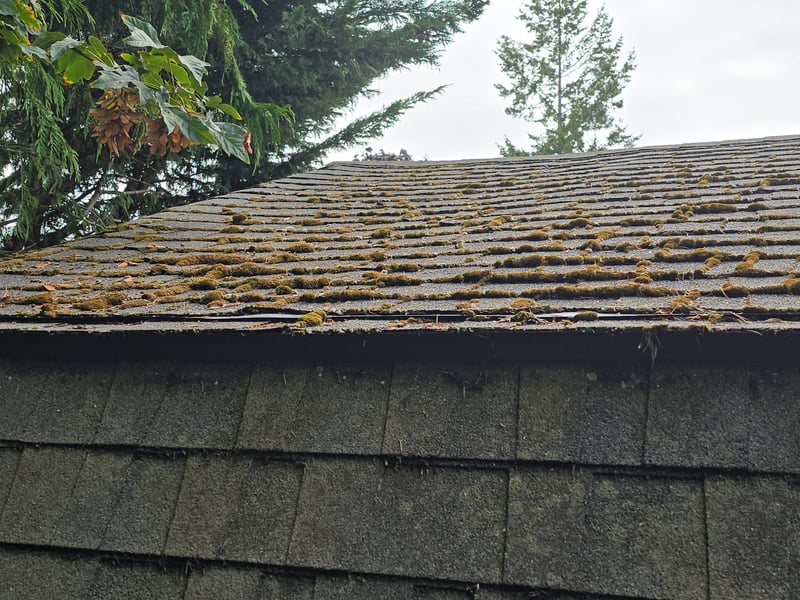
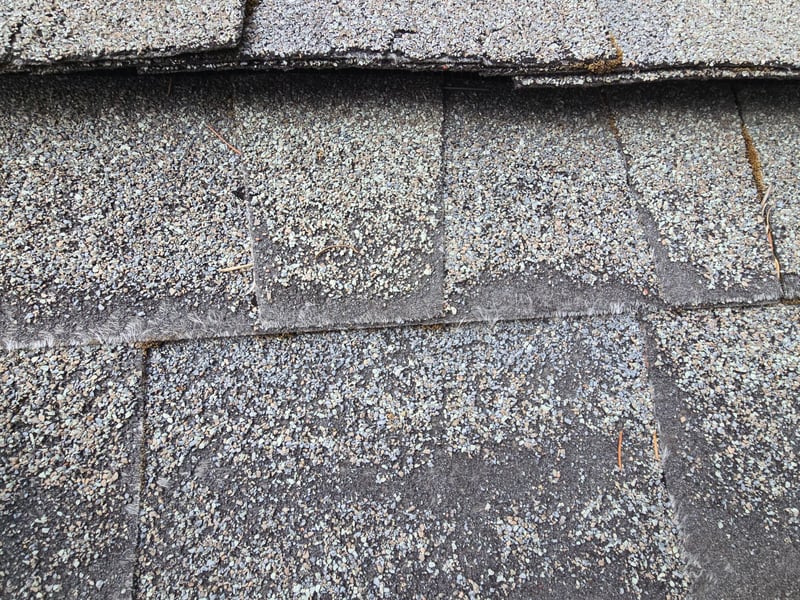
Our customer had asphalt shingles on her low-slope roof, and we ended up needing to replace pretty much all of the plywood decking on the roof because it was all rotten. The asphalt shingles were very worn out, and some parts of the roof were growing a lot of moss:
We also ended up tearing off the siding around the chimney because it was incredibly rotten. We built a new chimney chase to go around it.
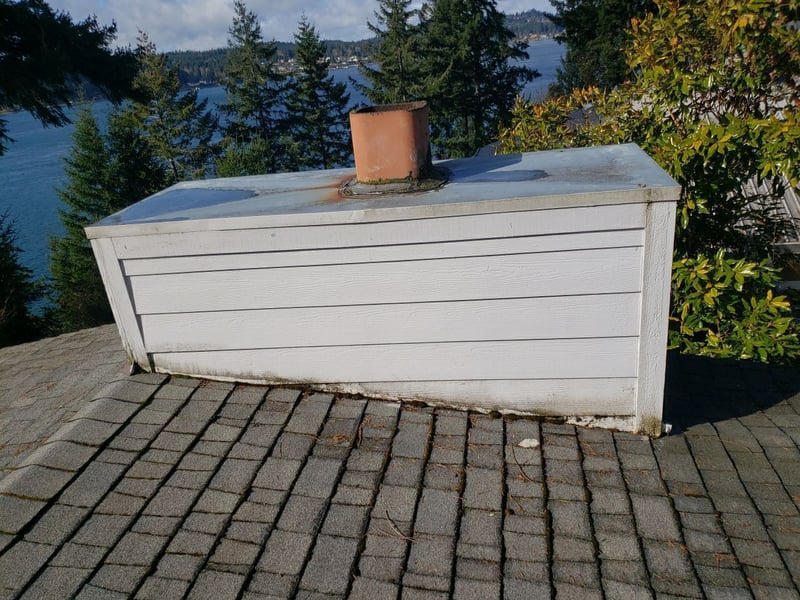
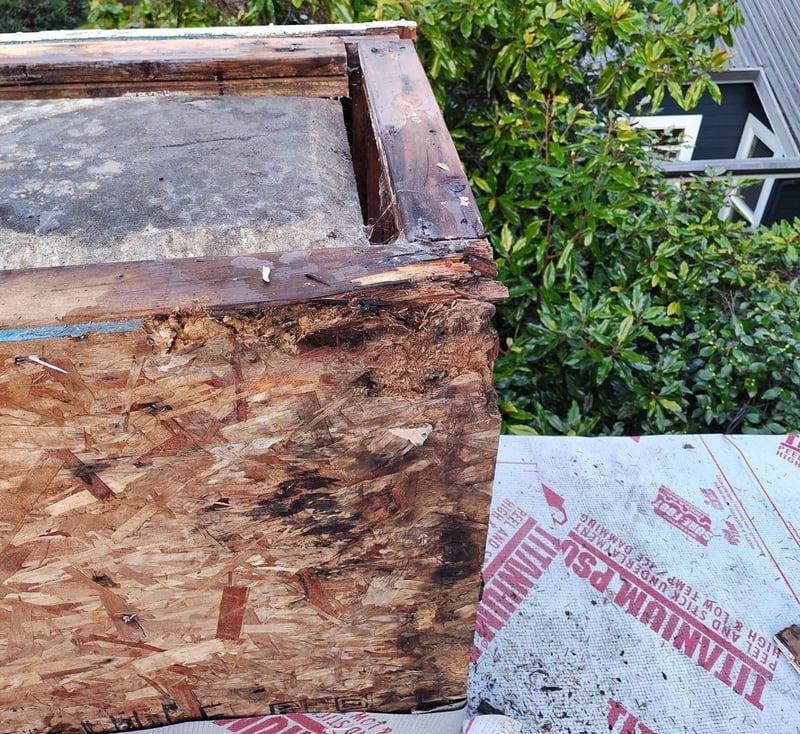
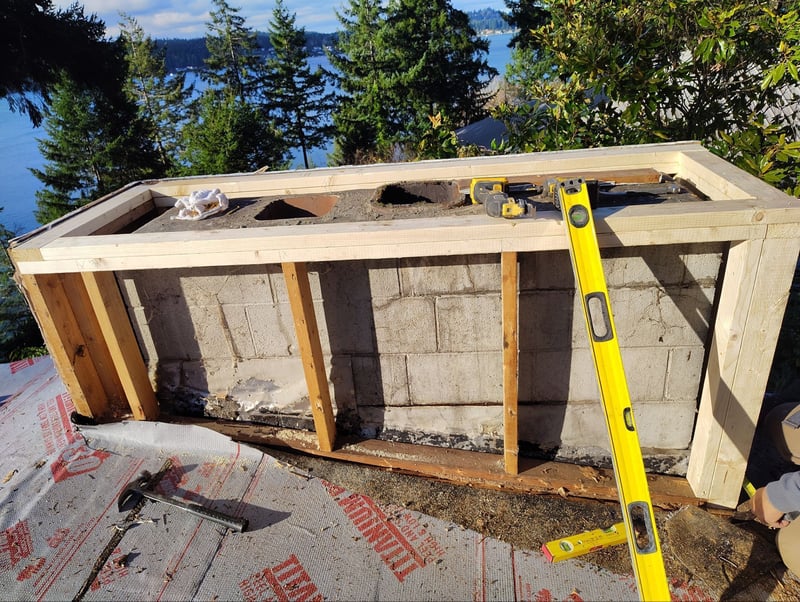
.jpg?width=800&height=754&name=chimney%20chase%20after%20(low%20slope%20metal).jpg)
Metal is the nicest-looking of all the options that you can put on a flat roof. You can choose to install these materials:
- Torch down
- PVC
- TPO
However, our customer did not like the way that any of these looked, so she chose mechanically seamed metal panels. This means that after the panels were installed on her roof, we went over every seam on the roof with a special tool to fold the seams over multiple times.
Mechanical seaming is a great way to ensure that your metal roof is watertight. It is ideal for low-slope roofs because they don’t drain as well and tend to collect water more easily.
Here’s a video of one part of the roof being mechanically seamed:
Mechanically seamed metal roofs are more expensive and take longer to install, but after dealing with asphalt shingles, our customer was happy to invest in a roof that would provide superior protection on her home for a long time.
Comparison Table: Best Roofing Materials for Low-Slope Oceanfront Homes
|
Roofing Material |
Suitable for Low Slopes? |
Suitable Near the Ocean? |
Lifespan |
Appearance |
Maintenance |
Overall Rating |
|
Mechanically Seamed |
Excellent |
Excellent (with a marine-grade paint system) |
40-70+ years |
Premium |
Low |
★★★★★ |
|
PVC Membrane |
Excellent |
Excellent |
25-40 years |
Functional |
Low |
★★★★☆ |
|
TPO Membrane |
Excellent |
Good |
20-30 years |
Functional |
Low |
★★★☆☆ |
|
Torch Down Roofing |
Good |
Good |
15-25 years |
Basic |
Moderate |
★★★☆☆ |
|
Asphalt Shingles |
Poor |
Poor |
Often shortened on low slopes |
Traditional |
High |
★☆☆☆☆ |
|
Standing Seam Metal (Non-Mechanical) |
Fair |
Good |
40-60 years |
Premium |
Low |
★★★★☆ |
Is a metal roof really the best choice for a low-slope roof?
As you've seen, choosing a roofing material for a home near the ocean with a low-slope roof requires balancing several factors at once. Salt air, standing water, wind-driven rain, and poor drainage can all shorten the life of the wrong roofing system.
While marine-grade mechanically seamed metal proved to be the right solution for this Gig Harbor home, it isn't automatically the best choice for every low-slope roof. Some locations make more sense with a more premium material, such as copper or aluminum, depending on the level of salt spray.
The roof's pitch, your home's location, your budget, and your long-term goals all play an important role in determining whether metal is the right investment.
Read next: Can You Use Metal on a Low-Slope Roof?
https://getroofsmart.com/blog/metal-on-low-slope-roof
In this article, we'll take a deeper look at when metal roofing is appropriate for low-slope roofs, explain why mechanically seamed panels are often required, and compare metal to other low-slope roofing options so you can confidently choose the best system for your home.
Frequently Asked Questions About Installing Metal on a Low-Slope Roof Near the Ocean
1. What is the best roofing material for a low-slope roof near the ocean?
Mechanically seamed metal is often one of the best options because it combines exceptional waterproofing with long-term durability. When installed with a marine-grade paint system and marine-grade fasteners, it can handle both salt-air exposure and the drainage challenges associated with low-slope roofs.
2. Can a metal roof rust near the ocean?
Yes, untreated steel can rust when exposed to salty ocean air. However, modern marine-grade metal roofing uses specialized paint systems and corrosion-resistant fasteners that significantly reduce the risk of rust and extend the roof's lifespan.
3. Why is a mechanically seamed metal roof better for low slopes?
Mechanical seaming folds the metal panel seams together after installation, creating a stronger, tighter connection. This helps prevent water intrusion on roofs where rainwater drains more slowly and standing water is more likely to occur.
4. Are asphalt shingles a good choice for low-slope roofs?
Generally, no. Asphalt shingles rely on gravity and adequate slope to shed water properly. On low-slope roofs, they often retain moisture longer, which can lead to premature aging, moss growth, leaks, and rotting roof decking.
5. What roofing materials perform best in salty coastal environments?
Some of the best-performing roofing materials near the ocean include:
- Marine-grade steel roofing
- Aluminum roofing
- PVC roofing membranes
- Certain synthetic roofing products
These materials resist moisture and corrosion better than traditional asphalt shingles.
6. How does ocean air affect a roof?
Salt carried by ocean air can accelerate corrosion, degrade exposed fasteners, wear down the paint system on metal, and shorten the lifespan of roofing materials that are not specifically designed for coastal environments.
7. Do coastal homes require special roofing fasteners?
Yes. Experienced roofers typically use stainless steel or marine-grade fasteners to prevent rust and corrosion. Standard fasteners may deteriorate much faster in coastal conditions.
8. Is PVC roofing a good alternative to metal on a low-slope roof?
Yes. PVC roofing is highly waterproof and performs very well on low-slope roofs. While it may not offer the same appearance as metal roofing, it is often a strong option for homeowners prioritizing performance and waterproofing.
9. How long does a metal roof last near the ocean?
A properly installed metal roof with a marine-grade paint system can last 40 years or more, even in coastal environments. Lifespan depends on the quality of materials, installation, maintenance, and proximity to saltwater exposure.
10. What are the warning signs that a low-slope roof is failing?
Common warning signs include:
- Persistent leaks
- Ponding water
- Moss or algae growth
- Rusting metal components
- Rotting roof decking
- Interior water stains
- Loose flashing
Addressing these issues early can help prevent costly structural damage.
Topics:
