

TL;DR: Summary
Converting a tile roof to metal in Seattle can reduce weight, lower maintenance, and improve durability in wet, windy conditions.
Metal roofs are much lighter than tile (reducing stress on your home’s structure), resist moss and algae growth, and handle impacts from branches better, making them a practical upgrade for Seattle homes.
The conversion process involves removing the tile, replacing damaged wood, installing plywood over skip sheathing, updating ventilation, and then installing underlayment, flashing, and metal panels.
The key takeaway: while the process is more involved than a standard replacement, switching from tile to metal can improve performance, reduce upkeep, and extend the life of your roof in Seattle’s climate.
Are you worried that your heavy tile roof is putting too much stress on your home or starting to fail under Seattle’s rain and wind? Have you noticed cracked tiles, moss buildup, or constant maintenance issues and wondered if switching to metal would actually solve those problems?
At RoofSmart, we replace hundreds of roofs every year. Homeowners in the Seattle area with old tile roofs often want to switch to a different type of roof that is cheaper and easier to maintain if they get a lot of tree debris in their yard.
In this article, we’ll walk you through what it really takes to convert a tile roof to metal, the structural and ventilation updates involved, and why more Seattle homeowners are making the switch to a lighter, lower-maintenance roofing system.
Tile Roof vs Metal Roof: Key Differences When Converting Your Roof
|
Category |
Tile Roof |
Metal Roof |
Why It Matters |
|
Weight |
Very heavy |
Lightweight (up to ~80% lighter) |
Reduces structural stress on home |
|
Maintenance |
High (moss, debris, cracked tiles) |
Low (easy to clean, moss-resistant) |
Saves time and long-term costs |
|
Durability |
Long-lasting but brittle |
Highly impact-resistant |
Better for windstorms and falling debris |
|
Cost |
Very expensive |
Expensive, but typically less than tile |
More budget-friendly option |
|
Installation Complexity |
Complex, heavy handling |
Requires precision but lighter materials |
Affects labor and timeline |
|
Moisture Performance |
Can trap debris and moisture |
Sheds water and debris easily |
Better for Seattle climate |
|
Repairability |
Individual tiles replaced |
Panels or sections repaired |
Both repairable, but different approaches |
|
Ventilation Needs |
Often outdated setups |
Requires updated ventilation system |
Critical for long-term performance |
What are the benefits of converting from tile to metal in Seattle?
Tile is an elegant, long-lasting roof material that can elevate the look of any home. However, in Seattle’s rainy and windy climate, there are some benefits to switching to metal roofing:
- Lighter-weight roof: Metal roofing is one of the lightest roofing material options (especially compared to tile, because it’s the heaviest roofing material). Switching from metal to tile reduced the weight of our customer’s roof by around 80%, relieving stress on the home’s framing.
- Lower cost: Although metal roofing can cost $65,000 or more to install in Seattle, it’s still less expensive than tile roofing.
- Less maintenance: Standing seam metal is resistant to algae and moss growth, which cuts out a lot of the maintenance needs on a tile roof. Plus, debris is more likely to slide off. If it doesn’t, it’s fairly easy to blow or rinse off (depending on your roof slope and style).
- Great impact resistance: Installing a metal roof is like putting armored plating on the top of your roof. Where tile would break upon impact from a branch or tree, metal can protect your roof from damage and walk away with minor scuffing or dents. It will likely need fewer repairs or none at all, which is a huge benefit in Seattle windstorms.
Tiles can crack, fall out, grow moss and algae, and collect debris. Even though they’ll continue to protect your roof for a long time, they require regular maintenance to keep looking great.
This happened to one of our recent customers who had an old, worn-out tile roof. When we went out to inspect the roof, it had a fair amount of debris and moss growth:
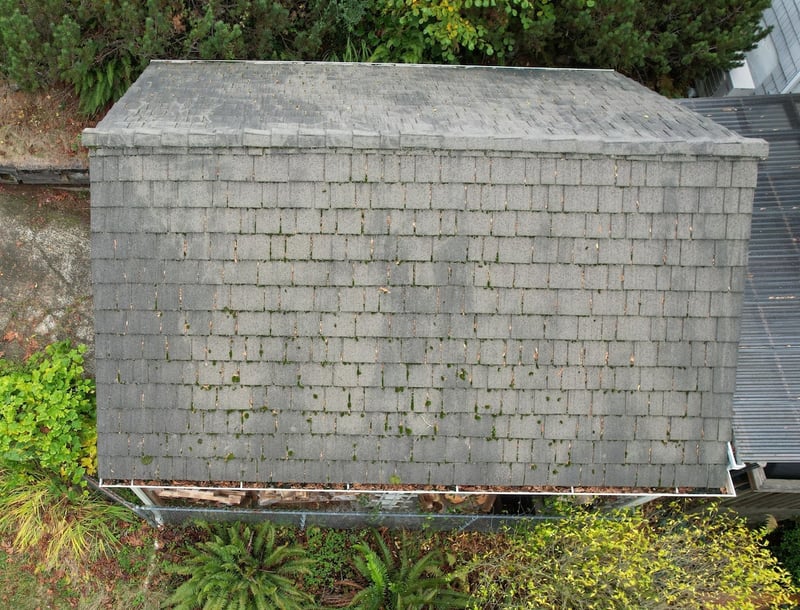
Once moss starts growing, it has to be scraped off, and the roof has to be treated with special chemicals to kill it. Tile roofs have a lot of little gaps and crevices where moss can grow, and debris can get caught, making it difficult to maintain.
Our customer decided to replace the tile with a standing seam metal roof, which is much easier to maintain and does not grow moss. It also weighs less and isn’t at risk of cracking or falling off after a certain amount of time.
What’s the process for converting your tile roof to metal?
When you’re converting a roof from tile to metal, it’s important to remember that you need to replace the skip sheathing with plywood and update ventilation. These are two key elements that many roofers gloss over.
Aside from those two important steps, the roof replacement process is pretty standard. Here’s what we did to replace this customer’s roof:
1. Remove tile
2. Replace rotting wood
3. Install plywood over top of the skip sheathing
4. Install underlayment and flashing
5. Install cricket to protect the chimney from leaks
6. Install metal panels
7. Update ventilation
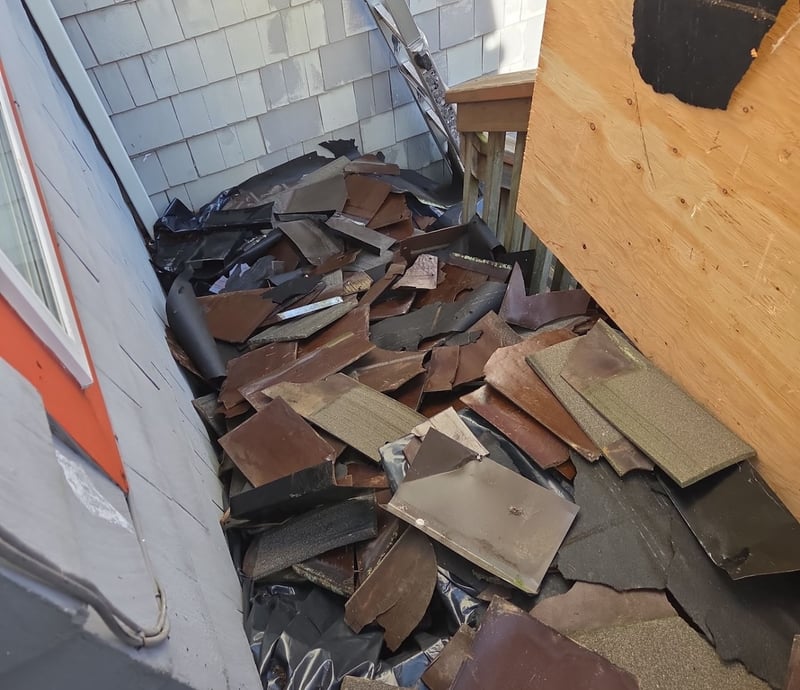
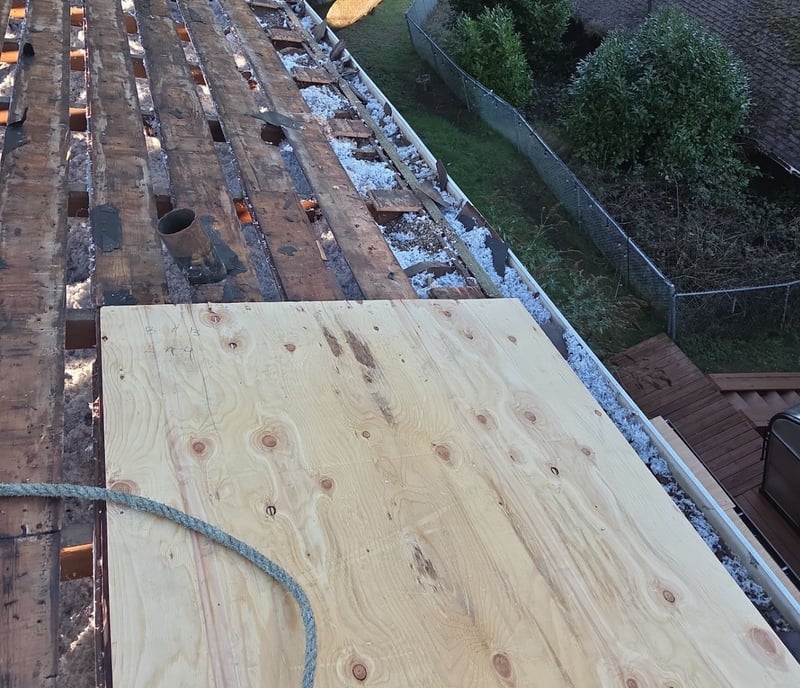
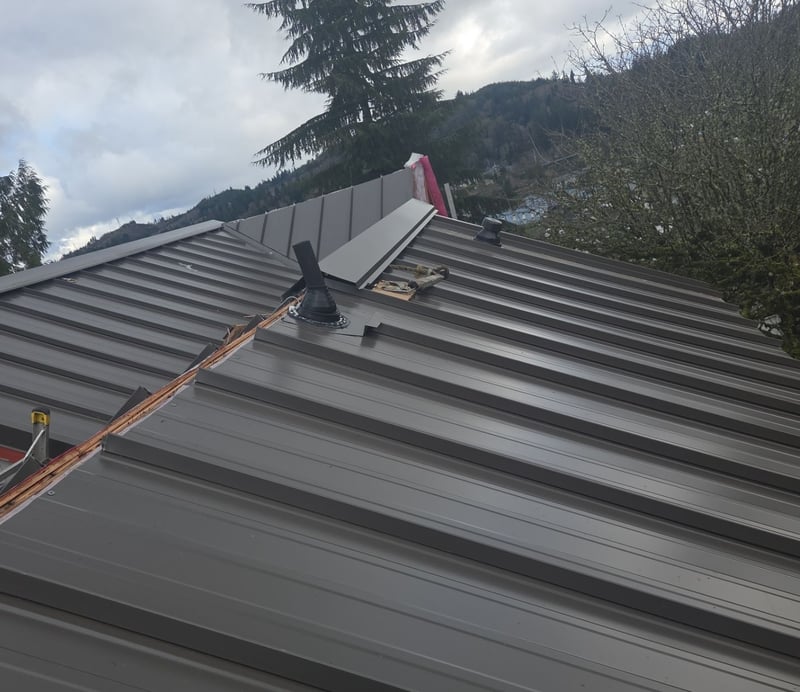
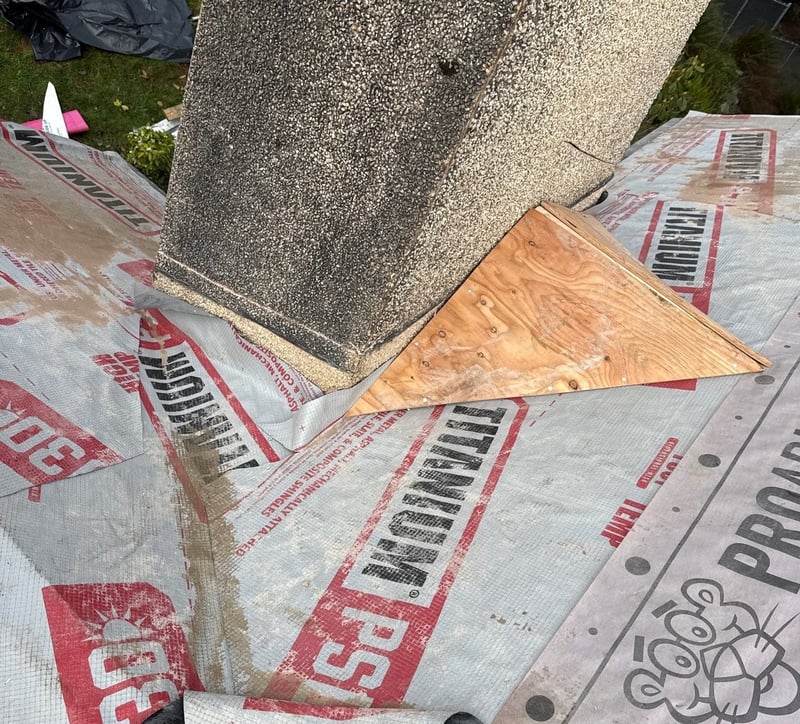
One other aspect of this job that was not as typical was the small sections of roof that were difficult to access but still needed to be replaced:
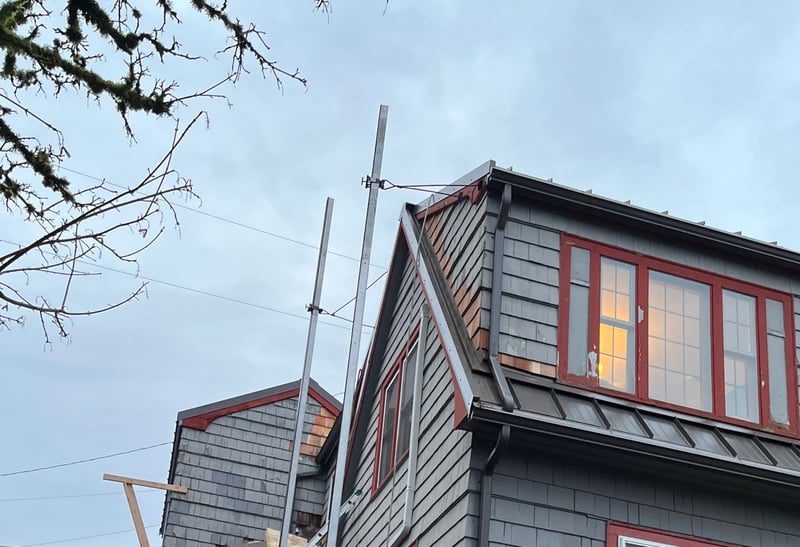
Our crew had to set up scaffolding to access the extra areas that needed to be roofed. Although it seems like roofing these sections would be quick and easy because they’re small, it actually took extra planning and labor to make sure the custom sections were done right.
What additional work did we do on this customer’s home?
On top of all the roofing work, we also noticed that the flashing was installed poorly in some spots, causing leaks and rotting siding all over the house.
In the spots where the cedar flashing was rotten and the flashing was completely shot, the customer asked us to replace the siding.
We did not paint the siding (the customer said he would take care of it), which makes it really easy to see where it got replaced. Here are some examples:
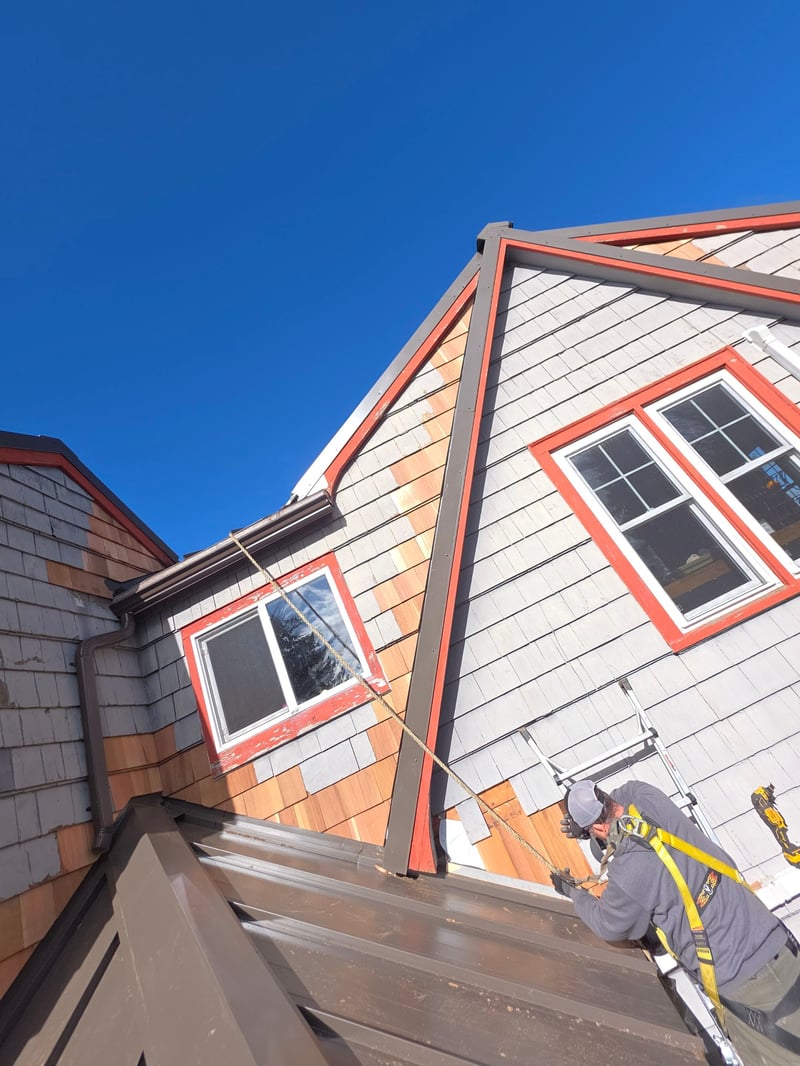
This picture does a good job of showing how much siding was needed. We also had to take out the siding along the diagonal mini roof sections to ensure that the flashing was installed correctly.
So, we replaced the cedar siding pieces due to a combination of needing to replace rotting wood and follow proper installation guidelines for the new flashing.
The customer was surprised by the amount of siding that needed to be replaced. He didn’t realize that there was so much rot in the siding. He also decided to paint the siding himself to save himself some money.
How much does it cost to convert from tile to a metal roof in Seattle?
As you’ve seen, converting from tile to metal is more than just a material swap. It involves structural considerations, new roof decking, updated ventilation, and often additional repairs like replacing rotted wood or siding. While metal offers clear advantages in weight, durability, and maintenance, the scope of work can vary quite a bit depending on your home.
That’s why cost is one of the most important factors to understand before moving forward.
From tear-off and disposal of heavy tile to installing a high-performance metal system, the total price can vary based on your roof’s complexity, accessibility, and the type of metal you choose.
Read our article “How Much Does It Cost to Install a Metal Roof in the Greater Seattle Area?” to learn about real pricing ranges, what drives the cost of a metal roof, and how to plan your budget for a long-lasting upgrade that performs well in Seattle’s climate.
Frequently Asked Questions About Converting a Tile Roof to Metal
1. Can you convert a tile roof to a metal roof in Seattle?
Yes, you can convert a tile roof to a metal roof, but it’s not a simple swap.
This type of project typically requires:
- Removing the existing tile
- Evaluating and replacing roof decking if needed
- Updating attic ventilation
- Installing new underlayment and flashing
Tile and metal roofing systems are built very differently, so converting between them requires structural and system upgrades to meet modern building codes and ensure long-term performance.
2. Why would I switch from tile to metal roofing?
Homeowners switch from tile to metal for several practical reasons.
Metal roofing is:
- Much lighter, reducing stress on your home’s framing
- Easier to maintain, with less moss and debris buildup
- More impact-resistant, especially during windstorms or falling branches
- Better at shedding water, which is ideal in Seattle’s wet climate
While tile is durable, it is more fragile and requires more ongoing maintenance.
3. Do you need to replace the roof decking when converting from tile to metal?
In many cases, yes.
Some older tile roofs are installed over skip sheathing, which has gaps between boards. Metal roofing requires a solid surface like plywood or OSB for proper installation.
Even if the decking is already plywood, your roofer may still need to:
- Replace damaged sections
- Upgrade thickness or structure
- Ensure everything meets current building codes
This step is critical for both safety and performance.
4. Is metal roofing cheaper than tile in Seattle?
Generally, yes.
While both are premium roofing materials, tile is typically more expensive due to:
- Heavier material weight
- Additional structural support requirements
- More labor-intensive installation
Metal roofing still has a high upfront cost, but it is often more cost-effective overall, especially when factoring in maintenance and longevity.
5. Will converting to metal reduce roof maintenance?
Yes, significantly.
Metal roofs:
- Do not support moss and algae growth as easily
- Shed debris more efficiently
- Require less frequent cleaning
In contrast, tile roofs tend to collect debris in gaps and crevices, which can lead to moss growth and ongoing maintenance needs.
6. Is metal roofing better for storms and falling debris?
Yes, metal roofing performs much better under impact.
Unlike tile, which can crack or break when hit, metal roofing can:
- Withstand falling branches
- Resist punctures
- Sustain minor dents without compromising performance
This makes metal a strong choice for homes in areas with trees or frequent windstorms.
7. How long does it take to convert a tile roof to metal?
Tile-to-metal conversions usually take longer than standard roof replacements.
This is because the project often includes:
- Careful removal of heavy tile
- Decking replacement or upgrades
- Ventilation improvements
- Custom flashing and detail work
Depending on the size and complexity of the roof, the project can take several days to a few weeks.
8. Will my attic ventilation need to be updated?
Yes, and this is one of the most important parts of the conversion.
Many older tile roofs have outdated or insufficient ventilation systems. When switching to metal, your roofer should ensure:
- Proper intake ventilation (soffits)
- Proper exhaust ventilation (ridge, static, or power vents)
- Balanced airflow throughout the attic
Without this, your roof can suffer from moisture buildup, mold, and premature failure.
9. Can converting to metal reveal hidden roof damage?
Yes, and this happens more often than homeowners expect.
Once the tile is removed, roofers may uncover:
- Rotting wood
- Poor or outdated framing
- Failed flashing
- Ventilation issues
These problems are often hidden for years and only become visible during tear-off.
10. Is converting from tile to metal worth it long-term?
For many homeowners, yes. It’s a strong long-term investment.
Benefits include:
- Lower maintenance costs over time
- Better performance in Seattle’s wet climate
- Reduced structural stress on the home
- Improved durability against weather and impact
While the upfront cost is significant, many homeowners find that the long-term savings and peace of mind make the upgrade worthwhile.
Topics:
