

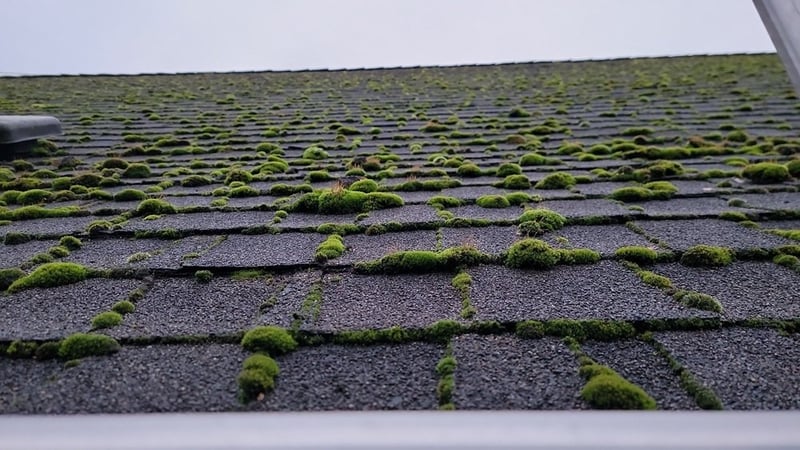
Are you worried that moss growing on your roof might be doing more damage than it looks? Have you noticed curled shingles, mysterious roof leaks, or dark green clumps building up in shady corners, but don’t know how serious it really is?
If you're a Seattle homeowner, you're not imagining things. Moss and algae aren't just an eyesore: they can silently destroy your roof from the bottom up.
At RoofSmart, we inspect, clean, and repair hundreds of roofs every year. A lot of roofs, especially older ones, grow moss. The longer that Seattle homeowners wait to call us out, the more damage the moss can cause. Luckily, this also means we have had the chance to perfect our removal process.
In this article, we’ll break down:
- How moss damages your shingles from underneath (and how fast it happens)
- Why even small moss patches can lead to thousands in repairs
- Safe and unsafe moss removal methods (and when to leave it to the pros)
- Which roofing materials resist moss and algae best in Seattle’s wet climate
Whether you're trying to prevent costly damage or just want your roof to last as long as it should, this guide will give you everything you need to make an informed, confident decision.
How does moss damage shingles?
Moss doesn’t have roots like a typical plant does, but it does have rhizoids, which are similar to roots. These root-like structures grip the shingles (specifically the granules), and the moss up top acts as a sponge, keeping shingles permanently saturated with moisture.
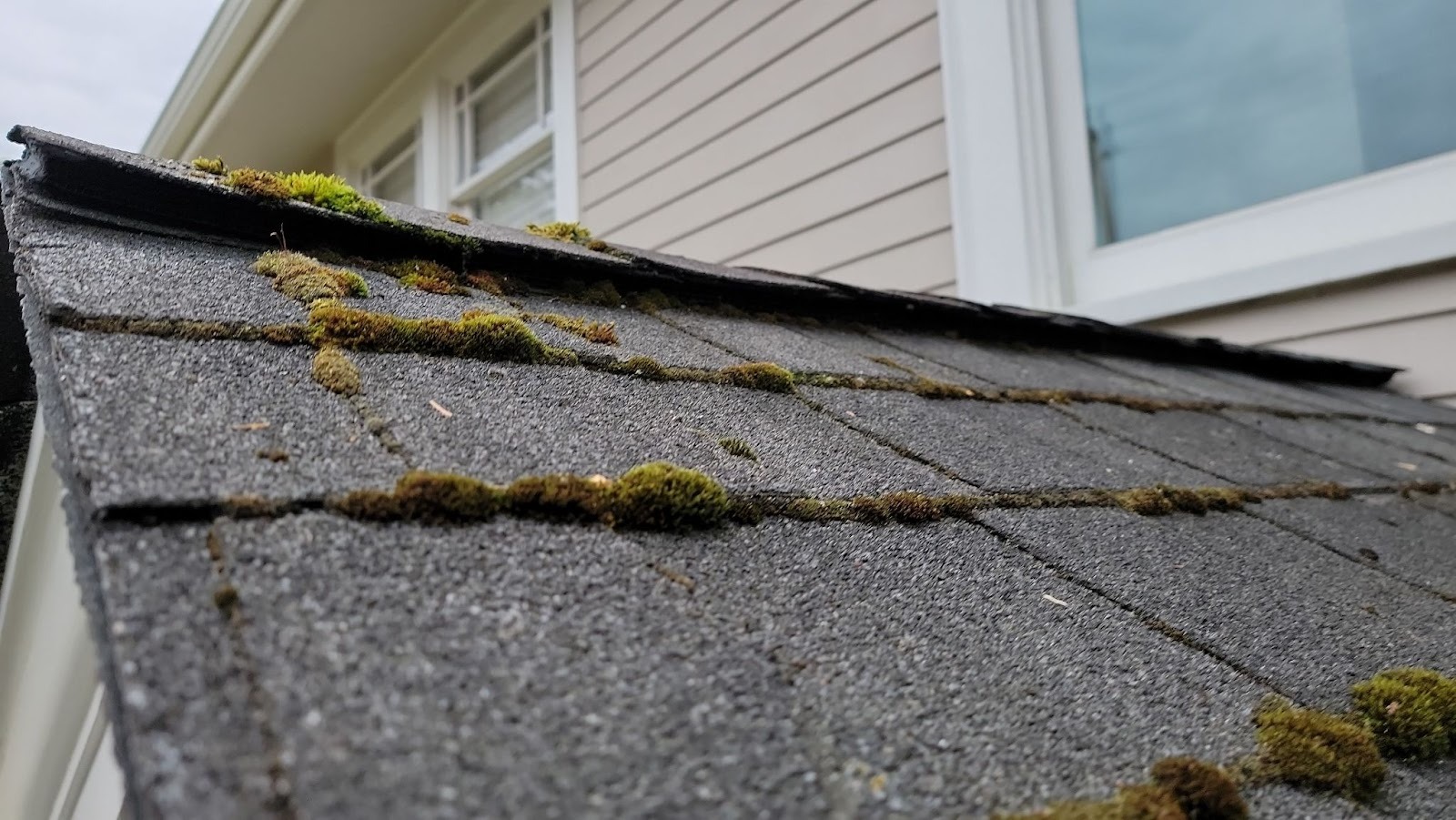
And in the Seattle area, with all the rain that we get, it could be six months before it finally dries out. Even after the rain is gone, it's holding water, soaking through, and weakening that shingle.
Asphalt shingles are not designed to be wet all the time. The constant moisture can damage your roof in many different ways before you even notice that there’s a problem.
Since moss is so good at retaining moisture on the shingle, it causes issues like:
- Premature deterioration: The shingles start to break down more quickly and fail much sooner than they should have.
- Lifted edges: Because moss is an organism that wants to grow, it gets underneath the shingle edges, and it lifts them over time. And that makes the shingles susceptible to wind damage, but also makes it easier for water to get underneath the shingles and cause a leak.
- Water damming: The little moss piles will also create a damming effect that can shoot water sideways when it hits the built-up moss instead of letting it flow down to the edge of the roof. If it goes sideways, it can find a seam and a nail, causing a leak
Can algae damage shingles?
Another common organism that grows on Seattle roofs is algae. But is algae as damaging as moss? What does it really do to the shingle?
Well, algae can discolor shingles and make them slippery. Mostly, it's a cosmetic issue. There typically isn’t any damage underneath the shingle.
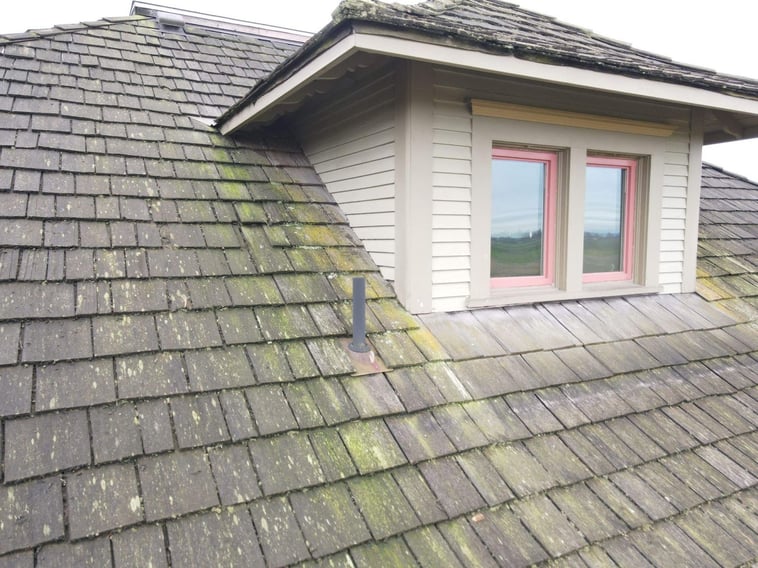
The best way to think about it is that it's an early warning sign that moss will soon follow. So if you start seeing algae, you know it’s best to get that fixed because the moss is coming fast.
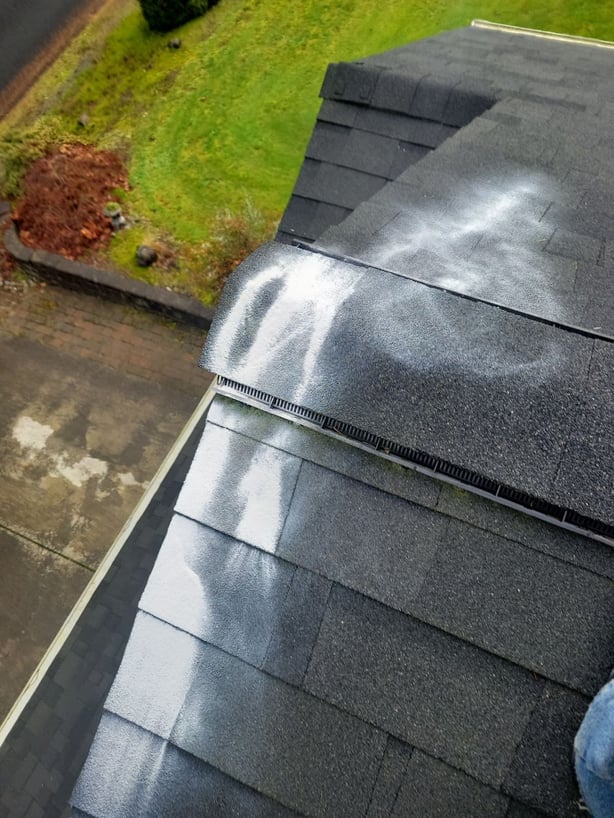
And the algae is fairly easy to take care of. You just sprinkle your algae treatment up there and walk away.
Here’s what the algae treatment looks like on the roof:
Can I remove moss myself, or do I need to hire a professional?
If you value saving money, then you might be more inclined to do it yourself. But keep in mind that getting up on the roof to clean off moss can be dangerous if you don’t have the right safety equipment.
If you have the money to pay a professional to do it, that’s a safer option because you know they’ll do a good job and that they have safety gear to protect them.
At the end of the day, it’s completely up to you and how comfortable you are climbing up a ladder and moving around on your roof.
How is moss removed?
Even though moss doesn’t have traditional roots, it can still really embed itself into your shingles and become difficult to remove (especially if it’s been growing for a while and you have a lot). If you try to rip it off, you’ll be taking off chunks of the roof with it.
You have 2 options to remove moss:
- Pressure-wash it: Using a pressure washer is the fastest way to remove moss. However, this is pretty much guaranteed to damage your roof, so you should really only do it if you’re about to have your roof replaced. Basically, doing this would save you a bit of labor costs on your roof replacement because moss removal does cost extra.
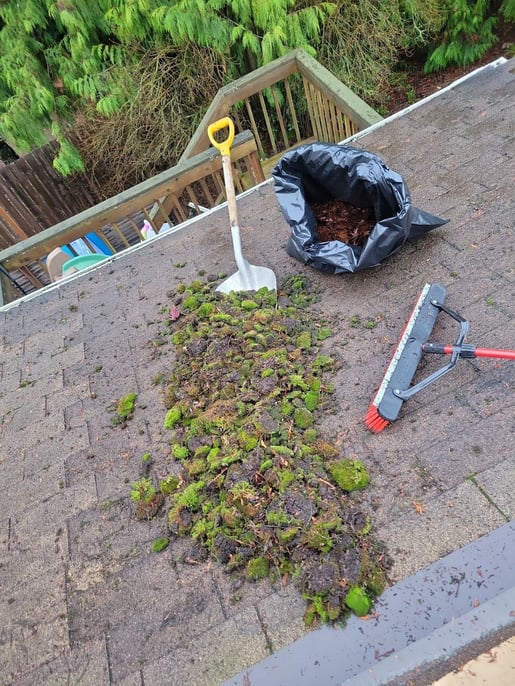
- Chemical treatment: You can use a shock treatment poison to kill the moss. Then, you have to wait for it to dry out. After that, it should be fairly easy to scrape off. This avoids damage from pressure washing or ripping off live moss. It is the recommended method.
This is what it looks like after being scraped off:
How do I prevent moss from returning?
To prevent moss from returning, you can keep the roof clean and free of debris, trim your trees so they're not hanging over your roof (or cut them down completely), and schedule professional maintenance.
Typically, the debris that's going to cause moss growth is from a nearby deciduous tree. That's the most common culprit. The sap that these trees have is incredibly nutrient-rich rich and moss just loves it.
So if you've got any leaves that drop or just branches hanging over your roof or just even nearby, that's usually why you get the moss.
Which roofing materials are moss and algae-resistant in Seattle’s damp, rainy climate?
When it comes to preventing moss and algae growth, some roofs are better than others. Some roofs can prevent it altogether, whereas some roofs only have so much protection.
Here is a list of roofing materials that resist moss and algae growth (ranked from best to worst):
- Copper: This roofing material is naturally resistant to moss and algae growth. There’s no chance it will grow on a copper roof.
- Zinc: Just like copper, zinc is naturally resistant to algae and moss growth.
- Standing Seam Steel (coated in zinc): It is standard for standing seam metal roofs to be coated in zinc. This protects them from a number of issues, including algae growth (but teel roofs without the protective zinc coating will definitely grow algae).
- EuroShield: These rubber shingles are designed to be algae-resistant as well, making them a good option if a metal roof isn’t quite in your budget.
- Asphalt Shingles Infused with Copper Granules (aids, but not a cure): Some asphalt shingles are infused with copper granules to help prevent algae growth. This is a helpful option if you want to stick to a lower budget. But in the Seattle area, it's only going to help. It's definitely not a cure.
Will regular maintenance on my Seattle roof save me money and prevent moss?
Now that you understand how moss can lift shingles, trap moisture, and slowly rot your roof from the inside out, it’s clear that prevention and early intervention are key. But keeping your roof moss-free and structurally sound in Seattle’s damp, tree-lined neighborhoods isn’t a one-time fix: it’s an ongoing process.
So, how do you make sure your roof stays in good shape long-term?
Partnering with a qualified roofing contractor for regular inspections and maintenance is one of the smartest investments you can make. They’ll know how to spot early signs of moss, diagnose hidden moisture damage, and prevent small problems from turning into expensive leaks.
If you’re wondering whether hiring a roofer is really necessary for routine maintenance and moss removal, our article breaks it all down for you: Will Regular Roof Maintenance Really Save Me Money on Repair Costs?
Learn what professional roofers do that most homeowners (and even handymen) often miss and how that can save you thousands down the line.
Topics:
