

TL;DR: Summary
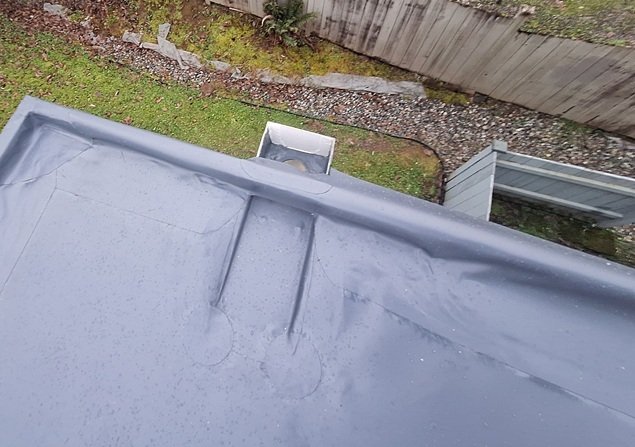
A leader head (also known as a conductor head or scupper box) is a critical external drainage component that acts as a catchment basin for water exiting a flat roof scupper. In Seattle’s heavy rain, many roofers skip this and use "through-wall" scuppers that drain internally.
This is a major risk; internal leaks are often invisible until they cause thousands in structural rot and mold damage. Investing a few hundred dollars extra for a leader head ensures water stays outside your walls, immediately channeling it to the downspout and protecting your home’s structural integrity.
Have you heard the term “leader head” but aren’t sure what it actually does (or if you even need one)? Worried your roofer might take the cheaper route, which could cause thousands in water damage later?
You’re not alone. Most Seattle homeowners don’t even know what a leader head is, until it’s too late. If your roof has a tricky drainage setup or a flat roof with scuppers, one small design flaw could be silently channeling water into your walls, attic, or roof deck.
At RoofSmart, we’ve repaired and replaced hundreds of flat roofs across the Seattle area. We have seen the damage that leaks around drain points can cause over and over again. We often recommend installing leader heads to our customers with flat roofs because we’ve seen how much better they work than cheaper alternatives.
In this article, we’ll break down exactly what a leader head does, why it matters in a rainy climate like Seattle, and how it compares to alternatives like through-wall scuppers.
You'll learn what to watch out for and how to make the right drainage decision before your roof turns into a costly repair nightmare.
Why should I install a leader head on my Seattle roof?
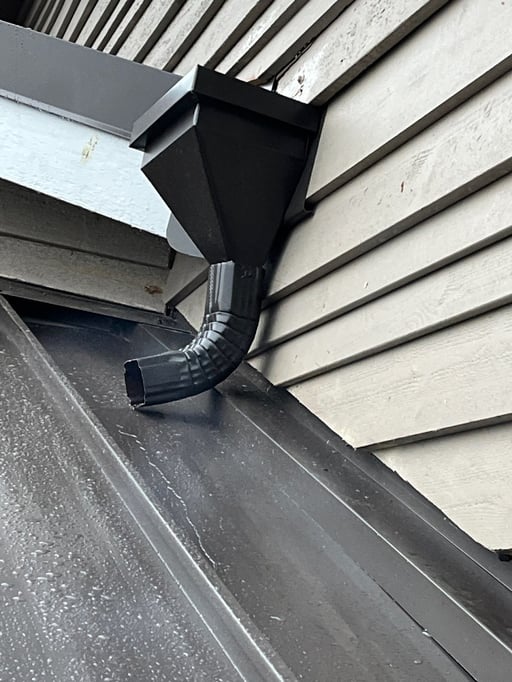
Leader heads (also known as a conductor head or scupper box) are part of the water drainage system on a roof. Not every roof requires a leader head, but they can make draining rainwater off the roof safer and more efficient.
Sometimes they are fancy and decorative, while others are simple. They can serve a functional purpose while also elevating the curb appeal of your home (the one pictured above is very simplistic).
They can be built to any style or shape you need, making leader heads a flexible solution. So, if you've got a funky spot or a weird corner, you can manufacture one of these things to fit how you need them to.
They are made out of aluminum or copper. Copper is a more expensive metal, so that usually used for fancier, more decorative leader heads. Aluminum is a cheaper option that still offers great quality.
Does every Seattle roof need a leader head?
In some cases, roofers will install a through-wall scupper that drains into the wall instead of a leader head. A through-wall scupper can be directed out to a leader head, but sometimes the drain just sits in the wall. These are often poorly installed, which causes damage.
It’s important to note that because the through-wall scupper sits in the wall, it increases the risk of leaks and other damage. It’s difficult to properly seal everything within the wall, so there’s a higher risk of mistakes or poor workmanship.
Leaks in the through-wall scupper can lead to rotting wood, mold, and structural damage. These types of leaks can stay hidden for a while and cause extensive damage.
For example, we had a recent customer with a lot of through-wall scuppers on multiple different levels of his flat roof. Here’s one of many damaged corners where a through-wall scupper had been installed:
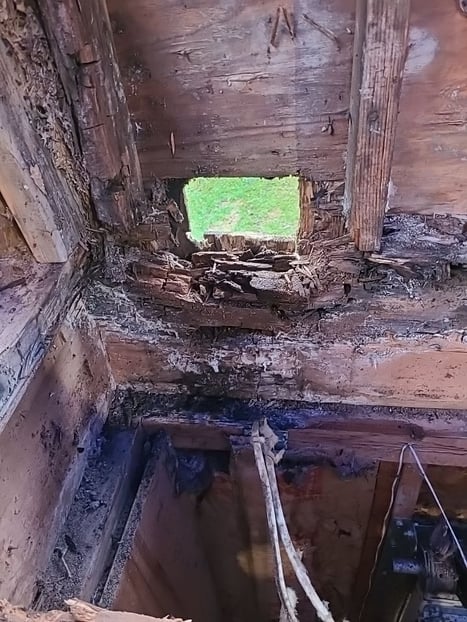
They had been leaking like crazy, and basically all of the wood was rotten and moldy. The worst part is that this type of leak damages your roof and your walls, so you’ll have to replace big portions of your house to fix all of the damage.
Another issue with through-wall scuppers with internal wall drainage is that they clog very easily with leaves and other debris.
If you don’t clean this out, it can cause water to back up and get into the walls. It’s not that difficult to clean out, but you really have to stay on top of it to prevent worsening clogs.
What are the benefits of using a leader head in Seattle?
In a rainy, damp area like Seattle, it’s crucial that your roofer takes the necessary precautions to protect your roof from leaks and water damage. And that’s exactly what having a leader head does for your roof and walls.
The idea behind a leader head is that it is all external, so water is not traveling through your ceiling or walls. It immediately goes to the downspout.
This design helps to prevent all of the problems caused by through-wall scuppers, including:
- Leaks
- Rotting wood
- Mold
- Structural damage
Repairs for mold and rotting wood can easily cost thousands of dollars. If the leak has time to spread further through the roof and even damage the siding, then you might be looking at tens of thousands of dollars for a repair.
Unfortunately, flat roof repair costs can quickly increase because so much of the damage is hidden.
How do I decide if a leader head is right for my roof?
Leader heads can be used on flat or sloped roofs, but they’re usually more of a decorative piece for sloped roofs. You can install decorative ones to elevate the curb appeal of your home. This is typically an extra expense because regular gutters work fine on most sloped homes.
On the other hand, they can be a useful tool for protecting your flat roof from damage. A through-wall scupper with internal drainage is a cheaper option, which is why so many flat roofs have it. But it comes with a higher risk of damage.
A leader head costs more, but you’re investing in better protection for your roof and siding. It's only a couple hundred bucks extra (while you’re installing the roof).
Repairing the water damage from a leak will cost you thousands of dollars (and a few hundred extra to then install a leader head).
Ultimately, it’s a decision of how much you want to spend on your roof now and how much of a risk you’re willing to take on having future damage.
Could poor drainage be hiding bigger installation problems in my flat roof?
Choosing the right drainage solution (like a leader head instead of an internal scupper) can protect your home from expensive water damage. But even the best drainage system can’t save your roof if the membrane itself was installed incorrectly.
If you have a flat roof, it’s critical to make sure the entire system was installed the right way (flashing, seams, and all).
Unfortunately, in the Seattle area, we see a lot of flat roofs that look “fine” at first… until leaks, ponding, or seam failures show up months (or even years) later.
Wondering if your flat roof was installed correctly, or if hidden shortcuts could be putting your home at risk? Find out in our article: “Was My Flat Roof Installed Correctly in Seattle?”

Frequently Asked Questions
1. What exactly is a leader head?
A leader head is a metal box (usually aluminum or copper) installed on the outside of your house. It catches water coming through a roof scupper and funnels it into a downspout. It acts as a safety overflow and keeps the drainage process entirely external to your home's walls.
2. Why are "through-wall" scuppers risky in Seattle?
Through-wall scuppers that drain inside the wall are difficult to seal perfectly. If they fail, water leaks directly into your wall cavity or attic. Because the damage is hidden, it often leads to extensive rot and mold before a homeowner even realizes there is a leak.
3. Do leader heads help with gutter clogs?
Yes. Unlike internal drainage systems that are a nightmare to clear, leader heads are open at the top. This prevents air pressure issues and makes it much easier to see and clear debris before it causes a backup into your roof system.
4. Can a leader head be decorative?
Absolutely. While they serve a vital functional purpose, they are often used to elevate the curb appeal of a home. They can be custom-manufactured into various shapes and styles, with copper being the premium choice for a high-end look.
5. How much extra does it cost to add a leader head?
During a roof installation, adding a leader head typically only adds a couple hundred dollars to the project. This is a small "insurance policy" compared to the thousands of dollars it costs to remediate mold and rot caused by internal drainage failure.
6. How do I know if my flat roof was installed correctly?
Drainage is just one part of the puzzle. You also need to ensure your membrane and insulation are handled properly. Find out more in Was My Flat Roof Installed Correctly in Seattle?
7. Do secondary scuppers serve the same purpose?
Not exactly. While a leader head manages primary drainage, a secondary scupper acts as an emergency overflow if your primary drain fails, preventing water from weighting down and collapsing your roof.
8. What is the best material for a flat roof in a rainy climate?
For long-term performance and easier drainage integration, we typically recommend a non-wicking PVC membrane. You can see how it compares to other options in Torchdown vs. Single-Ply PVC.
9. Is a "cant strip" needed with a leader head setup?
A cant strip is used to transition the roof membrane up the wall toward the scupper. It ensures the material doesn't crack at a sharp 90-degree angle, which is essential for a watertight seal at the drain point.
10. What should I look for in a roofing proposal regarding drainage?
Ensure your roofer specifically mentions how they are handling transitions and scuppers. If they suggest internal wall drainage to save money, it’s a major red flag in a roof proposal.
Topics:
