

TL;DR: Summary
Agreeing to a price is only the first step; the actual contract determines what you are truly entitled to and what the roofer is liable for. Watch out for hidden fees (like warranty registration costs), vague scopes of work, and clauses that explicitly disclaim responsibility for critical issues like attic ventilation or mold remediation.
A trustworthy contractor will use clear language and be willing to go over the contract with you line-by-line to ensure you aren't signing away your right to a functional, protected home.
Do you feel overwhelmed trying to understand your roofer’s contract? Are you worried there might be hidden fees, missing promises, or vague language that could come back to bite you?
At RoofSmart, we understand that choosing a roofing contractor is stressful. You need to find someone you trust with your home, your money, and your peace of mind.
We encourage all of our customers to ask us if they have any questions about the proposal or contract. The last thing we want is for you to feel like you’re agreeing to something that makes you uncomfortable.
This article will walk you through the most common red flags to watch for in the fine print of roofing contracts, show you how to protect yourself from vague or misleading language, and empower you to confidently review your agreement before you sign.
Do I need to read the contract from my roofer if I’ve already agreed to the price?
When you’re making your final decision about which roofer you want to work on your roof, it’s important to read every document they send you.
A lot of people decide based on the price quote that the roofer sends them and don’t really pay much attention to the actual contract before signing it. But when you do that, you might be agreeing to something that you don't expect.
It is important to make sure that you’re happy with the price for your roof work, but it’s also important to read the contract to make sure that you know what you’re signing up for. Some roofers have unexpected clauses added in. Looking at just the price won’t give you the full picture, even if it’s a proposal that also describes the scope of work.
What are exclusions or issues that can appear in a roofing contract?
The contract is designed to make sure that you and your roofer are on the same page about everything before your job begins. This means that contracts are usually long, so if you get something that is two pages or less, then it's not the whole contract.
Your roofer can pretty much write anything they want in the contract because it describes what they’re responsible for during the roofing job.
Here are some examples of hidden exclusions or tricky situations to look for in the contract:
- Hidden Fees: Are they suddenly charging you for stuff that you never discussed payment for? For example, sometimes it might seem like the warranty is free, but then the contract says that there is a several-hundred-dollar (or higher) fee for the warranty.
- Payment Terms: It’s important to confirm that you’re on the same page as your roofer about when and how you’ll be paying. For example, make sure that your company accepts the payment method you want to use, and see if they charge an extra fee for it.
- Scope of Work: When signing the contract, you might be promising that even though you talked about mold with your roofer, they make no guarantee that they will fix it. Or, they might’ve said that they're going to do ventilation, but then the contract says that they're actually not responsible if it works or not. This is actually something that we’ve seen before in another roofer’s contract:
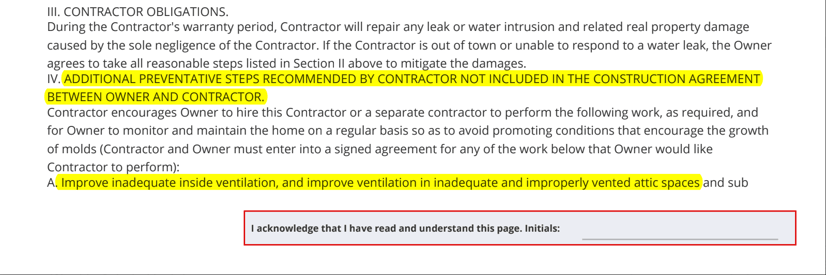
Having improper ventilation can damage your roof and void your manufacturer’s warranty for asphalt shingles, so it’s interesting that a roofer would so explicitly state that attic ventilation isn’t their problem. But there are a lot of roofers who don’t do ventilation work.
- Vague descriptions: Another thing to watch out for in the contract is weird or vague descriptions of the scope of work. You should be able to clearly tell what the roofer is going to do. Here’s an example of a strange and unhelpful description in a real contract about gutter guards (the middle one):
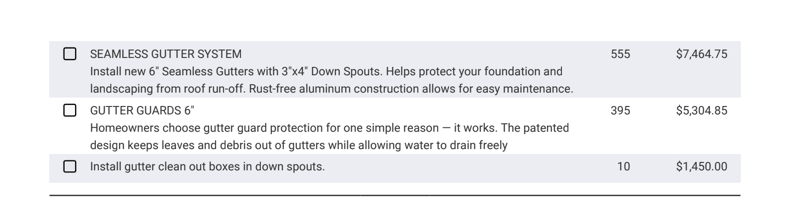
This doesn’t even say what style or brand of gutter guards they’re going to install. In fact, it doesn’t even say that they’re going to install anything. It’s just marketing fluff that says why gutter guards are useful. This is at the end of a long list of other descriptions, so it can be easy to miss.
- Warranty Details: Make sure that you’re getting the warranty you’re expecting. For example, if the roofer has been talking about a lifetime warranty this whole time but then the contract says it’s actually a 2-year warranty, that’s a problem. Also, there might be a clause in there about what you have to do to maintain your warranty coverage. Your roofer might require that you do semi-annual professional roof cleanings and have it documented.
- Contractor's Liability: Knowing what the contractor is liable for in case they damage your roof is a big one. If you sign the contract without reading it, you might be promising that they can break everything in your house, and you have no recourse.
You want to make sure you know what you're paying for and that your contractor is doing everything that they said they would. If there is something that you discussed with your roofer and it's something that matters to you, make sure it's in the contract.
Can I negotiate the terms of the roof work contract with my roofer?
If there is something in the contract that concerns you, then you should absolutely bring it up with your contractor! The same applies if you think something is missing or find something extra that you don’t want.
It’s a super long document with lots of rules, so your roofer is anticipating that you’ll have at least some questions. You can even sit down with your roofing contractor and go over the whole contract together if that would be helpful to you. That way, you can get all of your questions answered.
The contract is an agreement between you and your roofer, so if there’s something that you don’t agree with, then you’re within your rights to bring it up. In some cases, your roofer will agree and make changes, but that might not always happen.
Either way, if there’s something in the contract that makes you nervous, don’t feel pressured to sign it. There are plenty of other quality roofers out there who can help you.
How does reading the fine print help you choose the right roofing contractor?
If your roofer included a lot of confusing or shady clauses, this might not be someone you want to work with. You want to walk away from reading the contract feeling like your roofer wasn’t trying to hide anything from you.
A trustworthy contractor clearly explains everything and does not try to bury surprise costs or clauses. They are also happy to go over any part of the contract with you. If your roofer is dodgy or vague when you bring up a concern with the contract, that’s a bad sign.
Trust your gut and don’t be afraid to speak out when you see something you’re unsure about.
How Do I Know If a Roofing Contractor Is Actually Qualified to Protect My Home?
Reading the fine print in a roofing contract is one of the smartest things you can do as a homeowner, but it’s only half of the equation. Even the most detailed, homeowner‑friendly contract won’t protect you if the contractor behind it isn’t truly qualified to do the work they’re promising.
If you’ve noticed vague language, heavy exclusions, or clauses that shift risk onto you, those are often symptoms of a bigger issue: a contractor who lacks the experience, systems, or accountability to stand behind their work.
The reality is that qualified roofing contractors don’t need to hide behind confusing contracts because they rely on clear scopes of work, proper licensing, and actual expertise instead.
Before you sign anything, the next step is to make sure the company itself meets the standards your roof actually requires. That means understanding what qualified really looks like in the roofing industry and how to spot the difference between a legitimate professional and a risky shortcut.
Read our article “Is Your Seattle Roofer Actually Good? Here’s How to Tell Before It’s Too Late” to learn how to evaluate whether a roofer is truly qualified to work on your home and why that matters more than any line item in the contract.
Frequently Asked Questions
1. Is the price quote the same thing as the roofing contract?
No. While a quote or estimate gives you a ballpark cost, the contract is a legally binding document that outlines the specific materials, labor terms, and exclusions. Never sign based on price alone without reading the fine print.
2. Can a roofer charge me extra for a "free" warranty?
Yes, some do. A common red flag in the fine print is a hidden fee for warranty registration that was never mentioned during the sales pitch. Always check the "Exclusions" or "Fees" section.
3. Why would a contract say the roofer isn't responsible for ventilation?
Many roofers only want to "shingle and go." However, improper ventilation can void your manufacturer’s warranty. If a contract states they aren't responsible for the attic's airflow, it's a sign they may be skipping a critical part of the roof's health.
4. What are "vague descriptions" in a scope of work?
Vague language uses marketing fluff instead of technical specs. For example, a contract should state the brand and style of gutter guards or shingles, rather than just saying "high-quality protection will be provided."
5. How do payment terms usually work in a roofing contract?
Terms vary, but you should confirm when and how you are paying. Watch out for extra fees for specific payment methods (like credit card surcharges) or high upfront deposits before materials even arrive.
6. Am I allowed to negotiate the terms of a roofing contract?
Absolutely. If you find a clause that makes you uncomfortable—like one that says the contractor is not liable for property damage—you should bring it up. A reputable roofer will be open to discussing and potentially adjusting the language.
7. What should I do if a contract is only one or two pages long?
Be cautious. A comprehensive roofing contract is usually long because it needs to cover safety, liability, materials, and warranties. A very short document often leaves out protections that you might need if something goes wrong.
8. How do I know if my roofer is actually qualified to sign this contract?
A piece of paper doesn't prove expertise. You should verify their licensing, certifications, and local reputation before signing. If they hide behind vague language, they likely lack the accountability to stand by their work.
9. Can a roofer require me to pay for professional cleanings to keep my warranty?
Yes. Some fine print requires you to have documented, professional cleanings every year to maintain your coverage. If you don't do this, the roofer can legally deny future warranty claims.
10. What is the biggest "red flag" to look for before signing?
The biggest red flag is a contractor who is dodgy or vague when you ask questions about the contract. A trustworthy contractor will be happy to explain every clause and won't pressure you into signing something you don't understand.
Topics:
